Introduction: The High Cost of Grid Dependency in Industrial EV Charging
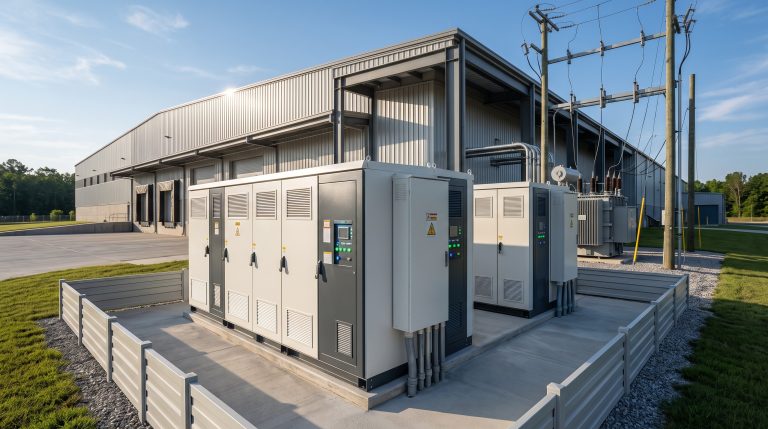
For commercial and industrial (C&I) facilities, the rapid proliferation of electric vehicle (EV) fleets has created a paradoxical crisis: while decarbonizing transport, the surge in high-power DC fast charging demands is exposing facility managers to debilitating demand charges and grid instability. A standard 150kW DC fast charger can spike a facility’s peak demand by over 1 MW, amplifying monthly utility bills by 30-50% in regions with punitive demand tariffs. The Wallbox EV Charger, when intelligently integrated with a Commercial Battery Energy Storage System (BESS), transcends its role as a mere charging point. It becomes a sophisticated peak-shaving asset, an energy arbitrage node, and a gateway to energy independence. This deep-dive explores the technical architecture, ROI metrics, and deployment blueprints of BESS-integrated EV charging solutions, drawing on industry standards like IEC 62619 (safety for industrial batteries), UL 9540 (energy storage systems), and UN38.3 (transportation).
Core Architecture & Battery Management: The Trinity of PCS, BMS, and EMS
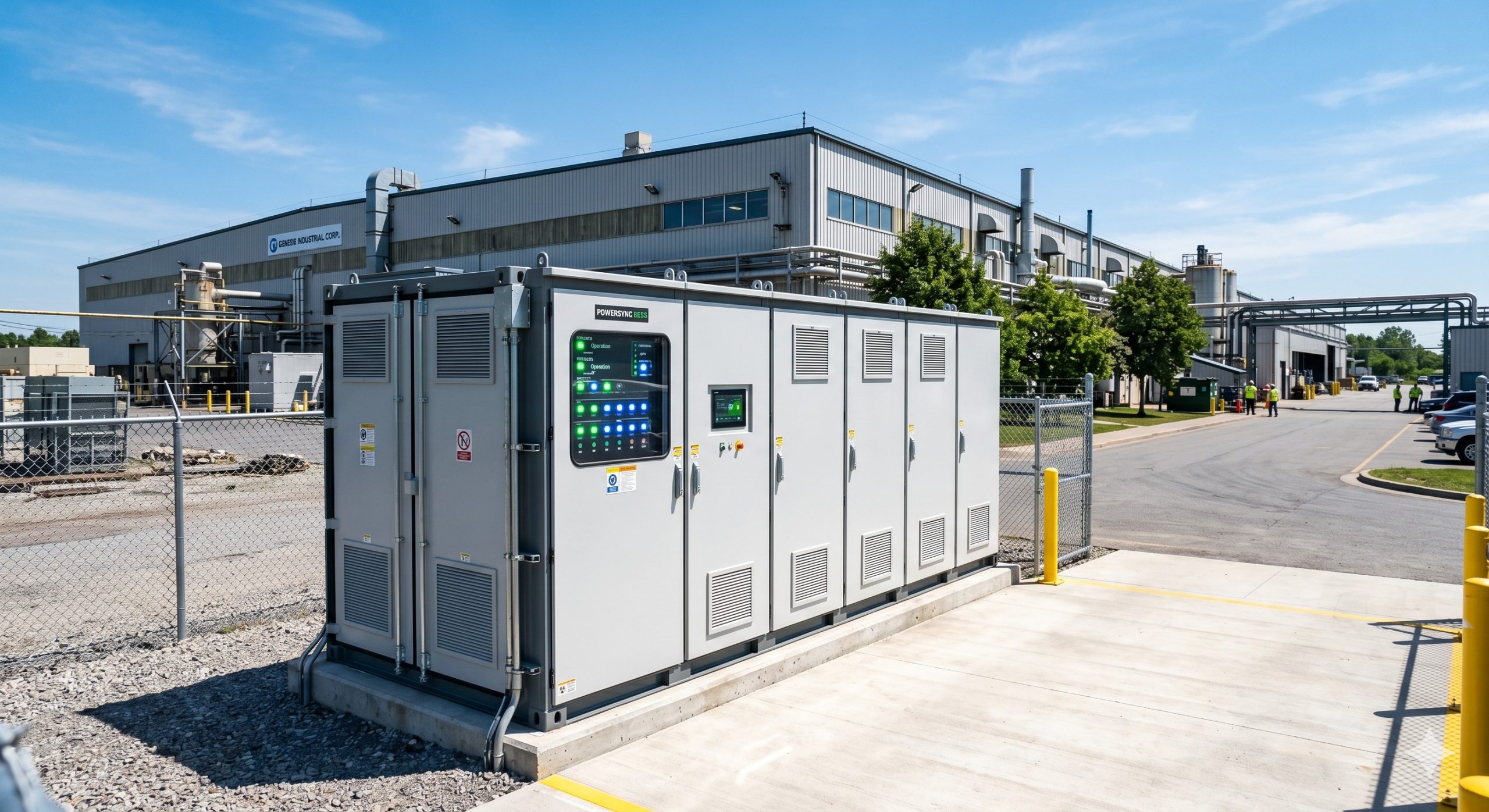
Any utility-grade Wallbox EV Charger integrated with storage demands a three-layer hierarchical control system. The Bidirectional Power Conversion System (PCS) is the hardware backbone, typically employing a SiC (Silicon Carbide) MOSFET topology achieving >97.5% round-trip efficiency. The Battery Management System (BMS) monitors cell-level voltage (accuracy ±1mV), temperature, and state-of-charge (SoC) with continuous balancing algorithms to maintain depth of discharge (DoD) up to 90% while preventing over-discharge below 2.5V per cell. The Energy Management System (EMS) functions as the site controller, executing load forecasting and demand response triggers in sub-second loops ( < 100ms reaction time).
Liquid Cooling vs. Air Cooling in High-Cycle Applications
For C&I EV charging, liquid cooling thermal control is non-negotiable. A typical C&I BESS for EV supercharging experiences >2,000 partial cycles annually due to intermittent charging events. Air-cooled systems degrade rapidly under such thermal stress, losing 15-20% capacity after 4,000 cycles. In contrast, liquid cooling (using a 50/50 glycol-water mix) maintains cell delta-T within 2°C across all modules, preserving calendar life and enabling >8,000 cycles at 90% DoD with LFP chemistry. Integrated aerosol-based fire suppression systems (meeting NFPA 855) provide secondary safety, venting thermal runaway gases without explosive ignition.
Regulatory Compliance
- IEC 62619: Safety requirements for industrial lithium-ion secondary cells.
- UL 9540A: Thermal runaway fire propagation testing.
- CE & UKCA: Electromagnetic compatibility and low-voltage directives.
- UN38.3: Safe transport of lithium batteries.
Technical Specifications: C&I Wallbox BESS Integration Metrics
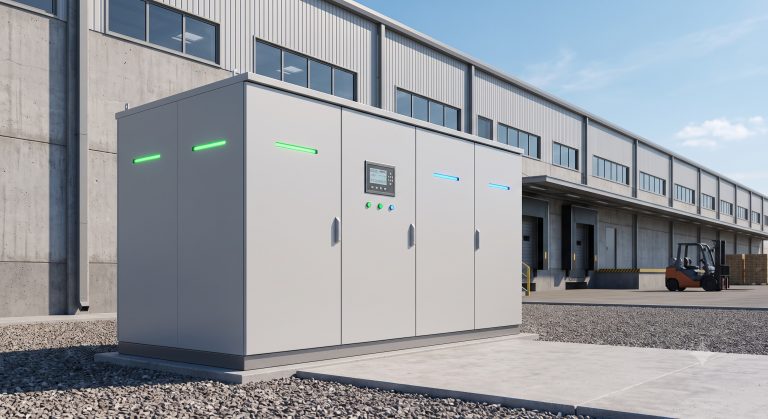
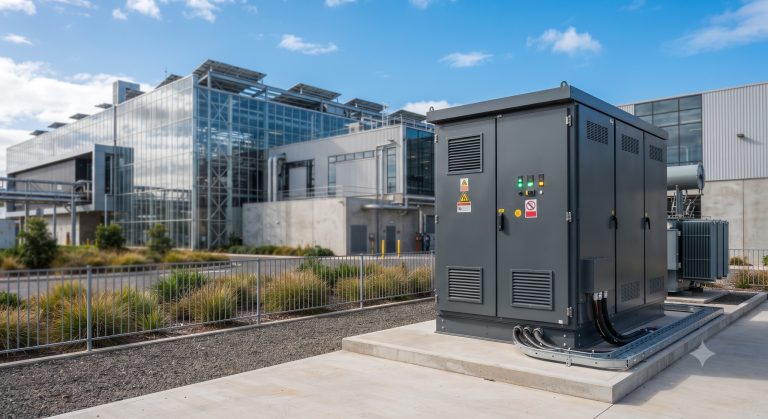
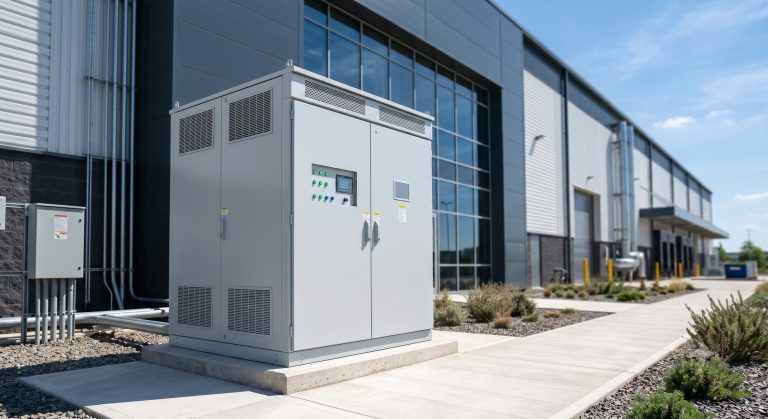
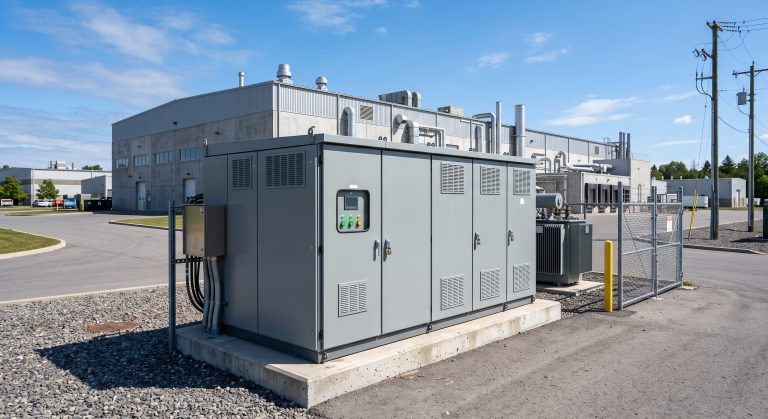
The following table outlines the baseline specifications for a utility-grade Wallbox EV Charger coupled with a 215kWh C&I BESS unit, typical for peak shaving at retail EV charging plazas or industrial fleet depots.
| Key Parameter | Technical Specification |
|---|---|
| Battery Chemistry | LFP (Lithium Iron Phosphate), prismatic cells, UL 9540A tested |
| Usable Energy Capacity | 215 kWh (215–2,000 kWh modular scaling) |
| Nominal Power (PCS) | 100 kW (peak 150 kW, 30 sec) |
| Round-trip Efficiency (DC-DC) | 97.5% @ 0.5C, including liquid cooling aux load |
| Cycle Life | >8,000 cycles @ 90% DoD, 25°C, EOL 70% SOH |
| Depth of Discharge (DoD) | Up to 95% (recommended 90% for cycle life) |
| Thermal Management | Liquid cooling (glycol-water, delta-T < 2°C across cells) |
| Fire Suppression | Aerosol-based + Novec 1230 backup, compliant with NFPA 855 |
| DC Fast Charging Interface | CCS2 / CHAdeMO (dual gun), 150kW max per Wallbox port |
| IP Rating | IP54 (outdoor cabinet), IP20 (battery modules inverter side) |
| Operating Temperature | -30°C to +55°C (derated >45°C, liquid cooling active) |
| Standards Compliance | IEC 62619, UL 9540, CE, UN38.3, VDE-AR-E 2510-50 |
Commercial ROI & Grid Support: Why BESS-Integrated Wallbox Beats Diesel Generators
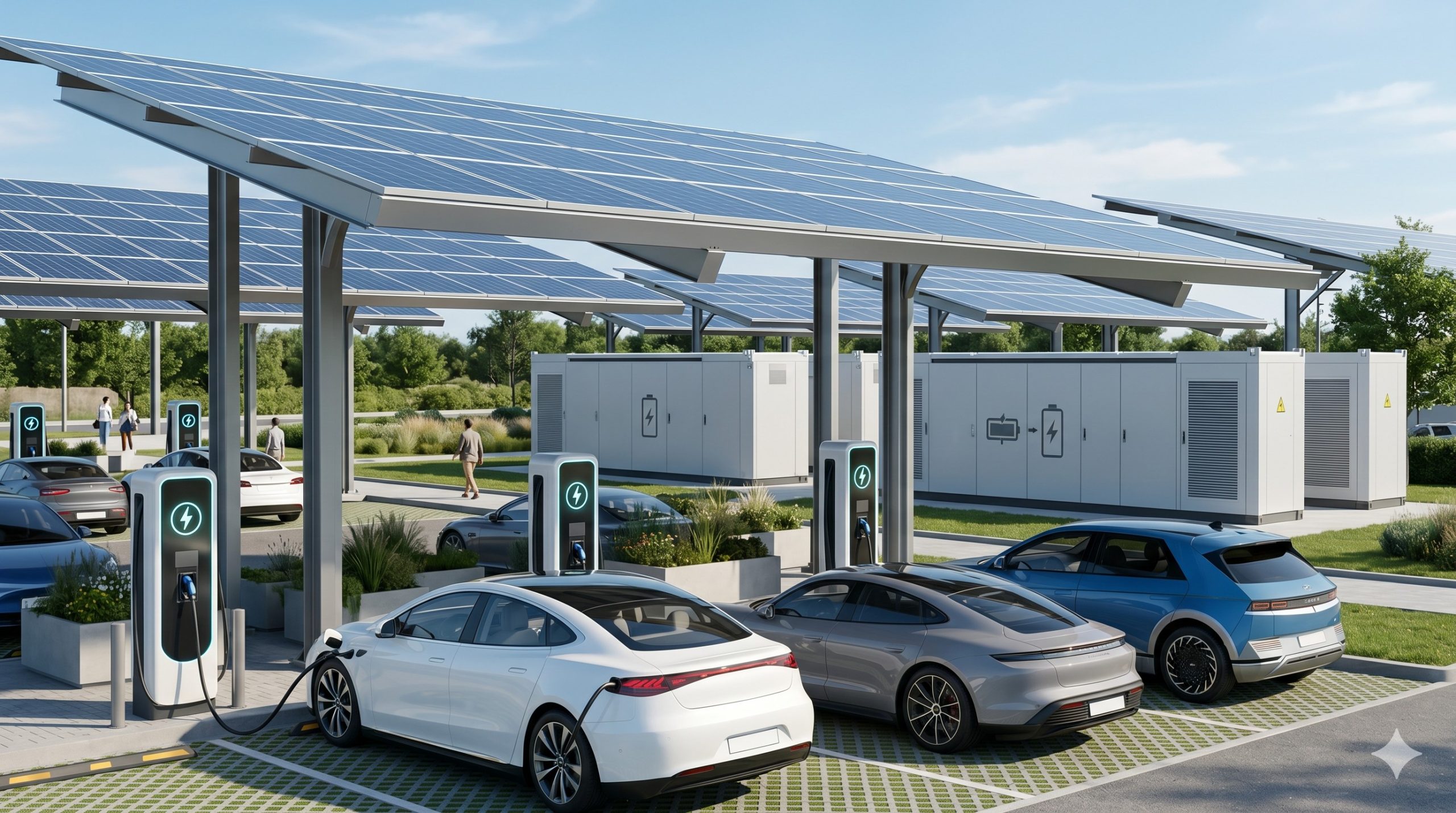
The business case is built on three pillars. First, peak shaving: a 215kWh / 100kW BESS can completely offset a 30-minute EV charging demand spike. At a demand charge rate of $15/kW in California, eliminating a 200kW spike saves $3,000/month. Second, energy arbitrage: charge the BESS overnight at off-peak rates ($0.07/kWh) and discharge during peak tariffs ($0.30/kWh), achieving a ~$0.23/kWh gross margin. Over 8,000 cycles, the Levelized Cost of Storage (LCOS) drops below $0.05/kWh, far superior to diesel generators ($0.30–0.80/kWh) with zero carbon emissions. Third, demand response (DR): aggregated BESS assets can participate in grid service markets (e.g., PJM RegD, CAISO non-spinning reserve) earning $100–200/kW/year. The integrated PV-Storage-Charging (PV-Storage-Charging) model leverages on-site solar to achieve near-zero marginal charging costs.
Deployment Scenarios
Three high-ROI applications dominate the C&I landscape. Scenario 1: EV Supercharging Hubs – Deploying a Wallbox EV Charger cluster (4x 150kW units) with a 500kWh/250kW BESS reduces transformer upgrade costs by 40% and eliminates grid congestion. Scenario 2: Industrial Fleet Depots – For 50 electric delivery vans requiring overnight charging, a 1MWh BESS time-shifts renewable energy (wind or solar) purchased via a Virtual Power Purchase Agreement (VPPA). Scenario 3: Islanded Microgrids – Combining a 1MWh BESS, solar PV, and backup diesel for critical manufacturing plants, achieving 99.99% uptime even during grid failures. The EMS executes black start capability in < 20 seconds.
Conclusion: The Zero-Carbon Adaptive Grid
The Wallbox EV Charger is no longer a passive load. As a fully orchestrated Commercial Energy Storage System node, it actively stabilizes the grid, monetizes flexibility, and future-proofs C&I energy assets. With LFP cycle lives exceeding 8,000 cycles, integrated liquid cooling, and smart EMS-driven demand response, the total cost of ownership now undercuts legacy fossil infrastructure. The next decade belongs to facilities that deploy BESS-integrated EV charging – not as a cost center, but as a revenue-generating grid asset. Evaluate your peak demand history, simulate your LCOS with our technical team, and accelerate your zero-carbon transition today.