EXECUTIVE SUMMARY
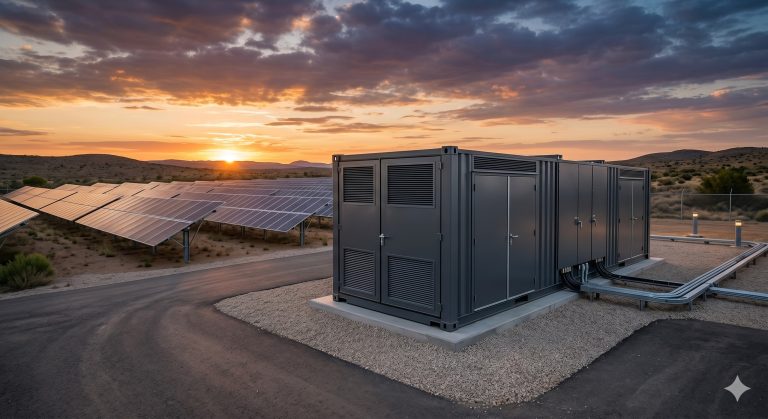
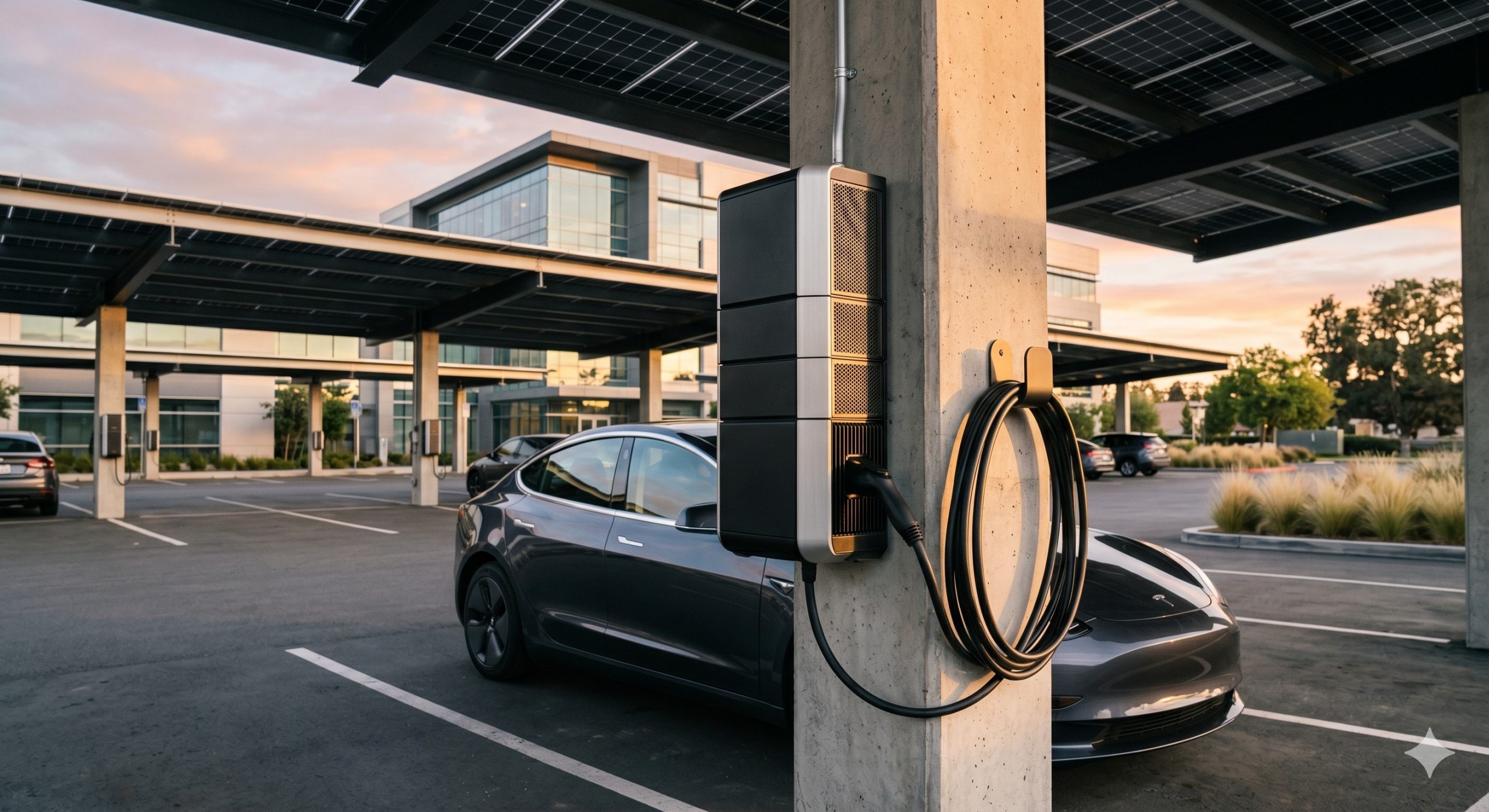
Positioned at the intersection of commercial convenience and industrial resilience, our Wallbox EV Charger delivers a future-proofed energy gateway for C&I facilities, EV supercharging annexes, and micro-grid edge nodes. Unlike conventional AC chargers, this unit integrates bi-directional readiness and real-time cloud dispatch, enabling facility managers to achieve zero-carbon mobility while participating in grid peak shaving and demand response programs. Designed for high-utilization environments such as corporate campuses, retail super hubs, and fleet depots, the Wallbox transforms parking infrastructure into an active energy asset.
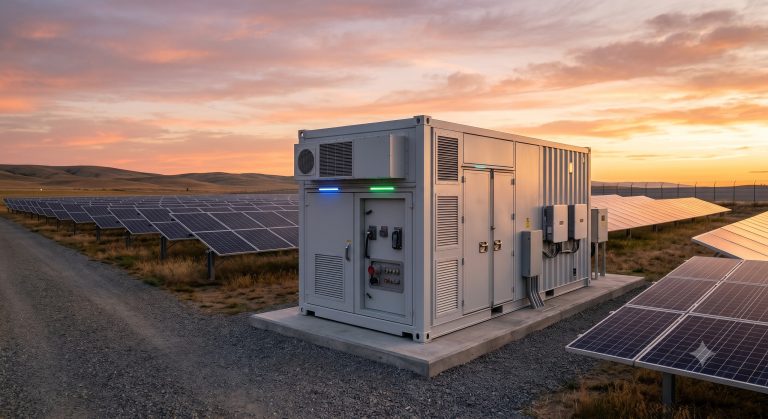
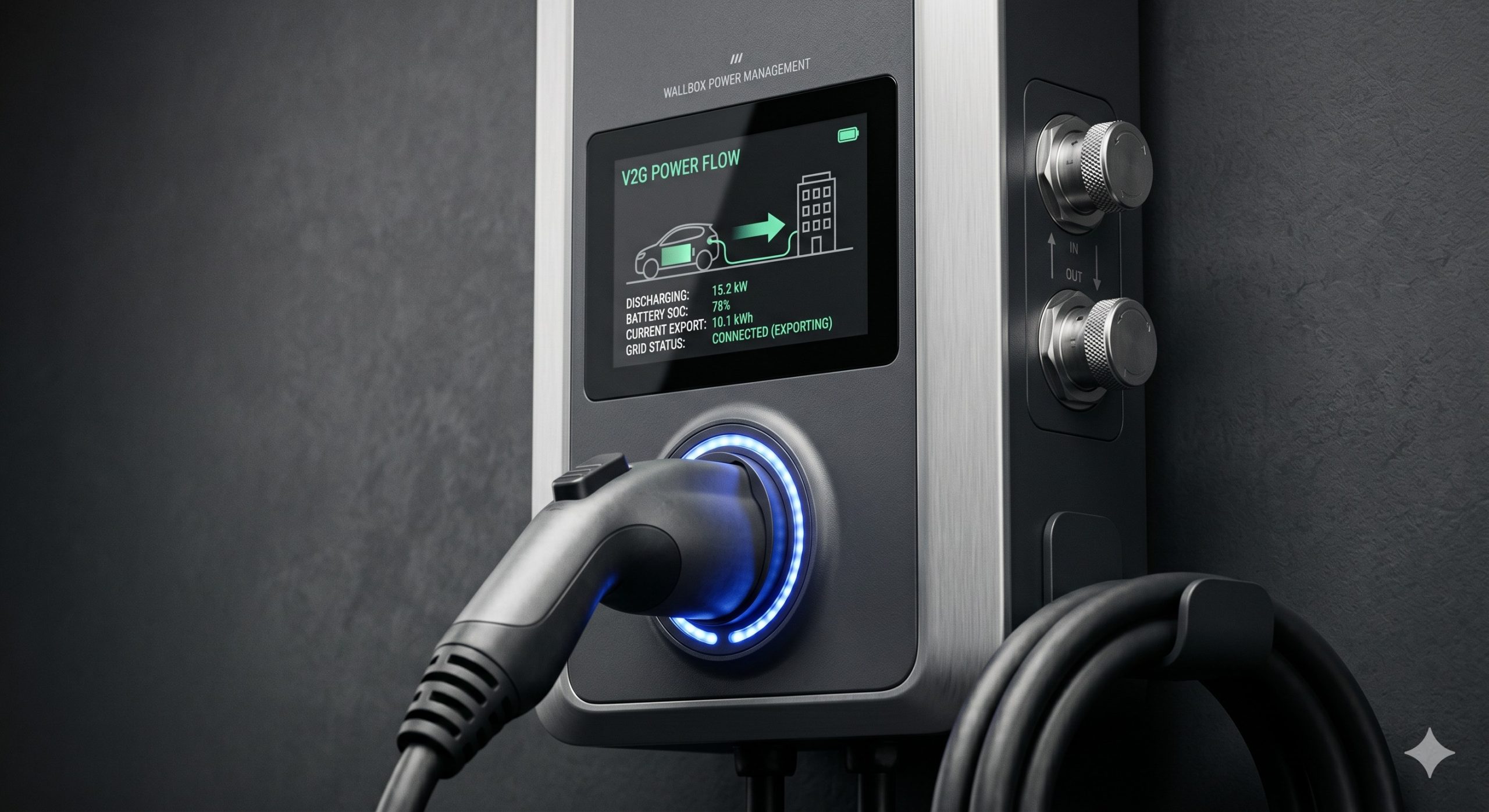
Built on the same core platform as our utility-scale storage systems, the Wallbox EV Charger features embedded digital energy management (EMS) and supports direct photovoltaic coupling. It reduces facility demand peaks by up to 35% through intelligent EV load shifting and scheduled V1G/V2G cycles (where grid code permits). For operators of EV supercharging stations, it serves as an on-site buffer that mitigates demand charges and stabilizes ultra-fast DC charger utilization. In micro-grid and off-grid scenarios, the unit functions as a managed bidirectional hub, balancing intermittent renewables with vehicle-to-building (V2B) power flows, ensuring critical operations remain online without diesel backup.
SYSTEM ARCHITECTURE & SAFETY
The Wallbox EV Charger utilizes a galvanically isolated, dual-stage power topology (AC-DC + DC-DC) built around industrial-grade SiC MOSFETs, achieving a peak efficiency of 97.2% in both charge and discharge modes. The core energy buffer (optional integrated storage skid) employs Tier-1 Grade A lithium iron phosphate (LFP) cells with an expected cycle life of 8,000 cycles at 80% depth of discharge and 25°C ambient. The battery management system (BMS) monitors every cell for voltage, temperature, and internal pressure with isolation detection down to 10µA, redundantly reporting to the local EMS and cloud platform via TLS-encrypted 4G/Ethernet.
Thermal management relies on a hermetically sealed liquid cooling loop shared between the power electronics and battery module (if present). The coolant (deionized water + propylene glycol) circulates through a dual-fan heat exchanger with variable speed control, maintaining cell delta-T below 4°C and internal ambient below 45°C even during full-power 350A DC fast charging sessions. For safety, the system integrates a three-layer suppression architecture: (1) per-cell vent gas detection, (2) aerosol-based submodule fire extinguishing, and (3) a cabinet-level clean agent (Novec 1230 or equivalent) release triggered by dual optical flame and hydrogen gas sensors. All high-voltage disconnects are bi-directional DC contactors with welded contact detection and automatic overcurrent tripping (breaking capacity 15kA).
KEY FEATURES
– Seamless Grid Transition (Ultra-Fast Transfer Switch): The internal static transfer switch (STS) transitions between grid power, on-site storage, and EV battery discharge in less than 12ms (grid-to-island) and 7ms (island-to-grid), making the Wallbox suitable for frequency regulation and uninterruptible vehicle-to-building backup. It supports both 50Hz and 60Hz grids with automatic phase synchronization.
– EMS Smart Dispatch with V2G/V1G Optimizer: Embedded Edge EMS (Linux-based, deterministic cycle 50ms) runs a local optimization engine that minimizes site peak demand, maximizes self-consumption of PV energy, and respects battery/inverter thermal limits. It includes a V2G scheduler conforming to ISO 15118-20, supporting PPP, EIM, and contract-based charging certificates. The optimizer can be remotely overridden by utility demand response signals (OpenADR 2.0b).
– Modular Expansion & Dual-Gun Architecture: The base unit supports two independent SAE J1772 (Type 1) or IEC 62196 (Type 2) sockets, each with dynamic load sharing (total max output: configurable from 11kW to 22kW AC or from 30kW to 180kW DC with external power cabinets). By stacking additional power modules in a side-car enclosure (up to 3 units), the system reaches 480kW DC total sharing across four guns, ideal for fleet depots. Firmware automatically rebalances power allocation based on vehicle SOC and departure time.
– Native PV-Storage-Charging Integration: The Wallbox directly communicates with Sungrow‘s hybrid inverters and energy storage systems via CAN 2.0 and Modbus TCP/IP (profiles SG-Ready, SunSpec). In solar self-consumption mode, the charger ramps down if site export exceeds a user-defined threshold (e.g., 80% of transformer rating) and ramps up when excess PV is available. A “zero-export” enforcement loop updates every 200ms, ensuring no reverse power flow beyond the utility meter even during V2G operations.
– Extreme Climate & Cyber-Resilient Enclosure: Rated IP65 (wallbox head) / IP55 (power module unit) and IK10 for mechanical impact, with an operating temperature range of -30°C to +55°C (derating above 50°C). The onboard hardware security module (HSM) stores encryption keys and enforces signed firmware updates (RSA-4096 + SHA-256). The system includes a physical emergency stop, a Type A + Type B (DC 6mA sensitive) residual current monitor integrated into the pilot line, and isolated voltage presence indicators for safe servicing.
COMPLIANCE & STANDARDS
The Wallbox EV Charger and its optional integrated battery storage are fully compliant with global safety and grid interconnection standards. The charger head meets UL 2594, UL 2231-1/2, CSA C22.2 No. 280, and IEC 61851-1 (Edition 3). For stationary storage safety, the configured system (if storage-equipped) follows UL 1973 (cell and module), UL 9540 (system), and UL 9540A (thermal runaway propagation tested at cell, module, and rack level). Electromagnetic compatibility and grid support adhere to IEC 61000-6-2/3, IEEE 1547-2018, and VDE-AR-N 4105. For transport, cells and modules are certified to UN38.3. Additional certifications include CE (LVD, EMC, RED), RCM, and UKCA. Cybersecurity follows IEC 62443-3-3 (SL2) for the EMS and cloud communication, with yearly third-party penetration tests.
TECHNICAL SPECIFICATIONS
Below are the key electrical, mechanical, and environmental parameters for the Wallbox EV Charger in its standard 22kW AC and 60kW DC configurations. Values for intermediate power levels and V2G-ready variants are available upon request for project-specific integration.
| Parameter | AC Wallbox (22kW) | DC Wallbox (60kW) |
|---|---|---|
| Nominal Output Power | 22 kW (11 kW per socket) | 60 kW (30+30 kW shared) |
| Max Output Current | 32 A per phase (3-phase) | 150 A continuous (200 A peak 10s) |
| Output Voltage Range | 230V / 400V ±20% (AC) | 150V – 1000V DC |
| Bidirectional Ready | Yes (V2G/V2H via ISO 15118-20) | Yes (native V2G with 150V–920Vdc) |
| Cooling Method | Passive convection (no liquid) | Active liquid cooling (propylene glycol loop) |
| Operating Temperature | -30°C to +55°C (derate above 50°C) | -30°C to +55°C (no derating to +50°C) |
| Enclosure Rating | IP65 (wallbox head) | IP65 (head) / IP55 (power converter unit) |
| Communication | 4G, Wi-Fi, Ethernet, RS485, CAN 2.0 | 4G, Ethernet, RS485, CAN 2.0, PLC (ISO 15118) |
| Safety Certification | UL 2594, IEC 61851-1, CE | UL 2594, UL 2231, UL 9741 (pre-cert) |
| Dimensions (W x H x D) | 260 x 420 x 160 mm (head only) | 600 x 800 x 275 mm (complete unit) |
| Weight | 6.5 kg | 68 kg (excluding optional battery skid) |
📥 Download Technical Specification
Click the button below to view or download the full official PDF datasheet.