Overview
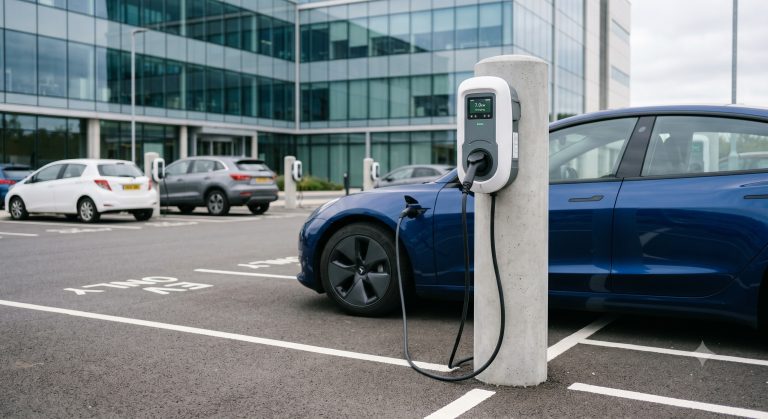
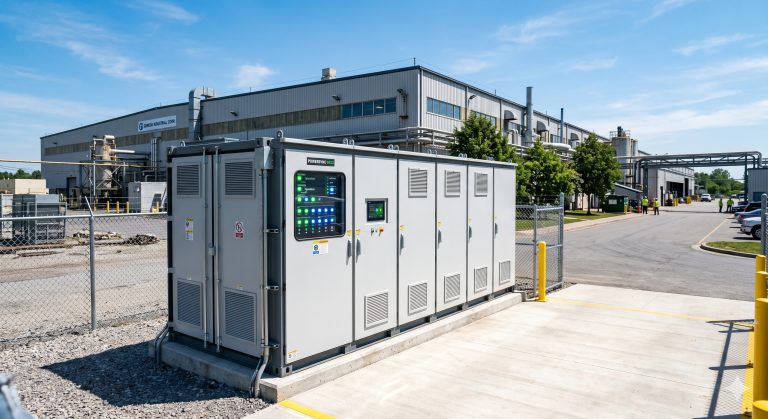
Integrating a Battery Energy Storage System (BESS) with a Wallbox EV Charger is transforming commercial fleet operations and workplace charging. This FAQ addresses technical and financial questions from B2B buyers, covering battery chemistry, safety, and scalability. Below, we answer 7 high-intent questions to help you optimize your BESS-Wallbox deployment.

Frequently Asked Questions
- Q1: What is the standard cycle life and recommended depth of discharge (DoD) for a BESS paired with a Wallbox EV charger?
- The standard cycle life is 6,000 to 8,000 cycles at 80% depth of discharge (DoD) for LFP (Lithium Iron Phosphate) battery chemistry. At 90% DoD, cycle life typically reduces to 4,000-5,000 cycles. For Wallbox EV charger applications with daily peak shaving, we recommend limiting DoD to 80% to achieve 10+ years of useful life. Advanced battery management systems (BMS) and liquid cooling help maintain this performance by keeping cells between 15°C and 35°C.
- Q2: How does liquid cooling improve Wallbox BESS performance compared to passive cooling?
- Liquid cooling extends continuous charging power by 40% and reduces cell temperature variance to under 3°C across all modules. Unlike passive air cooling, which can create hot spots during high-C rate discharges from Wallbox sessions, liquid cooling maintains optimal thermal uniformity. This directly enables faster DC fast-charging support (up to 150kW per Wallbox) without derating. For B2B deployments with multiple back-to-back EV charges, liquid cooling is essential to prevent cycle life degradation.
- Q3: What is the typical ROI payback period for a BESS-integrated Wallbox EV charger system?
- The ROI payback period is typically 3 to 5 years for commercial fleets leveraging peak demand shaving and time-of-use (TOU) arbitrage. Calculation factors include: (1) Local TOU spread: $0.15/kWh savings typical (peak $0.35 vs off-peak $0.20). (2) Demand charge reduction: average $8-12/kW monthly saved. (3) Fleet daily mileage: 150 miles/day per EV charger. (4) Incentives: up to 30% ITC (Investment Tax Credit) in the US. A 250kW BESS + 6 Wallbox chargers serving 20 EVs daily typically reaches breakeven at month 38.
- Q4: Can the BESS scale modularly when I add more Wallbox EV chargers later?
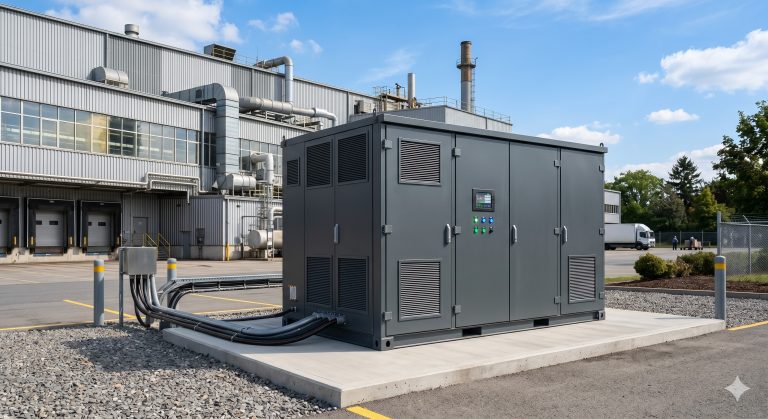
- Yes, most commercial BESS for Wallbox applications support modular scalability in 50kWh to 500kWh increments per cabinet. The central energy management system (EMS) allows hot-add of battery modules or additional inverter strings without downtime. For Wallbox integration, ensure your BESS supplier offers CAN-bus or Modbus TCP protocols that support dynamic load balancing across up to 20 chargers. Pre-sales key question: ask for the maximum parallel BESS units and the max Wallbox units per EMS gateway.
- Q5: How does the BMS (Battery Management System) monitor and report Wallbox charging events in real time?
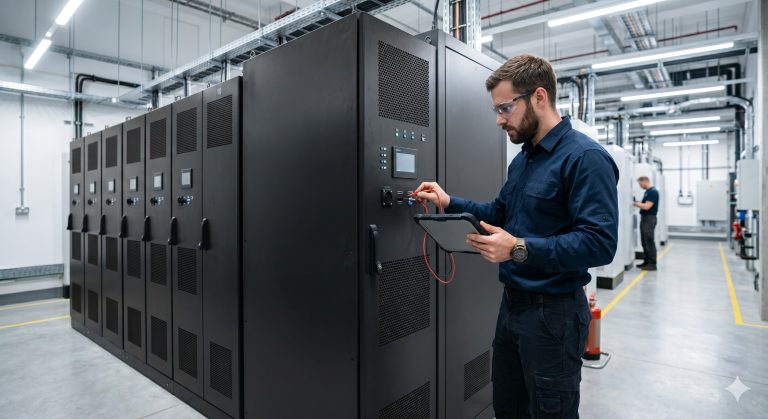
- The BMS monitors cell voltage (resolution ±1mV), temperature (sensors per 3-5 cells), and current (hall-effect sensors at 100Hz sampling) during every Wallbox discharge event. Post-sales, you can access these via: (1) Local web dashboard showing individual cell balancing, (2) Cloud API (RESTful or MQTT) pushing 1-second resolution data to your facility management system, (3) Automatic alerts for cell voltage drift >2% or temperature rise >5°C/minute during fast charging. Integration with OCPP (Open Charge Point Protocol) 2.0.1 allows the BESS to coordinate with Wallbox sessions for optimal battery stress reduction.
- Q6: What are the configuration differences between grid-tie vs off-grid mode for Wallbox BESS?
- In grid-tie mode, the BESS operates in parallel with the utility grid, enabling peak shaving (discharging to offset Wallbox loads) and export limiting (capped at 0W grid feed-in). In off-grid (island) mode, the BESS must form its own AC voltage and frequency (typically 120/208V or 277/480V) to directly power Wallbox chargers during outages. Critical difference: off-grid requires a bi-directional inverter with seamless transfer switch (sub-20ms switching) and a minimum battery reserve (e.g., 20% DoD limit for backup). For most B2B sites, hybrid configuration (grid-tie with UPS backup capability) is recommended for maximum ROI and resilience.
- Q7: How does the system prevent thermal runaway or fire risk when fast-charging EVs via Wallbox?
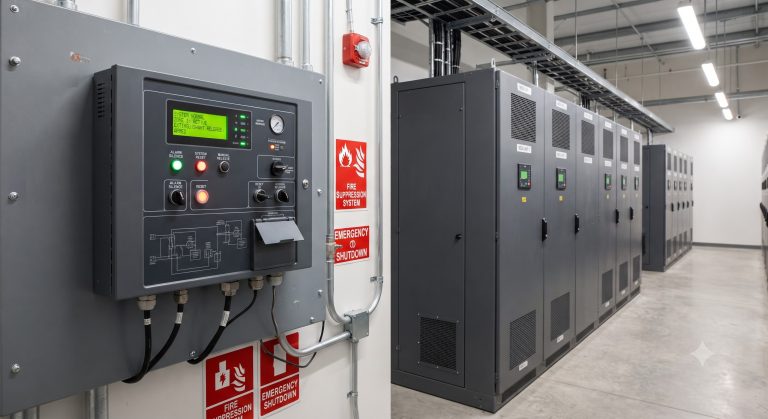
- Thermal runaway prevention relies on three layers: (1) Cell-level ceramic separators and pressure vents in LFP chemistry (self-extinguishing electrolyte, runaway onset >250°C vs 150°C for NMC). (2) Module-level fuse and pyroswitch that disconnects at >2°C/sec temperature rise. (3) System-level aerosol-based fire suppression (e.g., Novec 1230 or FM-200) triggered by gas detection (CO, H2) before flames occur. For Wallbox fast-charging (1C to 2C rates), keep BESS state of charge (SoC) between 20% and 90% daily and perform monthly BMS self-tests. UL 9540A testing is mandatory for commercial installations above 50kWh.
- Q8: Does the BESS support V2G (Vehicle-to-Grid) when used with a bidirectional Wallbox charger?
- Standard BESS for Wallbox applications does NOT inherently support V2G unless specified as a bidirectional AC-coupled or DC-coupled system. To enable V2G, the BESS inverter must support reverse power flow (grid-forming capability) AND the Wallbox must be a certified bidirectional model (e.g., Wallbox Quasar 2 with CHAdeMO or CCS combo). Without these, the BESS only charges from grid/solar and discharges to EVs. For V2G projects, ask your supplier for ISO 15118 compliance and a UL 1741-SA certified inverter.