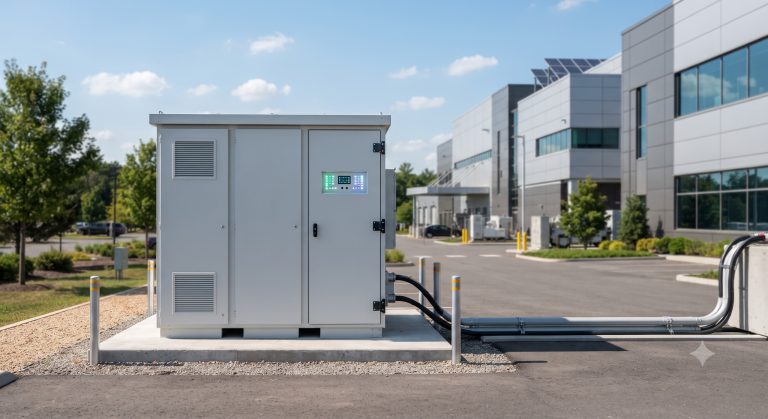
Introduction: The New Imperative of Intelligent Energy Management
For commercial and industrial (C&I) enterprises, escalating electricity costs and the pressing need for grid independence have elevated the Energy Management System (EMS) from a luxury to a core operational necessity. As we navigate an era of volatile energy markets, the strategic deployment of a robust EMS, paired with advanced Battery Energy Storage Systems (BESS), is no longer just about sustainability—it’s a fundamental economic driver. This comprehensive B2B sourcing guide dissects the architecture, financial metrics, and grid-support capabilities of modern EMS, offering a data-driven pathway for procurement managers, system architects, and facility directors to maximize their energy assets. From peak-shaving to frequency regulation, we delve into the engineering specifications that define industry leaders.
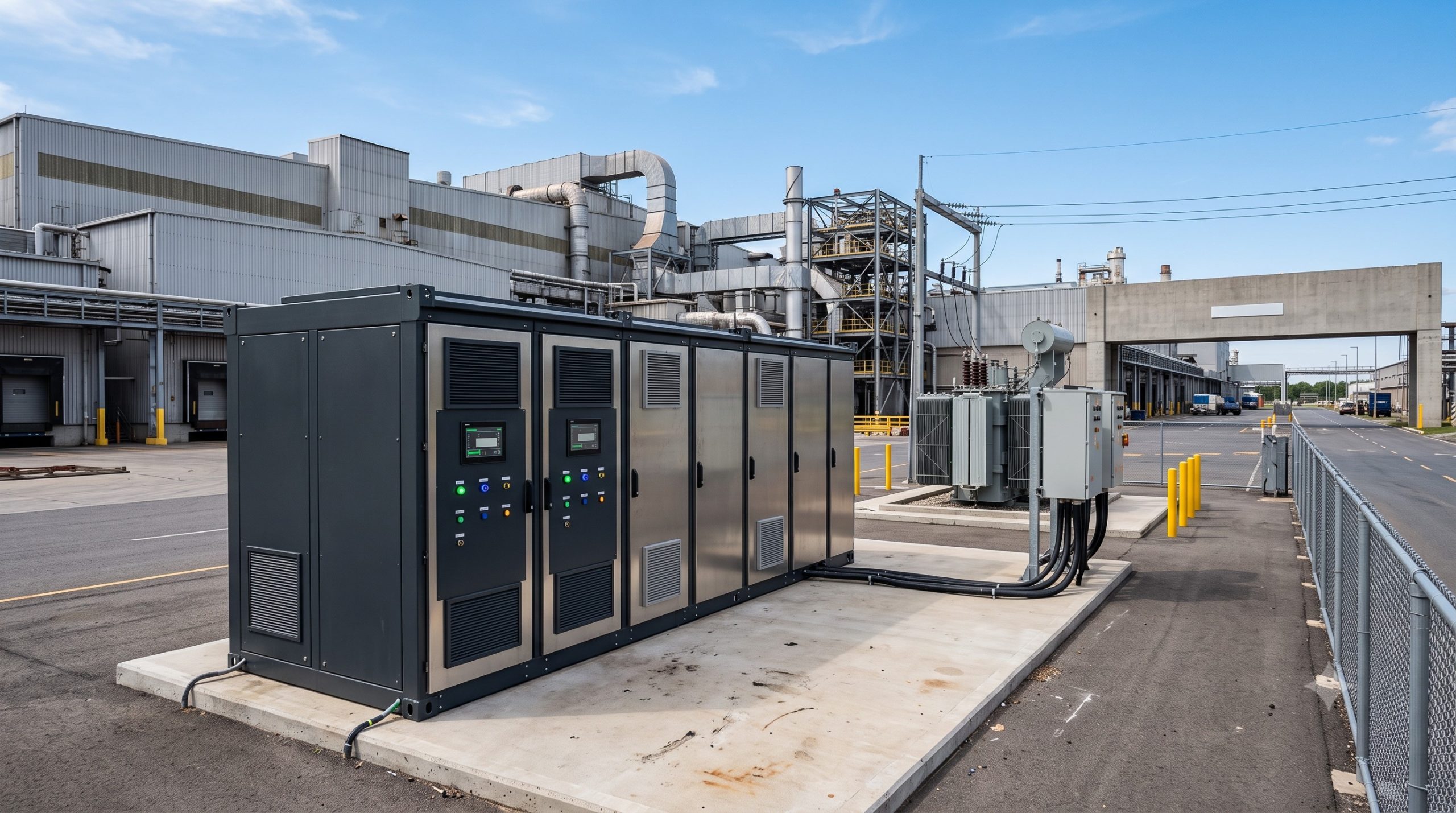
Core Architecture & Battery Management: The Brain Behind the Battery
System Topology and Intelligent Dispatch
At its heart, an Energy Management System (EMS) functions as the central intelligence orchestrating the entire energy ecosystem. It interfaces seamlessly with the Battery Management System (BMS), Power Conversion System (PCS), and site-level SCADA to optimize energy flow in real-time. Advanced EMS platforms leverage machine learning algorithms to forecast load curves and solar PV generation, automatically dispatching power to charge or discharge the battery. This intelligent dispatch is critical for peak-shaving, reducing demand charges by strategically discharging stored energy during high-tariff periods. For instance, a facility with a 500kVA transformer can achieve a 30% reduction in peak demand by utilizing a 500kWh/200kW BESS with a smart EMS, translating to significant monthly savings on utility bills.
Advanced Battery Management System (BMS) Integration
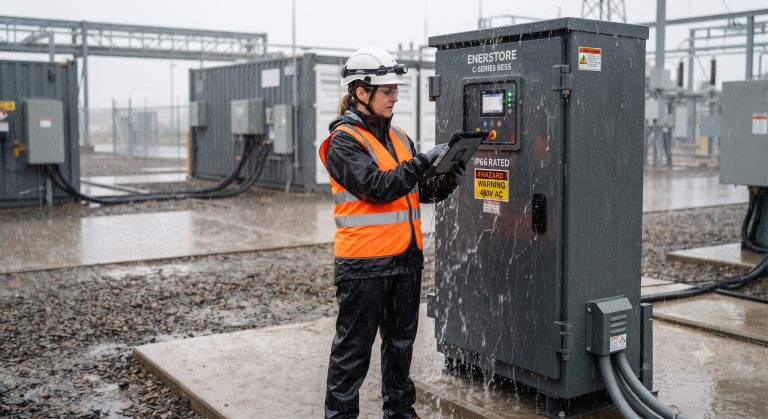
The BMS is the guardian of battery health, ensuring safety and longevity through precise monitoring of cell voltage, temperature, and State of Charge (SoC). The synergy between the EMS and BMS is paramount. The EMS bases its dispatch decisions on the BMS data, preventing operation outside safe parameters and optimizing Depth of Discharge (DoD) to maximize cycle life. In modern deployments, communication protocols like CANbus and Modbus TCP/IP enable sub-millisecond data exchange, ensuring instantaneous adjustments to load fluctuations. The integration also facilitates critical safety interlocks, initiating immediate shutdown sequences if the BMS detects anomalies that could lead to thermal runaway, thereby adhering to stringent safety norms like IEC 62619 and UL 9540.
Technical Specifications: Benchmarking Performance and Safety
Procuring a BESS requires a rigorous analysis of technical data. The following specifications represent baseline requirements for tier-1 manufacturers offering turnkey solutions. These metrics are crucial for calculating the Total Cost of Ownership (TCO) and ensuring compliance with local grid codes.
| Key Parameter | Technical Specification |
|---|---|
| Battery Chemistry | Tier-1 LFP (Lithium Iron Phosphate) Cells |
| System Capacity | 100kWh to 5MWh+ (Containerized / Modular) |
| Cycle Life | >8000 cycles @ 90% DoD to 70% EOL |
| Round-Trip Efficiency | ≥92% (Including PCS & Auxiliary Losses) |
| Cooling System | Intelligent Liquid Cooling with Microchannel Plates |
| Safety Certifications | UL 9540, IEC 62619, CE, UN38.3 |
| Communication Protocol | Modbus TCP/IP, CANbus, IEC 61850 |
| Fire Suppression | Aerosol & FM-200 Multi-level Detection System |
Metrics That Matter
- Round-Trip Efficiency (RTE): A high RTE, often exceeding 92% with liquid cooling, directly impacts LCOE by reducing energy losses during each charge/discharge cycle.
- Cycle Life & DoD: A guaranteed cycle life of >8000 cycles at 90% DoD ensures the asset remains viable for over 20 years, providing long-term financial stability.
- Safety Certifications: Compliance with UL 9540 (for the system) and UL 9540A (for thermal runaway propagation) is non-negotiable for insurance and fire marshal approval, particularly in densely populated industrial parks.
Commercial ROI & Grid Support: From Peak Shaving to Virtual Power Plants
Levelized Cost of Energy (LCOE) Analysis
The economic viability of a C&I storage project hinges on its LCOE. By leveraging the EMS for optimal dispatch, a system can achieve an LCOE significantly lower than retail grid rates. For example, with a system cost of $400/kWh and an RTE of 92%, the LCOE can be less than $0.15/kWh over 20 years. This compares favorably against commercial tariffs in many regions, which can exceed $0.25/kWh during peak hours. The EMS amplifies this by capturing value through demand response programs and participating in frequency regulation markets. This grid-support capability transforms the BESS from a cost center into a revenue-generating asset.
Peak-Shaving Cash Flow and Demand Charge Reduction
Industrial facilities often face exorbitant demand charges based on their highest 15-minute or 30-minute usage interval. The EMS uses predictive algorithms to actively cap this demand. By flattening the load curve, a C&I facility with a 2MW load can save over $100,000 annually in demand charges alone. The system achieves this by discharging stored energy precisely when the facility’s load approaches a preset threshold. This intelligent energy arbitration is the fastest path to ROI for most commercial applications.
Deployment Scenarios: Versatility Across the C&I Landscape
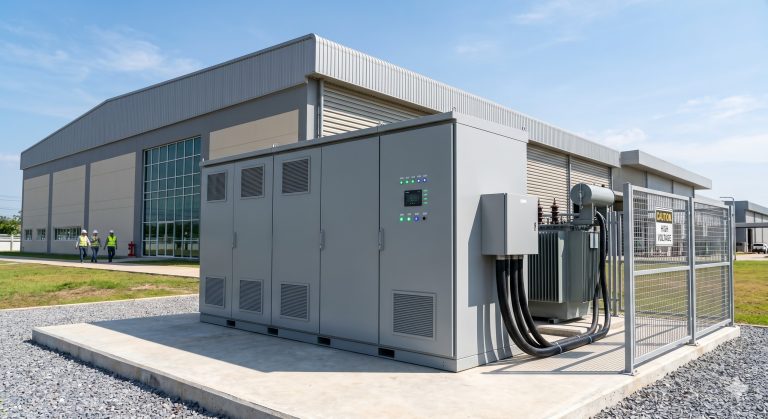
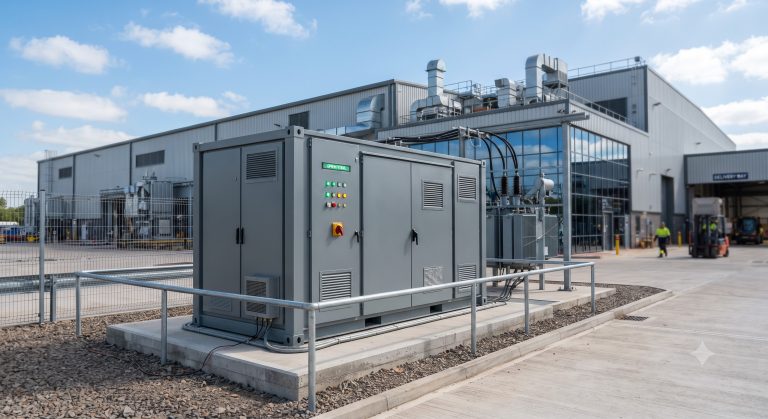
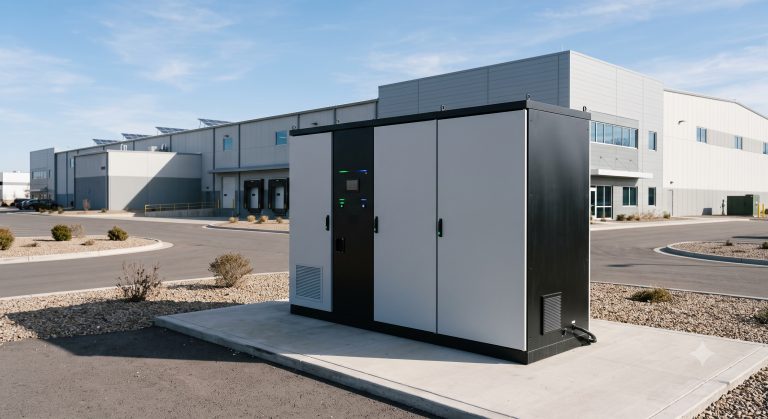
The modular nature of modern EMS and BESS enables deployment across a spectrum of applications. In industrial parks, containerized systems provide robust backup power for critical manufacturing processes, safeguarding against costly production halts. The integration of EMS with PV-storage-charging (光储充) hubs at EV supercharging stations is a rapidly growing segment. Here, the EMS manages battery buffers to support ultra-fast charging, reducing strain on the grid and enabling the integration of on-site solar generation. The system autonomously decides when to draw power from the grid, the solar canopy, or the battery to minimize operating costs.
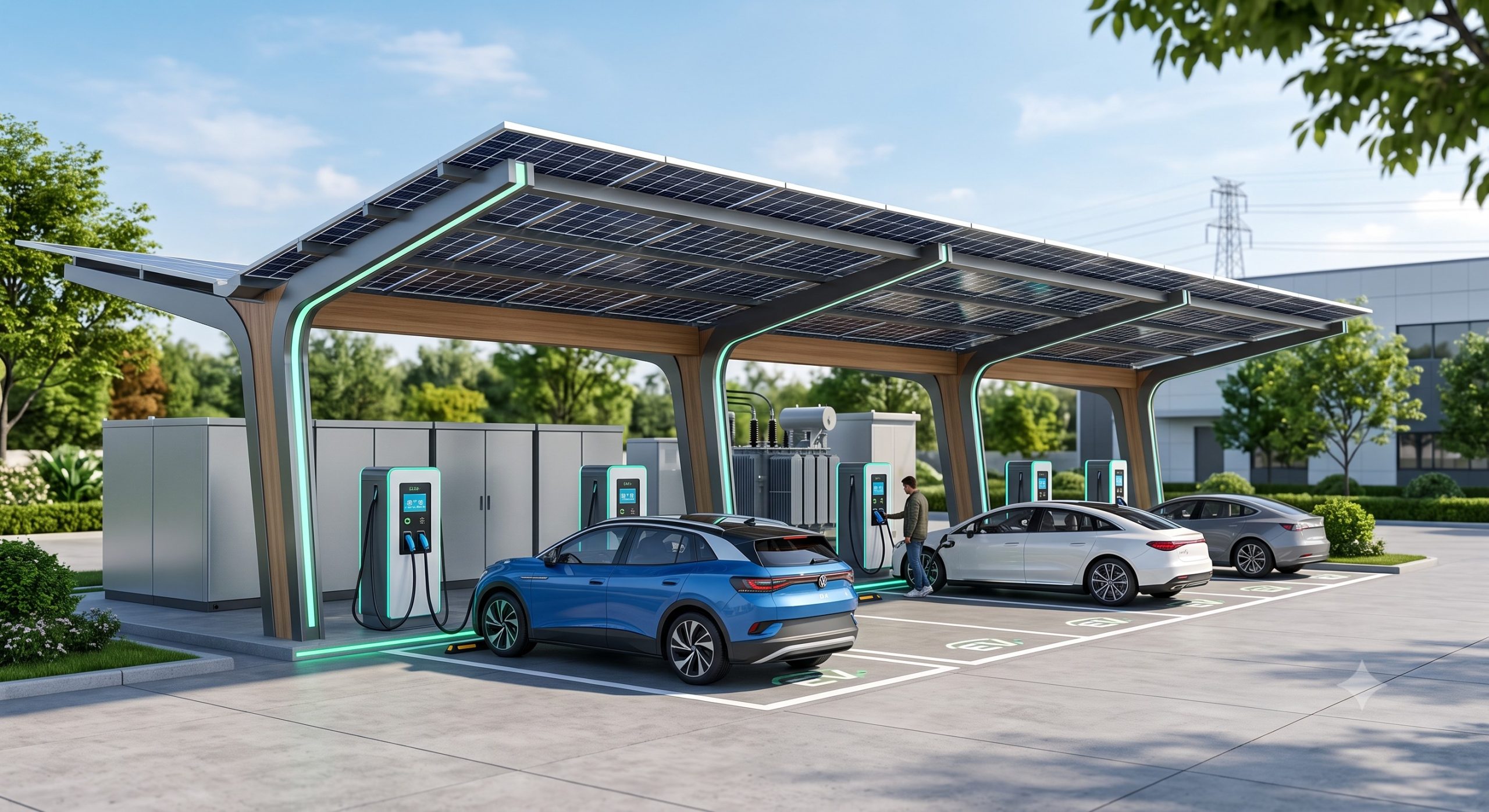
System Architecture and Grid Transition
For facilities prioritizing zero-carbon migration, the EMS is the architect of seamless grid transition. It can operate in multiple modes, including grid-tied, off-grid, and islanding. In the event of a grid outage, the EMS can isolate the facility and support critical loads within milliseconds using the BESS, demonstrating the true power of energy independence. This capability is particularly vital for data centers, hospitals, and critical infrastructure providers.
Conclusion: The Strategic Imperative of Intelligent Energy
The Energy Management System (EMS) is the cornerstone of modern C&I energy strategy. It bridges the gap between sustainability goals and economic performance. For B2B buyers, the selection of an EMS is a high-stakes decision that requires a deep dive into architecture, safety, and financial modeling. By prioritizing systems with advanced liquid cooling for superior thermal management, Tier-1 LFP cells for durability, and stringent safety certifications, enterprises can future-proof their operations. As the grid evolves, a capable EMS ensures your facility remains resilient, profitable, and a leader in the global energy transition.