Overview
Liquid-cooled energy storage systems (BESS) are transforming industrial and utility-scale power management by offering superior thermal control, longer cycle life, and higher safety margins compared to air-cooled alternatives. This FAQ addresses the most critical technical and commercial questions from B2B buyers, system integrators, and facility operators.

Frequently Asked Questions
- Q1: What is the maximum cycle life and depth of discharge (DoD) of a liquid-cooled BESS?
- The maximum cycle life of a liquid-cooled BESS is 8,000 to 12,000 cycles at 90% depth of discharge (DoD). Liquid cooling maintains cell temperature uniformity within +/-2°C, dramatically reducing lithium plating and SEI layer degradation. In practical terms, a daily full-cycle operation yields 22–33 years of service life before capacity drops to 70%.
- Q2: Which battery chemistry works best with liquid cooling, and why?
- Lithium iron phosphate (LFP) chemistry is the optimal match for liquid cooling in BESS applications. LFP’s lower thermal runaway risk combined with liquid cooling’s active temperature regulation allows sustained 1C–2C charge/discharge rates without accelerated aging. Liquid cooling also enables LFP cells to operate safely at 45°C ambient, reducing HVAC auxiliary power consumption by up to 35% compared to air-cooled LFP arrays.
- Q3: How does the liquid cooling system impact scalability and modular design?
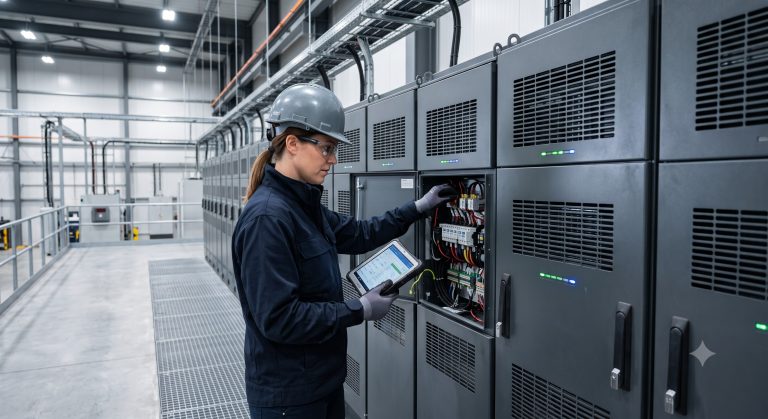
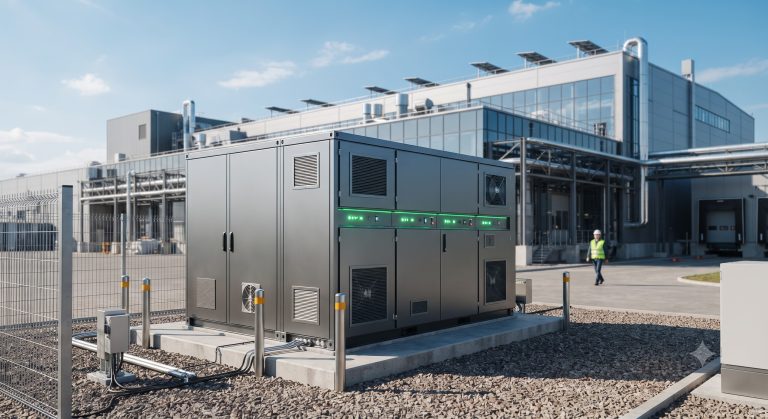
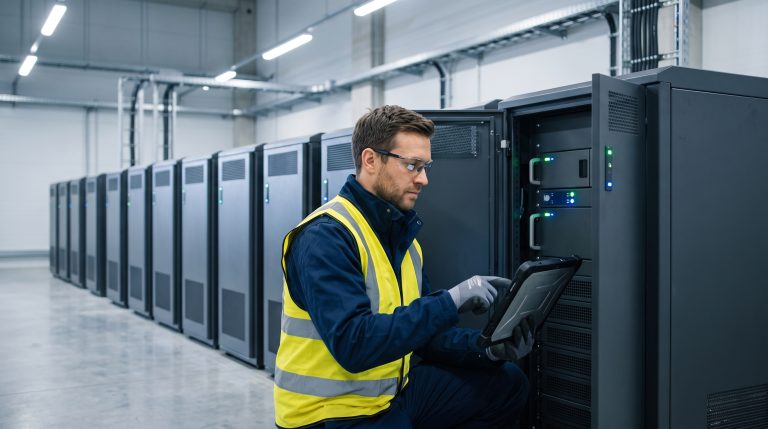
- Liquid cooling enables true plug-and-play scalability up to 100MWh or more within a single site. Standardized 20ft or 40ft containerized units each contain independent coolant distribution units (CDUs) that reject heat to a common dry cooler or chiller loop. To scale, you simply parallel additional containers via a shared coolant manifold and communication bus, with no need for costly aisle containment or oversized HVAC retrofits.
- Q4: How do I calculate ROI and payback period for a liquid-cooled BESS?
- Calculate ROI by subtracting total lifetime operating costs (CapEx + OpEx) from total revenue streams, then divide by CapEx. Liquid-cooled systems deliver 15–30% lower LCOS (levelized cost of storage) than air-cooled due to: (1) 8–12% higher round-trip efficiency (93–95% vs 85–88%), (2) 25% lower auxiliary power draw, and (3) 3–5 additional years of usable life. A typical utility-scale project achieves payback in 4–7 years, and 3–5 years for high-cyclic arbitrage or frequency regulation.
- Q5: How does the BMS monitor and control the liquid cooling system?
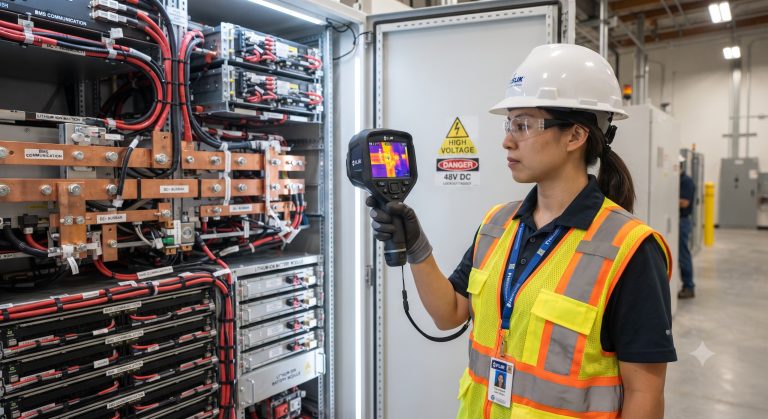
- The battery management system (BMS) continuously monitors each cell group’s voltage, temperature, and internal resistance, then dynamically commands coolant flow rate and chiller setpoints via PID control loops. Key post-sales metrics visible on the BMS dashboard include: cell delta-T (typical target <3°C), pump speed feedback, coolant pressure differential, and thermal runaway precursor detection (sudden impedance drop + localized heating). Alarms trigger automatic load shedding and redundant pump activation when any cell exceeds 55°C.
- Q6: Can a liquid-cooled BESS support both grid-tie and off-grid configurations?
- Yes, liquid-cooled BESS supports both modes natively through a bi-directional PCS (power conversion system) with programmable grid-following and grid-forming modes. In grid-tie mode, the system provides peak shaving, arbitrage, and frequency response. In off-grid (island) mode, liquid cooling’s precise temperature stability allows the BESS to handle sudden 0–100% load steps from diesel generators or solar PV without thermal derating. A single controller can switch between modes in <40ms, enabling seamless microgrid operation.
- Q7: What fire safety and thermal runaway prevention features are required for liquid-cooled BESS?
- Liquid-cooled BESS requires three-layer protection: cell-level prevention (pressure relief vents + flame-retardant electrolyte), pack-level suppression (aerosol or NOVEC 1230 agent directed via coolant tubes), and container-level inerting (nitrogen injection or water mist). Liquid cooling itself is a safety asset: the dielectric coolant absorbs runaway heat 30x faster than air and circulates to an external heat exchanger, preventing cascading failure. UL 9540A testing is mandatory to certify no fire propagation between adjacent enclosures.
- Q8: What’s the difference between passive, active, and hybrid liquid cooling in BESS?
- Passive liquid cooling uses natural convection (thermosiphon) without pumps, suitable for <100kW low-power applications. Active liquid cooling uses electrically driven pumps and a chiller/dry cooler, enabling 1MW+ systems with precise temperature control (+/-1°C). Hybrid cooling combines a liquid loop to remove 90% of heat plus a small air fan for BMS electronics, offering the highest efficiency (94.5% round-trip) and lowest parasitic loss (<3% of system power). Most commercial utility BESS specifies hybrid active liquid cooling.