Overview
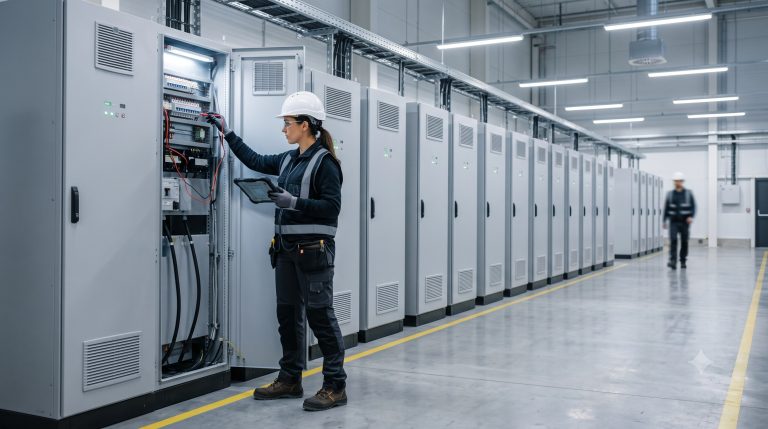
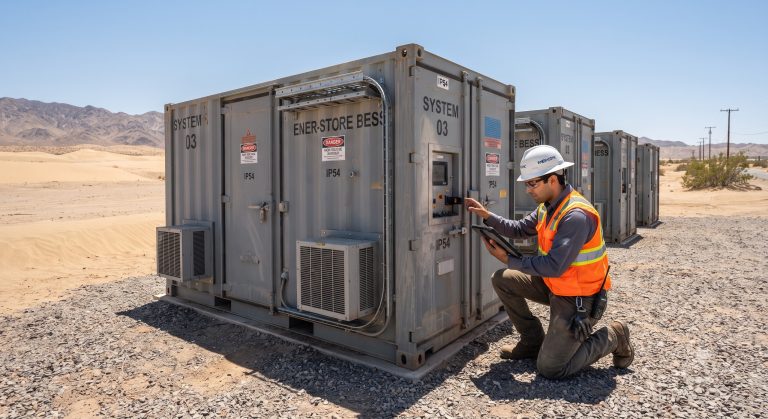
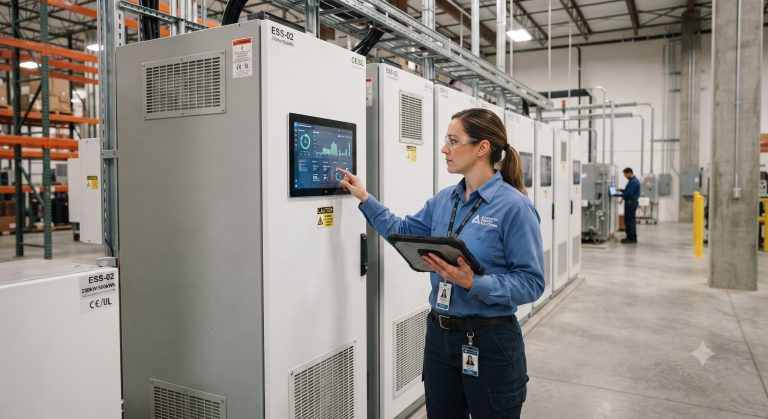
As commercial fleets and industrial facilities transition to high-voltage direct current (DC) fast charging, the integration of Battery Energy Storage Systems (BESS) with 80kW to 400kW all-in-one DC charging stations has become critical for grid stability and demand charge management. This FAQ addresses the most technical procurement and deployment questions from B2B engineers, project developers, and fleet managers.
Frequently Asked Questions
- Q1: What is the standard cycle life and recommended depth of discharge (DoD) for the batteries inside an 80kW-400kW all-in-one DC charging station?
- The standard cycle life is 6,000 to 8,000 cycles at 80% depth of discharge (DoD) for LFP (Lithium Iron Phosphate) chemistry, with some premium systems reaching 10,000 cycles at 90% DoD. Cycle life is directly influenced by thermal management; liquid-cooled all-in-one DC charging stations typically achieve 15% longer cycle life than air-cooled equivalents. For optimal ROI, we recommend limiting DoD to 90% for daily cycling and 100% only during peak demand events.
- Q2: How does the liquid cooling system in a 400kW all-in-one DC charger impact performance and maintenance?
- The liquid cooling system maintains cell temperature differentials below 5°C across the entire 400kW string, enabling continuous full-power charging without thermal derating. Unlike air-cooled units that require frequent filter cleaning and derate at 35°C ambient, liquid-cooled all-in-one DC charging stations operate at full capacity up to 50°C ambient. Maintenance requirements are limited to annual coolant level checks and pump inspection, reducing total cost of ownership by approximately 25% over 10 years compared to forced-air systems.
- Q3: Can the 80kW-400kW all-in-one DC charging station be scaled for future fleet expansion, and what is the typical payback period?
- Yes, these stations are designed for modular scalability: you can start with an 80kW unit and add up to four additional power modules to reach 400kW, with parallel cabinets supporting up to 1.2MW total. The ROI calculation typically yields a payback period of 2.8 to 4.5 years based on three factors: (1) peak demand charge reduction of $15-25/kW monthly, (2) energy arbitrage with time-of-use rates saving $0.08-0.12/kWh, and (3) avoided grid upgrade costs of $50,000-150,000. Use the formula: Payback (years) = (Capital Cost) / (Annual peak shaving savings + arbitrage revenue + avoided upgrade amortization).
- Q4: How does the BMS monitor and balance cells in real-time for a 400kW all-in-one DC charging station?
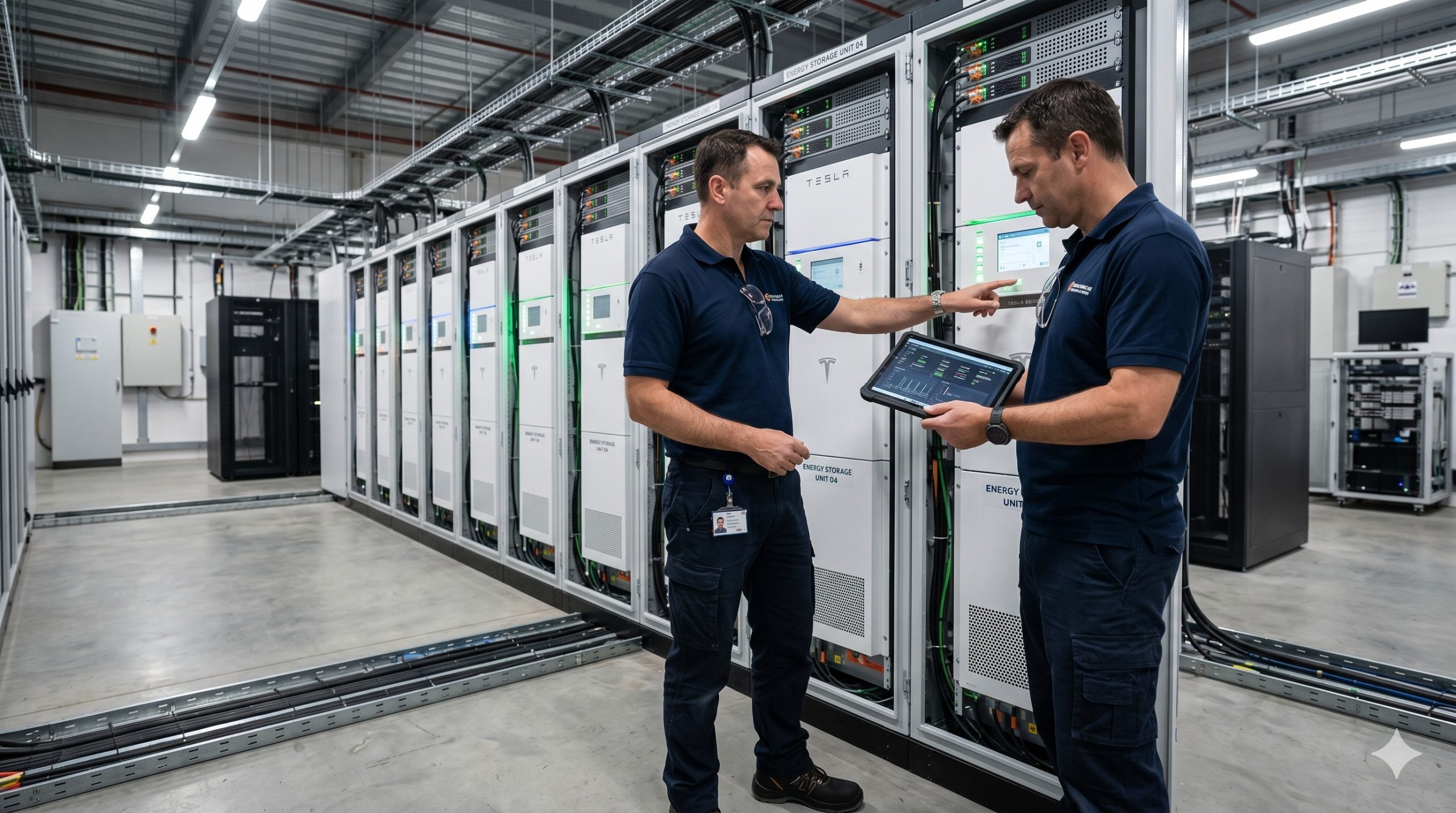
- The Battery Management System (BMS) uses distributed slave modules per battery rack and a master controller sampling voltage, current, and temperature at 100ms intervals, with passive balancing activated when cell voltage deviation exceeds ±30mV. For 400kW systems, the BMS continuously adjusts charging current to individual parallel strings, preventing overcharging and extending pack life. All data is accessible via Modbus TCP or CAN bus to your facility SCADA, with automatic alerts for cell degradation trends detected through coulomb counting and internal resistance tracking.
- Q5: What are the specific safety mechanisms for thermal runaway prevention in a high-power DC charging station with integrated BESS?
- Thermal runaway prevention relies on four redundant layers: (1) multi-point thermistor arrays triggering current interruption at 65°C cell surface temperature, (2) aerosol-based fire suppression per module activating at 120°C, (3) burst discs and exhaust channels directing off-gases away from adjacent cells, and (4) a gas detection sensor (CO and H₂) that disconnects the entire 400kW string within 200ms. All cabinets meet UL 9540A thermal runaway propagation testing requirements, ensuring no fire spreads between adjacent BESS modules.
- Q6: How do I configure the all-in-one DC charging station for grid-tied vs. off-grid operation with solar PV?
- In grid-tied mode, the station’s bi-directional inverter automatically manages peak shaving and export limiting, requiring only a grid CT (current transformer) connection and Ethernet to your utility meter. For off-grid configuration with PV, you must enable the islanding mode in firmware (factory option), which requires a dedicated diesel genset backup signal and minimum 150kW solar array to maintain the 80kW base charging capacity. The key difference: grid-tied uses virtual impedance control for seamless transition, while off-grid requires a secondary load bank resistor to dump excess PV energy when batteries reach 100% state of charge.
- Q7: What are the typical civil and electrical requirements for installing a 400kW all-in-one DC charging station?
- Installation requires a 480V or 600V three-phase feed with 800A OCPD (overcurrent protection device), a dedicated 3% impedance isolation transformer if grid impedance exceeds 5%, and a reinforced concrete pad measuring 3.5m x 2.5m with 200mm depth and grounding ring. Clearance requirements are 1.2m front access, 0.8m sides, and 2.5m overhead for cable management. No dedicated cooling room or ventilation ducting is needed due to the self-contained liquid cooling system.
- Q8: Does the 80kW-400kW all-in-one DC charger support simultaneous charging of multiple vehicle types, including depot-to-depot interoperability?
- Yes, the station supports simultaneous charging of up to four vehicles when operating below 200kW total, or two vehicles at 400kW, with dynamic power allocation adjusting kW per vehicle based on each battery’s state of charge and voltage request (200V to 1000V DC). For fleet depot-to-depot interoperability, the unit is compliant with ISO 15118-2 (Plug & Charge), OCPP 1.6/2.0.1, and CHAdeMO 3.0, allowing seamless authorization across different depot locations using a single RFID or vehicle-to-grid certificate.