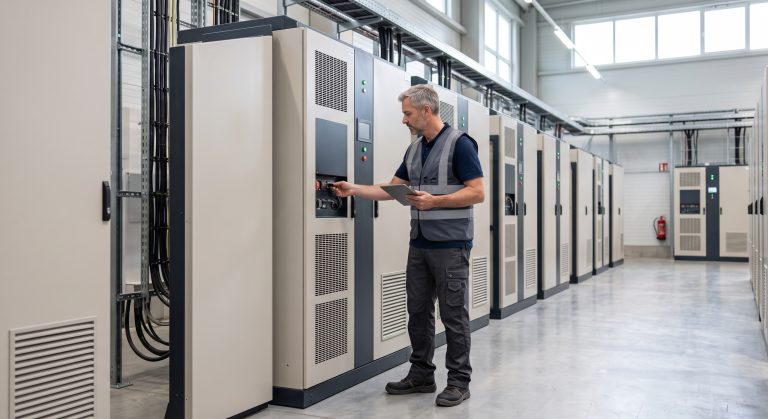
Overview
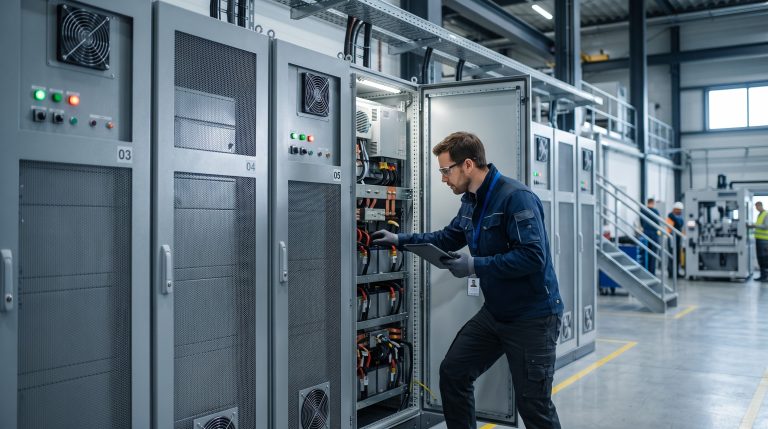
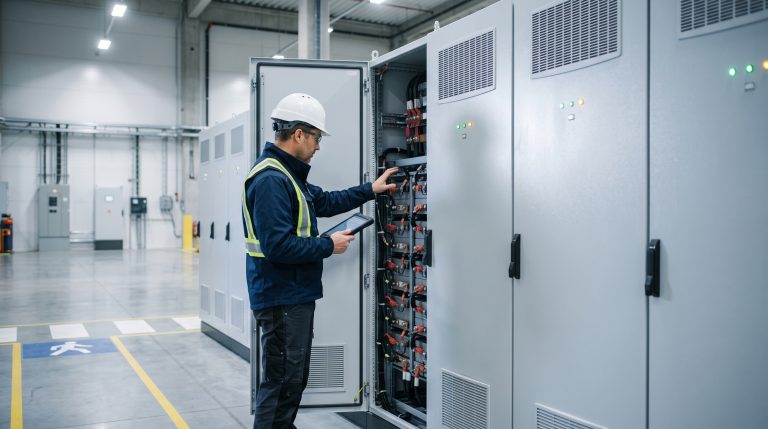
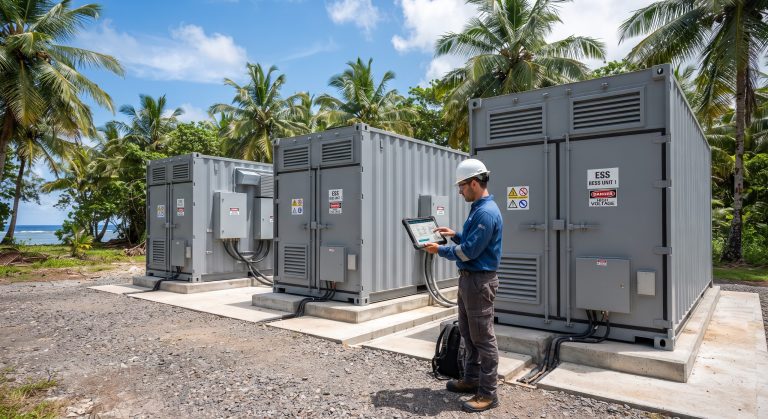
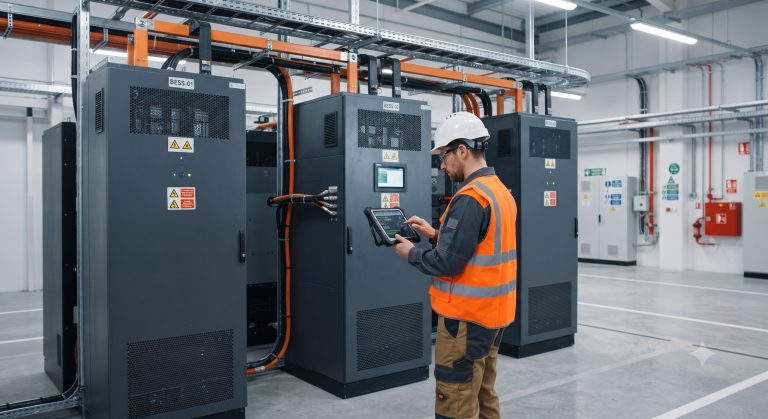
Designed for high-demand commercial and industrial EV supercharging hubs, the CPC400-C DC Charging Station integrates advanced Battery Energy Storage System (BESS) technology to stabilize grid draw, reduce peak demand charges, and enable off-grid charging. This technical FAQ addresses the most critical pre-sales and post-sales engineering questions about battery chemistry, thermal management, scalability, safety protocols, and financial return models.
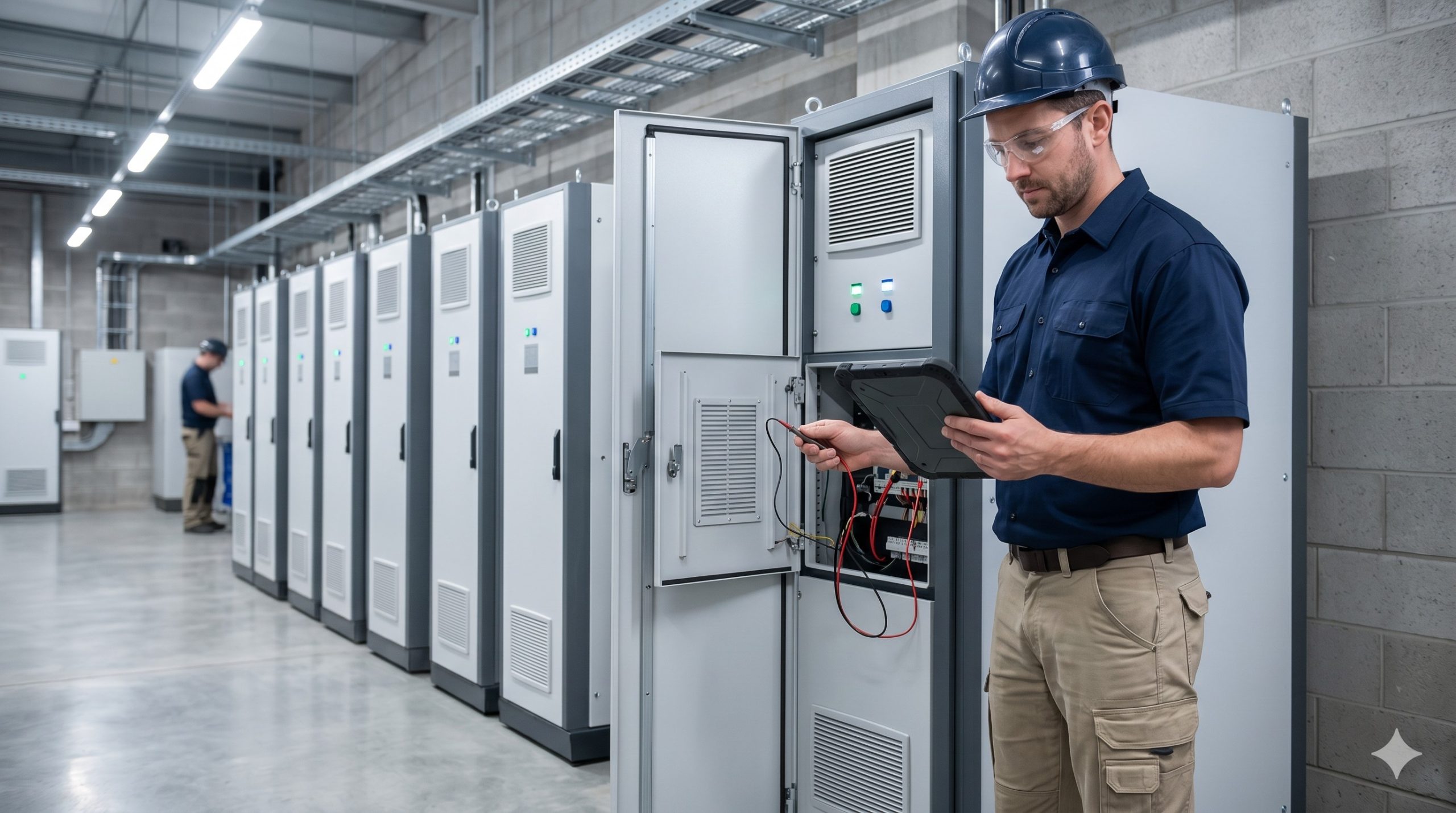
Frequently Asked Questions
- Q1: What is the standard cycle life and maximum DoD (Depth of Discharge) of the CPC400-C BESS?
- The standard cycle life is 6,000 cycles at 90% DoD, extendable to 8,000 cycles at 80% DoD using Tier-1 LFP (Lithium Iron Phosphate) prismatic cells. This represents a 15+ year operational lifespan under daily full cycling. Unlike NMC chemistries, LFP maintains thermal stability and lower capacity fade (≤70% remaining capacity at EOL). The BMS automatically limits DoD based on real-time temperature and load to maximize calendar life.
- Q2: How does the CPC400-C liquid cooling system improve charging uptime compared to air-cooled systems?
- The CPC400-C uses active liquid cooling with a glycol-based loop that maintains cell temperature differentials below 3°C across all modules. This enables sustained 400kW DC charging output even at 40°C ambient without derating. Air-cooled systems typically lose 20-30% output under the same conditions due to hot spots and fan noise constraints. The system also includes a bypass valve for sub-zero startup, preventing electrolyte freezing.
- Q3: What BMS monitoring protocols and remote balancing features does the CPC400-C include?
- The CPC400-C integrates a 3-layer BMS (cell, module, and system level) with continuous monitoring of voltage, current, impedance, and internal pressure. Key features include passive cell balancing (up to 500mA) during idle periods and optional active balancing (2A) during discharge cycles. The remote dashboard provides real-time alerts for SoC drift (deviation >2%), insulation resistance drop (<500 ohm/V), and pre-fault detection via cloud-based ML algorithms.
- Q4: Can the CPC400-C operate in off-grid mode with existing solar PV, and what is the switchover time?
- Yes, the CPC400-C supports seamless islanding (off-grid) mode with a certified auto-transfer switch. The switchover time from grid-tie to off-grid is ≤20 milliseconds, meeting IEC 62116 requirements for sensitive EV chargers. In off-grid mode, it can form a micro-grid with diesel generators or PV inverters using droop control (frequency-watt and volt-var). Maximum PV input is 500kW DC-coupled or 350kW AC-coupled, with integrated MPPT trackers.
- Q5: What fire safety and thermal runaway prevention systems are built into the CPC400-C?
- The CPC400-C complies with UL 9540A (cell-level thermal runaway propagation test) and NFPA 855. Protection includes: 1) Early gas detection (CO, H2, VOC) with extraction fan activation. 2) Aerosol-based fire suppression (Novec 1230 or equivalent) per module. 3) Pyro-fuse disconnect within 1ms of detecting internal short-circuit. 4) Passive ceramic-coated separators in cells to prevent internal shorting. No thermal runaway propagation beyond one module is guaranteed at 100% SoC.
- Q6: How do I calculate ROI and peak shaving savings for a CPC400-C installation at a 6-bay DC fast charging site?
- Use the formula: Annual Savings = (Peak demand charge reduction) + (Energy arbitrage) – (O&M costs). For a typical 400kW / 800kWh CPC400-C: reduce peak demand from 500kW to 300kW during utility peak hours (assume $15/kW/month) = $36,000/year. Charge at off-peak $0.06/kWh, discharge during peak $0.18/kWh with 88% round-trip efficiency = ~$70,000/year net arbitrage. Total gross savings ≈ $106,000/year. Hardware payback typically 3-4 years before incentives. Our ROI calculator tool is available for site-specific inputs.
- Q7: What is the modular scalability of the CPC400-C – how many cabinets can be paralleled and what busbar design is used?
- The CPC400-C supports parallel connection of up to 12 cabinets (4.8MW / 9.6MWh total) using a common DC busbar rated at 1500V / 5000A. Each cabinet includes pre-charge circuits to avoid inrush current. Scalability is achieved via a master-slave EMS where any cabinet can act as the grid interface. For larger projects, a custom DC link cabinet with copper busbars (4x 185mm² per phase) is supplied. No additional combiner boxes are required up to 6 cabinets.
- Q8: Does the CPC400-C meet UL 9540, IEC 62619, and other international interconnection standards?
- Yes. The CPC400-C holds full UL 9540 (Energy Storage Systems) and UL 1973 (Batteries) certification for North America, plus IEC 62619 (industrial storage), IEC 62477 (PCS safety), and CE (EU). For grid interconnection, it complies with IEEE 1547 (USA), VDE-AR-N 4105 (Germany), and G99 (UK). All certifications are factory-tested per cabinet. For projects requiring local compliance (e.g., CEC listing in Australia), we provide technical files for faster approval.