Overview
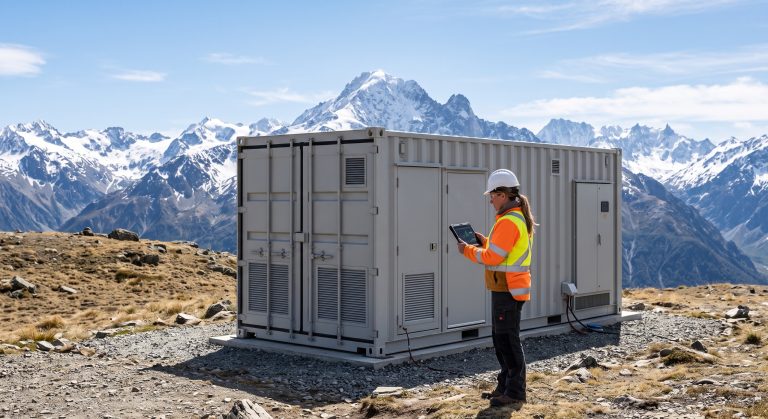
Designed for industrial and commercial micro-grids, the ST835CS-4HPowerStack combines Tier-1 LFP cells, an advanced liquid cooling loop, and a modular power conversion system. Below are the most critical technical and procurement answers from our BESS engineering team.
Frequently Asked Questions
- Q1: What is the standard cycle life and recommended Depth of Discharge (DoD) for the ST835CS-4HPowerStack?
- The standard cycle life is 8,000 cycles at 90% Depth of Discharge (DoD) under nominal temperature conditions. This is achieved through passive cell balancing via the Active BMS and the liquid cooling system maintaining cell delta-T below 3°C. At 80% DoD, cycle life extends beyond 10,000 cycles, preserving 70% of nameplate capacity.
- Q2: How does the liquid cooling system specifically prevent thermal runaway in the ST835CS-4HPowerStack?
- The liquid cooling system controls cell temperatures to a 15-35°C band, eliminating hot spots that trigger thermal runaway. Each battery module has integrated smoke and off-gas sensors; upon detection, the system automatically isolates the affected pack, shuts down the PCS, and activates the non-conductive, self-contained aerosol fire suppression unit without external water supply.
- Q3: Can the ST835CS-4HPowerStack operate both grid-tied and off-grid, and what is the transfer time?
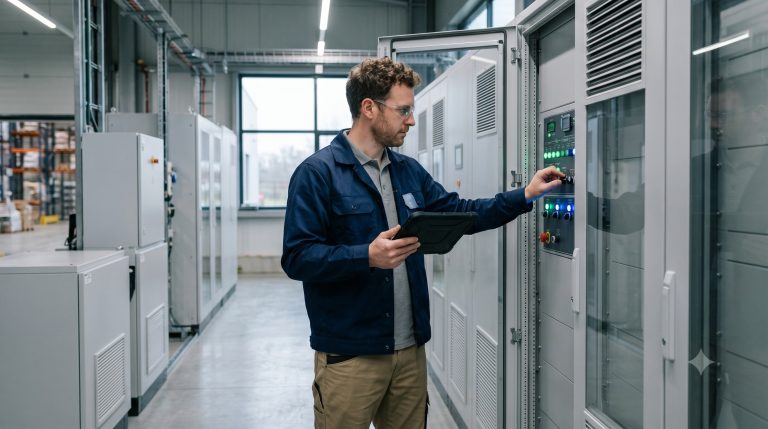
- Yes, it supports seamless grid-tied and off-grid (islanding) transition with a transfer time of <20ms, compliant with IEEE 1547. The bi-directional PCS automatically disconnects from the grid during a disturbance and forms its own micro-grid reference voltage, sustaining critical loads from the battery bank without interruption.
- Q4: How do I calculate simple ROI using peak shaving and arbitrage with the ST835CS-4HPowerStack?
- Calculate gross annual savings = (Daily peak demand reduction in kW × local demand charge per kW) + (Daily arbitrage kWh × (peak tariff – off-peak tariff)) × 365 days. For example, shaving 200kW at $15/kW demand charge saves $3,000/month; adding 500kWh daily arbitrage at $0.10/kWh spread adds $50/day, totalling ~$18,250 annual savings. Deduct O&M and financing for net ROI.
- Q5: What are the parallel scalability limits of the ST835CS-4HPowerStack for large projects?
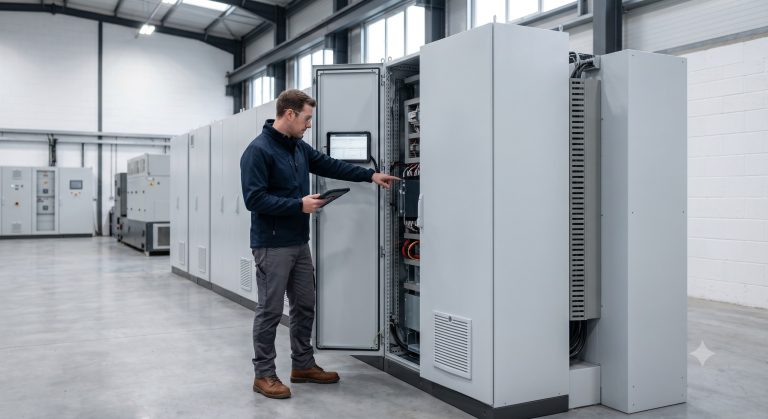
- A single cabinet contains 335kWh usable energy and 200kW output power. Up to 32 cabinets can be paralleled via a shared DC busbar, achieving a maximum system capacity of 10.72MWh and 6.4MW AC output. The master BMS coordinates inter-cable balancing and EMS dispatch without derating.
- Q6: What active BMS monitoring parameters can I access remotely, and how?
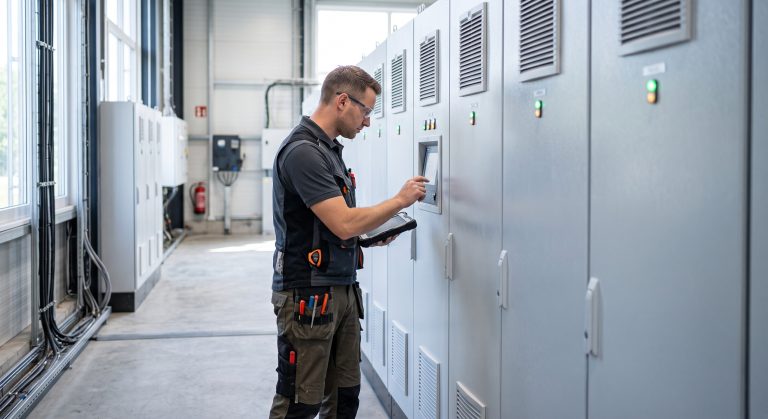
- The Active BMS provides real-time access to each cell’s voltage (accuracy ±5mV), temperature (accuracy ±0.5°C), state of charge, state of health, contactor status, and insulation resistance. All data streams via Modbus TCP/IP or optional cloud EMS dashboard, with configurable alerts for cell voltage deviation (>50mV) or temperature imbalance.
- Q7: Does the ST835CS-4HPowerStack meet UL 9540, IEC 62619, and other international safety standards?
- Yes, it is fully certified to UL 9540 (USA), UL 1973, IEC 62619 (Europe), UN38.3 for transport, and CE. The enclosure is IP55-rated for outdoor deployment and includes type-2 surge protection on both AC and DC sides.
- Q8: What is the typical turnkey lead time and included O&M support for wholesale procurement?
- Current lead time for the ST835CS-4HPowerStack is 8-12 weeks EXW (or 14-16 weeks CIF major ports) for orders of 1-10 cabinets. Standard warranty includes 10-year / 8,000 cycles performance guarantee (70% EOL capacity) plus 5-year full parts and remote monitoring O&M. On-site commissioning and training are available within 3 weeks of delivery.