Overview
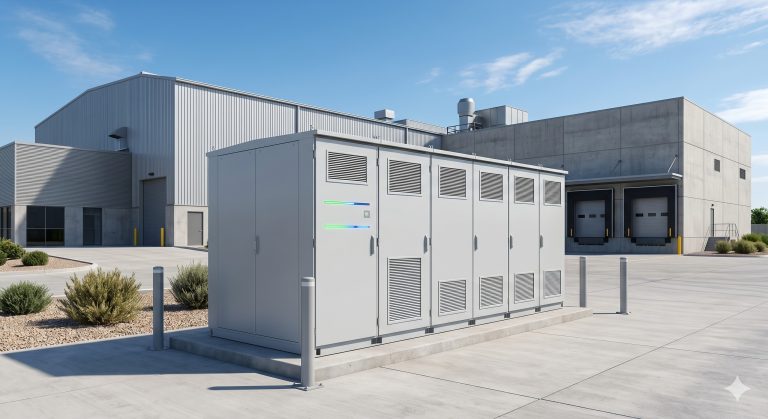
As commercial and industrial sites deploy electric vehicle (EV) charging at scale, the Energy Management System (EMS) becomes the critical bridge between battery energy storage and charging loads. This FAQ addresses the most common technical and procurement questions about EMS-to-EV charger integration, from communication protocols and smart dispatch to grid-tie configuration and post-sales monitoring. Whether you are a plant engineer, EPC contractor, or procurement manager, these answers will help you specify, deploy, and optimize a BESS that seamlessly supports your EV charging infrastructure.
Frequently Asked Questions
- Q1: How does the EMS communicate with EV charging infrastructure?
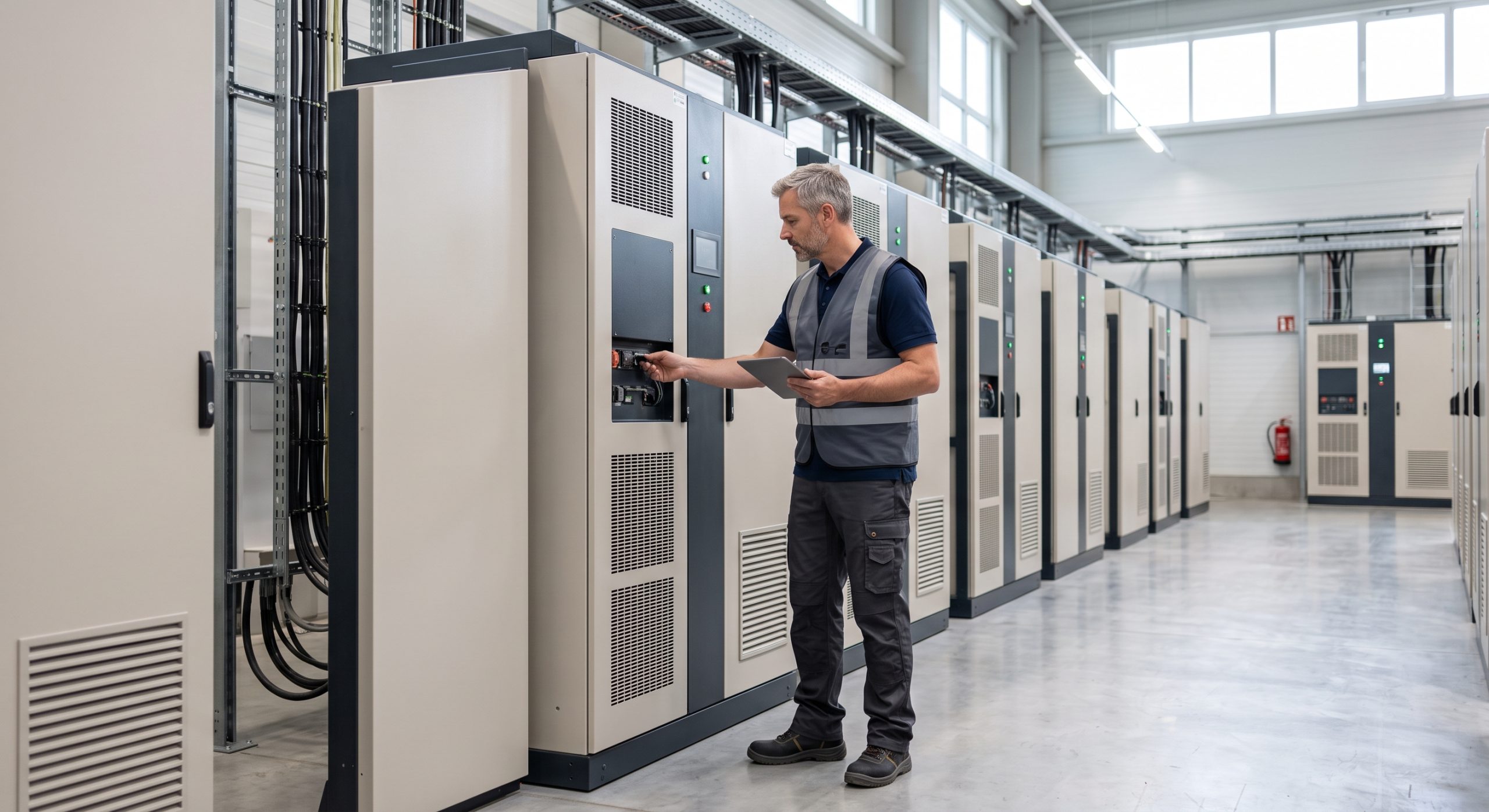
- The EMS communicates with EV charging infrastructure via standard industrial protocols such as OCPP 1.6/2.0.1, Modbus TCP/IP, and RESTful APIs. This enables real-time data exchange for charger status, power demand, and dynamic load management. The EMS aggregates charger telemetry and adjusts BESS discharge rates to avoid demand charges or transformer overloads.
- Q2: Can the EMS prioritize EV charging over other site loads during peak demand?
- Yes, the EMS can be configured to prioritize EV charging loads through programmable dispatch logic. It continuously monitors site load, solar generation, and battery state-of-charge (SoC) to allocate power dynamically. For example, during a demand response event, the EMS can throttle non-critical loads while maintaining full charging speed for vehicles.
- Q3: What is the typical cycle life and depth of discharge (DoD) for LFP batteries used in EV charging BESS?
- The typical cycle life is 6,000–8,000 cycles at 80% DoD for Tier-1 LFP cells. This is achieved through advanced liquid cooling and precise BMS cell balancing, which minimize degradation. For high-throughput EV charging, a 10-year performance warranty is standard when operating within 0.5C charge/discharge rates.
- Q4: How does the EMS integrate with solar arrays to support EV supercharging?
- The EMS integrates with solar arrays via DC-coupled or AC-coupled configurations to prioritize renewable energy for EV supercharging. It uses maximum power point tracking (MPPT) data and weather forecasts to schedule charging sessions when solar yield is highest. Excess solar can be stored in the BESS for later use, reducing grid reliance and carbon footprint.
- Q5: What safety mechanisms prevent thermal runaway in BESS cabinets serving EV chargers?
- Multi-tier safety mechanisms include early gas/smoke detection, cell-level fuses, liquid cooling with redundant pumps, and automatic isolation via contactors. The EMS triggers a controlled shutdown and fire suppression system activation if abnormal temperature or voltage is detected. These measures comply with UL 9540 and IEC 62619 standards.
- Q6: How is ROI calculated for a BESS integrated with EV charging infrastructure?
- ROI is calculated by comparing total installed cost against annual savings from peak shaving, demand charge reduction, and EV charging arbitrage. Key inputs include local electricity tariffs, charger utilization rates, and battery degradation curves. Most commercial projects achieve payback in 4–6 years with a 10-year LCOE of $0.08–$0.12/kWh.
- Q7: Can the EMS operate the BESS in both grid-tie and off-grid modes for EV charging?
- Yes, the EMS supports seamless switching between grid-tie and off-grid modes. In grid-tie mode, it performs peak shaving and demand response; in off-grid mode, it manages islanded operation for backup EV charging during outages. The transition is typically under 20 milliseconds, ensuring uninterrupted charging for critical fleets.
- Q8: What post-sales monitoring and O&M support are available for EMS-integrated BESS?
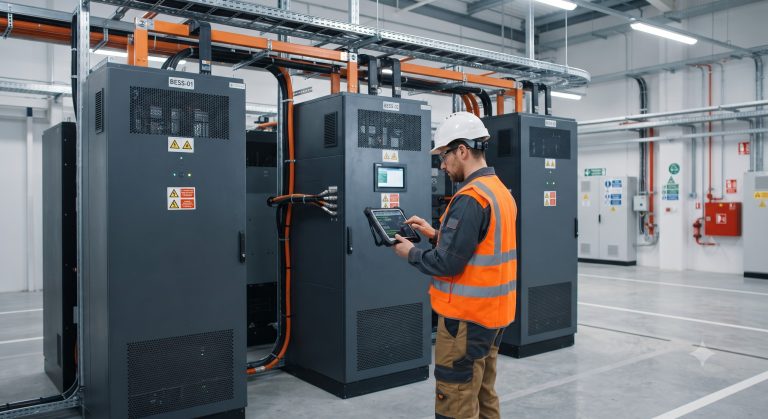
- Post-sales monitoring includes 24/7 remote EMS dashboards, automated fault alerts, and monthly performance reports. O&M support covers BMS calibration, firmware updates, and on-site maintenance within 48 hours for critical issues. Global sea freight security and spare parts availability are guaranteed through regional service hubs.