EXECUTIVE SUMMARY
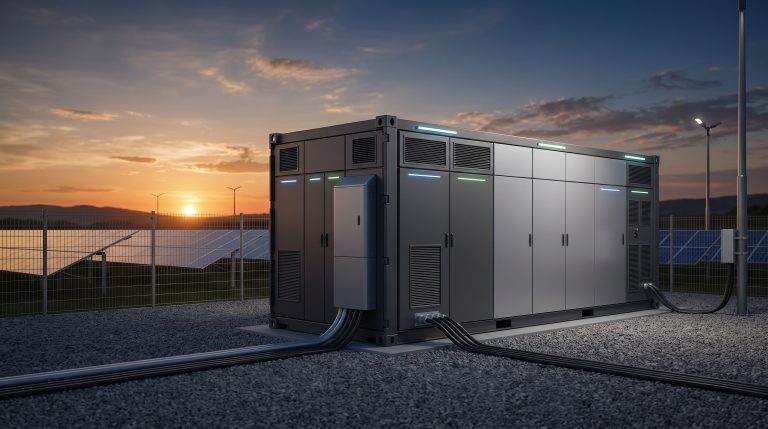
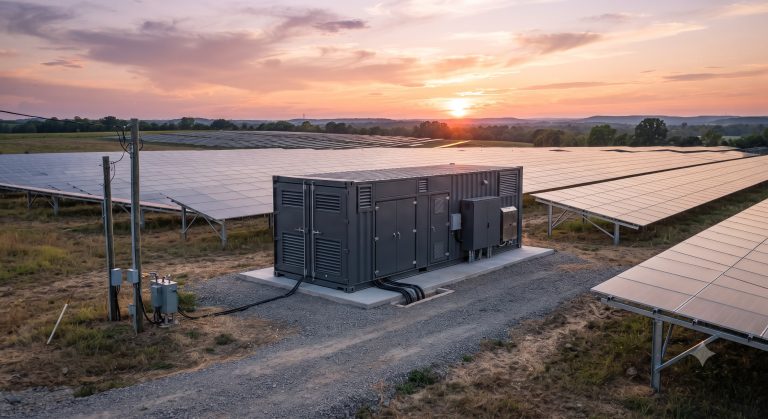
Off-grid battery energy storage systems (BESS) represent the critical backbone of remote industrial electrification, enabling continuous power availability in locations where grid extension is economically or logistically unfeasible. This document consolidates field-proven operational best practices for deploying, commissioning, and maintaining commercial-grade off-grid BESS platforms. Drawing from Tier-1 LFP hardware architecture and smart liquid cooling engineering, the guidance herein targets EPC contractors, facility managers, and asset owners seeking to maximize system availability, extend asset life, and minimize total cost of ownership. Off-grid BESS operational excellence hinges on four pillars: rigorous site assessment, adaptive energy management logic, proactive thermal regulation, and disciplined maintenance cycles. Each pillar is addressed in the sections that follow, with reference to applicable international standards and real-world deployment configurations.
SYSTEM ARCHITECTURE & SAFETY
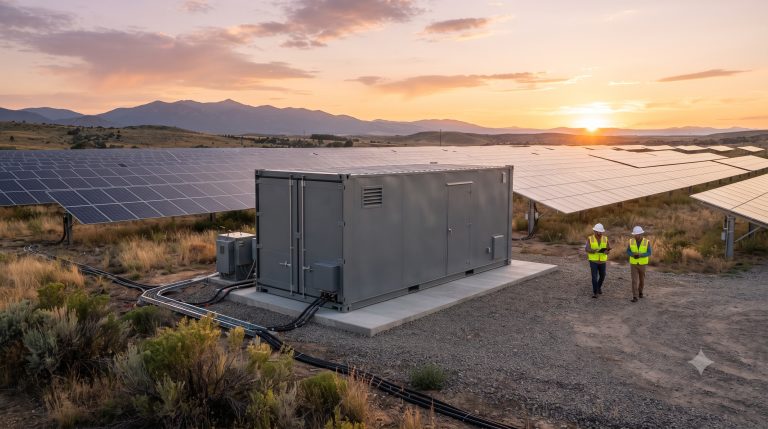
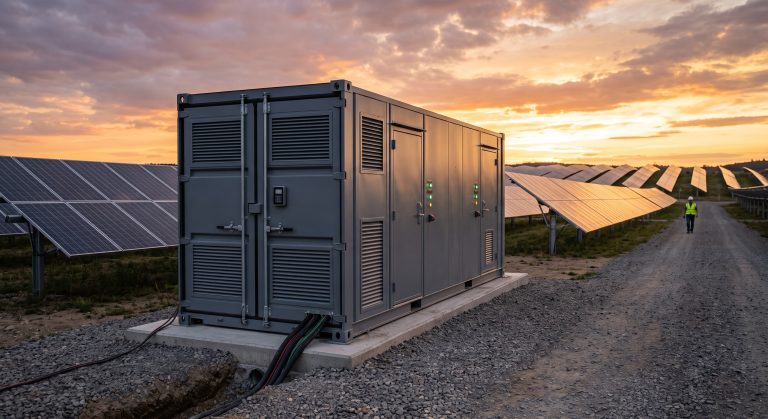
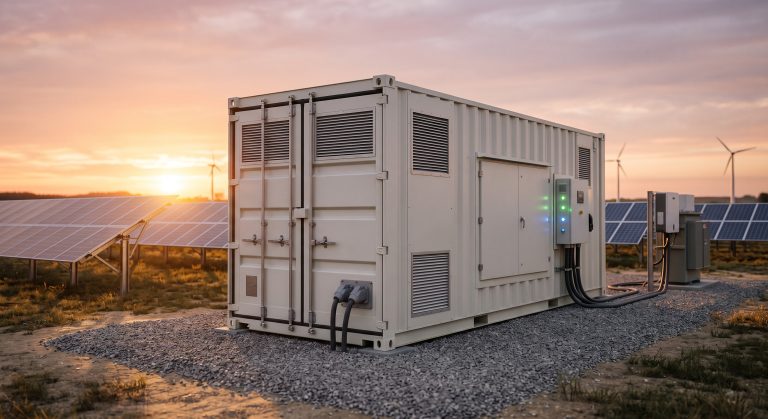
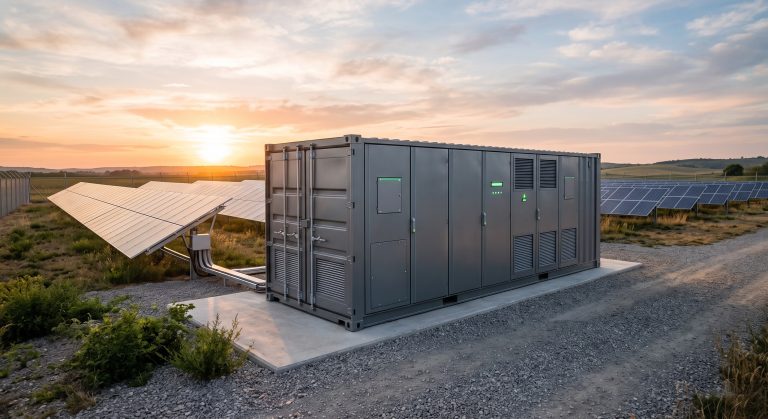
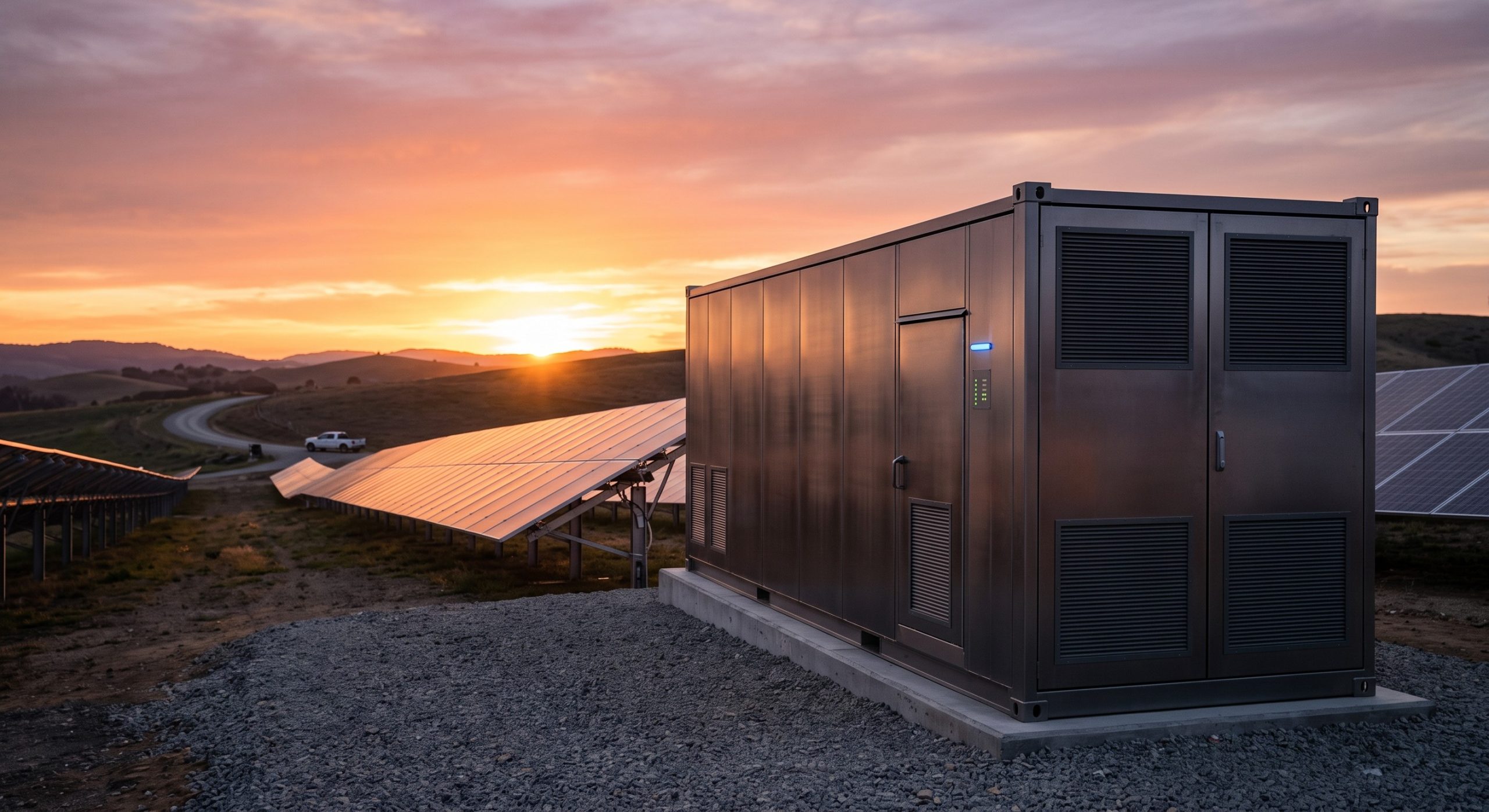
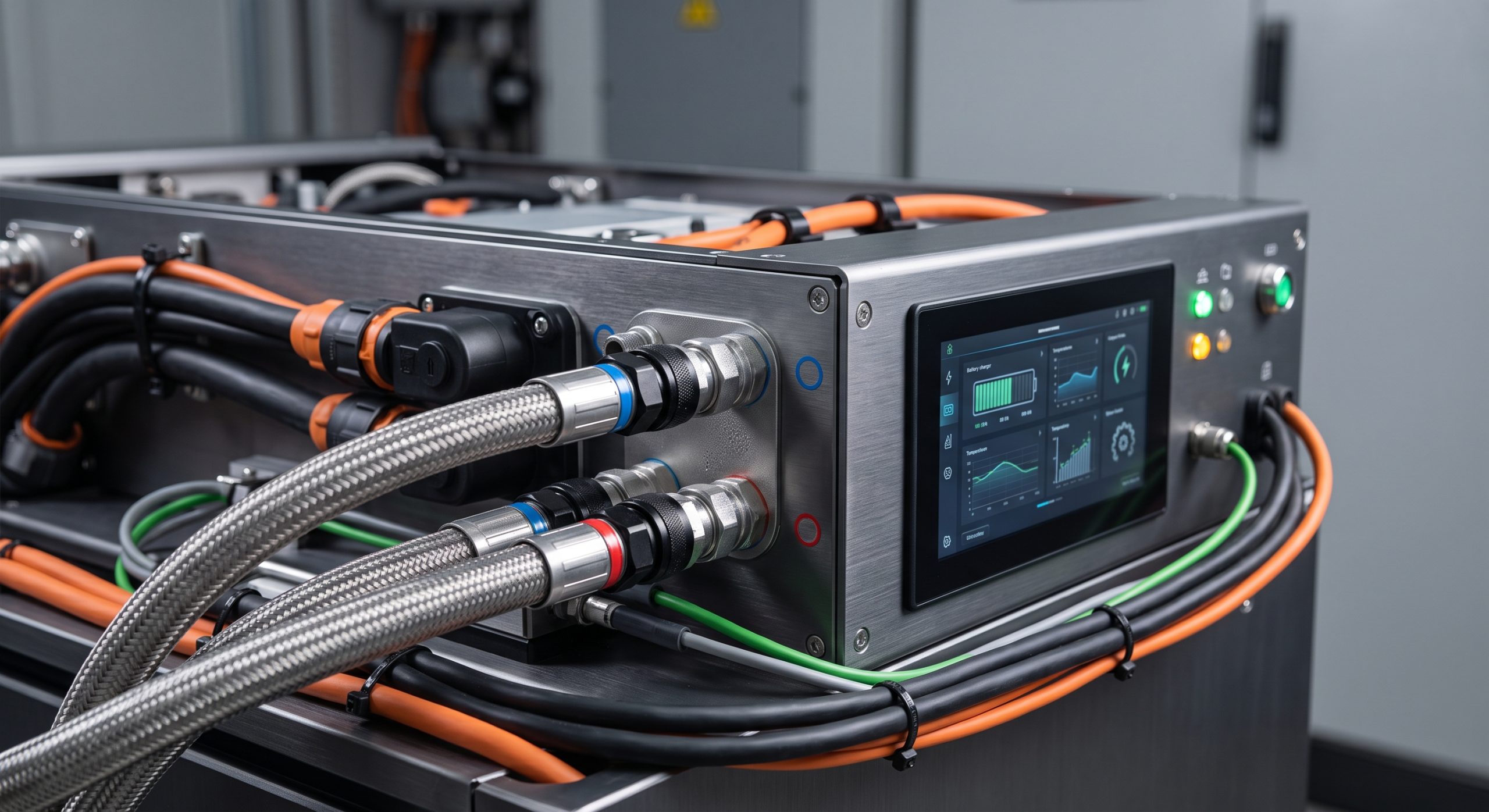
A typical off-grid BESS architecture comprises four principal subsystems: the battery module array (Tier-1 LFP cells configured in series-parallel strings), the power conversion system (PCS) with bi-directional inverter capability, the battery management system (BMS) with active cell balancing, and the thermal management unit employing smart liquid cooling. Safety is enforced through a multi-layered defense strategy. At the cell level, LFP chemistry provides inherent thermal stability with higher onset temperatures for thermal runaway compared to NMC variants. At the module level, ceramic separators and pressure-relief vents contain localized faults. At the cabinet level, aerosol-based fire suppression, gas detection, and emergency ventilation systems activate automatically upon abnormal temperature or gas signatures. At the system level, the EMS executes islanding detection, load prioritization, and controlled shutdown sequences. Operational best practices dictate that off-grid systems must be commissioned with a verified black-start procedure, and that the BMS state-of-charge (SOC) and state-of-health (SOH) algorithms be calibrated against actual load profiles within the first 72 hours of operation.
KEY FEATURES
– Adaptive Dispatch Logic: EMS algorithms continuously match generation forecasts (solar, wind, diesel backup) against real-time load demand, optimizing charge-discharge cycles to preserve battery life.
– Active Cell Balancing: Continuous cell-level equalization reduces SOC drift, extends usable capacity, and prevents premature string failure in off-grid cycling regimes.
– Smart Liquid Cooling: Closed-loop coolant circulation maintains cell temperatures within +/- 2 degrees Celsius of setpoint, even under high ambient conditions and heavy cycling.
– Remote Diagnostics: Cloud-connected monitoring enables 24/7 fault detection, firmware updates, and performance analytics without onsite intervention.
– Modular Expansion: Parallel busbar configurations allow incremental capacity additions without replacing existing cabinets, accommodating load growth over time.
– Multi-Layer Fire Suppression: Perfluorohexanone aerosol suppression combined with early-warning gas sensors and pressure relief ensures containment of thermal events.
COMPLIANCE & STANDARDS
Off-grid BESS deployments must satisfy a matrix of international and regional standards to ensure safety, interoperability, and insurability. Core certifications include UL 9540 (Energy Storage Systems and Equipment), UL 9540A (Thermal Runaway Fire Propagation Test), IEC 62619 (Safety Requirements for Industrial Lithium Batteries), IEC 62933 (Electrical Energy Storage Systems), and UN 38.3 (Transport of Lithium Batteries). For off-grid applications, additional attention is required for IEEE 1547 (Interconnection and Interoperability of Distributed Energy Resources) where the system may interface with a micro-grid or backup generator, and NFPA 855 (Installation of Stationary Energy Storage Systems) for site layout, spacing, and fire suppression requirements. Operators should maintain a compliance register documenting all certificates, test reports, and site-specific risk assessments. Periodic re-certification and firmware validation are best practices for maintaining compliance throughout the asset lifecycle.
TECHNICAL SPECIFICATIONS
The following specification matrix reflects a representative commercial off-grid BESS cabinet suitable for C&I and micro-grid applications. Actual parameters vary by configuration and project requirements.
| Parameter | Specification |
|---|---|
| Nominal Capacity | 215 kWh / 372 kWh per cabinet |
| Cooling Method | Smart Liquid Cooling |
| Cell Chemistry | Tier-1 LFP |
| Round-Trip Efficiency | Greater than 95% |
| Depth of Discharge | Up to 95% |
| Cycle Life | 6,000 cycles at 80% DOD |
| Operating Temperature | -20C to +55C |
| Communication Protocol | Modbus TCP / IEC 61850 |
| Certifications | UL 9540, UL 9540A, IEC 62619, UN 38.3 |
| Fire Suppression | Perfluorohexanone aerosol + gas detection |
| Enclosure Rating | IP55 / NEMA 3R |
| Dimensions (W x D x H) | 1,200 x 1,100 x 2,200 mm |
| Weight | Approximately 2,800 kg |
INDUSTRIAL DEPLOYMENT
Successful off-grid BESS deployment begins with a comprehensive site survey covering load profiling, renewable resource assessment, ambient temperature extremes, altitude, and seismic risk. Pad-mounted or containerized cabinets must be positioned on leveled, reinforced concrete pads with adequate clearance for airflow and maintenance access. Cabling between the BESS, PCS, and load distribution panel should be sized for maximum continuous current with a minimum 25% margin. Grounding must follow local codes, with a single-point earth reference to avoid ground loops. Commissioning best practices include: (1) verifying BMS cell voltage and temperature uniformity before first charge; (2) performing a controlled charge-discharge cycle to validate SOC accuracy; (3) testing black-start capability under no-load and full-load conditions; (4) simulating grid-loss and generator-failure scenarios to confirm seamless transition; and (5) documenting baseline performance data for future comparison. During operation, remote monitoring should be reviewed daily, with alarm thresholds set for cell voltage deviation, temperature rise rate, and SOC imbalance. Preventive maintenance intervals of six months are recommended for off-grid systems, including coolant level checks, terminal torque verification, and firmware updates. With disciplined O&M, a Tier-1 LFP off-grid BESS can achieve 15 years of operational life or 6,000+ full cycles at 80% depth of discharge.
📥 Download Technical Specification
Click the button below to view or download the full official PDF datasheet.