EXECUTIVE SUMMARY
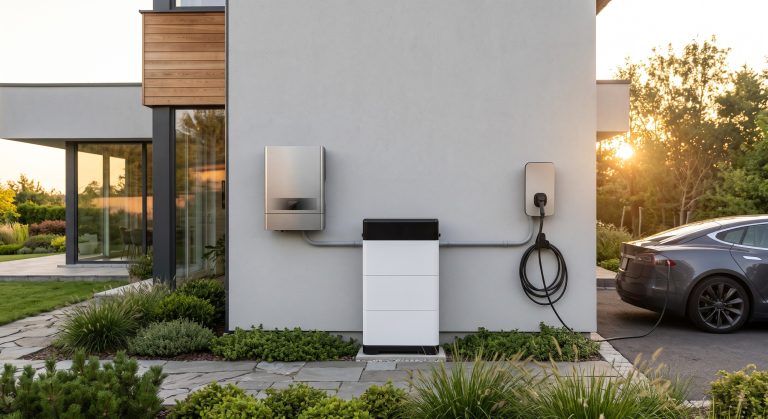
The global energy landscape demands higher density, safer, and more thermally stable storage solutions. Our Liquid-Cooled Energy Storage System (ESS) represents a paradigm shift in stationary battery technology, purpose-built for commercial & industrial (C&I) facilities, EV supercharging stations, and micro-grids. By replacing traditional air-cooling with advanced liquid thermal management, this system achieves a 30% higher energy density, extends cycle life by over 20%, and operates at peak efficiency even in extreme ambient temperatures.
As the cornerstone of zero-carbon transition and peak shaving strategies, this all-in-one DC-coupled solution enables renewable time-shifting, demand charge reduction, and emergency backup. For EV fleets, it buffers grid-stressing high-power chargers; for micro-grids, it provides black start capability and seamless islanding. Engineered to Tier-1 standards, this product delivers a sub-2ms response time for grid forming and supports direct PV-storage-charging integration without external converters.
SYSTEM ARCHITECTURE & SAFETY
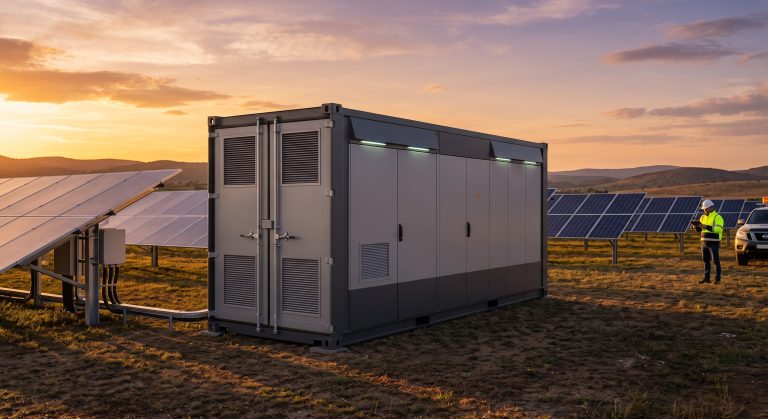
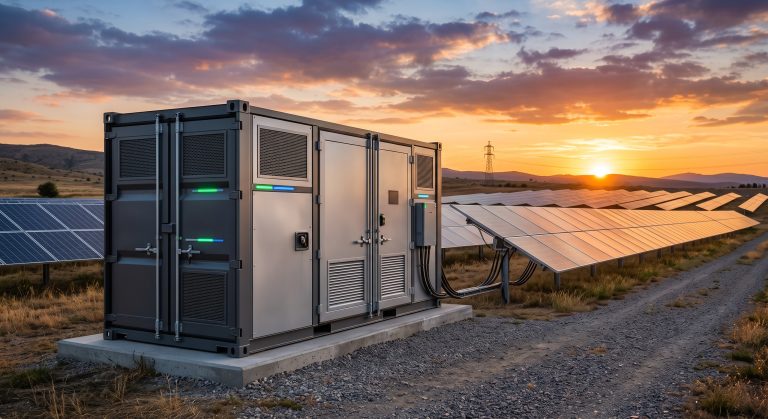
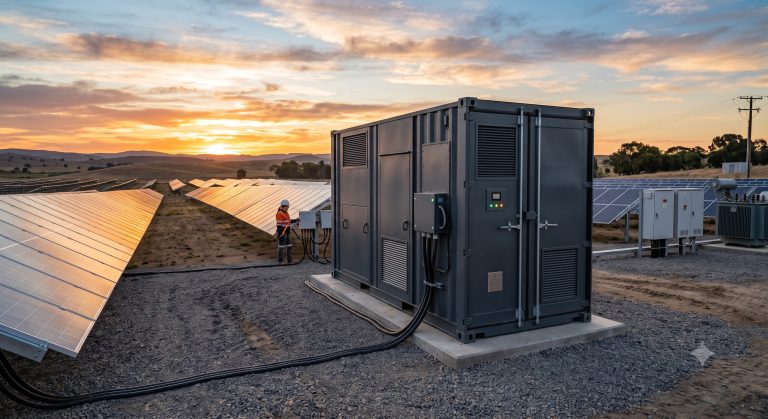
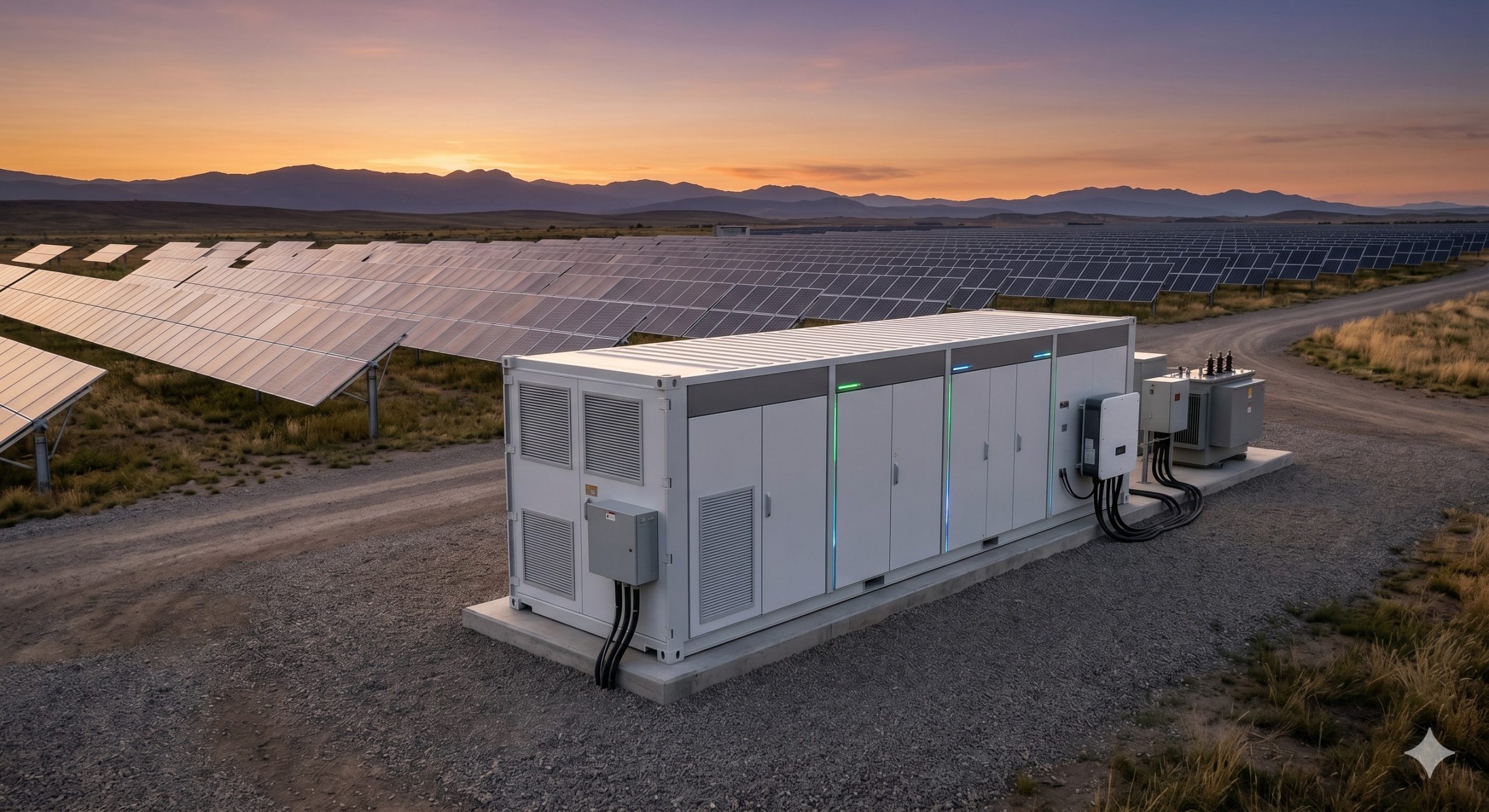
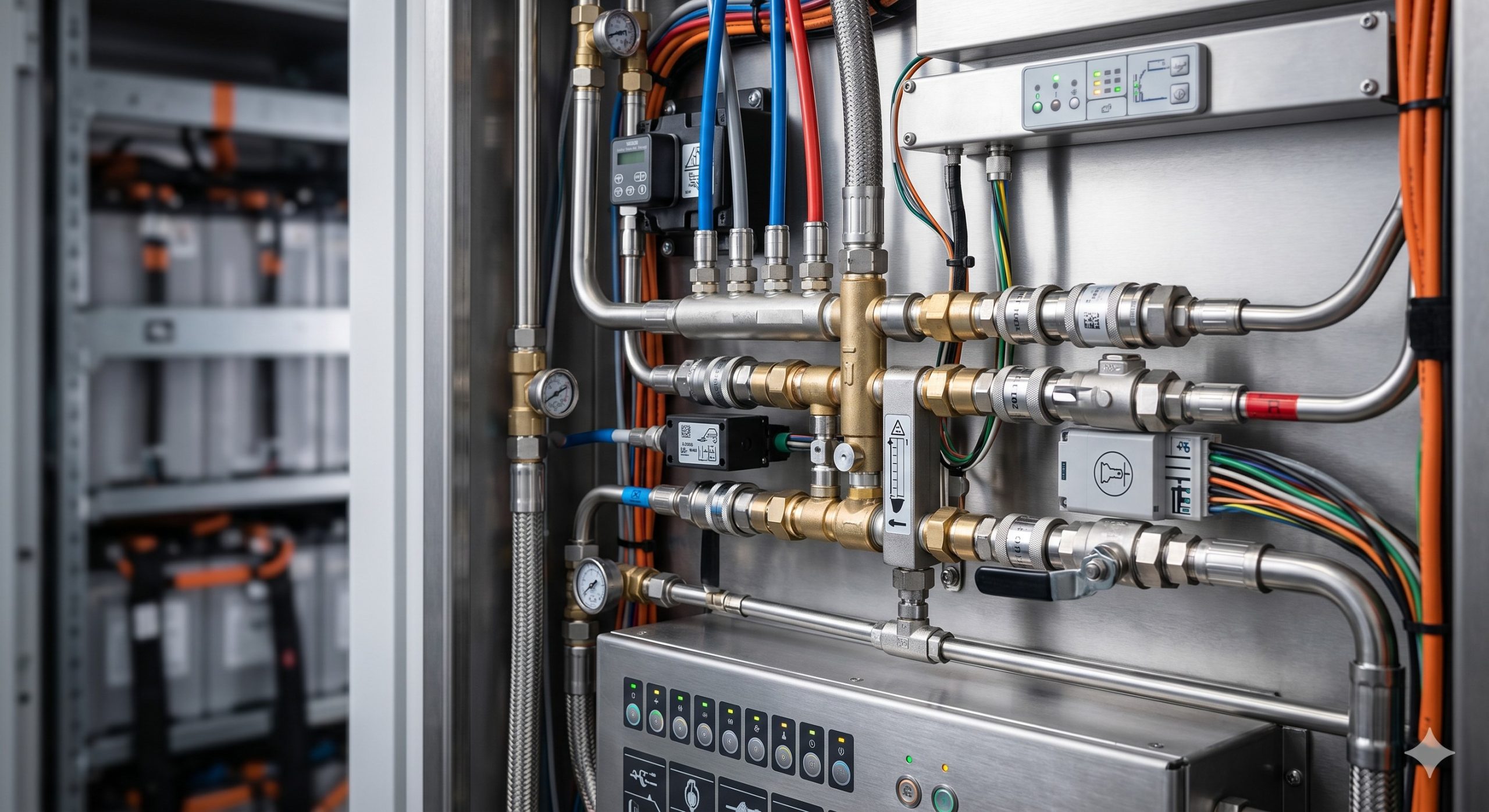
The system integrates Grade A lithium iron phosphate (LFP) cells from certified global Tier-1 suppliers, configured in modular battery packs within a NEMA 3R / IP55-rated outdoor cabinet. The core enabler is the closed-loop liquid cooling plate circuit, which maintains cell temperature differential ≤ 3°C across all series strings, eliminating hot spots. The refrigeration circuit uses a low-GWP R1234yf refrigerant and a variable-speed DC inverter compressor, achieving a cooling coefficient of performance (COP) > 2.5.
For safety, the architecture includes three independent layers: (1) Cell-level pressure relief and isolation fuses; (2) Pack-level contactor disconnects with passive cell balancing; (3) Cabinet-level clean agent aerosol fire suppression (NFPA 69-compliant) with hydrogen, smoke, and temperature composite detection. The dual-redundant battery management system monitors 120+ parameters per pack, while the integrated energy management system coordinates grid-tie circuit breakers and isolation transformers.
KEY FEATURES
– Seamless Grid Transition (Hybrid Inverter): Built-in high-speed static transfer switch enables <4ms transition between on-grid and off-grid mode, ensuring continuous power to critical loads during utility disturbances, with black start capability.
- EMS Smart Dispatch with AI Learning: The cloud-edge energy management system uses reinforcement learning to forecast load and PV generation, automatically optimizing peak shaving, time-of-use arbitrage, and demand response in real-time without manual programming.
- True Modular Expansion: Parallel up to 12 cabinets without communication bottlenecks using Gigabit ring Ethernet. Scalable from 250kWh to 3MWh per cluster. Hot-swappable power modules reduce mean time to repair to under 30 minutes.
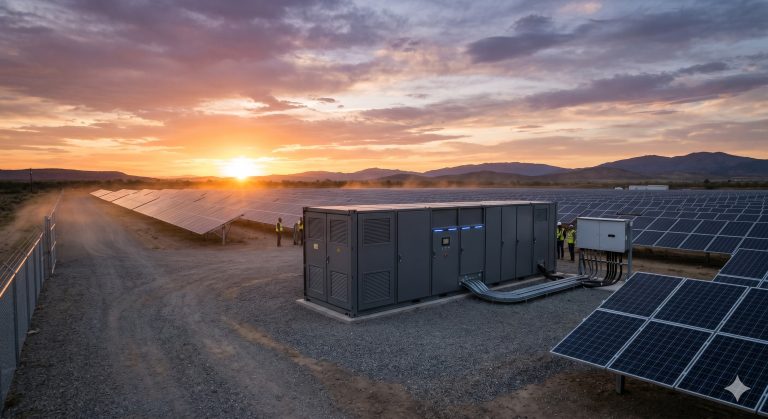
- Native PV-Storage-Charging Integration (DC-Coupled): Supports direct DC coupling to solar MPPT inputs and bidirectional EV charger ports, reducing inverter losses by 8% compared to AC-coupled alternatives and lowering balance-of-system costs.
- Wide Temperature Operation: Liquid-loop preheating and cooling allows full rated charge/discharge from -30°C to +55°C ambient, with derated operation up to 60°C, eliminating the need for electric cabinet heaters in cold climates.
COMPLIANCE & STANDARDS
The Liquid-Cooled ESS has been extensively certified to global safety and performance benchmarks. It holds UL 1973 (energy storage batteries) and UL 9540 (complete system) for North America, passing the UL 9540A thermal runaway fire propagation test. For international markets, it complies with IEC 62619 (industrial batteries), IEC 62477 (power electronics), and VDE-AR-E 2510-50. Transport certification includes UN38.3 (lithium batteries). Additional marks: CE, UKCA, CEC (California Energy Commission) list, and IEEE 1547 grid interconnection.
TECHNICAL SPECIFICATIONS
Below are the verified performance parameters under nominal test conditions (25°C ambient, 0.5C charge/discharge, beginning-of-life). Contact engineering for project-specific detailed drawings and factory acceptance test reports.
| Parameter | Specification |
|---|---|
| Nominal Capacity (DC) | 372 kWh per cabinet |
| Usable Capacity | 100% Depth of Discharge (LFP) |
| Nominal Voltage / Voltage Range | 768 Vdc / 672 Vdc to 876 Vdc |
| Max Charge / Discharge Power | 186 kW (0.5C continuous), 372 kW (1C peak for 5min) |
| Round-trip Efficiency (DC, 0.5C) | 94.5% at +25°C, 92.0% at -20°C |
| Cooling Method | Active liquid cooling (Ethylene-glycol water mixture) with variable-speed compressor |
| Cooling Power (Thermal) | 6.2 kW per cabinet @ 35°C ambient |
| Operating Temperature Range | -30°C to +55°C (charge), -30°C to +60°C (discharge) |
| Ingress Protection (Cabinet) | IP55 (outdoor), NEMA 3R |
| Fire Suppression | Aerosol-based + gas detection (NFPA 69, UL 9540A) |
| Cycle Life (to 80% SOH) | ≥8000 cycles at 0.5C, +25°C |
| Communication Interfaces | Ethernet (Modbus TCP), CAN 2.0, RS485, 4G/WiFi (optional) |
| Dimensions (W x D x H) | 1400 mm x 1200 mm x 2250 mm (single cabinet) |
| Weight | 2,950 kg (dry), 3,300 kg (with coolant) |
| Certifications | UL 1973, UL 9540, IEC 62619, CE, UN38.3, IEEE 1547 |
📥 Download Technical Specification
Click the button below to view or download the full official PDF datasheet.