UL 9540 & IEC 62619 TECHNICAL COMPLIANCE REGISTER: ESS FIRE PROTECTION SYSTEM OPERATION GUIDE
EXECUTIVE SUMMARY
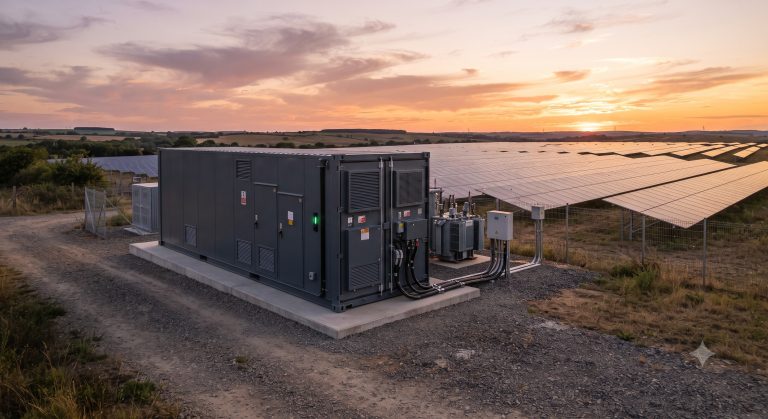
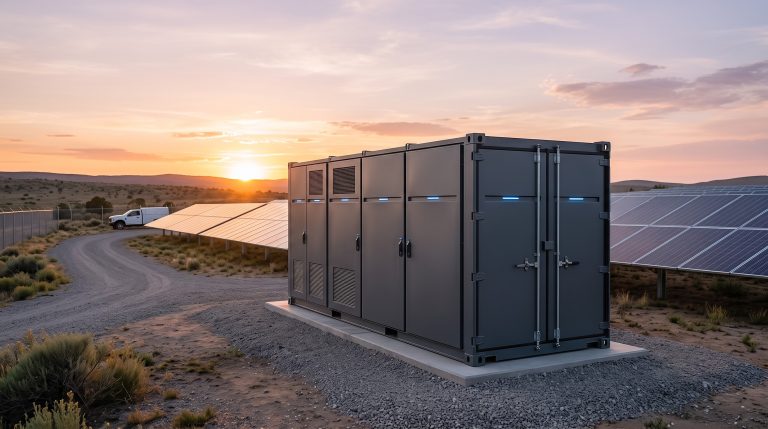
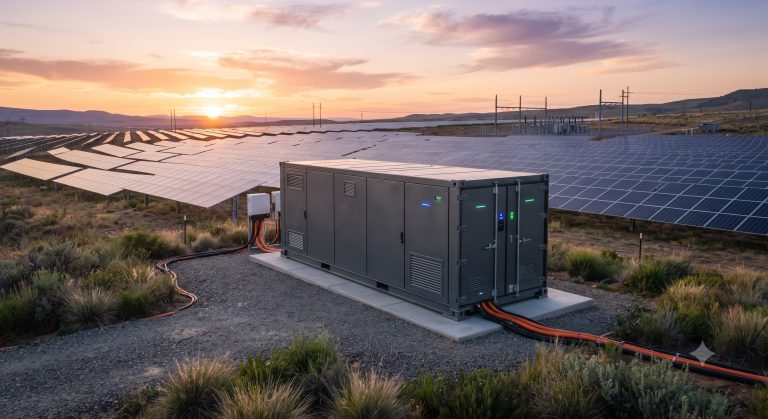
This document serves as the definitive technical overview and operational datasheet for the proprietary Fire Protection System (FPS) integrated within our commercial Battery Energy Storage Systems (BESS). Designed to meet and exceed the stringent requirements of UL 9540 and IEC 62619, this guide details the multi-layered safety architecture, suppression logic, and compliance-driven operational parameters. Our FPS represents a convergence of advanced aerosol and gas-based suppression technologies, early-warning detection algorithms, and robust mechanical engineering, ensuring that thermal events are mitigated with precision, speed, and absolute system integrity. This document is intended for systems integrators, facility engineers, and safety compliance officers.

SYSTEM ARCHITECTURE & DETECTION LAYERS
The fire protection system is fundamentally decentralized, with independent control units for each battery rack and a master controller for the entire container or cabinet. The architecture operates on a ‘Detect-Evaluate-Suppress-Contain’ cycle.
– PRIMARY DETECTION (EARLY WARNING): Multi-gas sensors detect abnormal levels of CO, H2, and volatile organic compounds (VOCs) within the enclosure. These are coupled with optical smoke detectors and rate-of-rise temperature sensors. The trigger threshold for Stage 1 (Alert) is defined as a 15% increase in baseline gas concentrations over a 10-second window.
– SECONDARY DETECTION (CONFIRMATION): TMR (Triple Modular Redundant) temperature probes located at each battery module and coolant inlet/outlet ports. If two out of three sensors confirm a cell temperature exceeding 65°C, the system escalates to Stage 2 (Warning).
– TERTIARY DETECTION (THERMAL RUNAWAY INDICATION): A pressure gradient sensor (≥ 3 kPa/s rise) and a specific VOC spike (e.g., electrolyte leakage indicator) trigger the final Stage 3 (Pre-Suppression) command. This initiates the automatic shutdown of the PCS (Power Conversion System) and galvanic isolation of the affected rack.
KEY FEATURES
– Feature 1: Dual-Mode Suppression Agent – The system deploys a combined agent strategy. For electrical fires (Class C), a proprietary perfluorohexanone (Novec 1230 / FK-5-1-12) clean agent is used, which does not leave residue and is safe for personnel at design concentrations. For emerging thermal propagation within a cell, an in-module aerosol generator (condensed aerosol) is activated to flood the individual cell enclosure.
– Feature 2: Staged Alarm & Evacuation Logic – The system incorporates a time-delayed alarm structure aligned with NFPA 72. Activation of Stage 3 initiates a 15-second pre-discharge delay, accompanied by audible and visual alarms. This delay is internally bypassed in ‘Auto-Mode’ if the rate-of-rise exceeds 10°C/min.
– Feature 3: Passive Containment & Ventilation – The enclosure is designed with a 2-hour fire-rated bulkhead separating battery compartments from electrical switchgear. A blow-out panel and a filtered external exhaust system channel suppressant gases away from personnel entry points following discharge.
– Feature 4: Mechanical & Communication Redundancy – The FPS controller is powered by an independent UPS (Uninterruptible Power Supply) and communicates via a secondary CAN bus to the BMS (Battery Management System). This ensures that fire control directives are executed even if the primary communication network fails.
COMPLIANCE & STANDARDS
The entire FPS architecture and its subcomponents have been validated against the following international frameworks:
– UL 9540 (Ed. 3): The system has been tested for fire propagation and external fire spread, achieving a certification for ‘ESS without fire propagation’ (no propagation to adjacent racks).
– IEC 62619: Requirements for the safe operation of secondary lithium batteries. Our FPS is fully compliant with the functional safety (SIL-2) requirements for control and protection systems.
– NFPA 72 & NFPA 855: The detection and alarm systems adhere to National Fire Alarm and Signaling Code, and the installation supports the spacing and clearance requirements of NFPA 855.
– ISO 13849: The safety-related control logic (especially the suppression activation loop) achieves Performance Level ‘d’ (PLd), ensuring high reliability against single point failures.
TECHNICAL SPECIFICATIONS
– AGENT TYPE: Perfluorohexanone (Novec 1230) for enclosure flooding; Condensed Aerosol for in-module cells.
– DESIGN CONCENTRATION: 4.5% – 6.0% for clean agent (safe for occupied spaces at 10% for 10 mins).
– DETECTION SENSORS: Electrochemical (CO, H2), PID (VOCs), Thermistor arrays, Optical smoke.
– ACTUATION TIME: < 500ms from Stage 3 confirmation to agent release initiation.
- SUPPRESSION DURATION: Sustained agent concentration maintained for > 10 minutes to prevent re-ignition.
– CONTROL INTERFACE: 7-inch color HMI touch panel with event logging and manual override.
– ENVIRONMENTAL RATING: IP54/NEMA 3R for external cabinet; Operating Temp: -30°C to +55°C.
| Parameter | Specification |
|---|---|
| Nominal Capacity | e.g., 215 kWh / 372 kWh per cabinet |
| Cooling Method | e.g., Smart Liquid Cooling |
| Cell Chemistry | e.g., Tier-1 LFP |
| Fire Suppression Agent | Perfluorohexanone (Novec 1230) / Aerosol |
| Detection Response Time | < 500ms to agent release |
| Enclosure Fire Rating | 2-Hour Fire Barrier (UL 9540A) |
| Communication Protocol | CAN Bus & Modbus TCP/IP |
INDUSTRIAL DEPLOYMENT & O&M LOGIC
Routine maintenance of the FPS is structured around a biennial inspection and six-month functional test cycle. Weight checks of the agent storage cylinders are mandated annually to ensure no leakage has occurred. The system’s self-diagnostic routine will automatically flag any sensor drift or communication loss to the central O&M platform via an encrypted 4G/LTE gateway. In the event of an actual discharge, the system locks out automatic recharging and requires a service technician to physically inspect the affected rack before the system is reset. This ‘lock-out/tag-out’ (LOTO) procedure is a critical safety interlock. The entire FPS event log, including all sensor pre-alarm data from the 48 hours preceding an event, is securely stored on a cloud-based historian for root cause analysis (RCA) and continuous improvement of our safety algorithms.

📥 Download Technical Specification
Click the button below to view or download the full official PDF datasheet.