COMMERCIAL BESS HIGH-DENSITY LITHIUM BATTERY CELL SPECS
OFFICIAL TECHNICAL OVERVIEW & DATASHEET
EXECUTIVE SUMMARY
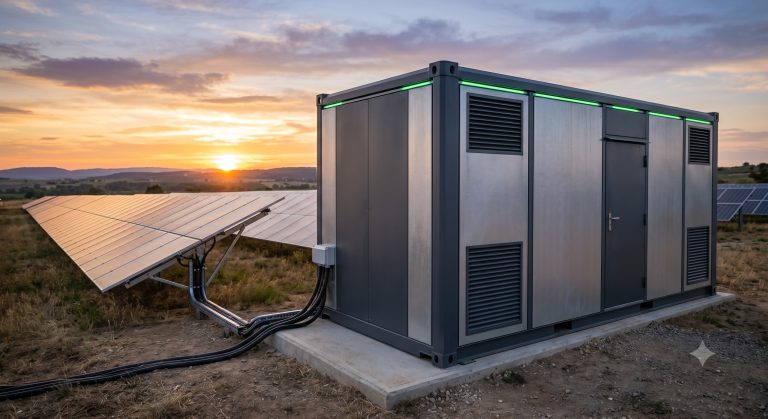
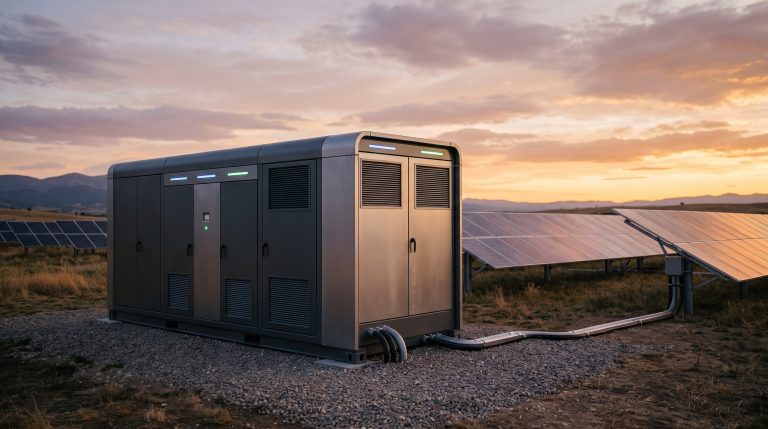
This document provides a comprehensive technical overview and performance datasheet for our next-generation high-density lithium battery cell platform, specifically engineered for commercial and industrial (C&I) energy storage systems (ESS). Designed to meet the rigorous demands of peak shaving, load shifting, and renewable integration, this cell platform represents a significant advancement in energy density, cycle life, and operational safety. Leveraging Tier-1 Lithium Iron Phosphate (LFP) chemistry, the cell delivers an optimal balance of high energy throughput, long-term durability, and intrinsic thermal stability. This datasheet serves as a definitive reference for system integrators, EPCs, and asset owners, detailing the core architecture, safety mechanisms, and verified performance parameters that underpin our entire BESS portfolio.
SYSTEM ARCHITECTURE & SAFETY
The high-density lithium battery cell is the foundational building block of our modular storage platform. The architecture is centered around a prismatic cell design, which maximizes volumetric efficiency and simplifies large-scale series-parallel integration. The cell incorporates an advanced electrode structure and a highly stable LFP cathode, ensuring a flat voltage discharge curve and consistent power delivery over a wide state-of-charge (SOC) range. A critical component of the architecture is the integrated safety vent and current interruption device (CID), engineered to provide robust protection against overpressure and overcurrent events.
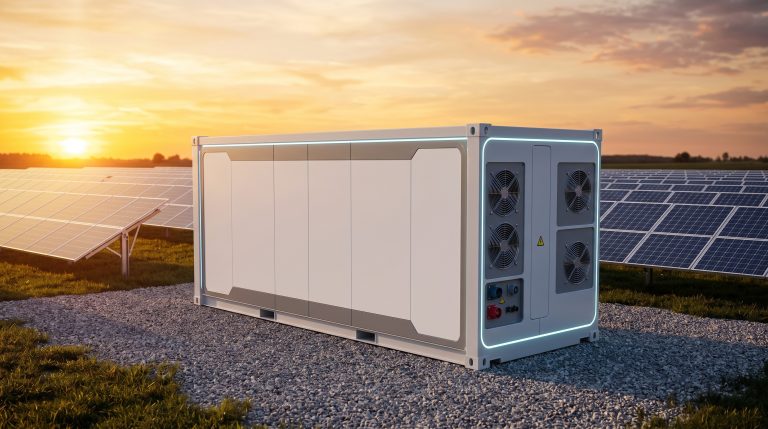
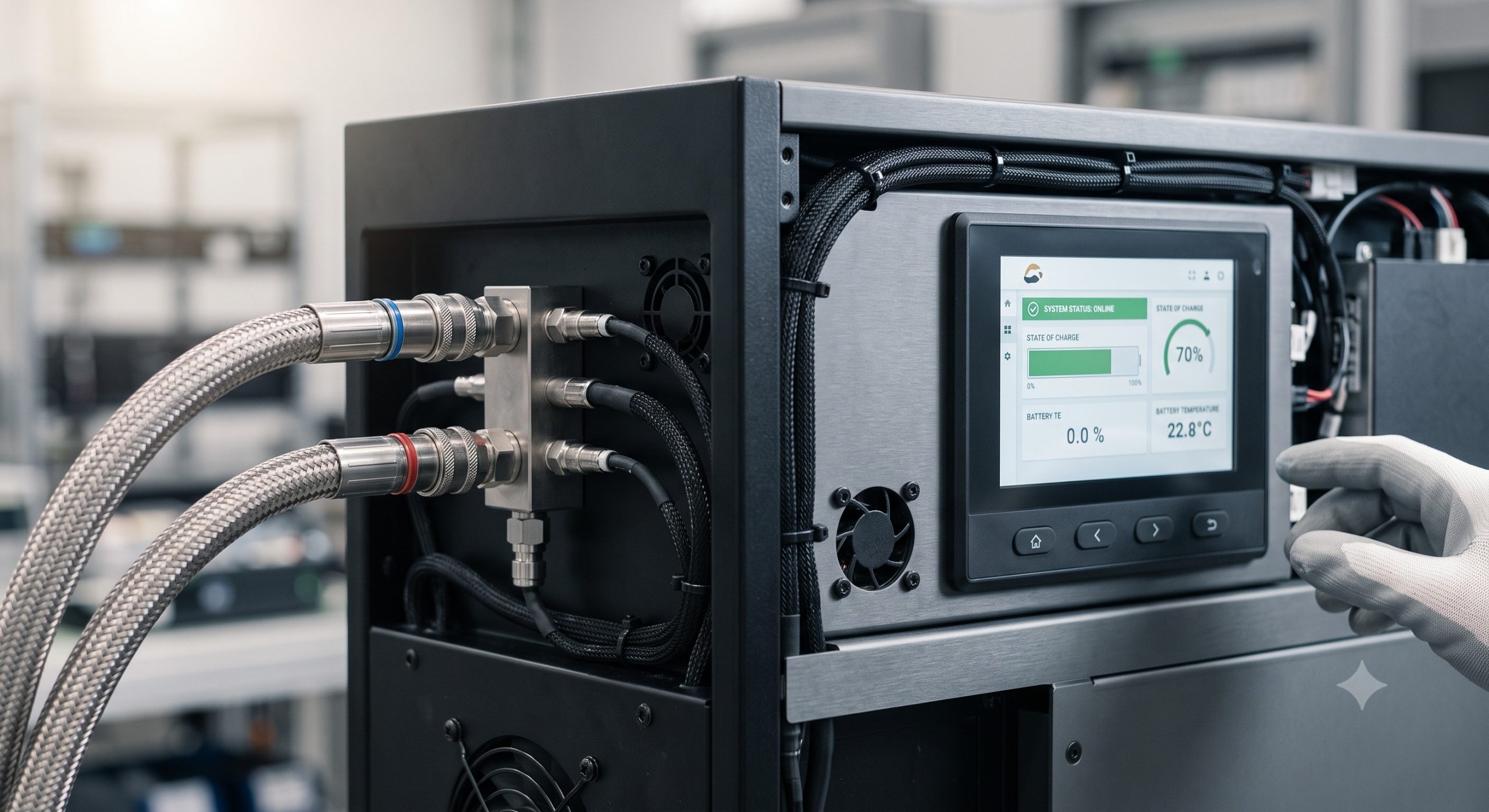
The cell’s internal design is optimized for thermal management, featuring low internal resistance (DCIR) to minimize heat generation during high-rate charge/discharge cycles. The electrolyte formulation is proprietary, offering enhanced ionic conductivity and stability at elevated temperatures. Furthermore, the cell is equipped with a durable, flame-retardant outer casing, providing mechanical resilience and contributing to the system’s IP67-rated enclosure when deployed in our outdoor cabinets or containerized solutions. The Battery Management System (BMS) interfaces directly with each cell, providing real-time monitoring of voltage, current, and temperature to ensure operation remains within the defined safe operating area (SOA).
KEY FEATURES
– High Energy Density: Achieves industry-leading volumetric energy density of >320 Wh/L and gravimetric energy density of >185 Wh/kg, enabling more energy in a smaller footprint and reducing overall system balance of plant (BOP) costs.
– Extended Cycle Life: Delivers a verified cycle life of >6,000 cycles at 25°C and 0.5C/0.5C charge/discharge (80% DoD), with less than 20% capacity degradation, ensuring a service life exceeding 15 years for standard applications.
– Superior Thermal Stability: Tier-1 LFP chemistry provides exceptional thermal runaway resistance. The cell is UL 9540A tested and demonstrates a low heat release rate (HRR) and negligible gas toxicity during thermal events, vastly improving system-level safety.
– Wide Operating Temperature Range: Full performance is maintained from -20°C to +55°C, with an integrated self-heating functionality enabling reliable operation in diverse climates down to -30°C. High-temperature performance is supported by efficient liquid or air cooling interfaces.
– High Power Capability: Supports continuous 1C charge and 1C discharge, with a peak discharge rate of 2C for 30 seconds, making it suitable for high-power applications such as grid frequency regulation and EV ultra-fast charging buffering.
– Smart BMS Compatibility: Designed for seamless integration with intelligent BMS platforms, offering precise SOC/SOH estimation algorithms (accuracy < 3%) and passive or active cell balancing to maximize usable capacity and prolong pack life.
- Low Self-Discharge Rate: Exhibits an extremely low self-discharge rate of <3% per month, ensuring high state-of-charge retention during extended storage periods or system idle times.
COMPLIANCE & STANDARDS
The high-density LFP cell platform is manufactured in compliance with the most stringent global safety and performance standards, ensuring regulatory acceptance across major markets. Comprehensive testing has been conducted by third-party certified laboratories to guarantee adherence to international norms.
- UL 1642: Standard for Lithium Batteries - Safety certification for the cell's design and construction.
- UL 1973: Standard for Batteries for Use in Stationary, Vehicle Auxiliary Power, and Light Electric Rail (LER) Applications - Certifies the cell for use in stationary storage systems.
- UL 9540A: Test Method for Evaluating Thermal Runaway Fire Propagation in Battery Energy Storage Systems - The cell has been rigorously tested, providing critical data for system-level fire safety design.
- IEC 62619: Secondary cells and batteries containing alkaline or other non-acid electrolytes - Safety requirements for secondary lithium cells and batteries, for use in industrial applications.
- IEC 60896-22: Stationary lead-acid batteries - Part 22: Valve-regulated types - Though primarily for lead-acid, related testing methodologies for stationary applications are referenced.
- UN 38.3: Recommendations on the Transport of Dangerous Goods - The cell is classified as non-dangerous for transport, complying with all requirements for air, sea, and land shipping.
- RoHS & REACH: Fully compliant with global environmental directives, restricting the use of hazardous substances.
TECHNICAL SPECIFICATIONS
| Parameter | Specification |
|---|---|
| Cell Chemistry | Lithium Iron Phosphate (LFP) |
| Nominal Voltage | 3.2 V |
| Nominal Capacity | 280 Ah |
| Nominal Energy | 896 Wh |
| Voltage Operating Range | 2.5 V – 3.65 V |
| Max Continuous Charge Current | 1C (280 A) |
| Max Continuous Discharge Current | 1C (280 A) |
| Max Pulse Discharge Current (30s) | 2C (560 A) |
| Round-trip Efficiency (DC, 0.5C) | ≥ 95% |
| Cycle Life @ 25°C, 0.5C/0.5C, 80% DoD | > 6,000 cycles |
| Cycle Life @ 35°C, 0.5C/0.5C, 80% DoD | > 4,000 cycles |
| Operating Temperature (Charge) | 0°C to +55°C |
| Operating Temperature (Discharge) | -20°C to +60°C |
| Storage Temperature | -20°C to +45°C |
| Internal Resistance (DCIR, 50% SOC) | < 0.3 mΩ |
| Dimensions (L x W x H) | 174 mm x 71.5 mm x 204 mm |
| Weight | 5.35 kg |
| Energy Density (Volumetric) | > 320 Wh/L |
| Energy Density (Gravimetric) | > 185 Wh/kg |
| Terminal Type | Threaded studs (M6) |
| Case Material | Aluminum alloy |
| Safety Features | Vent, CID, Flame-retardant casing |
The cell’s electrical, mechanical, and thermal specifications are detailed below. All values are typical at nominal conditions (25°C, 0.2C charge/discharge) unless otherwise stated. Full performance data sheets are available upon request for specific operating conditions.
INDUSTRIAL DEPLOYMENT
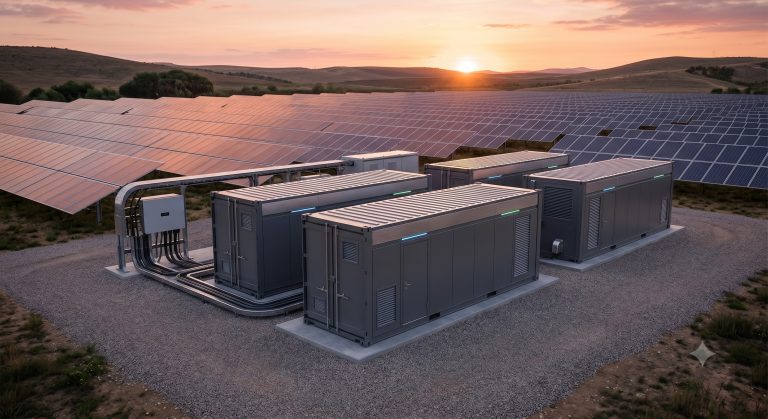
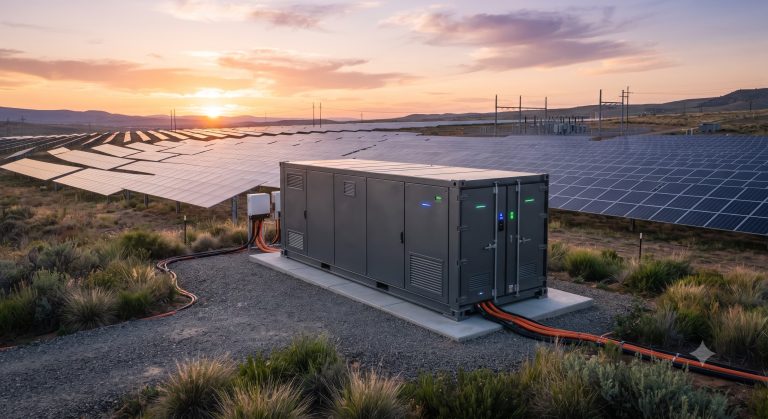
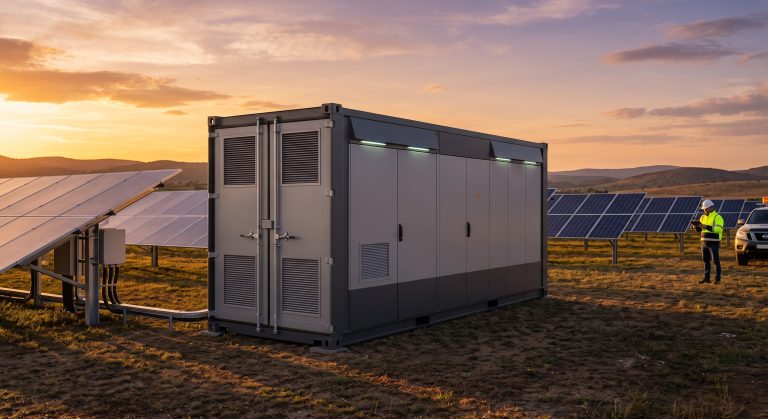
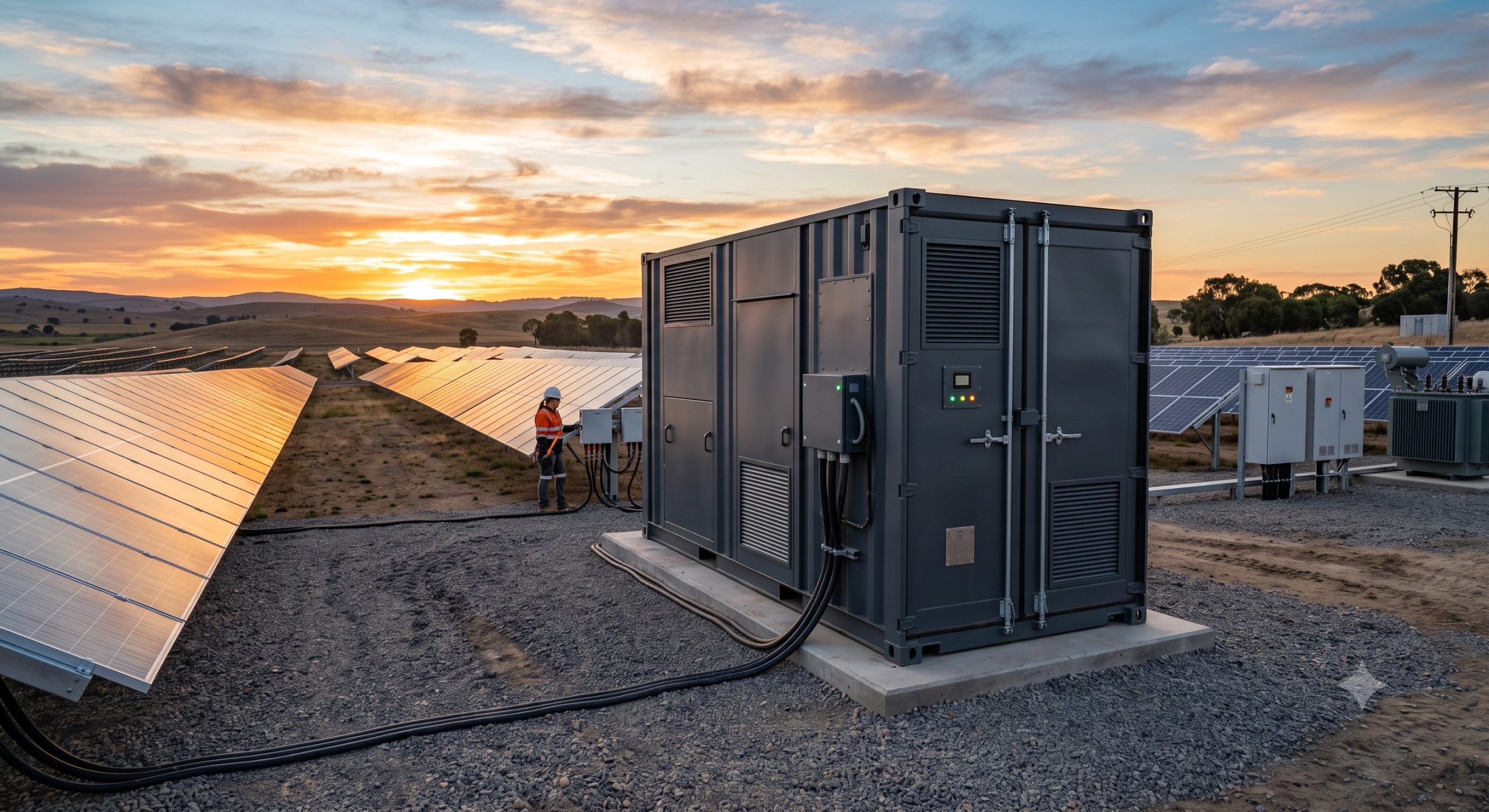
This high-density cell platform is the cornerstone of our entire C&I and utility-scale ESS portfolio, integrated into standardized 215 kWh, 372 kWh, and 1 MWh+ modular blocks. It is deployed across a wide range of demanding applications, including solar-plus-storage integration for renewable self-consumption and peak shaving, EV charging infrastructure for high-power DC fast charging grid support, industrial and commercial facilities for load shifting and demand charge reduction, and utility-scale grid services for frequency regulation and capacity firming. The cell’s inherent safety and extended life make it an ideal choice for mission-critical micro-grids in remote and island communities, as well as for backup power in data centers and essential services. Its performance has been validated in over 5 GWh of cumulative global deployments, proving its reliability and bankability in some of the world’s most challenging environments.
📥 Download Technical Specification
Click the button below to view or download the full official PDF datasheet.