Overview
Welcome to our comprehensive technical FAQ for the M8 Battery Terminal, designed for B2B energy storage system (BESS) professionals, plant engineers, and procurement specialists. This guide addresses critical pre-sales and post-sales inquiries, from battery chemistry and cycle life to BMS monitoring, safety protocols, and grid integration, ensuring you have the definitive answers for your energy storage projects.
Frequently Asked Questions
- Q1: What is the maximum cycle life and recommended depth of discharge (DoD) for the M8 Battery Terminal with LFP chemistry?
- The M8 Battery Terminal offers a maximum cycle life of 6,000 cycles at 90% Depth of Discharge (DoD) under standard operating conditions. This extended lifespan is achieved through the use of Tier-1 Lithium Iron Phosphate (LFP) cells and an advanced liquid cooling system that maintains optimal cell temperatures, significantly reducing degradation and ensuring consistent performance over a 15+ year service life.
- Q2: How does the M8 Battery Terminal’s liquid cooling system enhance performance and safety?
- The integrated liquid cooling system is critical for maintaining cell temperature uniformity within a +/- 2°C range, which directly enhances both performance and safety. By efficiently dissipating heat during high charge/discharge cycles, it prevents thermal runaway, maximizes round-trip efficiency, and extends the overall lifespan of the battery modules, ensuring reliable operation even in demanding industrial environments.
- Q3: What fire safety and thermal runaway prevention mechanisms are built into the M8 Battery Terminal?
- The M8 Battery Terminal features a multi-tiered fire safety system, including early gas and smoke detection, automatic isolation of affected modules, and a built-in aerosol-based fire suppression system. These mechanisms are designed to proactively detect and contain any thermal event at its source, preventing propagation to adjacent cells or the broader facility, and ensuring compliance with international safety standards like UL 9540A.
- Q4: How does the M8 Battery Terminal’s BMS support real-time monitoring and inter-cell balancing?
- The Active Battery Management System (BMS) provides 24/7 real-time monitoring of each individual cell’s voltage, temperature, and state of charge (SoC), enabling precise inter-cell balancing. This active balancing protocol ensures all cells operate at peak efficiency, maximizes usable capacity, and proactively alerts operators via the Local Energy Management System (EMS) to any anomalies, thereby preventing long-term performance degradation and ensuring system reliability.
- Q5: Can the M8 Battery Terminal be configured for both grid-tied and off-grid islanding modes?
- Yes, the M8 Battery Terminal is fully engineered for seamless grid-tied and off-grid (islanding) configurations. Its bi-directional Power Conversion System (PCS) allows for peak shaving and demand response in grid-tied mode, while also providing a seamless transition to islanding mode for backup power during grid outages, ensuring uninterrupted power supply for critical industrial loads.
- Q6: How scalable is the M8 Battery Terminal for expanding energy storage capacity?
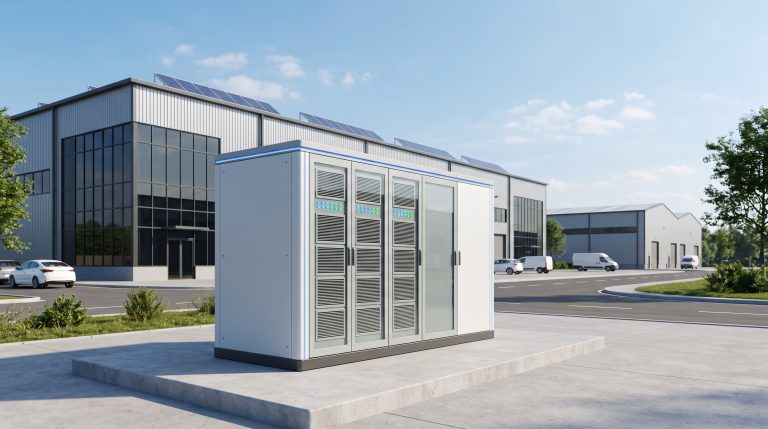
- The M8 Battery Terminal is designed with a modular, parallel architecture, allowing for straightforward scalability to meet growing energy demands. You can easily expand system capacity (kWh/MWh) by connecting additional cabinet units via a custom DC busbar linkage, enabling a flexible upgrade path from a small commercial installation to a large-scale industrial micro-grid without significant re-engineering.
- Q7: What is the typical ROI and payback period for a C&I M8 Battery Terminal system?
- The ROI for the M8 Battery Terminal is highly compelling, with a typical payback period of 3-5 years for commercial and industrial (C&I) applications. This is achieved through energy cost savings from peak shaving, participation in demand response programs, and arbitrage opportunities, effectively lowering the Levelized Cost of Energy (LCOE) and turning the battery system into a profitable decarbonization asset.
- Q8: Does the M8 Battery Terminal comply with international standards for interconnection and safety?
- Absolutely. The M8 Battery Terminal is certified to meet rigorous international interconnection and safety standards, including UL 9540, IEC 62619, and CE. This compliance ensures seamless integration with local utility grids, simplifies permitting, and provides assurance of the system’s safety, performance, and reliability for global B2B deployments.