Introduction: The Industrial Energy Crisis and the Battery Imperative
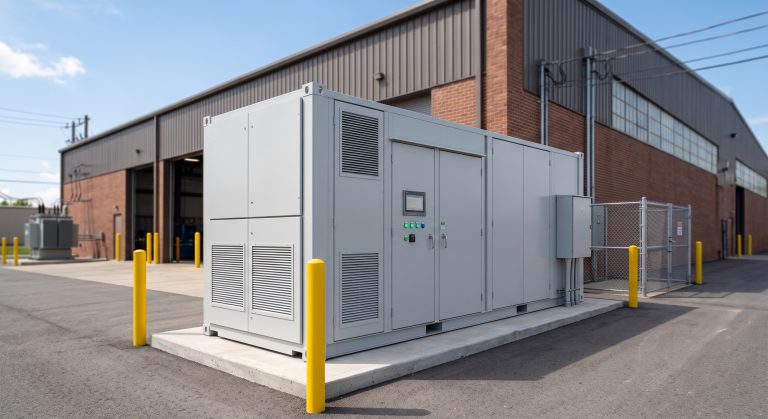
Commercial and industrial (C&I) facilities across North America, Europe, and Asia-Pacific are facing an unprecedented convergence of volatile electricity tariffs, decarbonization mandates, and grid instability. For facility managers and EPC contractors, the industrial lithium battery system has evolved from a niche backup asset into a strategic infrastructure investment. Unlike legacy lead-acid or diesel gensets, modern BESS (Battery Energy Storage Systems) deliver millisecond response times, scalable MWh capacity, and a levelized cost of energy (LCOE) that undercuts peak grid pricing by 40–60% in high-demand regions. This guide dissects the engineering architecture, safety compliance, and commercial ROI of deploying industrial lithium battery systems in C&I micro-grids.
Core Architecture: PCS, BMS, and the Tier-1 LFP Cell Stack
Power Conversion System (PCS) and Bi-Directional Inverter Logic
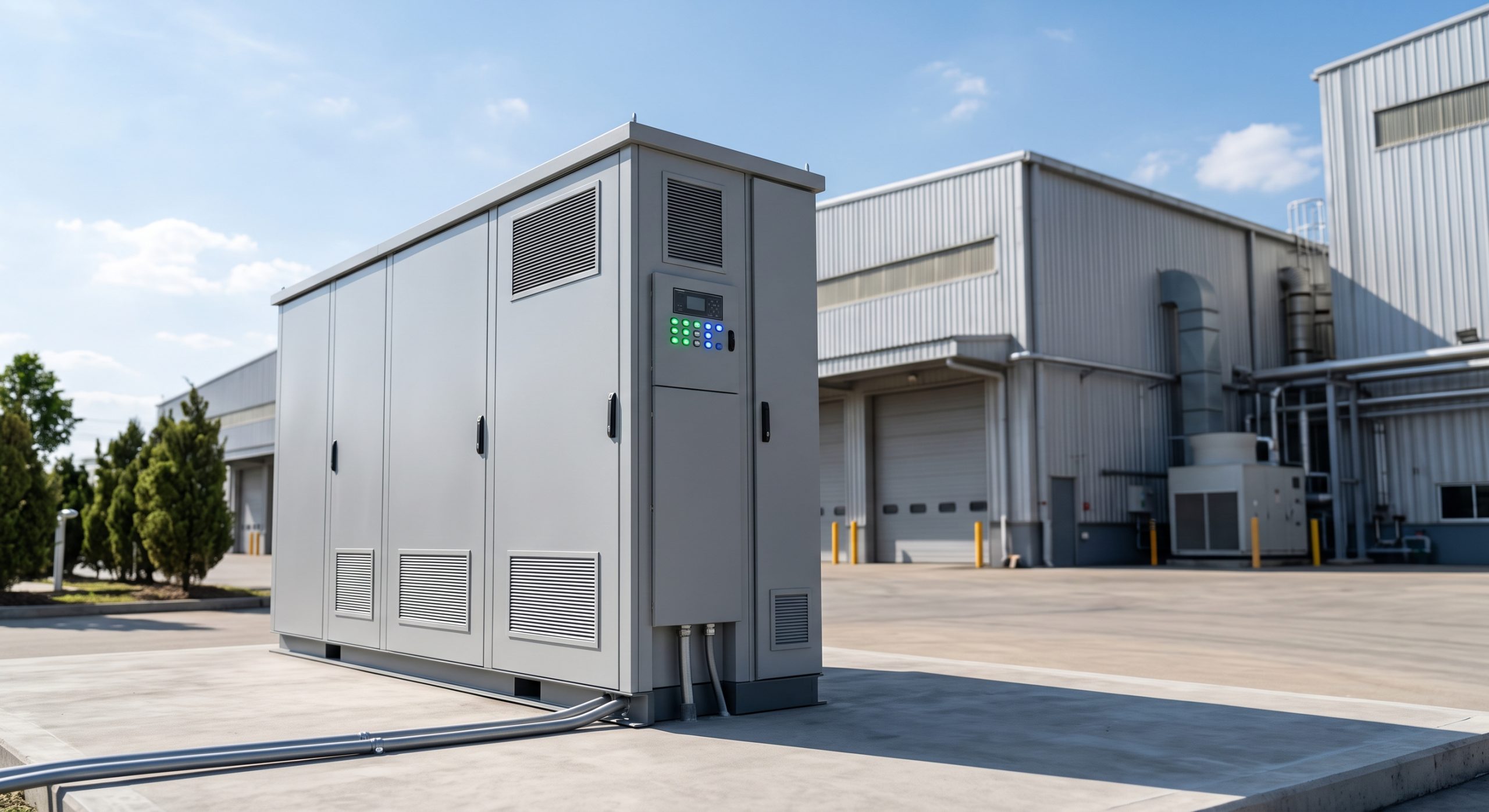
At the heart of any industrial lithium battery system lies the PCS (Power Conversion System), which manages bi-directional energy flow between the DC battery stack and the AC grid. Tier-1 PCS units now achieve round-trip efficiency of 95–98% at full load, with reactive power compensation and seamless grid-forming capability for black-start scenarios. The PCS must be paired with an EMS (Energy Management System) that executes smart dispatch algorithms—peak shaving, demand response, and time-of-use arbitrage—based on real-time load curves and utility signals.
Battery Management System (BMS) and Cell Balancing
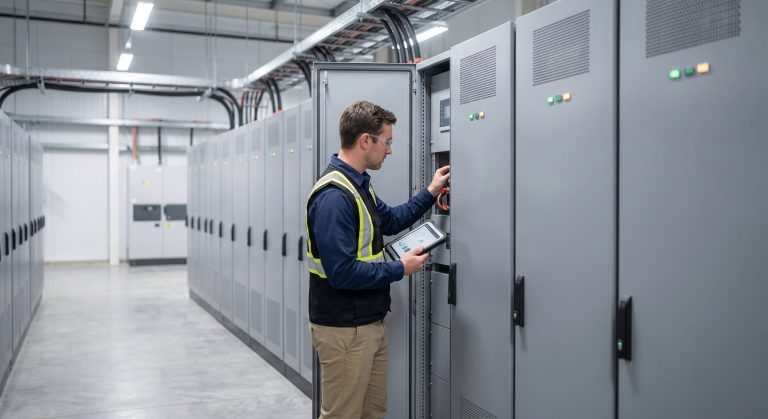
The BMS is the sentinel of the industrial lithium battery system, performing active cell balancing, state-of-charge (SoC) estimation, and state-of-health (SoH) tracking. Advanced BMS architectures now support multi-level safety redundancy, isolating faulted modules within milliseconds. For Tier-1 LFP (Lithium Iron Phosphate) chemistry, the BMS enforces voltage windows of 2.5V–3.65V per cell and temperature thresholds of -20°C to 60°C, ensuring cycle life exceeds 8,000 cycles at 90% DoD under controlled conditions.
Thermal Control: Liquid Cooling vs. Air Cooling in High-Density ESS
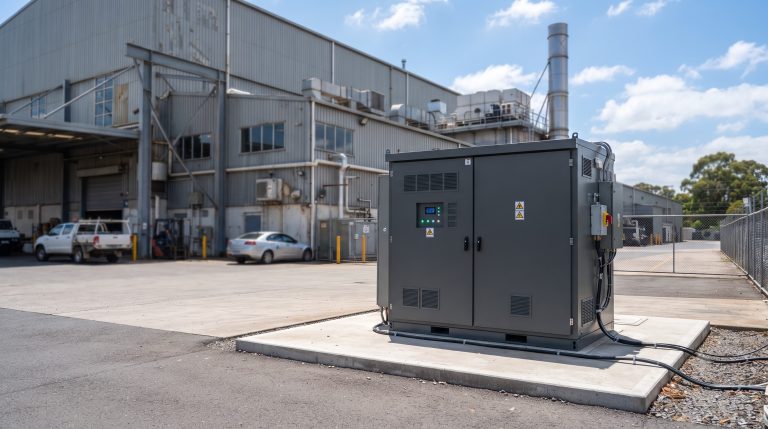
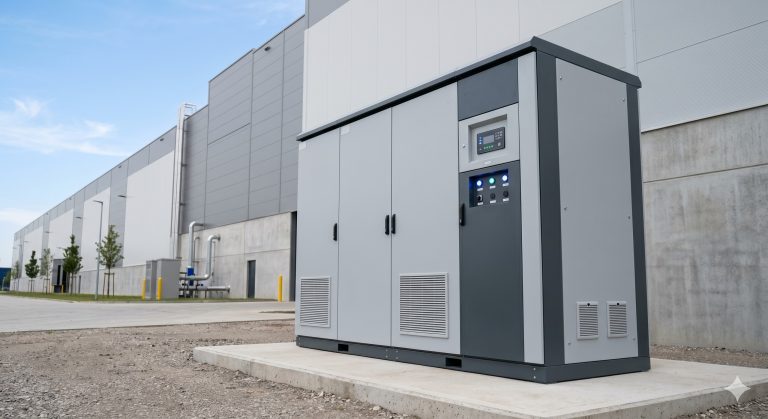
Thermal runaway prevention and uniform temperature distribution are non-negotiable for industrial lithium battery systems operating in harsh environments. Liquid cooling has become the gold standard for high-density cabinets (≥ 300 kWh per rack), maintaining cell-to-cell temperature delta below 3°C and extending calendar life by 20–30% compared to air-cooled counterparts. Air cooling remains viable for lower-power (< 100 kW) outdoor cabinets but struggles with ambient temperatures above 35°C, where derating becomes inevitable. For MWh-scale deployments, liquid-cooled containerized BESS units with integrated HVAC and fire suppression are the preferred turnkey solution.
Technical Specifications and Compliance Ledger
The following table summarizes the critical performance metrics and industry standards for a representative 500 kWh / 250 kW industrial lithium battery system. These parameters are essential for procurement teams evaluating LCOE and TCO across a 10–15 year asset life.
| Key Parameter | Technical Specification |
|---|---|
| Battery Chemistry | Tier-1 LFP (Lithium Iron Phosphate) |
| Nominal System Capacity | 500 kWh / 250 kW (scalable to MWh) |
| Cycle Life | >8,000 cycles @ 90% DoD, 25°C |
| Round-Trip Efficiency | ≥ 95% (DC-DC), ≥ 90% (AC-AC) |
| Depth of Discharge (DoD) | 90% usable |
| Thermal Management | Liquid Cooling (cell delta < 3°C) |
| Operating Temperature | -20°C to 55°C |
| Safety Standards | IEC 62619, UL 9540, CE, UN38.3 |
| Fire Suppression | Multi-level aerosol + water mist |
| Communication | Modbus TCP, IEC 61850, CAN 2.0 |
| Design Life | 15 years (10,000 cycles) |
| Warranty | 10 years / 8,000 cycles |
Commercial ROI: Peak Shaving, Demand Response, and LCOE Analysis
Peak Shaving and Demand Charge Reduction
For C&I facilities with demand charges exceeding $20/kW, an industrial lithium battery system can shave 30–50% of monthly peak demand, translating to annual savings of $50,000–$200,000 for a 1 MW facility. The LCOE of a Tier-1 LFP system now ranges from $0.08–$0.12/kWh over 10 years, compared to $0.25–$0.40/kWh for peak grid electricity in markets like California, Germany, and Australia.
Demand Response and Virtual Power Plant (VPP) Revenue
Beyond behind-the-meter savings, industrial lithium battery systems can participate in demand response programs and frequency regulation markets, generating additional revenue streams of $20,000–$80,000 per MW-year. VPP-ready EMS platforms aggregate distributed BESS assets to provide grid support services, including frequency response and voltage support, with payback periods shrinking to 4–6 years in high-value markets.
Deployment Scenarios: From Industrial Parks to EV Supercharging Hubs
Industrial Park Micro-Grids
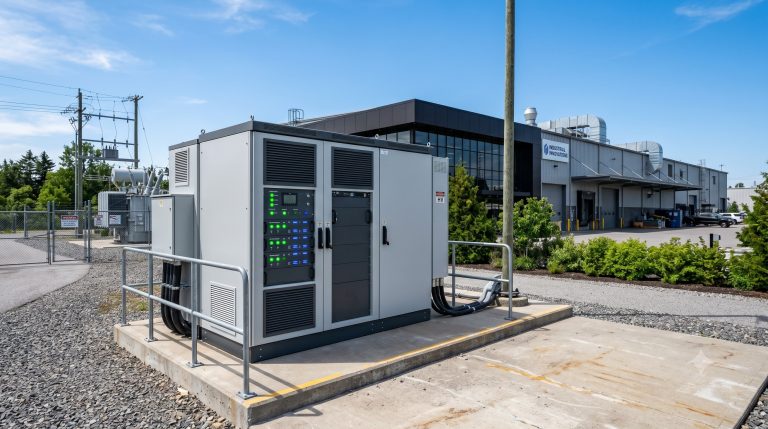
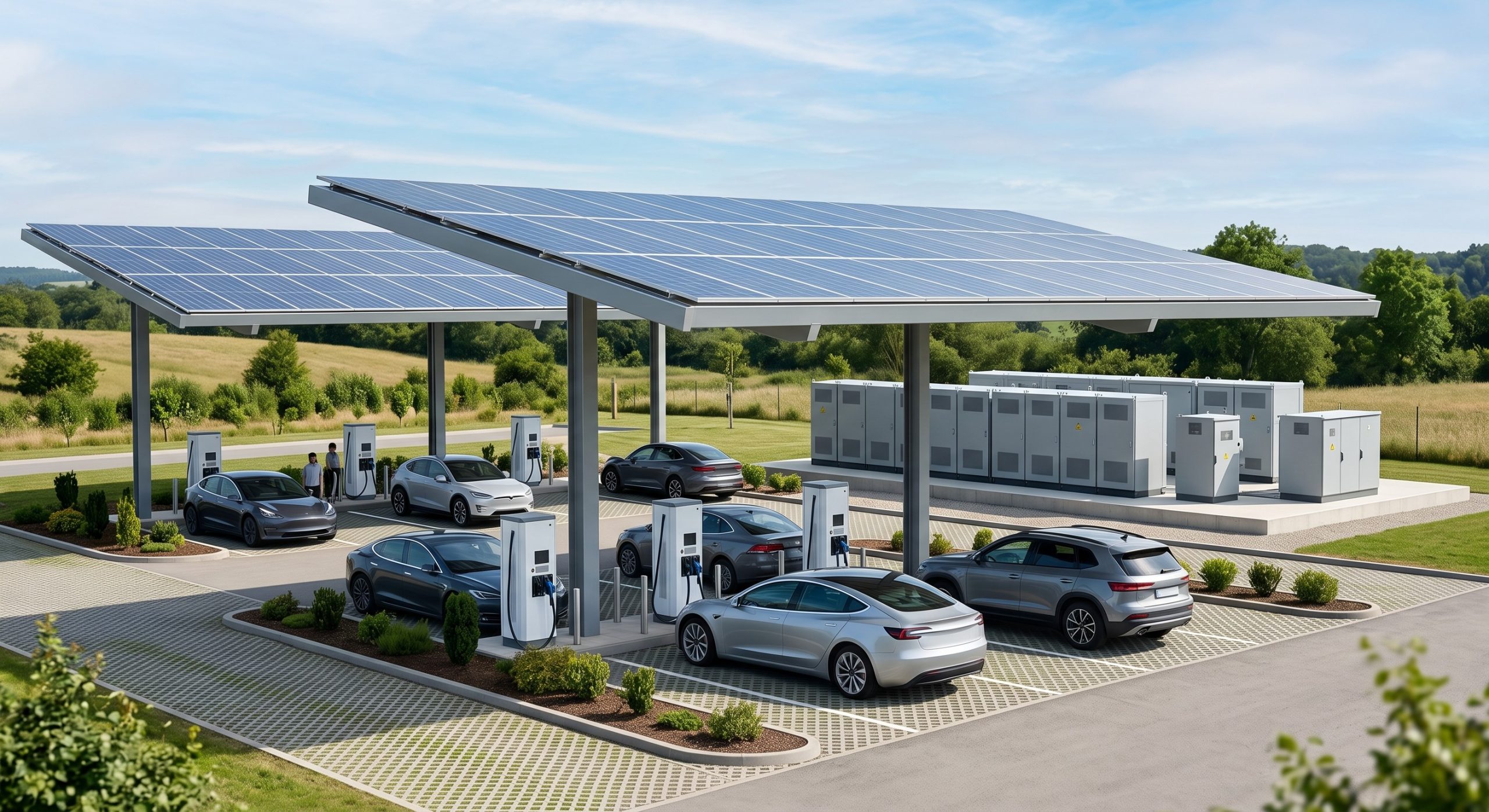
Modular industrial lithium battery systems enable energy independence for industrial parks by integrating with on-site PV generation and EV supercharging stations. A typical 2 MWh deployment can support 10–15 DC fast chargers (150–350 kW) while buffering grid demand and avoiding expensive transformer upgrades.
PV-Storage-Charging (光储充) Synergy
The PV-Storage-Charging model combines solar canopies, industrial lithium battery systems, and EV chargers into a single micro-grid. This architecture reduces carbon footprint by 40–60% and achieves zero-carbon charging during peak solar hours. For fleet operators, the round-trip efficiency of the integrated system exceeds 90%, ensuring maximum renewable utilization.
Conclusion: Strategic Procurement for the Decarbonized C&I Era
Deploying an industrial lithium battery system is no longer a tactical purchase but a strategic infrastructure decision. Procurement teams must prioritize Tier-1 LFP cells, UL 9540 and IEC 62619 certification, liquid cooling for high-density cabinets, and VPP-ready EMS for future revenue stacking. By aligning LCOE, cycle life, and grid support capabilities, C&I facilities can achieve energy independence, reduce operational costs, and meet decarbonization targets—all while future-proofing against volatile energy markets.