EXECUTIVE SUMMARY
This document provides a comprehensive technical overview of the BMS Active Balancing Configuration Guide for advanced Commercial & Industrial (C&I) Battery Energy Storage Systems (BESS). Active balancing is a critical differentiator in modern energy storage, enabling precise cell-level charge equalization, extended pack lifespan, and enhanced safety. This guide details the architecture, operational logic, and performance benefits of integrating active balancing into Tier-1 LFP-based BESS platforms. It serves as a definitive reference for system integrators, EPCs, and asset owners seeking to optimize battery performance, reduce O&M costs, and maximize return on investment.
SYSTEM ARCHITECTURE & SAFETY
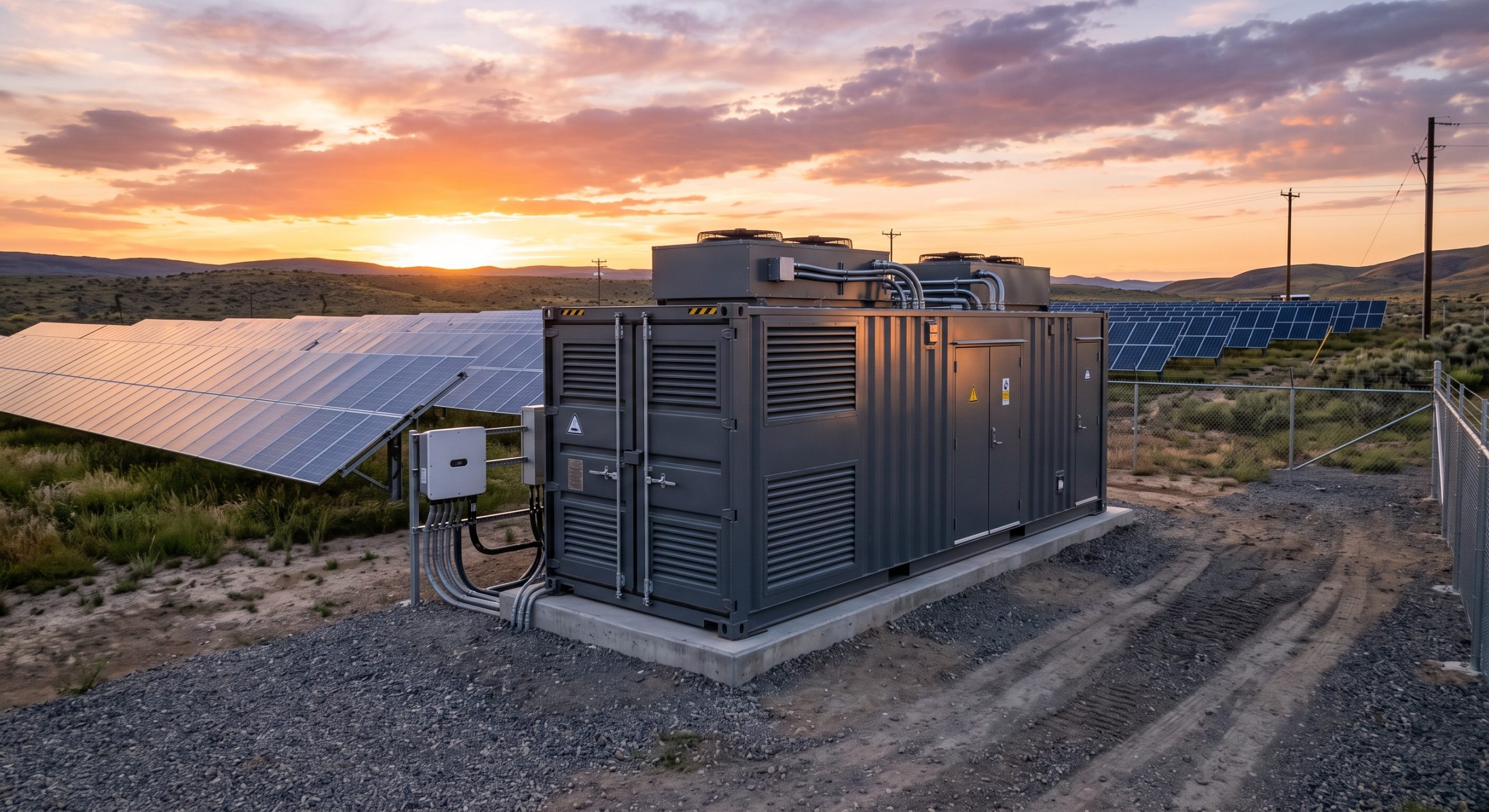
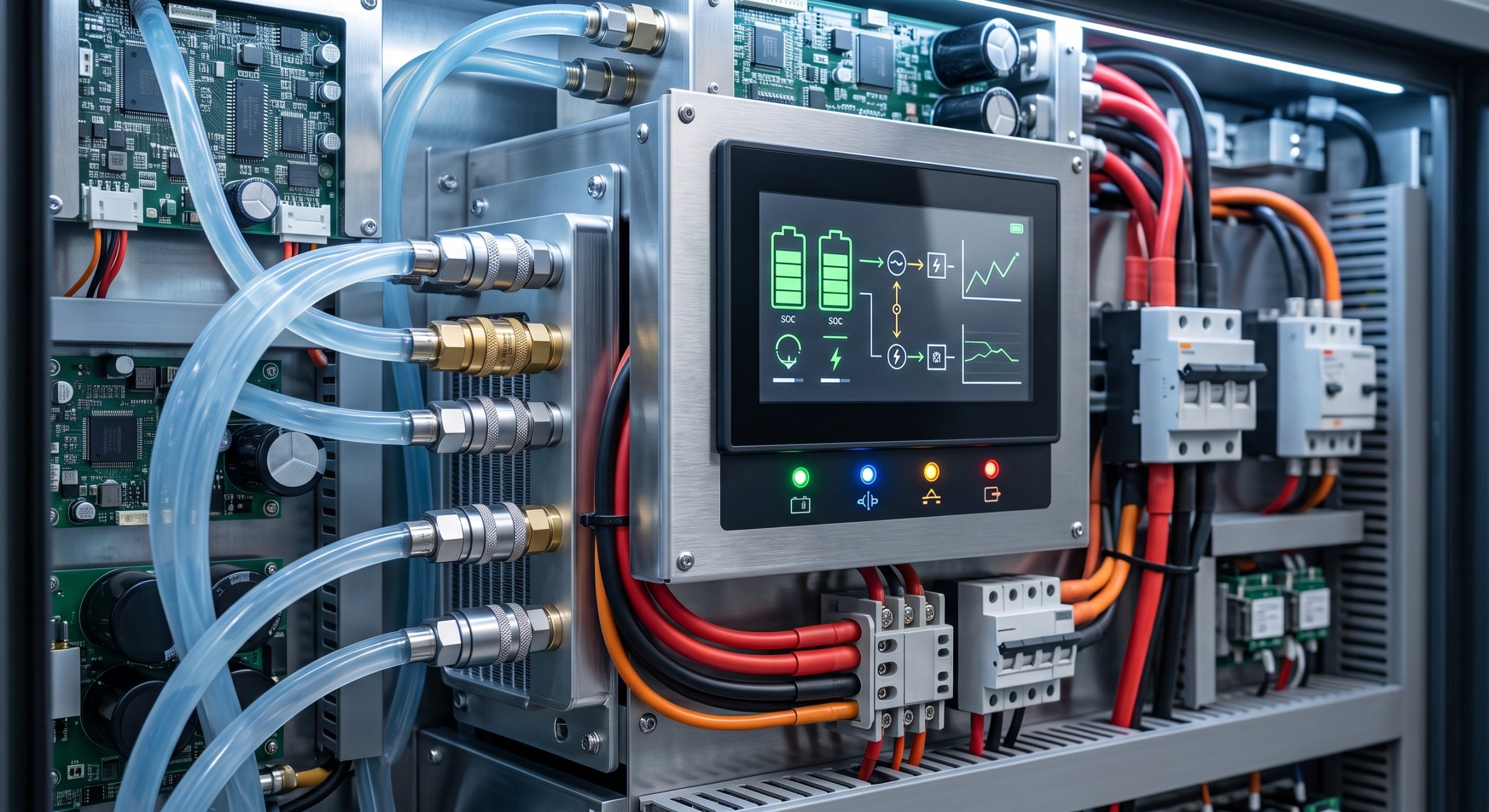
The active balancing BMS is engineered as a distributed, hierarchical control system. At the module level, dedicated active balancing ICs continuously monitor individual cell voltages and temperatures. Unlike passive balancing, which dissipates excess energy as heat, the active system transfers energy from higher-charge cells to lower-charge cells using high-efficiency DC-DC converters. This process minimizes energy waste and thermal stress. The Battery Management Unit (BMU) coordinates module-level data, while the String Control Unit (SCU) manages rack-level operations and communicates with the Power Conversion System (PCS) and Energy Management System (EMS). Safety is enforced through multi-layered protections, including overvoltage, undervoltage, overcurrent, overtemperature, and short-circuit detection, all certified to IEC 62619 and UL 9540 standards.
KEY FEATURES
– Cell-Level Active Balancing: Transfers energy between cells with up to 90% efficiency, maintaining voltage differentials below 10 mV.
– Extended Cycle Life: Reduces depth of discharge (DoD) stress on individual cells, extending pack lifespan by up to 20%.
– Real-Time Diagnostics: Continuous monitoring of cell State of Health (SoH) and State of Charge (SoC) with cloud-based reporting.
– Modular Scalability: Supports parallel expansion from 215 kWh to MWh-scale configurations without additional balancing hardware.
– Enhanced Safety: Integrated thermal runaway suppression logic and active equalization reduce risk of cell failure.
– Seamless Integration: Compatible with leading PCS and EMS platforms via Modbus TCP/IP and CAN 2.0B.
COMPLIANCE & STANDARDS
The BMS active balancing configuration complies with major international standards, ensuring global deployment readiness. Key certifications include:
– UL 9540: Energy Storage Systems and Equipment
– IEC 62619: Safety requirements for industrial secondary lithium cells and batteries
– IEC 62477: Safety requirements for power electronic converter systems
– UN 38.3: Transport of lithium metal and lithium-ion batteries
– CE and RoHS: European conformity and hazardous substance restrictions
TECHNICAL SPECIFICATIONS
The active balancing BMS supports a wide range of operating parameters, designed for C&I and utility-scale applications. It operates effectively within a temperature range of -20°C to 55°C, with optional heating for extreme cold climates. Communication interfaces include Ethernet, RS485, and CAN. The system is compatible with 280 Ah, 306 Ah, and 314 Ah LFP cells, providing flexibility for various rack designs.
| Parameter | Specification |
|---|---|
| Balancing Method | Active (Inductive/Capacitive Energy Transfer) |
| Balancing Efficiency | ≥ 90% |
| Voltage Equalization Precision | ≤ 10 mV |
| Max Balancing Current | 5 A (continuous) / 10 A (peak) |
| Supported Cell Chemistry | Tier-1 LFP (280 Ah / 306 Ah / 314 Ah) |
| Communication Interfaces | CAN 2.0B, RS485, Modbus TCP/IP |
| Operating Temperature Range | -20°C to 55°C |
| Certifications | UL 9540, IEC 62619, IEC 62477, UN 38.3, CE, RoHS |
| Cycle Life Extension | Up to 20% improvement vs. passive balancing |
| Compatible System Sizes | 215 kWh to MWh-scale |
INDUSTRIAL DEPLOYMENT
The BMS active balancing configuration guide is tailored for diverse industrial deployments, including peak shaving, demand response, microgrid support, and renewable integration. In a typical 1 MW / 2 MWh C&I installation, the active balancing system ensures consistent cell performance across 10,000+ cycles, reducing maintenance interventions and improving system availability. The guide provides step-by-step configuration procedures, commissioning checklists, and troubleshooting protocols for field engineers. It also outlines best practices for integrating active balancing with fire suppression systems and HVAC controls, ensuring a holistic safety approach.
📥 Download Technical Specification
Click the button below to view or download the full official PDF datasheet.