COMMERCIAL SYSTEMS ENGINEERING REFERENCE MANUAL: FACTORY ELECTRICITY COST REDUCTION STRATEGY GUIDE
EXECUTIVE SUMMARY
This document serves as the definitive technical reference for deploying Battery Energy Storage Systems (BESS) to achieve substantial and measurable reductions in factory electricity expenditures. By strategically integrating a utility-scale energy storage platform, industrial facilities can capitalize on energy arbitrage, peak demand shaving, and enhanced power quality, effectively transforming a passive operational cost into a strategic, revenue-generating asset. This guide outlines the engineering principles, system architecture, and performance metrics of our Tier-1 LFP-based storage solution, engineered to deliver a guaranteed return on investment through intelligent energy management.
SYSTEM ARCHITECTURE & SAFETY
The core of the system is a modular, high-voltage battery platform built upon prismatic Lithium Iron Phosphate (LFP) cells. The architecture is designed for seamless integration with existing facility infrastructure, employing a three-level safety and control hierarchy:
– Battery Management System (BMS): Provides cell-level voltage, temperature, and current monitoring with active balancing to ensure uniform state-of-charge (SOC) across all cells, maximizing cycle life and safety.
– Power Conversion System (PCS): A bi-directional inverter with a grid-following and grid-forming capability, enabling seamless transition between grid-tied and islanded modes. Features include low-voltage ride-through (LVRT) and reactive power compensation.
– Energy Management System (EMS): An intelligent, cloud-connected controller that runs proprietary algorithms for peak load forecasting, price-based arbitrage, and demand response dispatch. The EMS continuously optimizes the charge/discharge schedule against real-time utility tariffs and production schedules.
Safety is paramount. The system is engineered with multi-level protection against thermal runaway, including passive fire barriers, active aerosol suppression, and a liquid cooling loop that maintains cell temperatures within a +/- 1°C delta, preventing hot spots and significantly enhancing long-term reliability.
KEY FEATURES
– Feature 1: Intelligent Peak Shaving: The EMS algorithm predicts facility load peaks and automatically discharges stored energy to flatten the demand curve, significantly reducing demand charges which often constitute 30-50% of a facility’s electricity bill.
– Feature 2: Energy Arbitrage: The system automatically charges during periods of low off-peak tariffs (e.g., overnight) and discharges during high on-peak periods (e.g., afternoon), capitalizing on the time-of-use (TOU) rate differential.
– Feature 3: Advanced Liquid Cooling: An integrated, closed-loop liquid cooling system dissipates heat more efficiently than air, ensuring optimal cell performance, extending cycle life by up to 20%, and allowing for a more compact system footprint.
– Feature 4: Grid-Interactive Capabilities: Supports both AC and DC coupling for PV integration. Provides backup power in the event of grid instability, with a seamless transition time of less than 20ms, protecting critical production lines from costly downtime.
COMPLIANCE & STANDARDS
The system is engineered and certified to the highest international safety and performance standards, ensuring a risk-free and code-compliant installation worldwide.
– UL 9540: Certified for Energy Storage Systems and Equipment.
– UL 9540A: Tested for thermal runaway fire propagation, meeting rigorous safety standards for large-scale installations.
– IEC 62619: Certified for safety requirements for secondary lithium cells and batteries.
– IEC 63056: Safety requirements for secondary lithium cells and batteries for use in electrical energy storage systems.
– IEEE 1547: Standard for Interconnection and Interoperability of Distributed Energy Resources with Associated Electric Power Systems Interfaces.
TECHNICAL SPECIFICATIONS
| Parameter | Specification |
|---|---|
| Nominal Capacity | Up to 2 MWh per unit (expandable in 250kWh increments) |
| AC Output Power (Rated) | Up to 1 MW (customizable at 50kW intervals) |
| Round-Trip Efficiency | > 92% |
| Cell Chemistry | Tier-1 LFP (Lithium Iron Phosphate) |
| Thermal Management | Integrated Smart Liquid Cooling (Closed Loop) |
| Operating Temperature Range | -20°C to +50°C (derated above 45°C) |
| Enclosure Rating | IP54 / NEMA 3R |
| Cycle Life | > 6,000 cycles at 80% Depth of Discharge (DoD) |
| Communication Protocol | Modbus TCP/IP, CAN Bus, IEC 61850 |
| Safety Certifications | UL 9540, UL 9540A, IEC 62619, IEC 63056 |
| Warranty | 10-year performance guarantee (80% capacity retention) |
INDUSTRIAL DEPLOYMENT
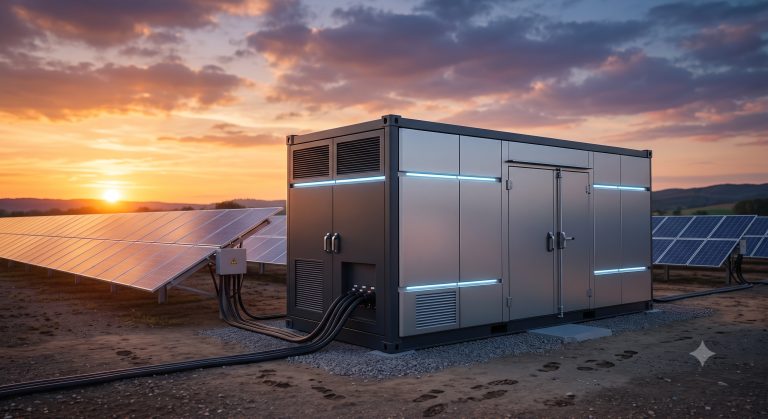
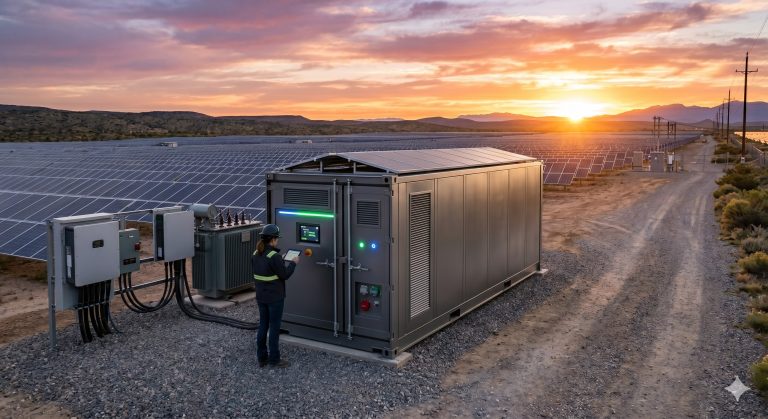
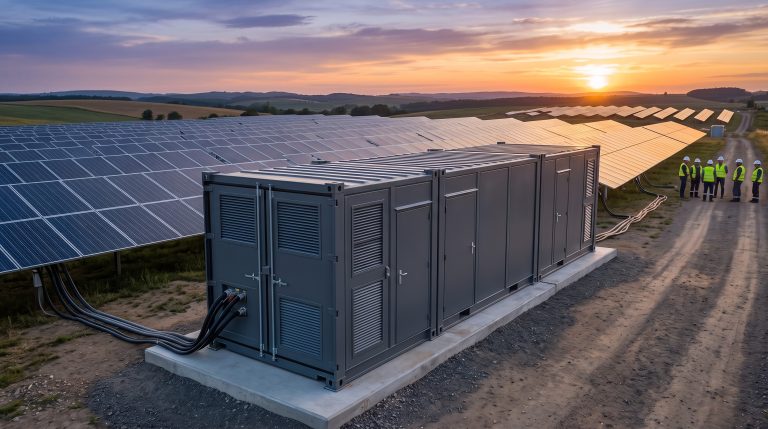
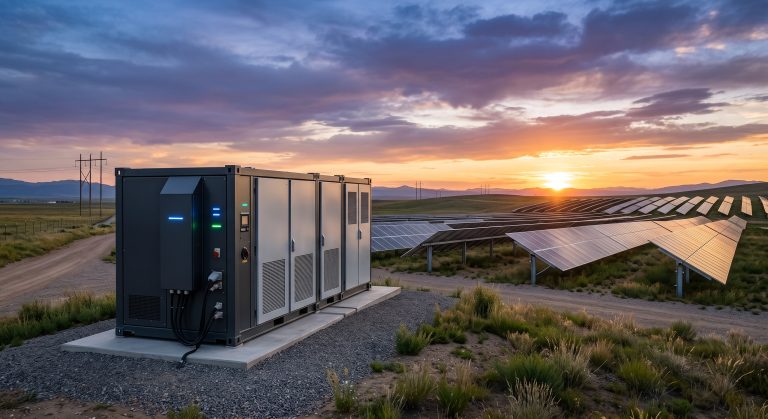
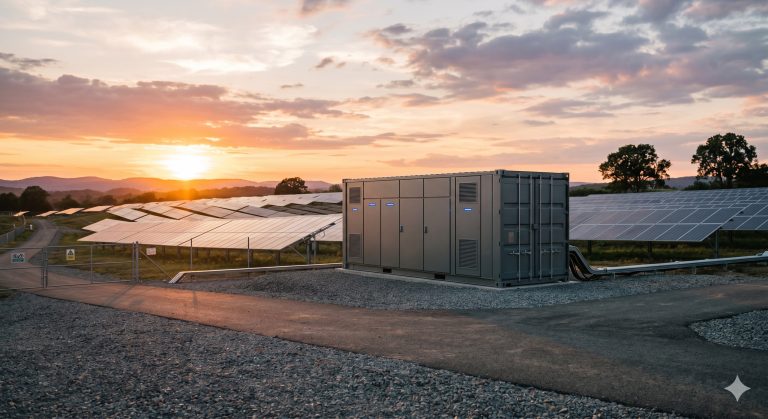
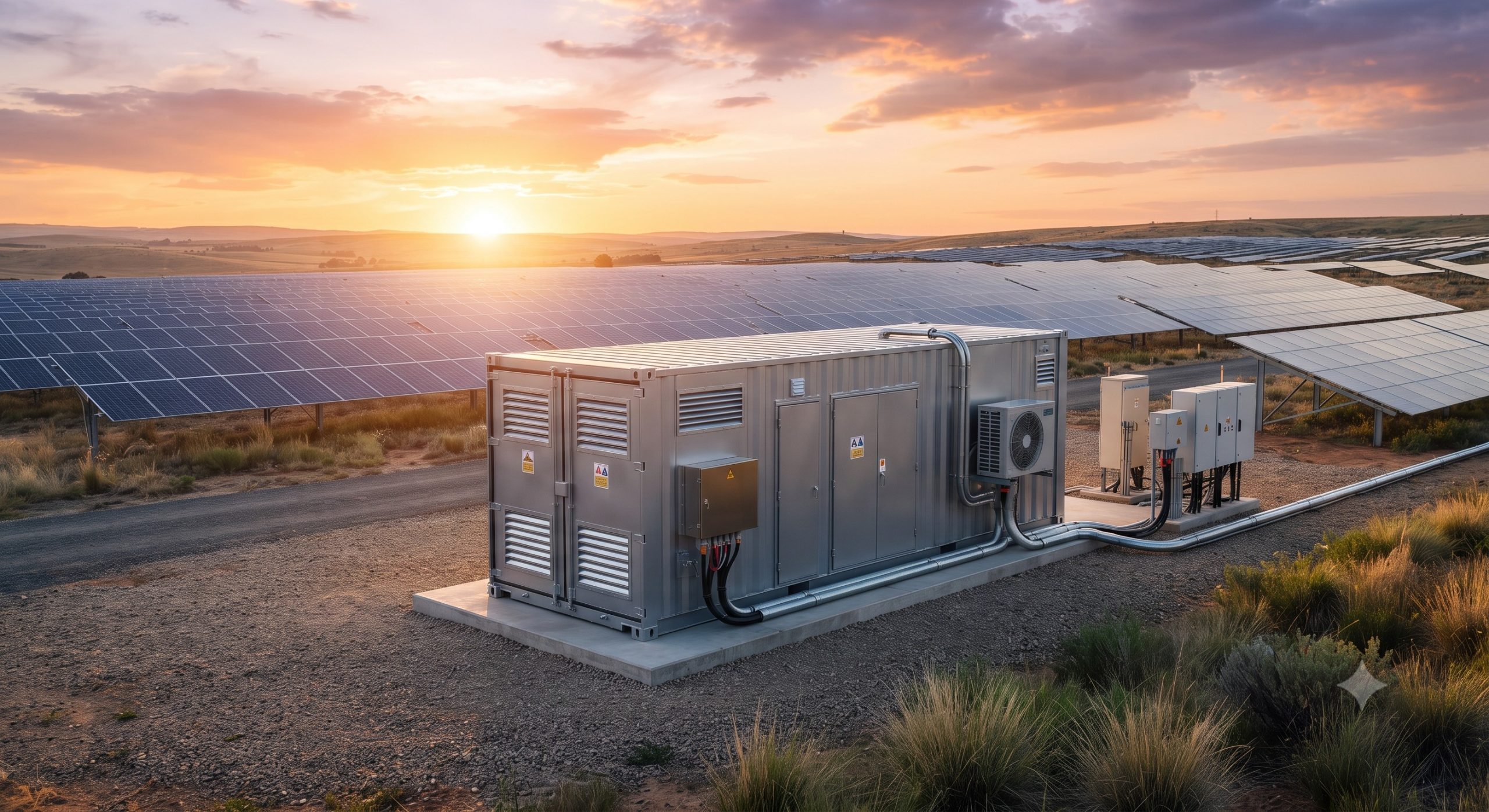
Deployment is designed for minimal site disruption and rapid commissioning. The system is housed in a robust, weatherproof enclosure (IP54/NEMA 3R) rated for outdoor installation. The system connects directly to the facility’s low-voltage or medium-voltage busbar via a step-up transformer. Installation requires a prepared concrete pad with a simple wiring connection to the main switchgear.
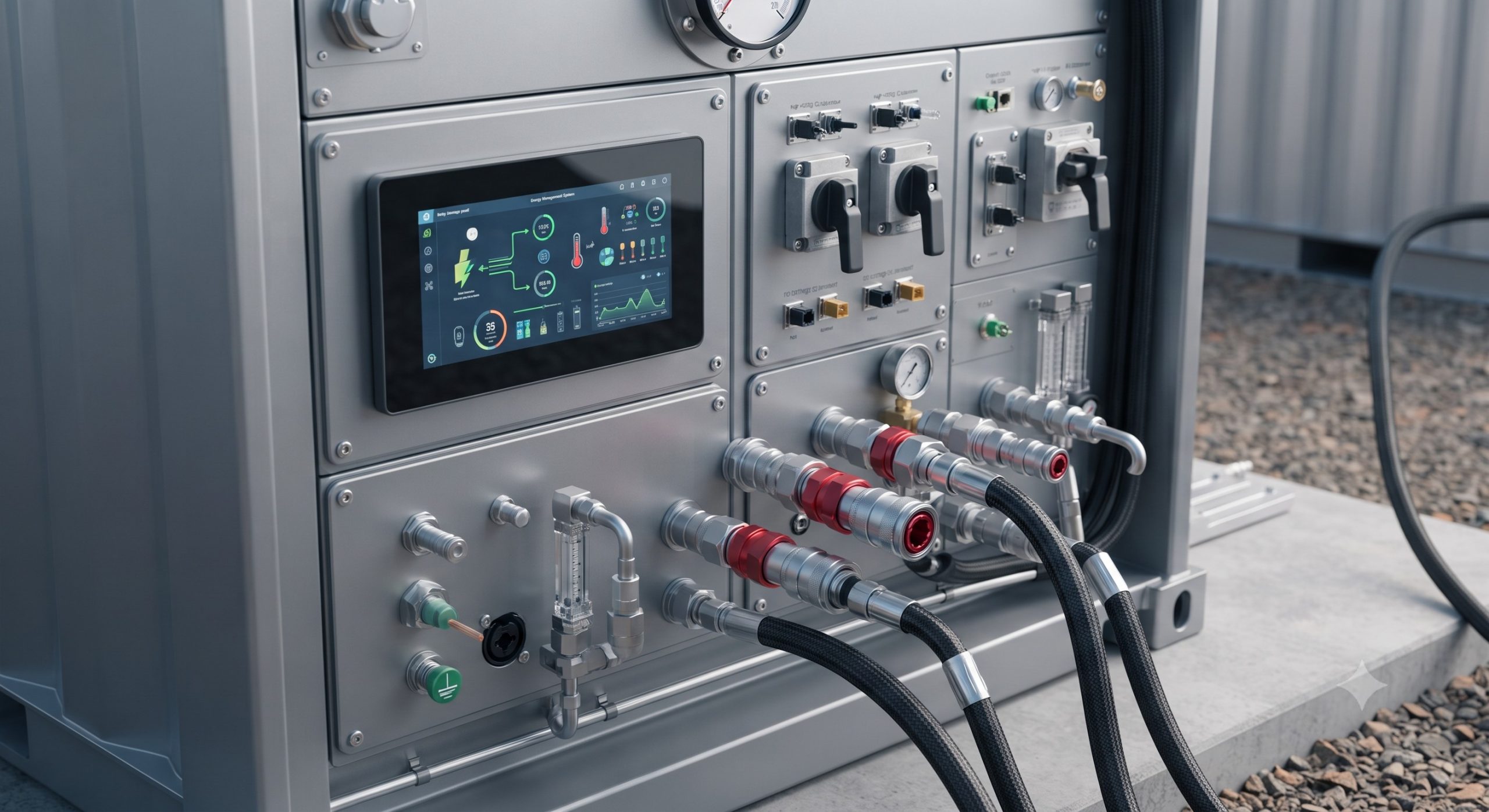
For a typical 2 MWh installation, the entire footprint is less than 25 square meters. The system operates autonomously, requiring minimal maintenance. On-site monitoring is available via a local touchscreen HMI, while the EMS provides a comprehensive web-based dashboard for remote performance tracking, fleet management, and firmware updates.
📥 Download Technical Specification
Click the button below to view or download the full official PDF datasheet.