Overview
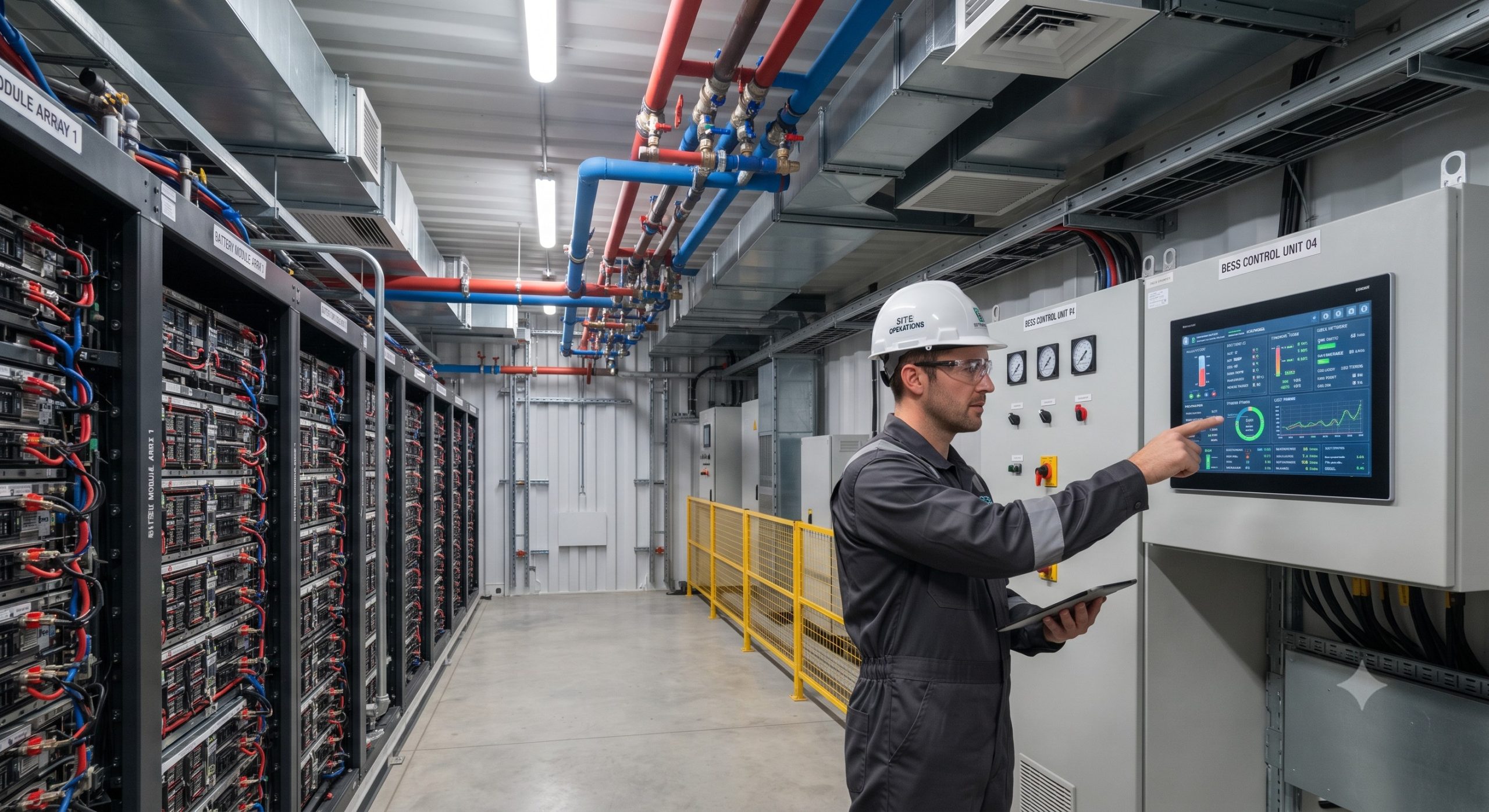
For B2B energy storage system (BESS) deployments, the thermal management system is not just an accessory—it is a critical determinant of safety, performance, and long-term ROI. As a field-proven technical support engineer, I can confirm that the HVAC system in modern utility-scale containers is a complex, multi-layered environmental control unit. It combines high-capacity liquid cooling circuits, intelligent air circulation, and integrated fire suppression to maintain optimal battery operating temperatures between 15°C and 35°C, thereby preventing thermal runaway and maximizing cell cycle life. This FAQ addresses the most critical technical and safety questions from plant engineers and procurement specialists regarding BESS HVAC solutions and their role in overall system protection.
Frequently Asked Questions
- Q1: What specific HVAC systems are used in modern energy storage containers to manage thermal runaway?
- Modern BESS containers utilize a hybrid HVAC system combining active liquid cooling (chiller-based) for the battery racks and vapor-compression air conditioning for ambient humidity control. The system is integrated with early-warning gas detection and aerosol-based fire suppression to proactively prevent and mitigate thermal runaway events.
- Q2: How does the liquid cooling system in the BESS container prevent cell degradation and extend cycle life?
- The liquid cooling system maintains inter-cell temperature variance below 3°C, which is crucial for preventing localized hot spots that accelerate degradation. By circulating a water-glycol mixture through cold plates directly beneath the battery modules, it ensures optimal electrochemical performance, thereby supporting a cycle life of 6,000+ cycles at 80% Depth of Discharge (DoD) and maximizing the system’s 15-year operational lifespan.
- Q3: What are the multi-tier fire safety mechanisms integrated with the BESS HVAC system?
- The HVAC is integrated with a multi-tier safety architecture: Tier 1 includes real-time gas detection (CO, H2, and VOCs) that triggers ventilation adjustments; Tier 2 involves local aerosol fire suppression units installed in each battery rack; Tier 3 provides for a full-container gaseous fire suppression (typically Novec 1230 or FM-200) release in the event of confirmed thermal runaway.
- Q4: How does the BMS (Battery Management System) communicate with the HVAC to ensure optimal battery health?
- The BMS actively monitors cell voltages and temperatures, providing continuous data to the HVAC controller. If the BMS detects a trending temperature spike or cell imbalance, it commands the HVAC to increase cooling capacity, adjust fan speeds, or initiate a pre-cooling cycle to stabilize the pack, thereby preventing a cascade of cell failures.
- Q5: What is the IP rating and corrosion protection standard for the HVAC enclosure in harsh outdoor environments?
- The container and its HVAC components are designed with a minimum IP65 (NEMA 4X) rating, ensuring they are dust-tight and protected against low-pressure water jets and severe corrosion. This includes anti-corrosion coatings, marine-grade aluminum fin coils, and heavy-duty epoxy-coated grilles suitable for desert, coastal, or high-humidity industrial environments.
- Q6: What are the standard power consumption and control protocols for this BESS HVAC system?
- The HVAC system typically consumes between 5% to 8% of the BESS rated power, with variable-speed compressors and EC fans that optimize energy use based on real-time load and ambient conditions. It supports standard communication protocols like Modbus RTU and TCP/IP, enabling seamless integration with the site’s Energy Management System (EMS) for demand-response or remote dispatch scenarios.
- Q7: What post-sales maintenance is required for the HVAC system in these energy storage containers?
- Post-sales maintenance includes quarterly inspections of filter cleanliness, refrigerant levels, and coolant quality (including glycol concentration checks), along with an annual factory-certified service to inspect seals, electrical connections, and sensor calibration. This robust maintenance plan is crucial to uphold the 10-year performance warranty and ensure global sea-freight security standards for shipped units.
- Q8: What international standards and certifications apply to the BESS HVAC and fire suppression system?
- The system is designed to meet stringent international certifications including UL 9540 (for thermal runaway fire propagation), UL 9540A (for fire testing), and IEC 62619 (for functional safety). Additionally, the HVAC and safety sub-systems comply with CE, NFPA 855, and various local building codes, ensuring the project aligns with global interconnection and safety standards.