Introduction: The Economic Imperative of BESS in a Volatile Energy Market
In an era of unprecedented industrial electricity price volatility and aggressive corporate net-zero pledges, the Renewable energy integration BESS (Battery Energy Storage System) has transitioned from a niche technology to a strategic financial asset. For commercial and industrial (C&I) enterprises, energy costs often represent the second-largest operational expense. Traditional peak-demand tariffs, where utility companies charge a premium based on the highest 15-minute average usage, severely penalize facilities with uneven load profiles. By deploying a strategic commercial energy storage solution, businesses can effectively shave these peaks, leveraging time-of-use arbitrage to significantly cut electricity bills. However, for procurement managers and system architects, the true measure of success extends beyond the initial CapEx; it hinges on a rigorous Total Cost of Ownership (TCO) analysis over a 10-15 year asset lifespan.
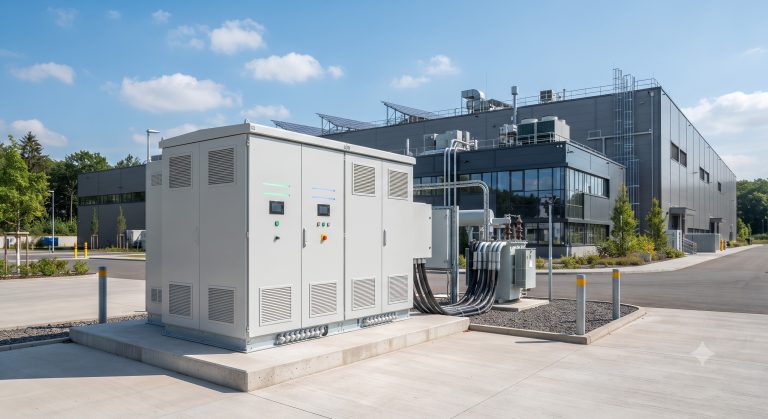
Modern Renewable energy integration BESS systems are engineered to integrate seamlessly with PV solar arrays and existing grid infrastructure, providing not just backup power but intelligent load management. This blog serves as a comprehensive B2B sourcing guide, dissecting the technical architecture, safety certifications, and financial modeling required to maximize peak-shaving ROI. We will navigate through core metrics such as Round-trip efficiency, Depth of Discharge (DoD), cycle life, and the critical role of advanced thermal management via liquid cooling in preserving battery health. By the end, you will have a data-driven framework to evaluate Tier-1 LFP cell specifications and understand how the right BESS can transform an energy liability into a competitive advantage.
Core Architecture: PCS, BMS, and the Brains of the Operation
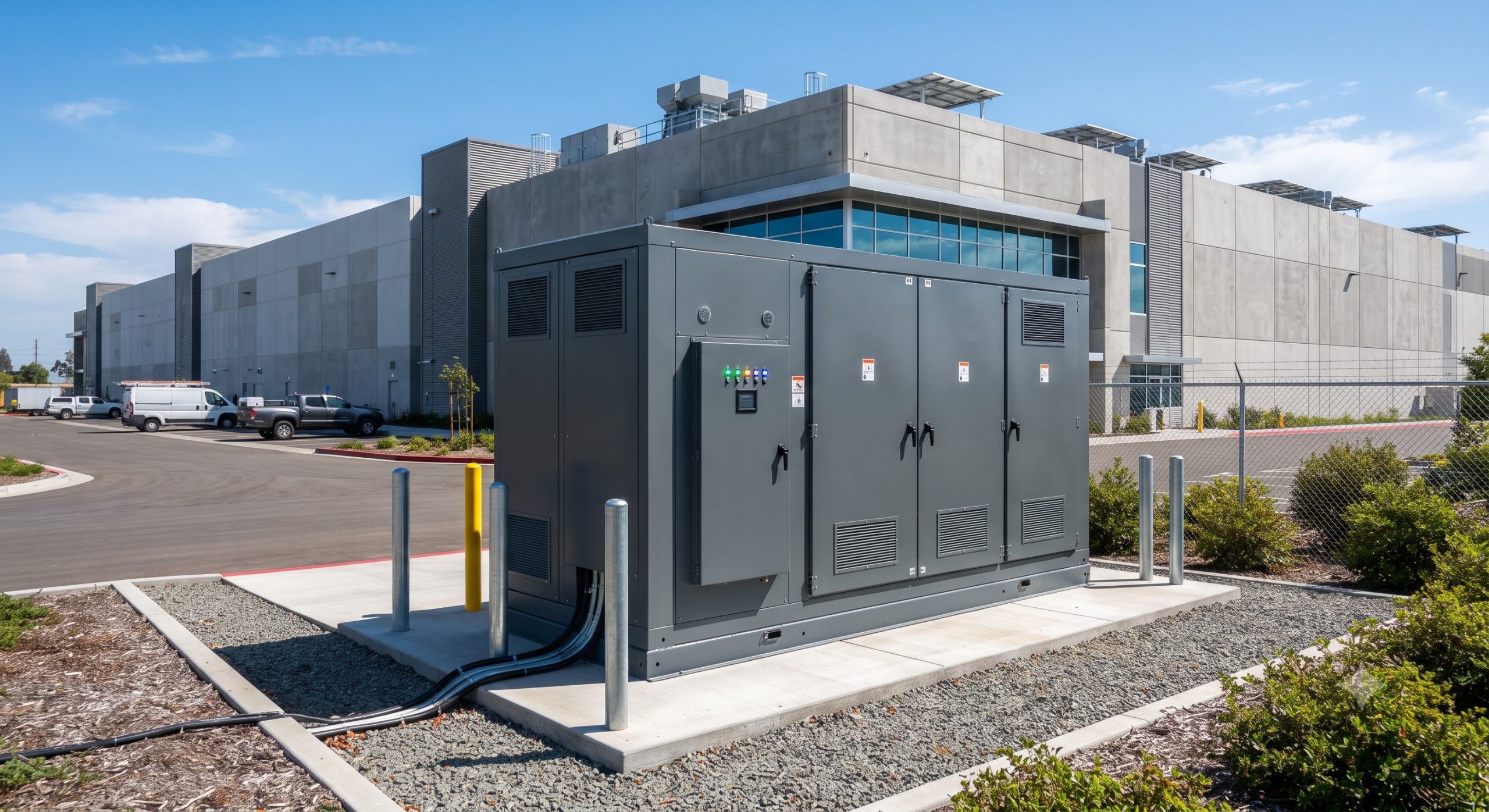
To maximize peak-shaving ROI, one must understand the synergistic components that drive performance. A high-performance Renewable energy integration BESS is not merely a stack of batteries; it is an orchestrated system built around three core pillars: the Battery Management System (BMS), the Power Conversion System (PCS), and the Energy Management System (EMS).
Power Conversion System (PCS) & Bi-Directional Inverters
The PCS acts as the gateway between the DC energy stored in the batteries and the AC power required by facility loads and the grid. For peak shaving, the PCS must respond to EMS dispatch commands within milliseconds. High-efficiency PCS units, often featuring advanced silicon carbide (SiC) semiconductors, achieve conversion efficiencies exceeding 98.5%, minimizing energy losses during both charging (from solar/grid) and discharging (to load/grid). When evaluating BESS specifications, pay close attention to the overload capacity (e.g., 110% continuous and 150% for 10 seconds), which is crucial for handling sudden high-current demands in industrial applications.
Intelligent Battery Management System (BMS)
The BMS serves as the safety and longevity guardian. It continuously monitors individual cell voltage, current, and temperature across thousands of cells. Advanced BMS algorithms calculate State of Charge (SoC) and State of Health (SoH) with high precision, implementing cell balancing to ensure uniform performance across the pack. This is vital to prevent individual cell degradation from compromising the entire system’s capacity. For peak-shaving applications where the battery cycles daily, a robust BMS that enforces safe operational limits is non-negotiable. The system is engineered to comply with stringent safety standards including IEC 62619 (safety requirements for industrial batteries) and UL 9540 (standard for energy storage systems), ensuring the system has undergone rigorous testing for thermal runaway prevention and electrical safety.
Thermal Control: Liquid Cooling vs. Air Cooling
Temperature is the primary accelerant of battery degradation. While air-cooled systems are less expensive upfront, they often struggle to maintain uniform temperatures (ΔT < 5°C) across densely packed battery modules, leading to hotspots and uneven aging. Liquid cooling technology, utilizing a micro-channel cold plate design, offers superior thermal regulation, maintaining cell temperatures within a narrow optimal band of 25±2°C. This precision not only enhances Round-trip efficiency by reducing internal resistance but also significantly prolongs cycle life. For C&I facilities running intensive peak-shaving cycles, the higher CapEx of liquid cooling is rapidly amortized through deferred capacity replacement and reduced performance degradation, lowering the Levelized Cost of Storage (LCOS).
Technical Specifications: The Data-Driven Sourcing Matrix
When sourcing a Renewable energy integration BESS for peak-shaving, the technical datasheet is your primary diagnostic tool. Below is a curated registry of core specifications that fundamentally dictate ROI, system resilience, and grid-support capabilities. It is crucial to scrutinize these against your unique load profile and local utility rate structures.
| Key Parameter | Technical Specification |
|---|---|
| Battery Chemistry | Tier-1 LFP (Lithium Iron Phosphate) |
| Nominal System Capacity | 100-5000 kWh (Modular/Containerized) |
| Cycle Life (@ 25°C) | >8000 cycles @ 90% DoD (End-of-Life 60% SOH) |
| Round-Trip Efficiency | >95% (with Liquid Cooling & SiC PCS) |
| Cooling Technology | Liquid Cooling (Micro-channel cold plate / ΔT ≤ 3°C) |
| PCS Efficiency | >98.5% (Peak) |
| Response Time | < 40ms for Grid Support / Frequency Regulation |
| Safety Certifications | UL 9540, IEC 62619, CE, UN38.3 |
| Grid Connection | Seamless On-Grid/Off-Grid Transition & VPP Ready |
Interpretation of Key BESS Metrics
- Battery Chemistry (LFP): The current industry standard for C&I storage is Lithium Iron Phosphate (LFP) due to its intrinsic thermal stability, long calendar life, and absence of cobalt. Tier-1 LFP cells offer >8000 cycles at 90% DoD, equating to a 15-20 year lifespan under daily cycling.
- Round-Trip Efficiency (RTE): This metric measures the total energy recovered relative to the energy stored. An RTE of >95% (achievable with liquid cooling and high-efficiency PCS) ensures minimal energy loss, directly increasing the profitability of arbitrage and peak-shaving operations.
- Depth of Discharge (DoD): While systems are rated for 100% DoD, operating at 90% DoD is often recommended to extend cycle life. Balancing DoD with capacity sizing is a key TCO lever.
- Response Time: For frequency regulation and seamless grid transition, a response time of < 40ms is critical for compliance with grid codes.
Commercial ROI: Peak Shaving, TCO, and Grid Support
Financial modeling for a Renewable energy integration BESS must extend past simple energy arbitrage. In many regions, peak demand charges constitute 30-50% of a commercial electricity bill. By deploying a BESS to discharge during peak demand periods and recharge during low-cost off-peak periods or via on-site PV, companies can reduce these charges by 30-80%.
Total Cost of Ownership (TCO) Analysis:
The TCO equation is: CapEx + OpEx + Replacement Cost – Energy Savings – Incentives.
- CapEx: Includes the BESS equipment, PCS, BMS, thermal management, installation, and grid interconnection.
- OpEx: Primarily covers O&M, insurance, and software/licensing fees. With liquid cooling systems and robust BMS, OpEx is typically < 2% of CapEx per year.
- Incentives: Many utilities and governments offer capital subsidies, tax credits, or demand response incentives that can reduce net CapEx by 10-30%, accelerating payback periods to less than 3-5 years.
Beyond peak shaving, BESS enables demand response participation, where utilities pay businesses to curtail load or discharge stored energy back to the grid during grid stress events. With VPP (Virtual Power Plant) readiness, a BESS can generate additional revenue streams.
Deployment Scenarios: From Industrial Parks to EV Supercharging
The versatility of modern BESS allows for deployment across diverse scenarios, each with unique sizing and performance requirements. The integration of PV-Storage-Charging hubs represents the pinnacle of synergistic energy management.
Industrial Parks and Manufacturing Facilities
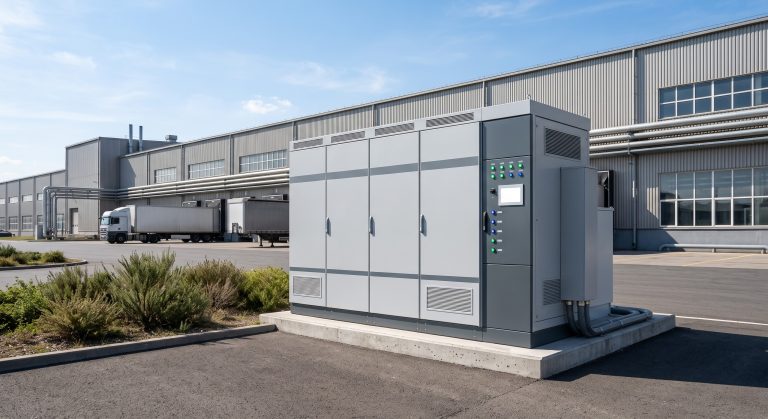
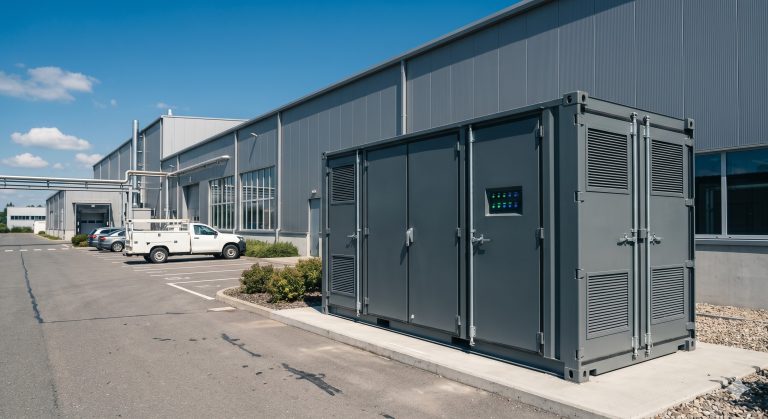
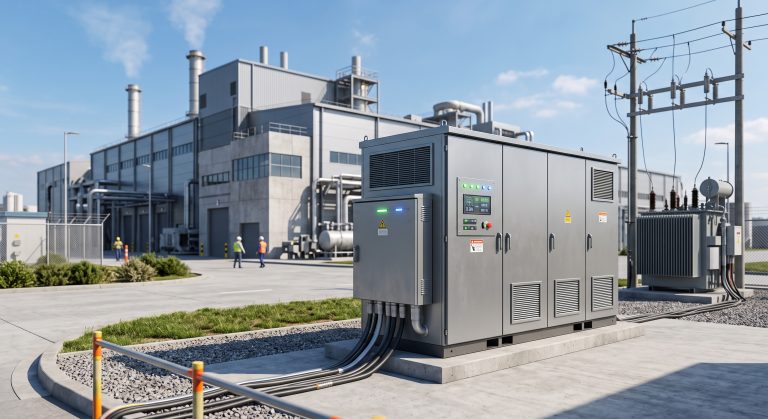
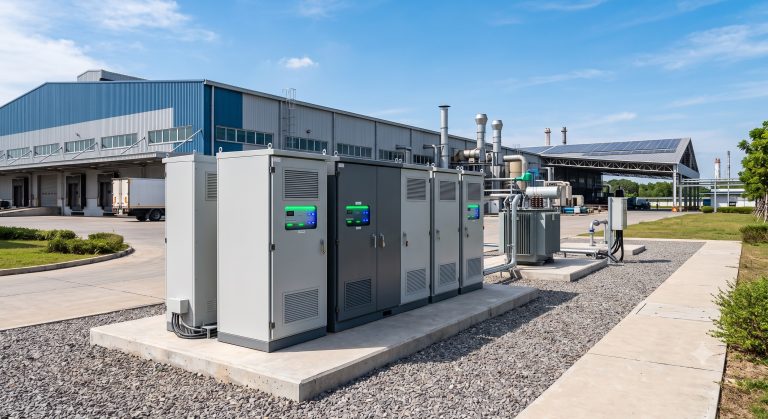
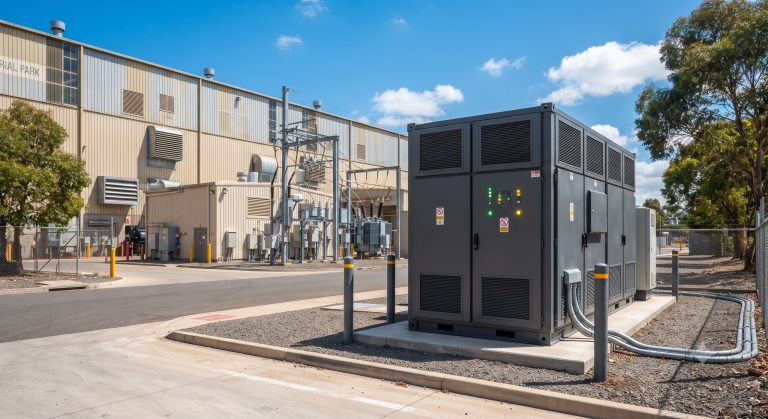
Energy-intensive industries such as cold storage, automotive manufacturing, and food processing exhibit predictable daily load peaks. A modular, containerized BESS (often MWh-scale) installed outdoors can be configured to track the load profile, shaving peaks and providing backup power to mitigate production losses from grid outages. The system’s ability to perform automatic black starts is an added layer of resilience.
EV Supercharging Stations
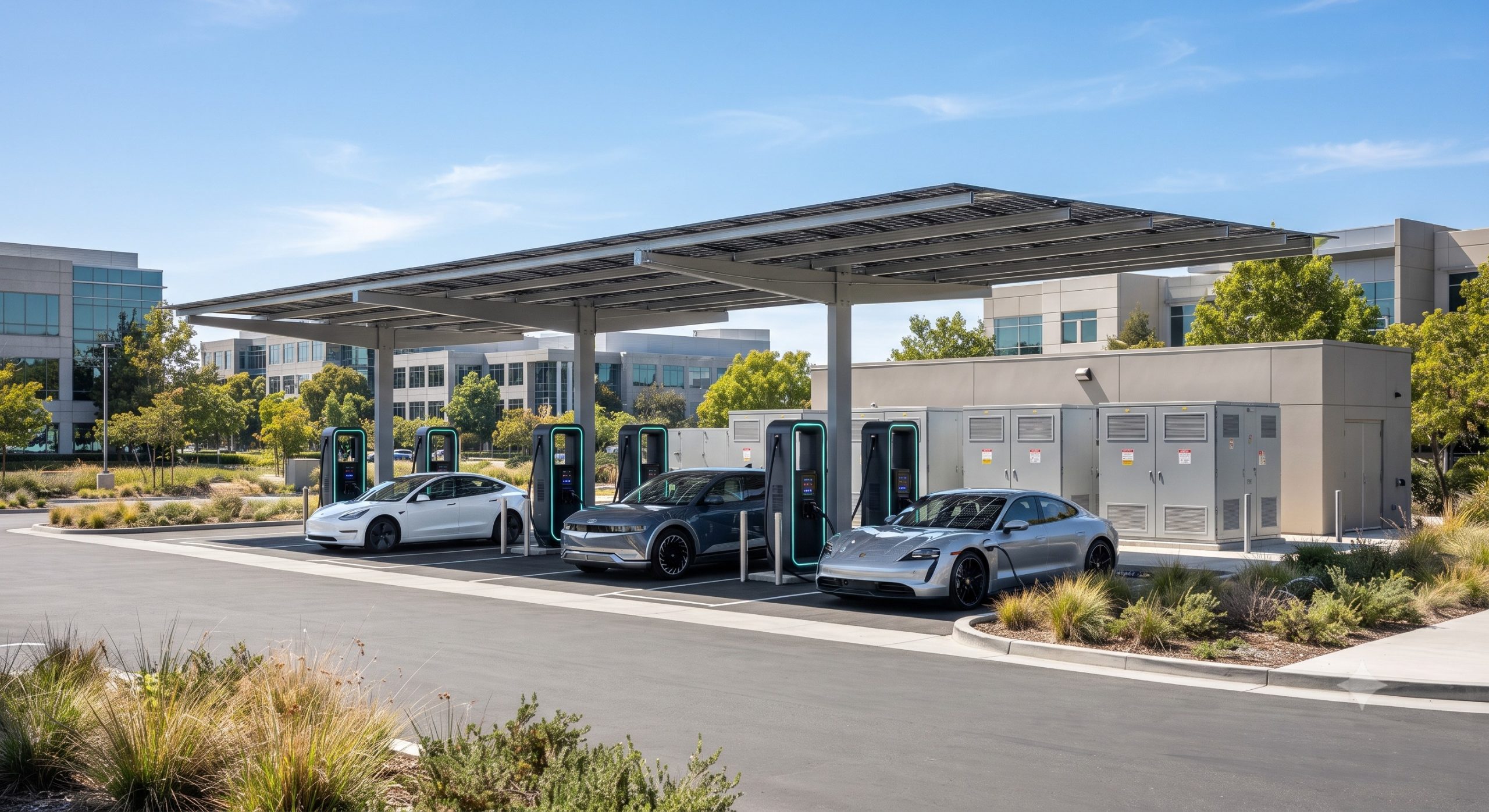
The rapid proliferation of electric vehicles is straining grid capacity at charging hubs. Integrating a Renewable energy integration BESS with a solar canopy allows for ‘peak topping’, drawing from the battery during high-demand charging events to avoid expensive demand surges. This battery-buffered approach enables existing grid connections to support more chargers without expensive utility upgrades, significantly reducing the project’s balance-of-system costs and speeding up deployment.
Conclusion: Engineering the Future of Commercial Energy
The strategic deployment of a Renewable energy integration BESS is not just an environmental statement; it is a meticulous financial engineering decision. As we have explored, achieving maximum peak-shaving ROI requires a sophisticated evaluation of PCS and BMS architecture, the undeniable efficacy of liquid cooling in preserving cycle life (>8000 cycles @ 90% DoD), and a keen eye on certified safety standards like IEC 62619 and UL 9540. The quantitative data is unequivocal: with a Round-trip efficiency exceeding 95% and a robust total cost of ownership model, C&I enterprises can decisively cut energy costs, enhance grid stability, and future-proof their facilities against energy market volatility. For system architects and procurement leaders, the shift to battery energy storage is a calculable, high-return investment that aligns operational resilience with long-term sustainability goals.
Key Takeaways
- ROI is Quantifiable: Peak-shaving can cut demand charges by up to 80%, with payback periods under 5 years when leveraging incentives.
- Thermal Management is Critical: Liquid cooling enhances Round-trip efficiency and prolongs battery life, reducing LCOS.
- Safety is Standardized: Always source BESS with full compliance to UL 9540, IEC 62619, and UN38.3 for transport.
- Synergy is Key: Integrating BESS with on-site PV and EV charging maximizes grid independence and asset utilization.
As the global energy transition accelerates, the commercial energy storage market offers unprecedented opportunities. By applying this data-driven, systems-level analysis, your organization can confidently navigate the B2B sourcing landscape and capture the full economic potential of renewable energy integration.