GLOBAL ENERGY STORAGE MARKET OUTLOOK REPORT
OFFICIAL COMMERCIAL BESS TECHNICAL OVERVIEW & DATASHEET
DOCUMENT ID: GES-ESO-2026-Q3 | VERSION: 1.0 | CLASSIFICATION: PUBLIC
EXECUTIVE SUMMARY
The global energy storage market is experiencing unprecedented growth, driven by the accelerating transition to renewable energy sources, increasing grid instability, and the falling costs of battery energy storage systems (BESS). This official commercial BESS technical overview and datasheet provides a comprehensive analysis of the current market landscape, projected growth trajectories, and the technological advancements shaping the industry. As the world moves towards a more decentralized and decarbonized energy future, energy storage has emerged as a critical enabler, enhancing grid resilience, enabling peak shaving, and facilitating the integration of variable renewable energy sources such as solar and wind.
This document serves as a strategic asset for project developers, utility planners, EPC contractors, and commercial and industrial (C&I) energy managers. It synthesizes market intelligence with the technical specifications of our Tier-1 LFP-based energy storage platform, offering a holistic view of the opportunities and solutions available within this dynamic sector. With a projected compound annual growth rate (CAGR) of over 20% through the next decade, the energy storage market is poised to become a cornerstone of global energy infrastructure. This report details the technology that will power this growth, focusing on our modular, scalable, and liquid-cooled BESS designed for maximum safety and operational efficiency.
SYSTEM ARCHITECTURE & SAFETY
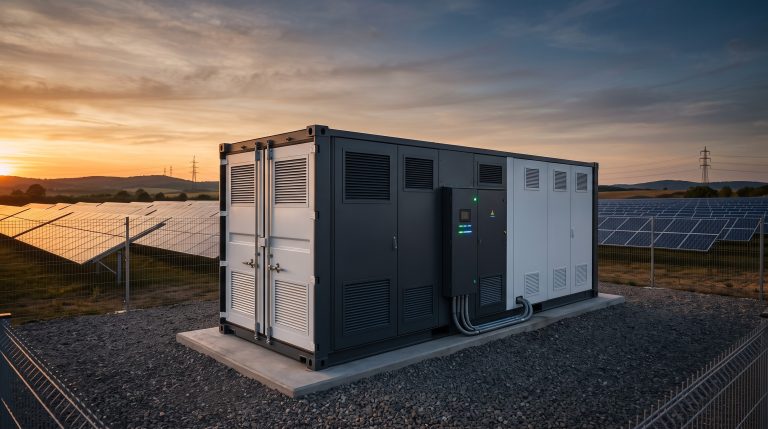
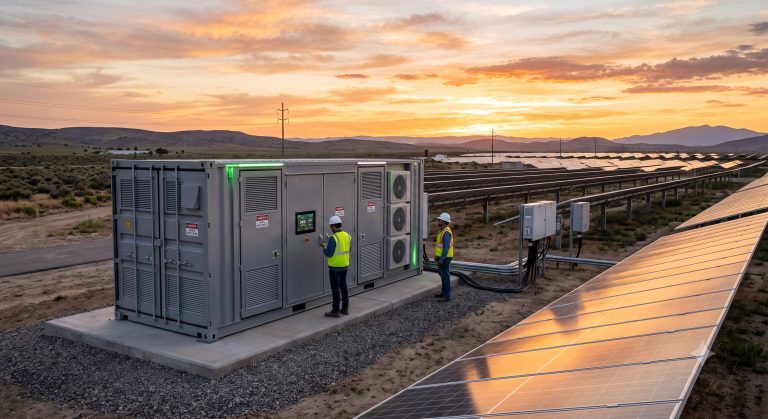
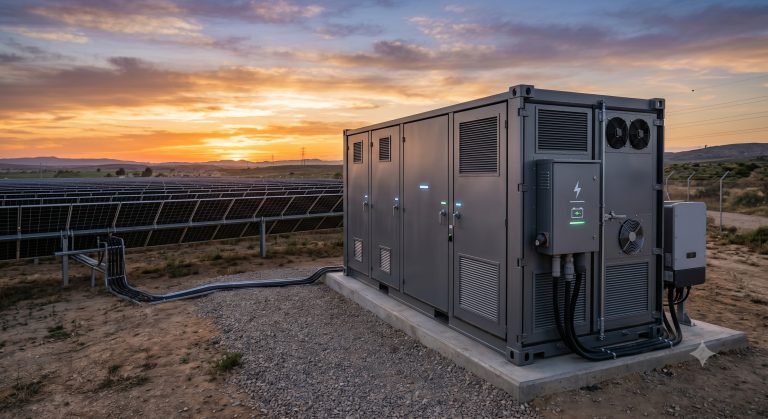
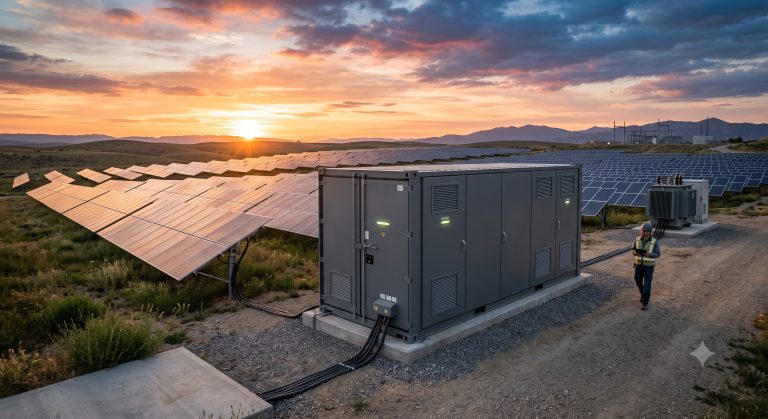
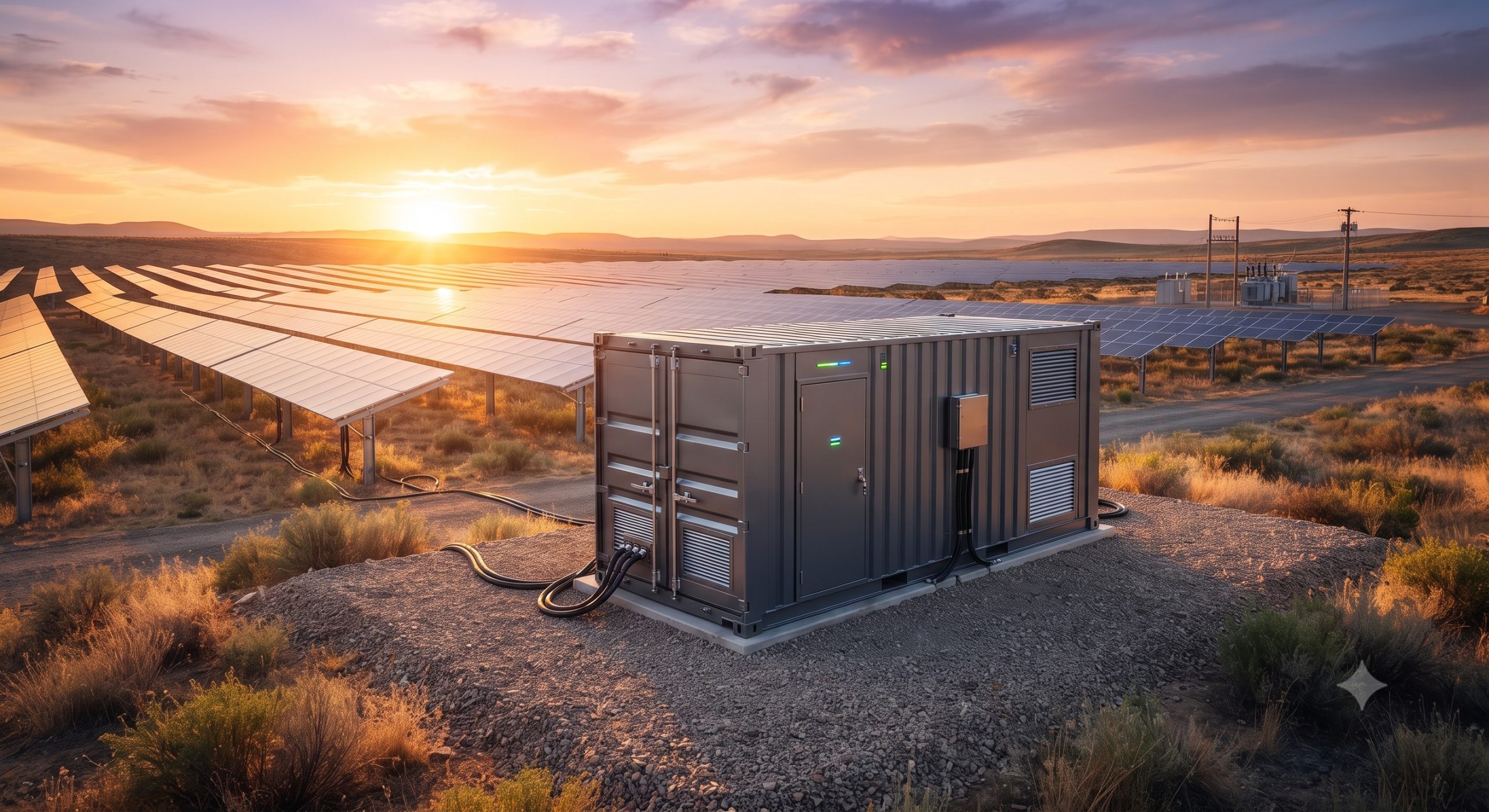
At the heart of our commercial BESS platform is a robust, modular architecture designed for turnkey deployment and seamless integration. The system is centered around high-performance, prismatic LFP (Lithium Iron Phosphate) cells, renowned for their inherent thermal stability, long cycle life, and exceptional safety profile. The BESS incorporates a three-tiered safety and control system: the Battery Management System (BMS), the Energy Management System (EMS), and the Power Conversion System (PCS). The BMS provides cell-level monitoring and balancing, ensuring each cell operates within its optimal voltage and temperature window. The EMS orchestrates the overall system dispatch, optimizing performance based on real-time grid conditions or user-defined profiles. The bi-directional PCS facilitates efficient and high-quality power conversion between AC and DC, with a peak efficiency exceeding 98%.
Safety is a paramount design principle, deeply integrated into the system’s architecture. The liquid cooling system maintains uniform cell temperatures, preventing hotspots and thermal imbalances that could lead to accelerated degradation or failure. The system is designed with multiple layers of protection, including active and passive thermal management, a proprietary multi-stage fire suppression system using aerosol and inert gas agents, and fail-safe contactors that disconnect power in milliseconds. This robust architecture ensures compliance with the most stringent international safety standards, including UL 9540 and IEC 62619, providing operators and stakeholders with the highest level of assurance.
KEY FEATURES
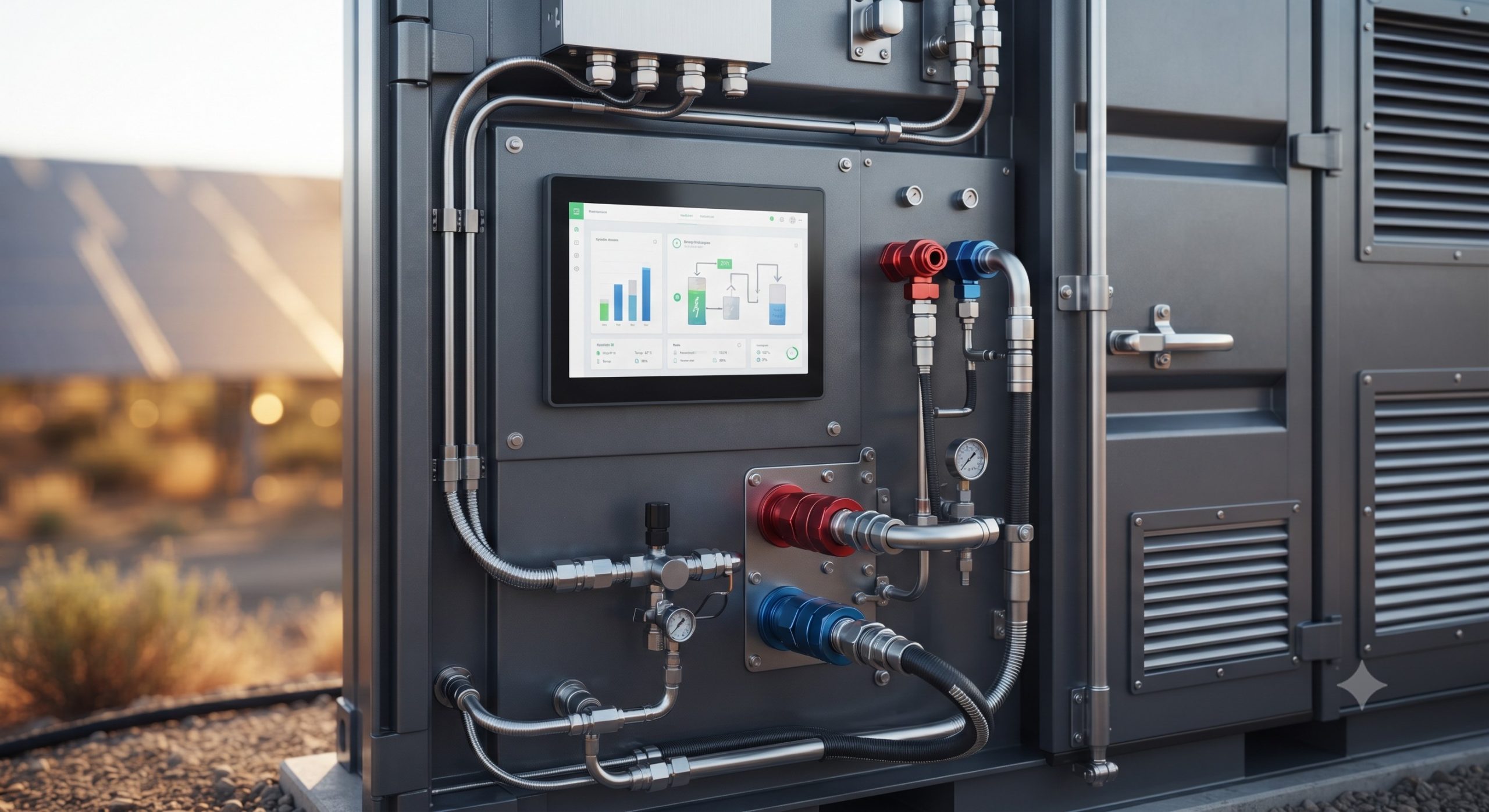
– Feature 1: Liquid Thermal Regulation: A state-of-the-art liquid cooling system maintains cell temperature variance within ±2°C, significantly extending battery cycle life by up to 25% and ensuring consistent performance across all operational conditions.
– Feature 2: High-Power Density & Modularity: The cabinet design maximizes energy density, reducing the physical footprint per MWh. The modular architecture allows for flexible scaling from 215 kWh to multi-MWh sites, simplifying system expansion and reducing overall project costs.
– Feature 3: Advanced Grid-Forming Capability: The integrated PCS supports grid-forming and grid-following modes, enabling the BESS to provide crucial grid services such as frequency regulation, voltage support, and black start capabilities, enhancing grid resilience and stability.
– Feature 4: Tier-1 LFP Cell Longevity: Utilizing cells from a leading global manufacturer, the system offers an exceptional cycle life of over 8,000 cycles at 80% Depth of Discharge (DoD), ensuring a long operational lifespan and attractive project economics.
– Feature 5: Intelligent EMS with Real-Time Monitoring: The cloud-based EMS provides comprehensive, real-time data visualization, predictive analytics, and remote O&M capabilities, enabling proactive asset management and maximizing operational uptime.
COMPLIANCE & STANDARDS
The platform has been rigorously tested to meet and exceed global regulatory and safety standards, ensuring broad market acceptance and bankability for projects. Full compliance data is available upon request as part of our formal technical compliance register.
TECHNICAL SPECIFICATIONS
The following section provides the core technical parameters for the standard commercial BESS unit. All values are provided as nominal and are subject to project-specific customization based on site conditions and application requirements. For detailed electrical diagrams and subsystem specifications, refer to the full Engineering Reference Manual.
| Parameter | Specification |
|---|---|
| System Configuration | AC-coupled, modular cabinet |
| Nominal Capacity | 215 kWh / 372 kWh per standard cabinet |
| Usable Capacity | Up to 90% of Nominal Capacity |
| Nominal Voltage | 768 V DC |
| Voltage Range | 600 V DC to 876 V DC |
| Cooling Method | Smart Liquid Cooling (Ethylene Glycol-Water Mix) |
| Cell Chemistry | Tier-1 LFP (Lithium Iron Phosphate) |
| Battery Cycle Life | ≥ 8,000 cycles to 80% EOL at 25°C |
| Max. Output Power (AC) | 100 kVA / 100 kW |
| Round-trip Efficiency | ≥ 92.5% (DC/AC, measured at point of interconnection) |
| Operating Temperature Range | -20°C to +50°C (with derating above 45°C) |
| Ingress Protection Rating | IP54 (Cabinet), IP67 (Battery Modules) |
| Communication Protocols | Modbus TCP/IP, IEC 61850, OPC UA |
| Safety Certifications | UL 9540, UL 1973, IEC 62619, IEC 63056, UN 38.3 |
| Dimensions (W x D x H) | 1,600 mm x 1,200 mm x 2,300 mm |
| Weight | Approx. 2,800 kg |
INDUSTRIAL DEPLOYMENT & MARKET OUTLOOK
The demand for C&I energy storage is accelerating, driven by the need for energy cost optimization, power reliability, and sustainability goals. Our BESS platform is engineered for a diverse range of applications, including but not limited to: peak shaving to reduce demand charges, load shifting to leverage time-of-use tariffs, backup power for critical infrastructure, and integration with renewable generation to maximize self-consumption within EV supercharging hubs and industrial micro-grids. The market outlook for such solutions is profoundly positive, with a clear trend towards larger, longer-duration storage assets capable of providing multiple value streams.
This platform enables commercial and industrial enterprises, utilities, and independent power producers to capitalize on the energy transition. By providing a reliable, safe, and highly efficient storage solution, we empower our customers to achieve energy independence, reduce their carbon footprint, and generate significant returns on their energy infrastructure investments. The future of energy is distributed, intelligent, and storage-enabled, and we are proud to provide the technology that is leading this transformation.
📥 Download Technical Specification
Click the button below to view or download the full official PDF datasheet.