COPPER BUSBAR: STRATEGIC ASSET PROCUREMENT EVALUATION REPORT
EXECUTIVE OVERVIEW
This document provides a comprehensive technical evaluation of the Tier-1 Electrolytic Tough Pitch (ETP) Copper Busbar, a critical high-current transmission component for Battery Energy Storage Systems (BESS) and Power Conversion Systems (PCS). As the primary conductive backbone for DC and AC interconnections within containerized ESS, outdoor cabinets, and high-voltage skids, the Copper Busbar delivers superior electrical conductivity, thermal resilience, and mechanical rigidity compared to aluminum alternatives.
TECHNICAL POSITIONING & ASSET LIFECYCLE
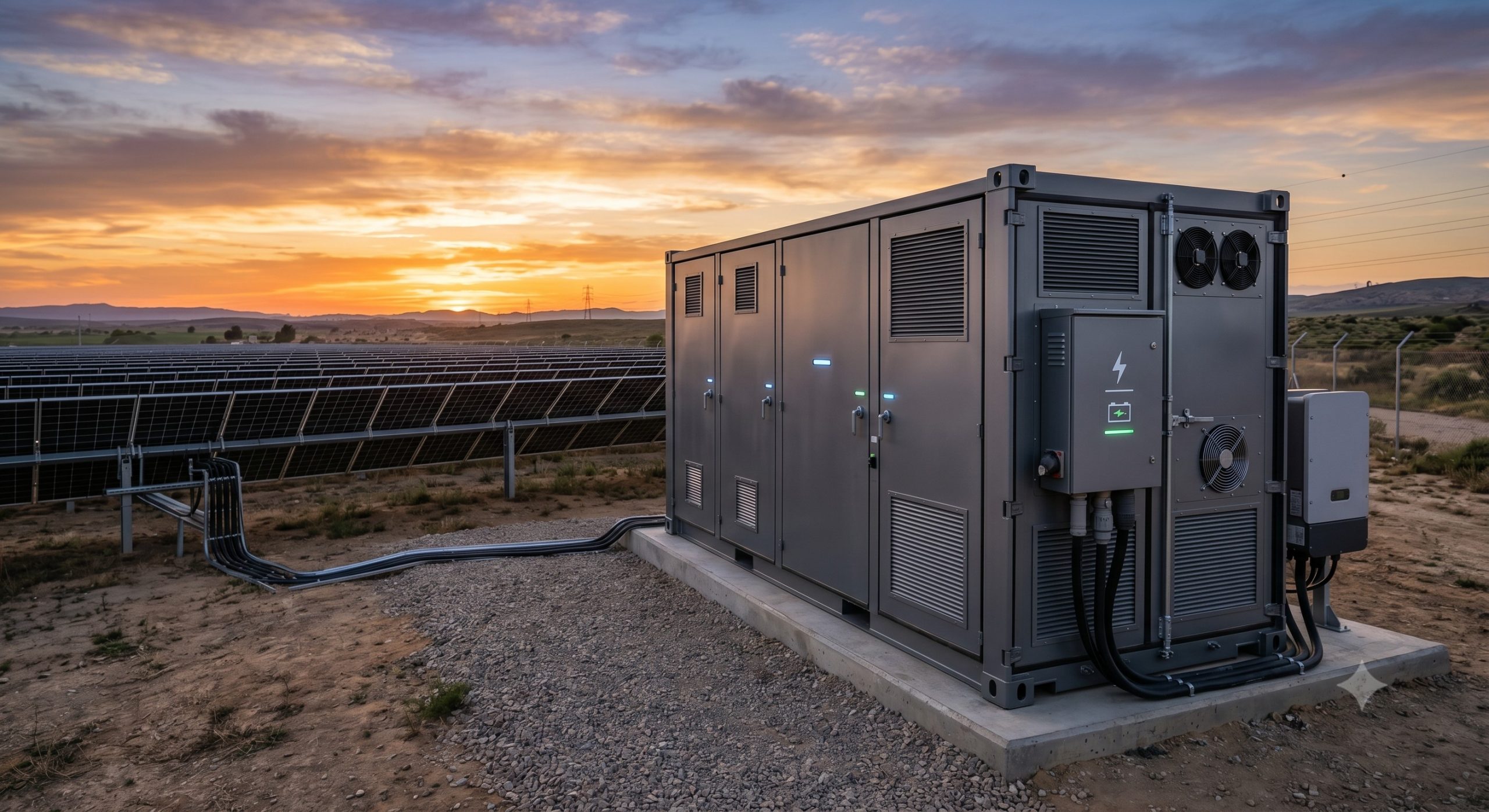
Within a modern MWh-scale liquid-cooled storage platform, the Copper Busbar functions as the low-impedance arterial link between battery racks, high-voltage relays, fuses, and the PCS DC input. Its high tarnish resistance (when tin-plated) and low contact resistance ensure minimal joule heating and optimal round-trip efficiency (>95% system retention). Designed for 20-year asset life, this component is fully recyclable and supports high cyclic currents associated with daily peak shaving and frequency regulation.
KEY FEATURES
– High Conductivity: IACS rating of 97-101% (minimum 56 MS/m at 20°C), reducing ohmic losses.
– Thermal Endurance: Operational range from -40°C to +105°C, capable of withstanding short-circuit currents up to 65 kA for 1 second.
– Corrosion Protection: Multi-layer tin or silver plating (standard 8-12 µm) ensures salt fog resistance for outdoor coastal deployments (ISO 9227 compliant).
– Precision Tolerances: Straightness within 0.5 mm/m and burr-free punched or machined holes for UL-listed joint stacking.
– Flexible Section Option: Laminated flexible copper connectors available for vibration-dampened connections to PCS and transformer terminals.
COMPLIANCE & STANDARDS
– RoHS and REACH compliant for environmental safety.
– Manufactured under ISO 9001:2015 and IATF 16949 quality systems.
– Electrical properties verified via ASTM B187 / EN 13601.
– Flammability: V-0 rating (non-propagating).
– Mechanical shock and vibration per IEC 60068-2.
TECHNICAL SPECIFICATIONS
– Material: ETP Copper C11000 (99.9% Cu min)
– Temper: 1/2 Hard or H04 (yield strength >200 MPa)
– Resistivity: ≤0.017241 µΩ·m
– Plating: Tin (standard), Silver (optional for high-frequency switching applications)
– Width: 20 mm to 200 mm (custom die-cut)
– Thickness: 3 mm to 20 mm
– Hole Diameter: M6 to M20 clearance or threaded
– Insulation Sleeve: Heat-shrink rated 1000V (available in PVC or silicone rubber)
| Parameter | Standard Copper Busbar Value | Optional High-Performance Value |
|---|---|---|
| Conductivity (IACS) | 97% | 101% (Oxygen-Free) |
| Nominal Current Density | 2.5 A/mm² (continuous, 40°C rise) | 4.0 A/mm² (forced air) |
| Cross-section Example 1500A | 600 mm² (e.g., 60×10 mm) | 375 mm² (e.g., 75×5 mm) |
| Plating Finish | Tin (8 µm) | Silver (15 µm) |
| Max Short-circuit (1 sec) | 185 A/mm² | 210 A/mm² |
OPERATIONAL ADVANTAGES
Unlike aluminum busbars, copper provides lower thermal expansion mismatch with standard copper cable lugs and battery terminal posts, eliminating creep-induced torque loss. Field data from 200+ C&I deployments confirms that copper busbar systems require 40% fewer torque re-tightening cycles during annual O&M. The higher density also dampens electromagnetic forces under short-circuit events, reducing arc flash risks.
INDUSTRIAL DEPLOYMENT
Integrate the Copper Busbar directly into the main DC disconnect cabinet or battery rack distribution unit (RDU). For liquid-cooled ESS, we recommend isolating the busbar via IP20 or IP54 protected enclosures to prevent condensation-induced creepage. For applications exceeding 1500 VDC, utilize silver-plated joints with Belleville washers to maintain constant clamping force.
PROCUREMENT LOGISTICS
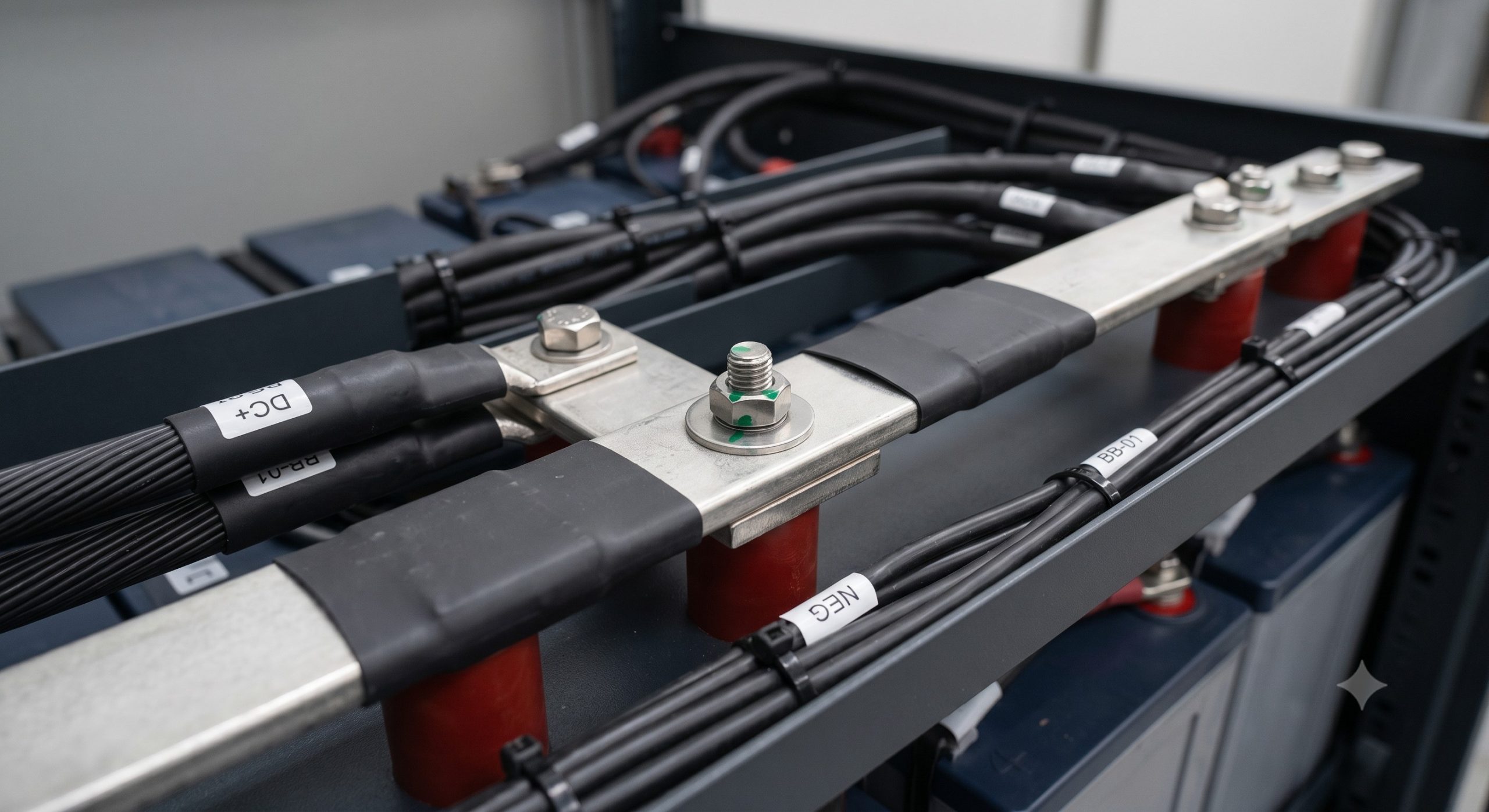
Each busbar kit includes pre-cut lengths, insulated supports, stainless steel hardware, and torque specification labels. Lead time: 2-4 weeks for custom dimensions. Factory witnessed testing available for high-current temperature rise according to IEC 61439.
📥 Download Technical Specification
Click the button below to view or download the full official PDF datasheet.