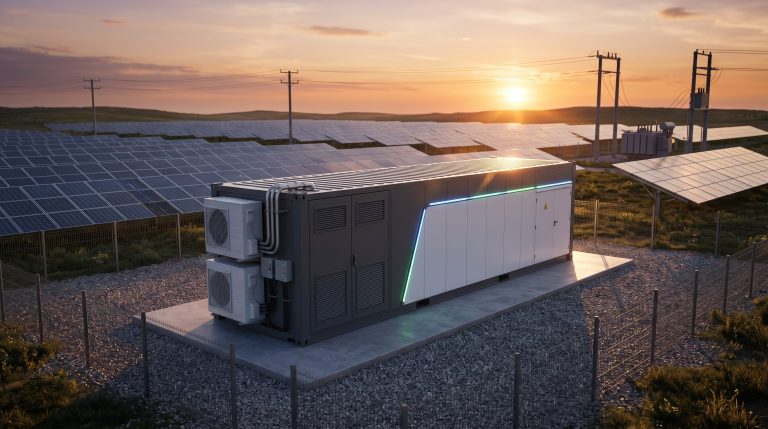
ADVANCED THERMAL RUNAWAY SUPPRESSION ENGINE FACTSHEET: LITHIUM BATTERY THERMAL RUNAWAY PREVENTION VALIDATION
OFFICIAL COMMERCIAL BESS TECHNICAL OVERVIEW & DATASHEET
EXECUTIVE SUMMARY
This document provides a comprehensive technical overview of the proprietary multi-level thermal runaway prevention and validation architecture integrated into our next-generation Commercial & Industrial (C&I) Battery Energy Storage Systems (BESS). As global energy storage deployments scale into the multi-gigawatt-hour range, the proactive mitigation of lithium-ion battery thermal runaway events has become the paramount engineering challenge. This factsheet details the rigorous, tiered approach to safety, spanning from individual LFP cell characterization to system-level fire suppression and validation testing. Our engineering philosophy is anchored in the principle of “Prevent, Detect, Suppress,” ensuring that our systems not only meet but exceed the most stringent international safety standards, including UL 9540A and NFPA 855, thereby guaranteeing asset protection, operational continuity, and stakeholder confidence.
SYSTEM ARCHITECTURE & SAFETY PHILOSOPHY
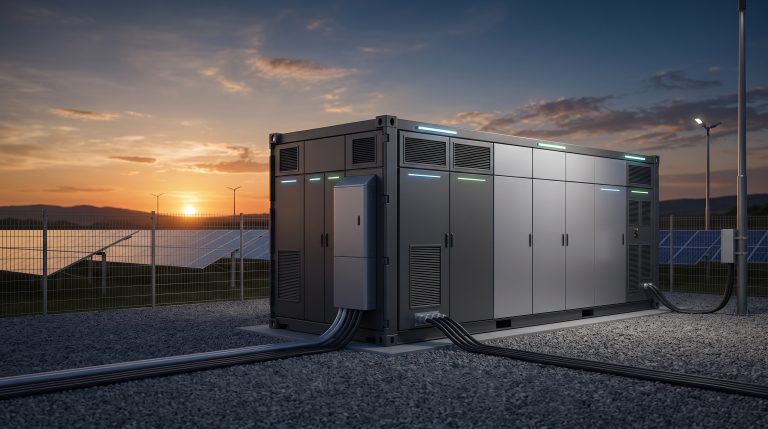
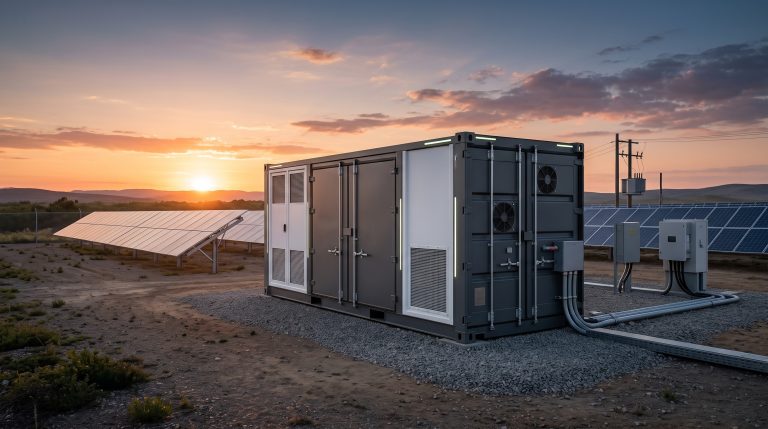
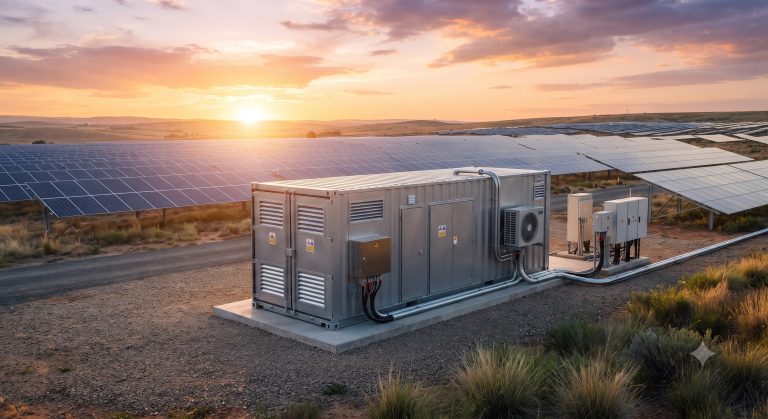
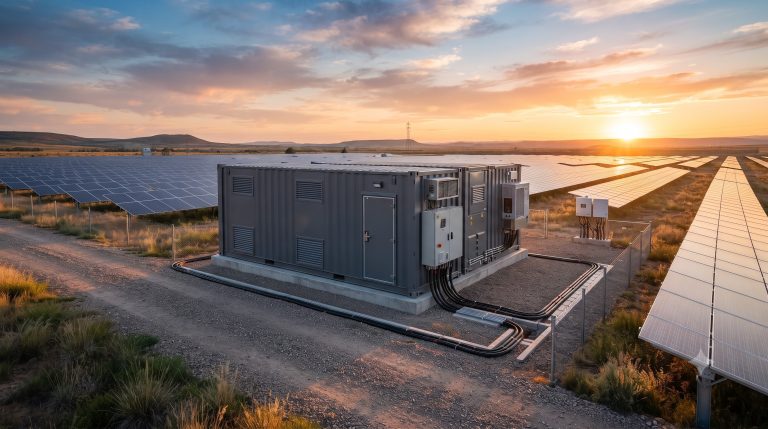
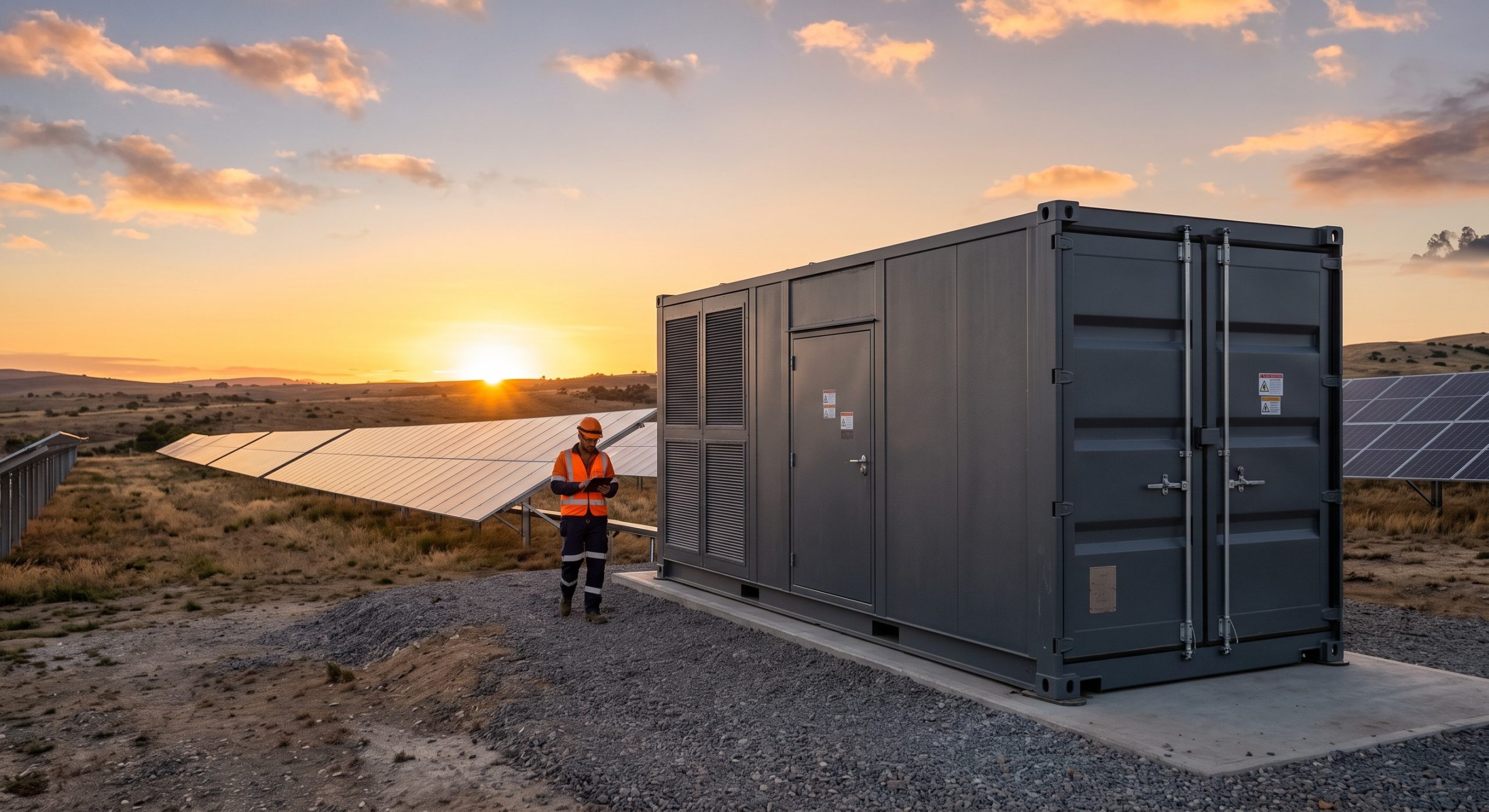
Our thermal runaway prevention strategy is embedded within the very core of the system architecture, creating an integrated safety ecosystem. The platform is engineered around a three-stage defense-in-depth approach. Stage one focuses on intrinsic cell safety through the use of premium, Tier-1 Lithium Iron Phosphate (LFP) cells renowned for their inherent chemical stability and high thermal runaway trigger temperature. Stage two encompasses active prevention through a sophisticated Battery Management System (BMS) that monitors cell voltage, temperature, and internal resistance with millisecond precision, actively balancing cells and preventing operation outside of safe operating envelopes. Stage three involves a robust containment and mitigation system, including fire-rated enclosures, explosion venting panels, and an integrated fire suppression system. This holistic architecture ensures that the system is resilient at every level, from the individual cell to the complete containerized unit.
THERMAL RUNAWAY PREVENTION: KEY FEATURES
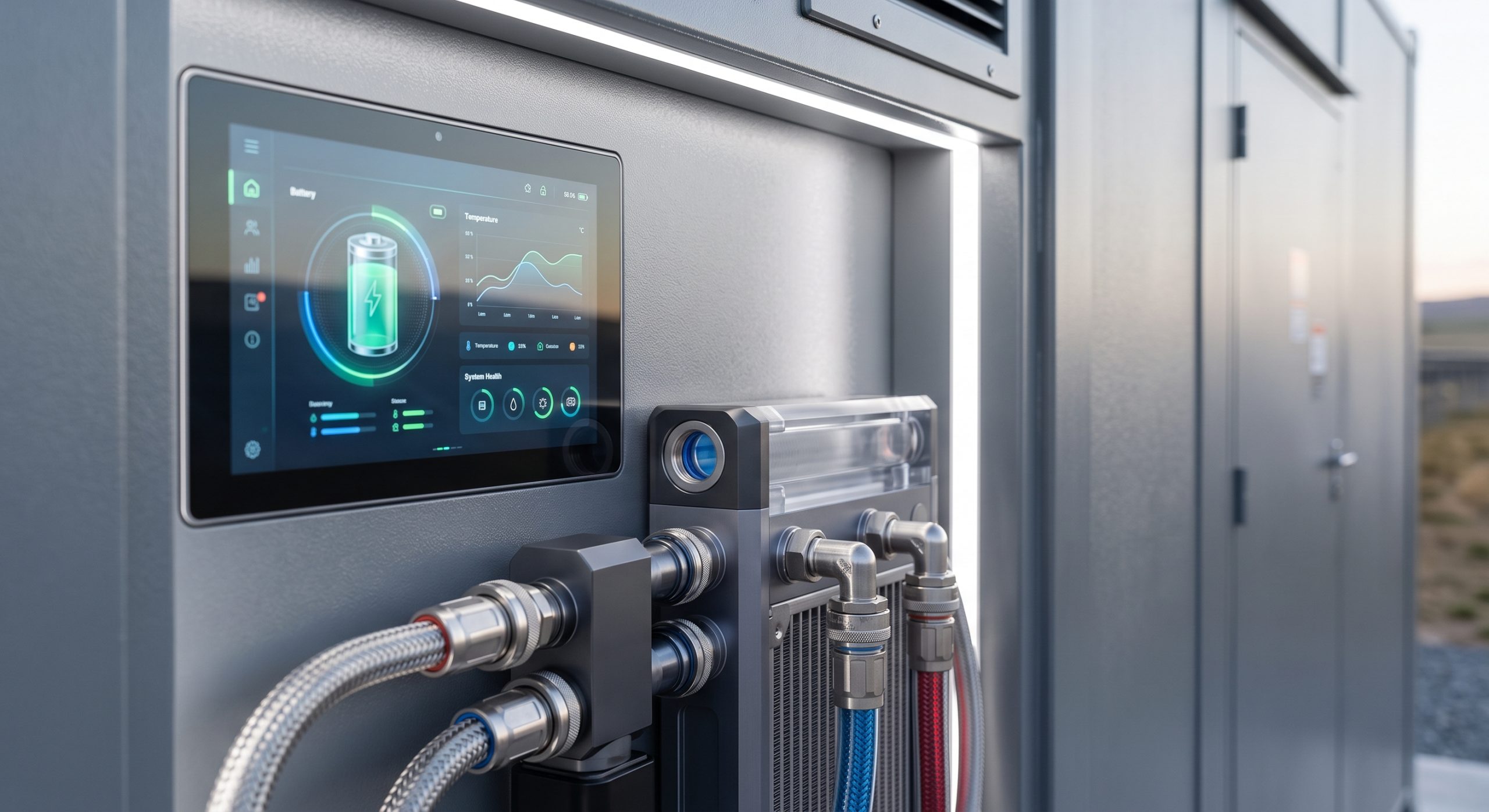
– Multi-Level BMS Safety Algorithm: Our proprietary BMS employs a predictive algorithm that analyzes historical and real-time data to forecast potential cell anomalies. This system can preemptively throttle charge/discharge rates or issue isolated shutdown commands to specific modules, preventing the cascade effect that leads to thermal runaway. This includes high-precision current sensing and redundant temperature monitoring at every module.
– Advanced Liquid Cooling & Thermal Management: The system utilizes a smart liquid cooling system with isolated fluid flow profiles to maintain optimal cell temperature uniformity within +/- 2°C across all cells. By stabilizing cell temperatures and actively rejecting heat, this system drastically reduces the risk of thermal hotspots, which are a primary precursor to internal short circuits and subsequent thermal events. The cooling system is designed with fail-safe redundancy to ensure continuous operation.
– Inert Gas Fire Suppression & Containment: Each enclosure is equipped with a UL-listed aerosol-based or clean agent fire suppression system specifically designed for lithium-ion battery fires. The system is designed to discharge an inert gas that rapidly depletes atmospheric oxygen within the enclosure, effectively starving any nascent fire. The enclosures themselves are constructed from fire-resistant materials and include reinforced mechanical vents designed to release pressure safely in the unlikely event of a catastrophic failure, preventing structural breach and containing any potential fire to a single module or compartment.
COMPLIANCE & STANDARDS VALIDATION
Our thermal runaway prevention validation process is a rigorous, documented series of tests conducted in accordance with the most demanding international standards. This ensures that our claims of safety are verified by third-party certification bodies and are not merely theoretical. The system is designed and validated to comply with the following key standards:
– UL 9540A: The gold standard for evaluating the fire safety of battery energy storage systems. Our system has successfully passed the stringent UL 9540A test method, which evaluates cell, module, unit, and installation-level fire propagation. This demonstrates our ability to contain a cell-level thermal runaway event without propagation to adjacent cells or the surrounding environment.
– UL 9540: The overarching standard for the safety of energy storage systems and equipment. This certification confirms that our entire system, including the battery, BMS, cooling system, and power conversion system, meets the rigorous safety requirements for installation in the United States.
– IEC 62619: The international safety standard specifically for secondary lithium cells and batteries used in industrial applications. This standard dictates safety requirements for the battery system’s design, including protection against overcharging, over-discharging, and short circuits, all of which are critical to thermal runaway prevention.
– NFPA 855: The Standard for the Installation of Stationary Energy Storage Systems. Our system’s design is in full alignment with NFPA 855’s requirements for spacing, ventilation, fire suppression, and explosion control, ensuring a seamless and compliant installation process.
| Parameter | Specification |
|---|---|
| Nominal Capacity per Cabinet | 215 kWh / 372 kWh (Configurable) |
| Cell Chemistry | Tier-1 Lithium Iron Phosphate (LFP) |
| Cooling Method | Smart Liquid Cooling (Active & Passive Modes) |
| BMS Architecture | Distributed, Multi-Master Redundant w/ Predictive Analytics |
| Fire Suppression System | UL-listed Aerosol / Clean Agent (Inert Gas) |
| Enclosure Protection Class | IP54 / IP55 (Dust-tight & Water-resistant) |
| Key Safety Standards Compliance | UL 9540A, UL 9540, IEC 62619, NFPA 855 |
| Explosion Venting | Integrated Over-pressure Relief & Deflagration Panels |
INDUSTRIAL DEPLOYMENT & VALIDATION PROTOCOLS
The validation of our thermal runaway prevention systems extends beyond laboratory testing to include real-world deployment and monitoring. Our comprehensive validation protocol includes:
– Automated Factory Acceptance Testing (FAT): Every system undergoes a 100% automated FAT, which includes a rigorous cycling test that simulates extreme operating conditions to verify the integrity and performance of the BMS and thermal management systems prior to shipment.
– On-Site Commissioning Validation: During site commissioning, our certified engineers perform a series of system-level safety checks, verifying all communication links, sensor accuracy, and the integrity of the fire suppression system, ensuring the system is safe to energize within its specific site environment.
– Cloud-Based Predictive Analytics: Our EMS platform is equipped with cloud-based analytics that continuously monitors system health data from thousands of installed units. This data is used to identify potential trends in cell degradation or BMS anomalies, enabling proactive predictive maintenance and further refining our safety algorithms through machine learning.
📥 Download Technical Specification
Click the button below to view or download the full official PDF datasheet.