Introduction: The Energy Storage Imperative for Modern Households
The global energy landscape is undergoing a paradigm shift, driven by volatile utility tariffs, increasing grid instability, and a surging demand for sustainable energy independence. For homeowners, Residential PV battery integration has evolved from a niche luxury into a strategic asset that delivers energy security, significant peak-shaving savings, and carbon footprint reduction. As a B2B procurement specialist, system integrator, or solar EPC, understanding the granular engineering and economic metrics behind these systems is paramount to selecting the optimal solution. This guide provides a comprehensive, data-driven examination of Residential PV battery integration, dissecting its core architecture, key performance indicators (KPIs), safety compliance, and real-world ROI to empower your sourcing decisions.
Core System Architecture: Inverter, BMS, and EMS Synergy
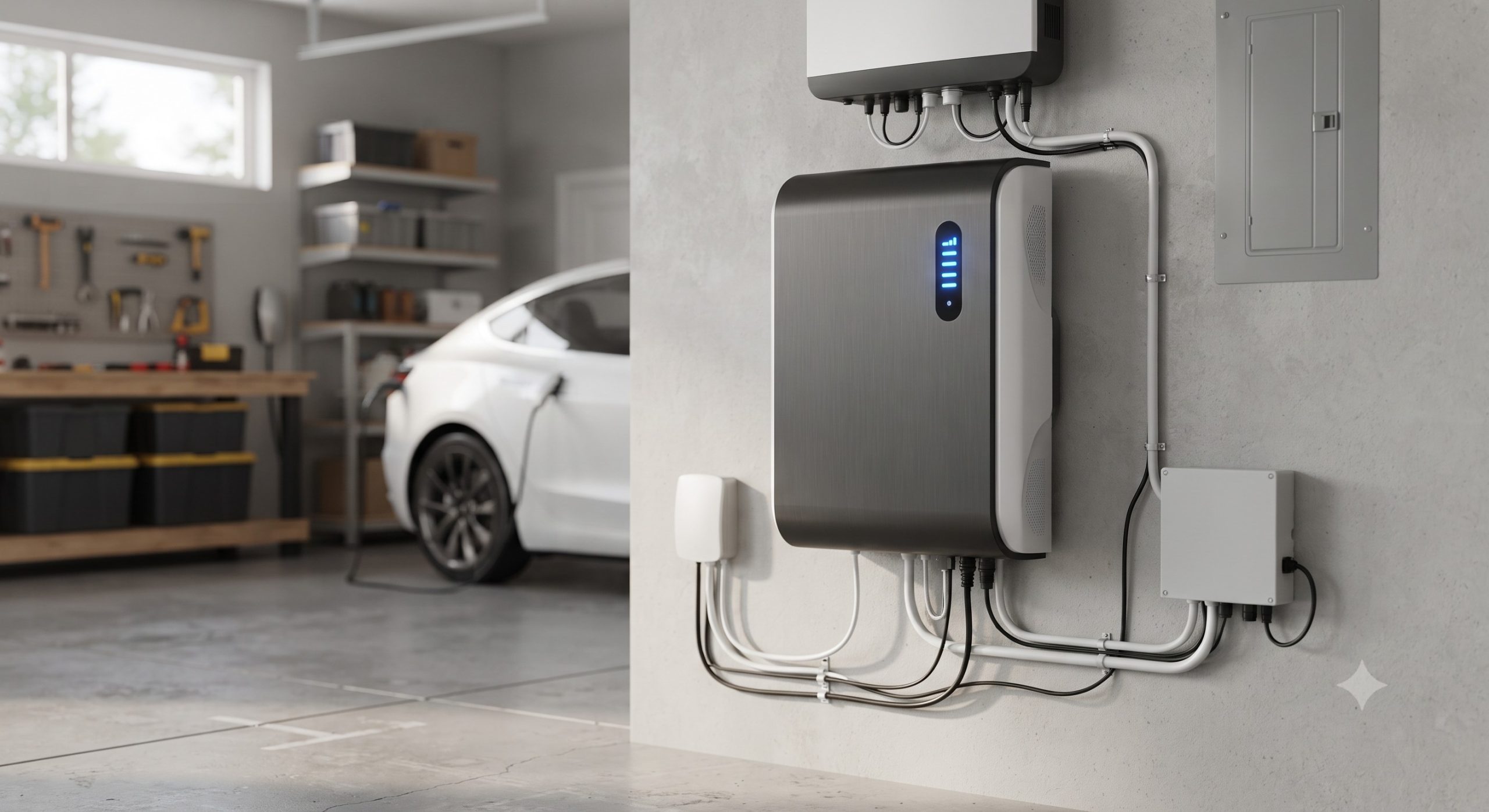
At the heart of any high-performance Residential PV battery integration lies a sophisticated interplay of power electronics and intelligent software. The architecture is more than a simple battery and solar panel connection; it is a bi-directional energy management ecosystem.
Power Conversion System (PCS) & Hybrid Inverters
The PCS or hybrid inverter serves as the system’s gateway, converting DC power from the PV array and the battery into usable AC power for the home. Advanced units integrate Maximum Power Point Tracking (MPPT) algorithms to optimize PV harvest and feature seamless grid-tie and off-grid transition capabilities. A key metric is the peak efficiency, with top-tier systems achieving >98% round-trip efficiency, minimizing conversion losses. These inverters are equipped with grid-forming capabilities, enabling the system to create its own micro-grid during utility outages.
Intelligent Battery Management System (BMS)
The BMS is the safety and longevity cornerstone of Residential PV battery integration. It continuously monitors cell voltage, current, and temperature to ensure operation within safe parameters. A robust BMS employs active cell balancing to maintain uniform state-of-charge (SoC) across all cells, preventing premature degradation. Compliance with standards like IEC 62619 (for industrial batteries) and UL 9540 (for energy storage systems) is non-negotiable for ensuring safety and insurability. The BMS works in concert with the EMS to execute complex dispatch strategies.
Energy Management System (EMS) Logic
The EMS is the system’s brain, orchestrating when to charge, discharge, or export energy based on time-of-use (TOU) tariffs, weather forecasts, and load profiles. Advanced EMS units support demand response protocols, allowing utilities to tap into residential storage for grid frequency regulation, often generating ancillary revenue for the homeowner. This integration is critical for maximizing the economic value of Residential PV battery integration.
Technical Specifications: The Benchmark of Tier-1 Systems
When evaluating Residential PV battery integration solutions, a granular focus on technical specifications separates market-leading assets from commoditized boxes. The following table outlines the core technical parameters that B2B buyers must scrutinize to ensure long-term performance and ROI.
| Key Parameter | Technical Specification |
|---|---|
| Battery Chemistry | Tier-1 LFP (Lithium Iron Phosphate) |
| System Capacity (Usable) | 5 kWh – 20 kWh (Stackable/Modular) |
| Round-Trip Efficiency (AC-AC) | > 90% (Typical) |
| Cycle Life (@ 90% DoD) | > 8,000 cycles (to 70% capacity) |
| Max. Depth of Discharge (DoD) | 90% – 100% |
| Voltage Range (DC) | 48V to 600V (High Voltage Systems) |
| Communication Protocol | CAN Bus, RS485, Modbus TCP/IP |
| Safety Certifications | UL 9540, IEC 62619, CE, UN38.3 |
| Thermal Management | Air Cooling or Liquid Cooling (Optional) |
Chemistry Deep Dive: The LFP Advantage
The industry standard for residential storage has firmly shifted towards LFP (Lithium Iron Phosphate) chemistry. Unlike NMC (Nickel Manganese Cobalt) cells, LFP offers a superior thermal runaway threshold (approximately 270°C vs. 150°C for NMC), significantly enhancing safety. Furthermore, Tier-1 LFP cells boast a cycle life of over 6000 cycles at 80% Depth of Discharge (DoD), translating to a useful lifespan of 15-20 years. This durability dramatically improves the Levelized Cost of Energy (LCOE), making LFP the most economically sound choice for long-term residential assets.
Thermal Management: Liquid Cooling vs. Air Cooling
Efficient thermal control is vital for maintaining performance and prolonging cell life. While air-cooling systems are simpler and cheaper, they struggle with high ambient temperatures and rapid charge/discharge rates. Liquid cooling is emerging as a premium standard for high-capacity residential systems, as it offers superior heat dissipation, maintains a more uniform cell temperature, and reduces the risk of hot spots, thereby enhancing round-trip efficiency and cycle life. Systems employing liquid cooling can maintain optimal cell temperatures within a 2-3°C window, ensuring consistent power output.
Safety & Compliance Certifications
A Tier-1 Residential PV battery integration system must carry a comprehensive suite of certifications to pass local building codes and utility interconnection agreements. Key certifications include UL 9540, which is the system-level safety standard for ESS; IEC 62619 for safety requirements of secondary cells; CE marking for European compliance; and UN38.3 for safe transportation. These certifications are not just paperwork; they are critical due diligence indicators that demonstrate the manufacturer’s engineering rigor and commitment to quality.
Commercial ROI and Grid Support Strategy
Beyond the engineering, the business case for Residential PV battery integration is driven by its ability to unlock multiple revenue and savings streams. For the professional installer or system owner, the ROI is a function of optimized energy arbitrage and enhanced grid resilience.
Peak Shaving and TOU Arbitrage
The primary economic driver is peak shaving. By storing low-cost energy during off-peak hours (e.g., overnight or mid-day solar peak) and discharging during premium high-tariff peak hours, the system significantly reduces electricity bills. The savings can be amplified by intelligent EMS algorithms that predict the household’s load curve and PV production, maximizing the spread between buying and selling prices.
VPP Readiness and Frequency Regulation
Modern Residential PV battery integration systems are increasingly VPP (Virtual Power Plant) ready. This capability allows utilities to aggregate thousands of home batteries and dispatch them to the grid for frequency regulation and ancillary services. This transforms the home battery from a cost-center into a revenue-generating asset. The key requirement for VPP participation is a grid-tie inverter that responds to external dispatch signals via standard communication protocols (e.g., IEEE 2030.5).
Cost of Ownership and ROI Amortization
The Total Cost of Ownership (TCO) analysis must factor in the CapEx, installation, maintenance, and replacement costs against the accumulated savings from TOU arbitrage, net-metering, and potential VPP revenue. Given the long cycle life of >8000 cycles, a well-specified system amortizes its initial cost within 6-8 years, providing over a decade of free, clean energy. This represents a compelling internal rate of return (IRR) for both homeowners and investors.
Deployment Scenarios: From Single Homes to Virtual Power Plants
The application of Residential PV battery integration is diverse, catering to various use cases that extend beyond simple backup power.
Scenario 1: Off-Grid and Self-Sufficiency
In remote areas or for homeowners seeking complete energy independence, the system is coupled with a substantial PV array and potentially a generator to create a self-sustaining micro-grid. Here, the system’s ability to seamlessly transition to off-grid mode with uninterruptible power supply (UPS) -grade switching (typically <10ms) is non-negotiable.
Scenario 2: Urban PV-Storage-Charging Synergy
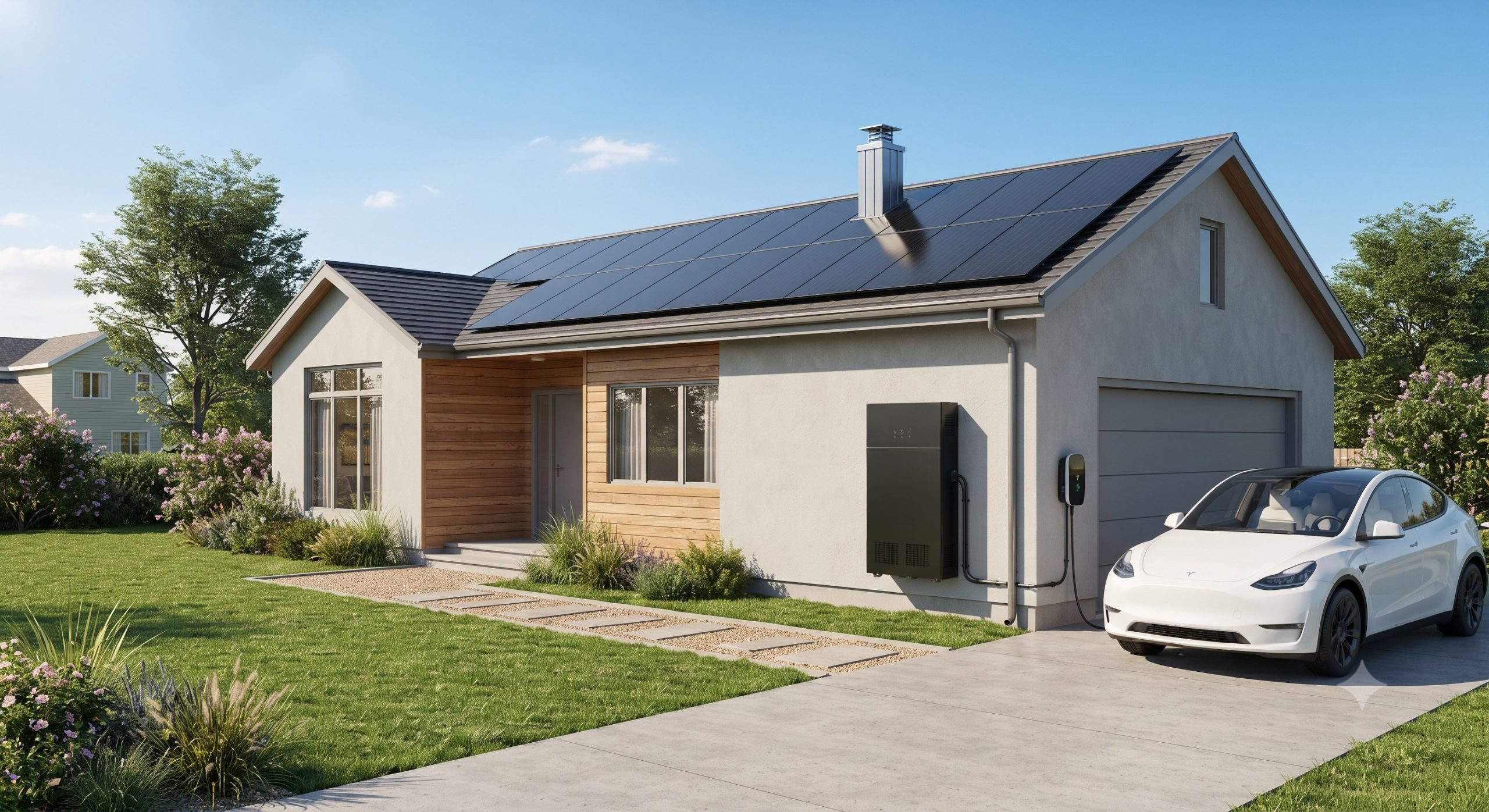
With the rapid electrification of transport, Residential PV battery integration is increasingly paired with home EV charging stations. This allows the homeowner to charge their EV directly from the stored solar energy, maximizing self-consumption and minimizing the carbon footprint of their vehicles. This synergy represents a holistic approach to residential energy management.
Scenario 3: Demand Response and Utility Interactions
For utilities, a large fleet of connected home batteries represents a dispatchable resource. This transforms the residential system into a grid-supportive asset, contributing to stability and reducing the need for expensive peaker plants. This model is gaining significant traction across North America and Europe, making VPP-readiness a critical feature for future-proofing any system.
Conclusion: The Strategic Imperative
As the industry moves towards the energy transition, Residential PV battery integration is no longer an option but a strategic imperative for energy-conscious homeowners and utility modernization. The combination of Tier-1 LFP chemistry, advanced BMS, intelligent EMS, and global safety certifications like IEC 62619 and UL 9540 ensures a robust, safe, and highly lucrative asset. For B2B buyers and integrators, selecting a system based on these data-driven engineering benchmarks, rather than just upfront price, is the only path to long-term success. By prioritizing cycle life, round-trip efficiency, and grid-support capabilities, you can deliver exceptional value to your clients while contributing to a sustainable, decentralized energy future.