COMMERCIAL SYSTEMS ENGINEERING REFERENCE MANUAL: AIR-COOLED COMMERCIAL BATTERY PARAMETERS
DOCUMENT CLASSIFICATION: OFFICIAL OEM TECHNICAL OVERVIEW & DATASHEET
REVISION: 2.1 | DATE: AUGUST 2026
1.0 EXECUTIVE SUMMARY
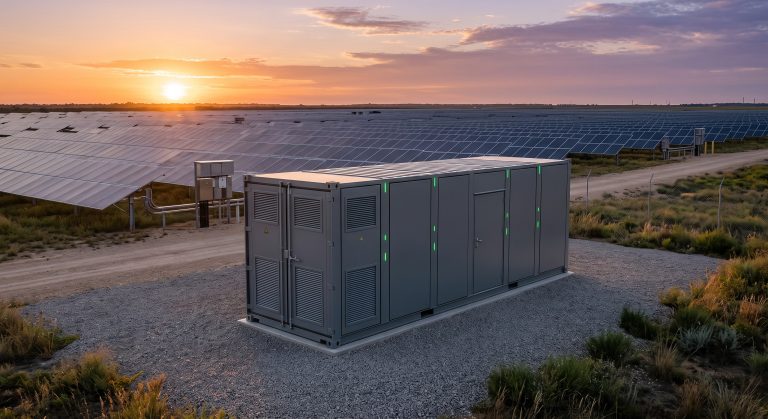
This document serves as the definitive engineering reference for the deployment and integration of our next-generation Air-Cooled Commercial Battery Energy Storage System (BESS). Designed specifically for the rigors of Commercial & Industrial (C&I) applications, this platform delivers a robust, thermally resilient, and cost-effective solution for peak shaving, demand charge management, and PV self-consumption optimization. By leveraging advanced forced-air convection thermal management and Tier-1 Lithium Iron Phosphate (LFP) cell technology, the system achieves superior cycle life and operational safety without the parasitic energy losses or maintenance complexity associated with liquid-cooled alternatives in moderate climate zones. This manual provides comprehensive specifications, architectural logic, and safety protocols essential for engineering, procurement, and construction (EPC) partners and facility owners.
2.0 SYSTEM ARCHITECTURE & THERMAL MANAGEMENT LOGIC
2.1 PRINCIPLE OF OPERATION
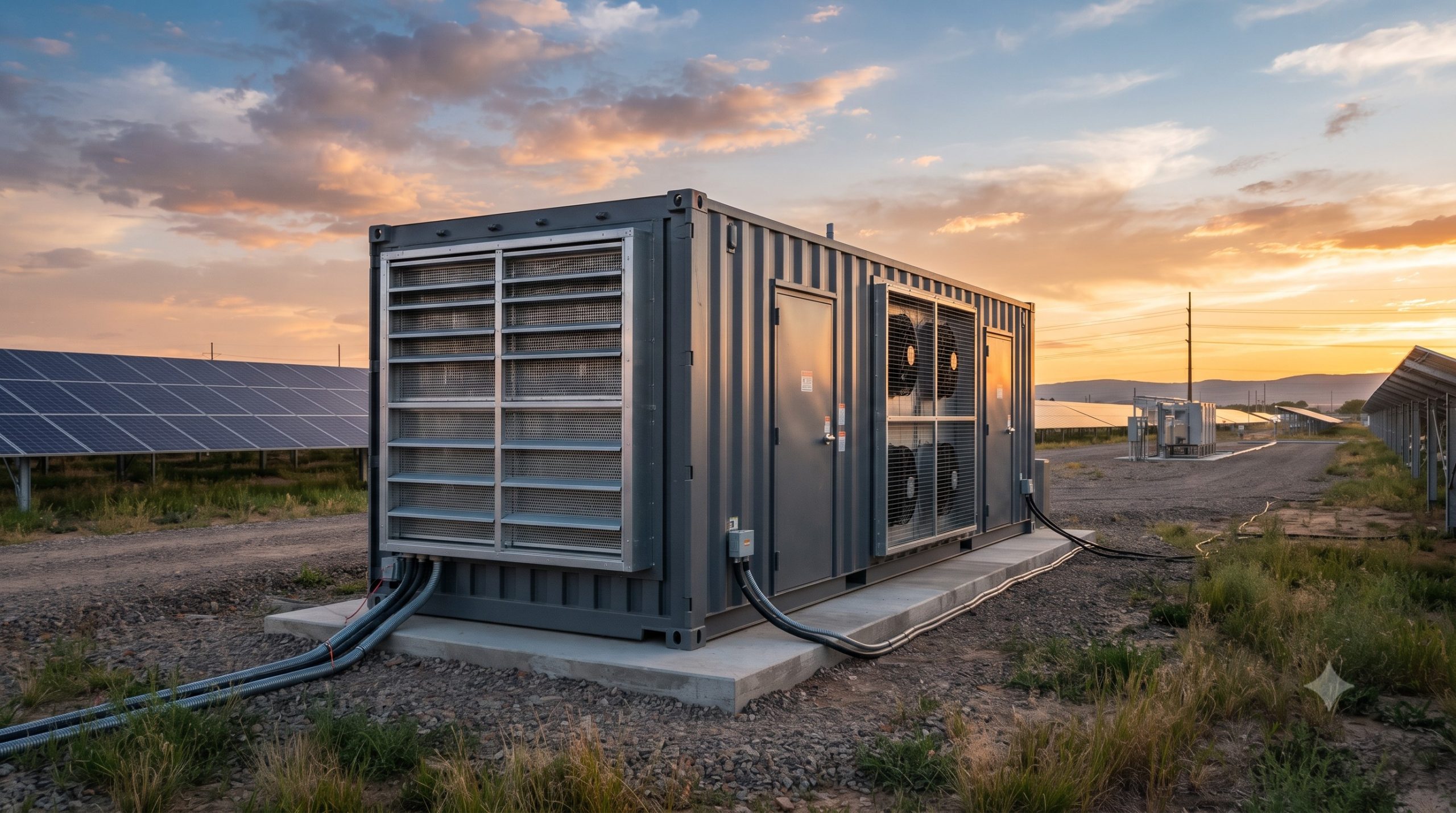
The Air-Cooled Commercial BESS integrates high-energy-density LFP battery modules with a multi-zone intelligent air distribution network. The system operates on a dynamic thermal control algorithm that adjusts fan speed and airflow direction based on real-time cell temperature data from distributed NTC sensors. This proactive thermal regulation ensures minimal cell-to-cell temperature variance (ΔT), preserving the chemical stability and extending the calendar life of the battery array.
2.2 INTERNAL BESS TOPOLOGY
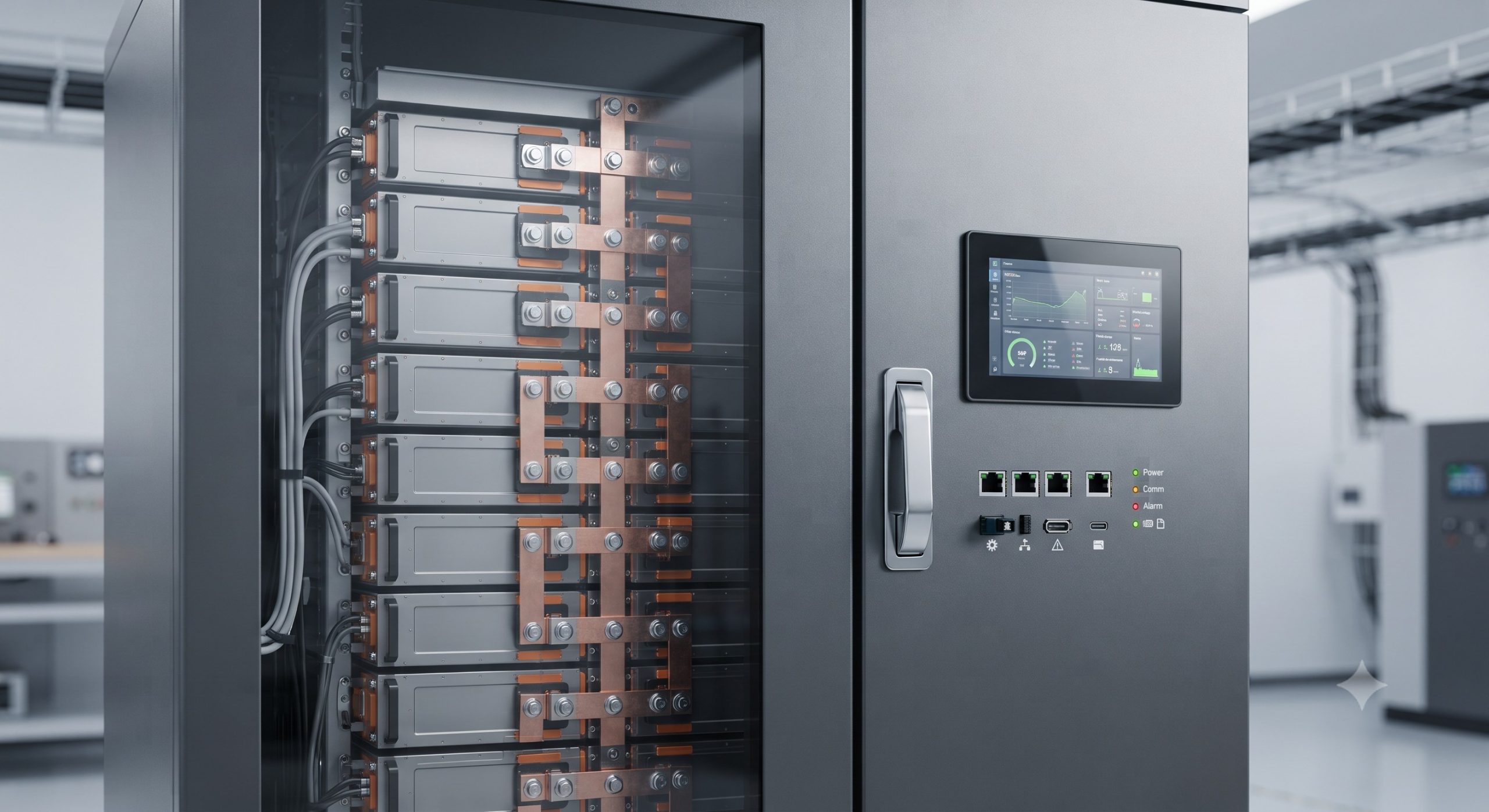
The architecture is centered around a non-isolated DC busbar, interfacing with a bi-directional Power Conversion System (PCS) rated for grid-forming and grid-following operations. The cabinet houses multiple battery racks interconnected via high-current busbars, with a centralized Battery Management System (BMS) orchestrating passive and active cell balancing. The compact outdoor-rated IP54 chassis provides NEMA 3R-equivalent protection, ensuring operational continuity in dusty or humid industrial environments.
3.0 CORE FEATURES & OPERATIONAL ADVANTAGES
KEY FEATURES
– Feature 1: Dynamic Airflow Architecture: Utilizes a variable-speed, plenum-based air distribution system to maintain optimal operating temperatures across all cells, significantly reducing thermal stress and ensuring a cycle life exceeding 6,000 cycles at 80% Depth of Discharge (DoD).
– Feature 2: Tier-1 LFP Cell Integration: Employs prismatic LFP cells with proven thermal stability and zero cobalt content, offering intrinsic overcharge and over-discharge protection with a wide operational temperature window (-20°C to 55°C).
– Feature 3: High-Voltage Direct Bus: Supports a nominal DC voltage range of 800V to 900V, optimizing PCS efficiency and minimizing line losses during high-power arbitrage cycles.
– Feature 4: Smart EMS Integration: Fully compatible with cloud-based Energy Management Systems (EMS), enabling real-time remote monitoring, predictive maintenance alerts, and seamless integration with SCADA systems.
– Feature 5: Turnkey Parallel Expansion: Supports multi-cabinet parallel expansion via a standardized DC busbar interface, allowing scalable capacity upgrades from 215 kWh to over 2 MWh per site.
4.0 COMPLIANCE, SAFETY & STANDARDS
COMPLIANCE & STANDARDS
This system is engineered and verified to meet the most stringent international safety and performance standards, ensuring bankability and smooth regulatory approval. Certified by TÜV Rheinland and UL, the platform adheres to the following directives:
– UL 9540: Standard for Energy Storage Systems and Equipment.
– UL 9540A: Test Method for Thermal Runaway Fire Propagation in Battery Energy Storage Systems.
– IEC 62619: Safety requirements for secondary lithium cells and batteries for industrial applications.
– IEC 60730-1: Automatic electrical controls for household and similar use.
– UN 38.3: Transportation of dangerous goods (Lithium batteries).
– IEEE 1547: Standard for Interconnection and Interoperability of Distributed Energy Resources with Associated Electric Power Systems Interfaces.
Multi-level protection systems include over-current protection (OCP), ground-fault monitoring, and an aerosol-based fire suppression system integrated with the ventilation ductwork.
| Parameter | Specification (Air-Cooled Platform) |
|---|---|
| Nominal Energy Capacity | 215 kWh per standard cabinet (configurable up to 372 kWh) |
| Cooling Method | Forced-Air Convection with Digital Variable Speed Fans |
| Cell Chemistry | Prismatic LFP (Lithium Iron Phosphate) – Tier 1 OEM |
| Max. Input/Output Power | 100 kW (Standard) / 150 kW (Peak for 10s) |
| Nominal DC Voltage | 819.2 Vdc (512 cells in 16S configuration) |
| Round-Trip Efficiency | ≥ 93.5% (at 25°C, 0.5C rate) |
| Cycle Life | ≥ 6,500 cycles @ 90% DoD (End of Life: 70% SOH) |
| Operating Temperature | -20°C to +55°C (Derating above 40°C) |
| Ingress Protection Rating | IP54 (Indoor/Outdoor installation) |
| Weight (approx.) | 2,200 kg (Battery only) |
| Dimensions (W x D x H) | 1,300 mm x 1,800 mm x 2,200 mm |
| Communication Interfaces | Ethernet (Modbus TCP), RS485 (Modbus RTU), CAN 2.0B |
| Fire Suppression | Aerosol-based, UL-listed, integrated with HVAC shutdown |
| Max. Altitude | ≤ 2,000 m (Derating above 1,000 m) |
5.0 INDUSTRIAL DEPLOYMENT & INSTALLATION GUIDELINES
5.1 STRUCTURAL CHASSIS OVERVIEW
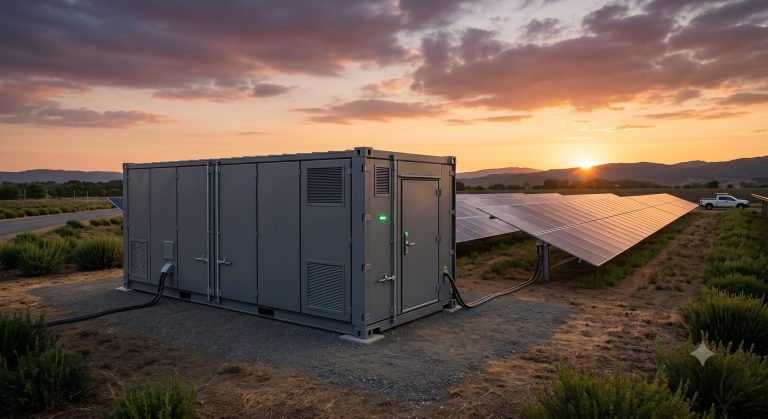
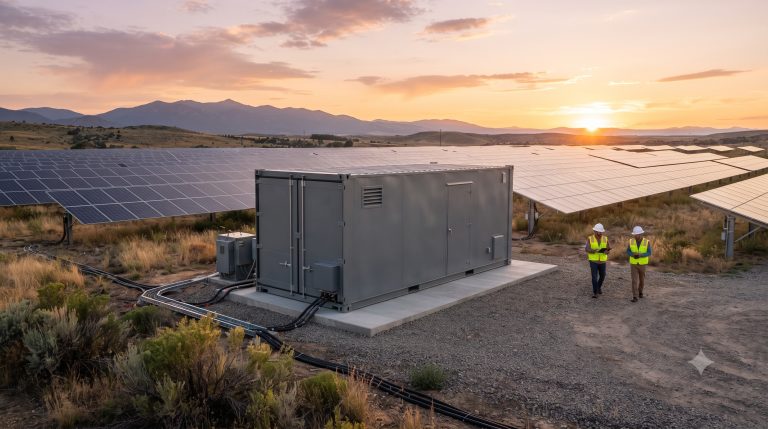
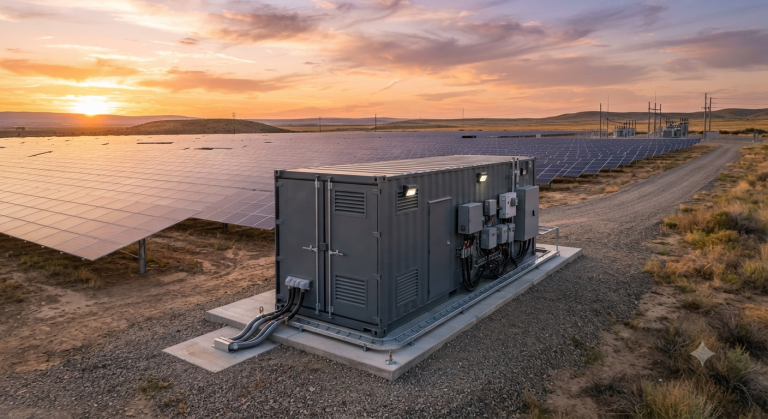
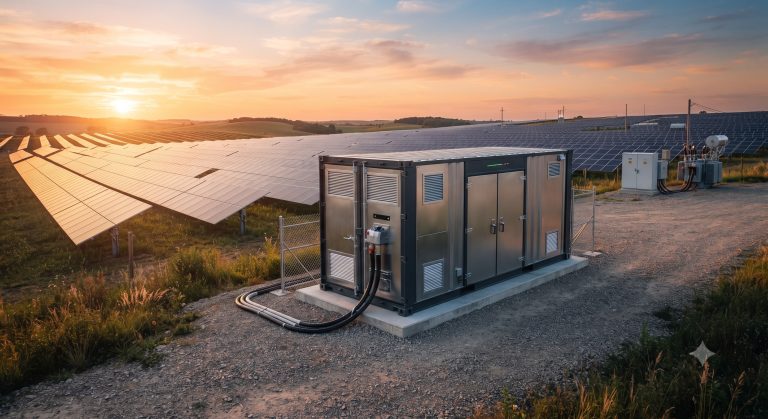
The system is housed in a heavy-gauge, powder-coated steel enclosure with vandal-resistant locks. The outdoor pad-mounted design includes integrated forklift pockets and lifting eyes for ease of logistics and installation. A dedicated cable entry gland plate at the base of the enclosure simplifies AC and DC wiring integration with existing switchgear.
5.2 RECOMMENDED FACILITY LAYOUTS
For optimal thermal performance, a minimum clearance of 1.5 meters on the intake side and 1.0 meter on the exhaust side is recommended to prevent air recirculation. The cabinet supports installations at ambient temperatures up to 40°C at full load without derating. Below 0°C, a self-consumption heating function ensures electrolyte fluidity and maintains capacity retention.
5.3 O&M MAINTENANCE LOGIC
Preventive maintenance is limited to a semi-annual inspection of air filters, verification of fan RPM signatures, and firmware updates. The BMS logs all cell voltage and temperature data to an internal SD card, with a 30-day data retention buffer for fault analysis. In the event of a communication failure, the system defaults to a safe state with contactors opening to isolate the battery from the PCS.
6.0 WARRANTY & ASSURANCE
The platform is backed by a standard 10-year or 6,000-cycle performance warranty, whichever comes first, guaranteeing a minimum of 80% rated capacity retention. Extended performance guarantees are available upon request for critical infrastructure projects.
📥 Download Technical Specification
Click the button below to view or download the full official PDF datasheet.