EXECUTIVE SUMMARY
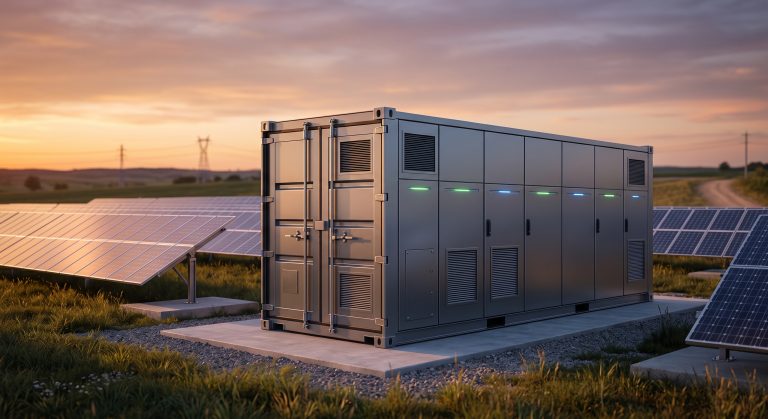
This document provides a strategic technical comparison between contemporary Tier-1 Lithium-Ion (Li-ion) Battery Energy Storage Systems (BESS) and the emergent Solid-State Battery (SSB) technology. As the industry transitions toward higher energy densities, enhanced safety profiles, and extended operational lifespans, it is crucial for asset owners, EPCs, and grid operators to understand the evolutionary roadmap. This report serves as an official commercial datasheet and technical reference for evaluating the performance ledger, system architecture, safety implications, and commercial readiness of both chemistries. While Li-ion (specifically LFP) represents the benchmark for cost-effective, reliable energy storage with over a decade of field-proven data, Solid-State technology is positioned as the transformative successor, with distinct advantages in thermal stability and energy density that promise to redefine the future of C&I and utility-scale storage.
SYSTEM ARCHITECTURE & SAFETY
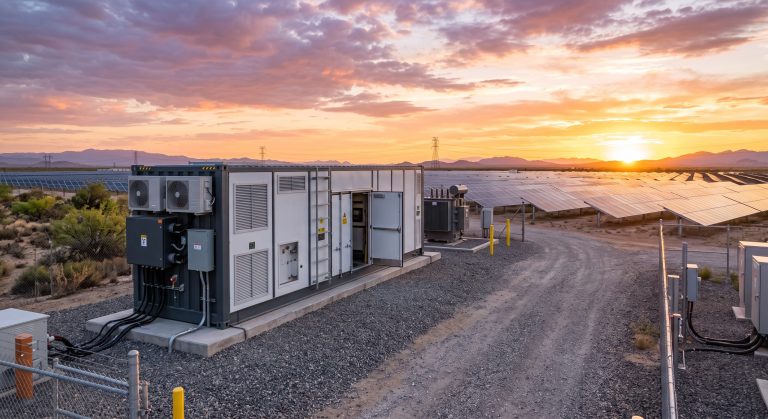
The operational paradigm for solid-state batteries fundamentally diverges from traditional Li-ion due to the replacement of the liquid organic electrolyte with a solid electrolyte. This shift eliminates the primary fuel source for thermal runaway, allowing for a more compact and thermally stable system architecture. Current Li-ion (LFP) systems rely on robust but complex liquid cooling thermal management systems to maintain cells within a narrow operating window of 15°C to 35°C, mitigating the risk of dendrite formation and subsequent short circuits.
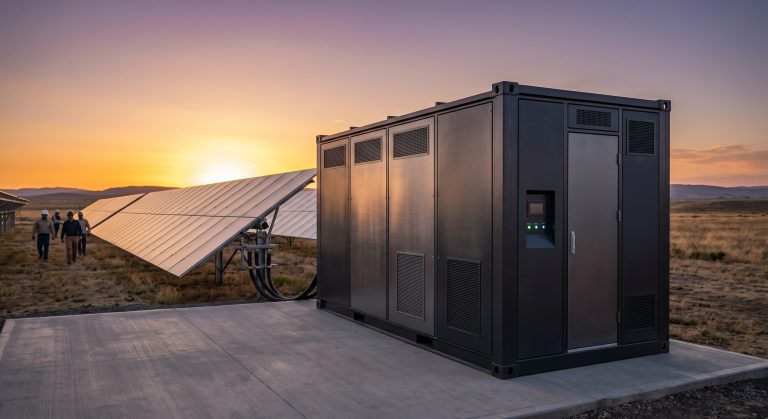
In contrast, the solid-state architecture enables a simplified thermal management interface. The solid electrolyte permits operation at higher ambient temperatures and facilitates bi-polar stacking of cells, leading to higher pack voltages and significantly reduced passive component requirements (busbars, contactors). This results in a modular design with fewer balance-of-plant components, translating to improved reliability and simplified maintenance. However, the systemic challenge of maintaining uniform pressure across the solid-state cell stack to prevent delamination and performance degradation remains a critical engineering focal point.
KEY FEATURES
– Thermal Runaway Suppression: Solid-state batteries are inherently non-flammable, eliminating the catastrophic fire risk common with liquid electrolytes. They can withstand temperatures exceeding 150°C without thermal runaway.
– Energy Density Advancement: Solid-state offers 2-3x higher volumetric energy density (up to 500 Wh/L) compared to standard LFP (260 Wh/L), enabling drastically smaller footprints for the same capacity.
– Extended Cycle Life: Theoretical estimations place solid-state cycle life at 10,000+ cycles with greater than 80% State-of-Health (SOH) retention, surpassing the 6,000-8,000 cycle benchmark of modern LFP cells.
– Wide Operating Temperature Window: Solid-state batteries can function efficiently from -30°C to 100°C, reducing the need for aggressive HVAC or liquid cooling energy consumption.
– Fast Charging Capability: The solid electrolyte allows for faster lithium-ion migration at high currents, supporting charging rates exceeding 2C to 5C, ideal for grid frequency response and EV charging arbitrage.
COMPLIANCE & STANDARDS
Both technologies are bound by international safety and performance standards; however, the testing protocol for solid-state requires adaptation. For current Li-ion deployments, compliance is governed by UL 9540A (thermal runaway propagation), IEC 62619 (industrial battery safety), and UN 38.3 (transportation). Solid-state, while theoretically compliant, often requires additional testing to evaluate the consequences of mechanical fracture (cracking) in the solid electrolyte under high vibration scenarios. It aligns with the evolving UL 9540 framework but faces scrutiny regarding the integrity of the solid-state separator under rapid thermal expansion. Currently, Tier-1 Li-ion systems maintain the advantage of a fully mature compliance register with guaranteed certification for all global markets (IEC, UL, CE, VDE). Solid-state deployment is currently pending full UL 1973 and IEC 61420-2 certification, expected by 2027.
TECHNICAL SPECIFICATIONS
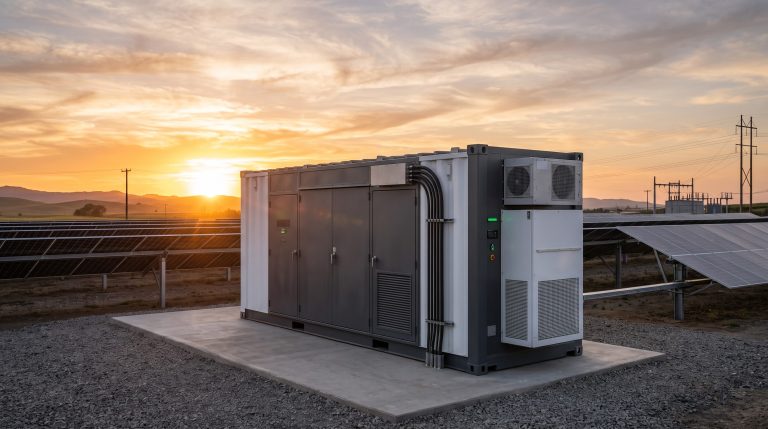
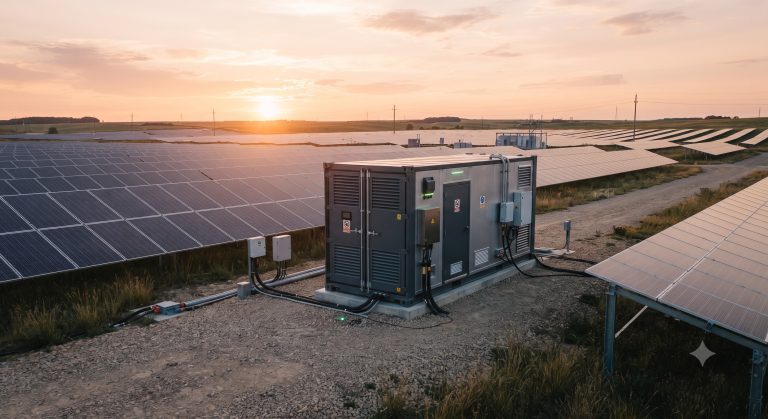
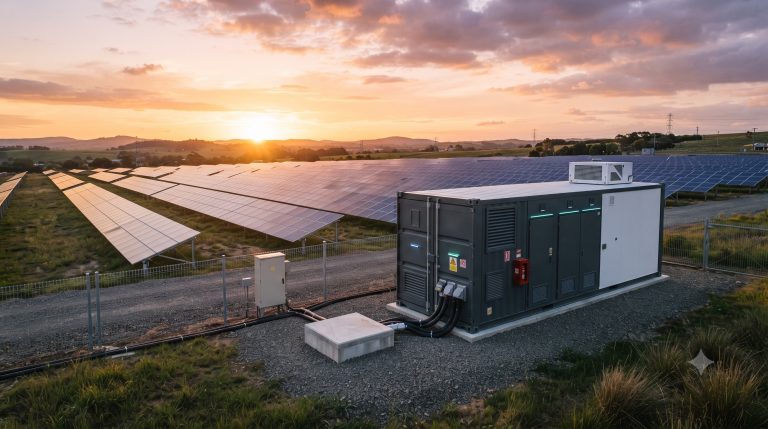
The following specifications provide a direct comparison between the mature LFP Li-ion platform (e.g., 215kWh cabinet) and the projected specifications of a commercially viable Solid-State cabinet.
| Parameter | Li-ion (LFP) Specification | Solid-State (SSB) Projected Specification |
|---|---|---|
| Nominal Energy Capacity | 215 – 372 kWh per cabinet | 300 – 500 kWh per cabinet (High Density) |
| Volumetric Energy Density | ≤ 260 Wh/L | ≤ 500 Wh/L |
| Round-Trip Efficiency (RTE) | ≤ 94% – 96% | ≤ 97% – 98% |
| Cycle Life (80% EOL) | 6,000 – 8,000 cycles | 10,000 – 12,000 cycles (Projected) |
| Thermal Management | Active Liquid Cooling (15-35°C) | Passive Air / Low-Intensity Cooling (-30 to 60°C) |
| Thermal Runaway Threshold | ≥ 150°C (Risk of propagation) | ≥ 300°C (Non-flammable electrolyte) |
| Operating SOC Window | 10% – 95% (Standard) | 0% – 100% (Extended) |
INDUSTRIAL DEPLOYMENT
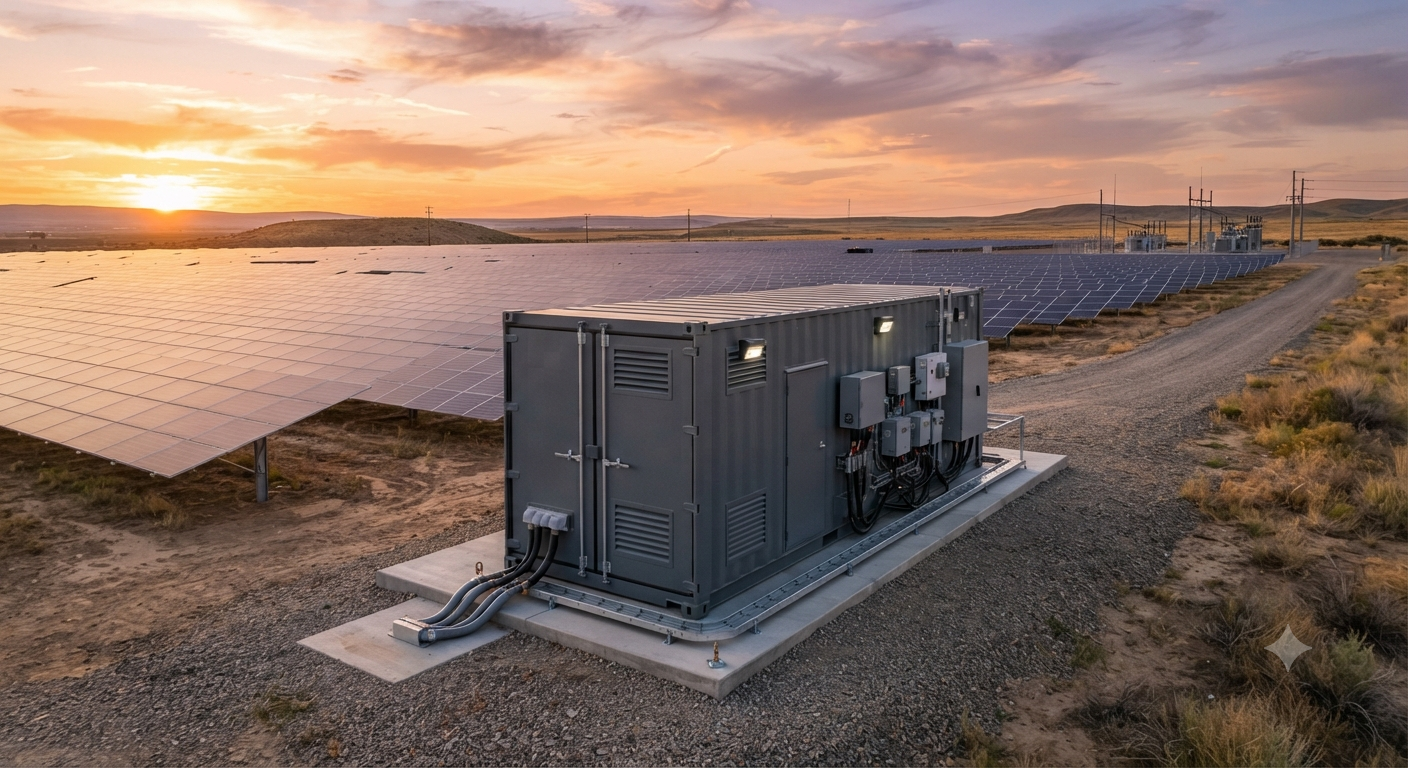
The deployment roadmap for solid-state in commercial infrastructure is forecasted to commence with pilot projects in 2026-2027, focusing on heavy-duty vehicle fleet charging and data center backup power—applications where the premium for density and safety is justified. The mass-market C&I segment is expected to see initial availability for 4-hour duration storage by 2028, targeting high-energy throughput markets where land area is scarce. However, until production scale reaches price parity, Tier-1 LFP remains the undisputed platform for 90% of global ESS deployments due to its reliable supply chain, mature recycling infrastructure, and lower upfront capital expenditure (CapEx).
For existing utility-scale and C&I projects, the immediate priority remains the optimization of liquid-cooled LFP systems, which offer a proven 20-year technical lifetime. The transition to solid-state will be phased, initially applied to premium-use cases requiring minimal fire risk and maximal capacity density. Successful global adoption will hinge on the evolution of the solid-state manufacturing ecosystem and the effective resolution of high interfacial resistance and mechanical stress issues.
📥 Download Technical Specification
Click the button below to view or download the full official PDF datasheet.