Overview
As a B2B Energy Storage System (BESS) technical support engineer, I answer the most common pre-sales and post-sales questions about the maximum discharge rate (C-rate) supported by our battery modules. This FAQ covers LFP chemistry, degradation limits, cycle life, thermal management, scalability, BMS monitoring, grid-tie configuration, fire safety and ROI calculation for commercial and industrial deployments.

Frequently Asked Questions
- Q1: What is the maximum discharge rate (C-rate) supported by your battery modules?
- Our standard LFP battery modules support a continuous discharge rate of 1C and a peak discharge rate of 2C for up to 10 seconds. This means a 100 kWh module can deliver 100 kW continuously and 200 kW briefly for grid support, peak shaving or EV supercharging pulses. The exact C-rate depends on cell specification, state of charge and thermal conditions, so always confirm the datasheet for your chosen cabinet.
- Q2: What battery chemistry do you use, and how does it affect C-rate and cycle life?
- We use Tier-1 lithium iron phosphate (LFP) cells, which provide a strong balance of high discharge rate, thermal stability and long cycle life. LFP chemistry typically delivers 6,000 to 8,000 cycles at 80% depth of discharge (DoD) and tolerates 1C continuous discharge with minimal degradation. Unlike NMC, LFP is more forgiving under high C-rate operation, making it ideal for commercial peak shaving and micro-grid applications.
- Q3: What is the cycle life and degradation profile of your battery modules at high C-rate?
- The expected cycle life is 6,000 cycles at 80% DoD and 1C discharge, with capacity retention above 80% of the original rated capacity. At higher continuous C-rates, degradation accelerates slightly; for example, 1.5C continuous operation may reduce cycle life by roughly 10-15%. Our BMS and liquid cooling system work together to limit cell stress and preserve cycle life across the system lifespan.
- Q4: How does the liquid cooling system support high discharge rates and prevent thermal runaway?
- Our liquid cooling system maintains cell temperature within a narrow band, typically 25°C to 35°C, even during 1C to 2C discharge pulses. This thermal preservation directly supports higher C-rate capability and reduces the risk of thermal runaway. Multi-tier safety features include cell-level temperature sensing, coolant flow monitoring, early gas and smoke detection, and automatic isolation of affected modules.
- Q5: Can your BESS be scaled in parallel for higher discharge power and capacity?
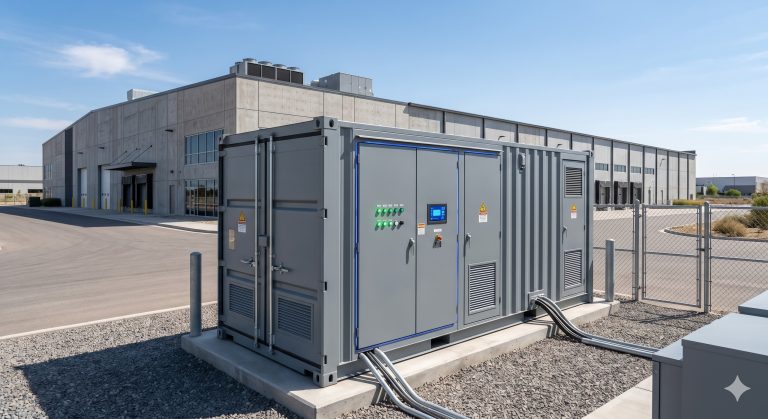
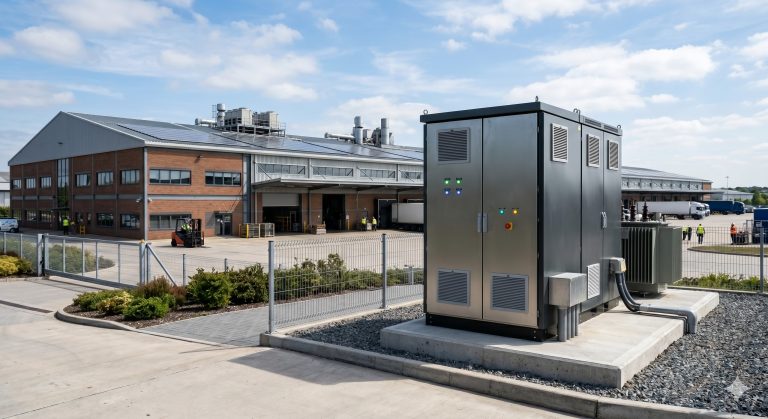
- Yes, our modular cabinets can be connected in parallel to scale both energy capacity and discharge power. A single cabinet may support 100 kW to 250 kW discharge, and parallel cabinet connectivity allows you to reach megawatt-scale systems using custom DC busbar linkage. The BMS coordinates current sharing across cabinets to prevent overload and maintain stable C-rate performance.
- Q6: How does the BMS monitor and balance cells during high C-rate discharge?
- The active BMS continuously monitors cell voltage, current, temperature and state of charge, and performs inter-cell balancing to keep the pack within safe limits. During high C-rate discharge, the BMS dynamically limits current if any cell approaches voltage or temperature thresholds. This protects the battery modules and ensures consistent performance across the system.
- Q7: What grid-tie and off-grid configurations are supported for high discharge rate applications?
- Our BESS supports grid-tie, off-grid and hybrid configurations through a bi-directional power conversion system (PCS). For grid-tie operation, the system can perform peak shaving, demand response and frequency regulation; for off-grid or micro-grid use, it can seamlessly switch to islanding mode. The PCS and EMS coordinate discharge rate limits based on load demand and available renewable generation.
- Q8: How do I calculate ROI and LCOE for a high C-rate BESS in commercial and industrial facilities?
- ROI and LCOE depend on discharge rate, cycle life, electricity tariffs and peak demand charges. A high C-rate BESS can increase savings by capturing more peak shaving events and providing demand response revenue, but higher C-rate operation may slightly reduce cycle life. Our team provides a 10-year guarantee and local lifecycle service to help you model LCOE and verify the business case before purchase.