Introduction
In the rapidly evolving landscape of commercial and industrial (C&I) energy storage, the efficacy of a Battery Energy Storage System (BESS) hinges not merely on the capacity of its Tier-1 LFP cells or the efficiency of its liquid cooling thermal management, but fundamentally on its communication protocols. As grid operators demand faster frequency regulation and facility managers seek granular control over peak-shaving strategies, the interoperability between the Battery Management System (BMS), Power Conversion System (PCS), and Energy Management System (EMS) becomes the central nervous system of the asset. This comprehensive B2B sourcing guide dissects the architectural layers of BESS communication protocols, offering a data-driven analysis of latency, round-trip efficiency, and the standards—such as IEC 62619, UL 9540, and Modbus TCP/IP—that dictate the total cost of ownership (TCO) and return on investment (ROI) for MWh-scale deployments.
Core Architecture & Battery Management
The Three-Tier Communication Hierarchy
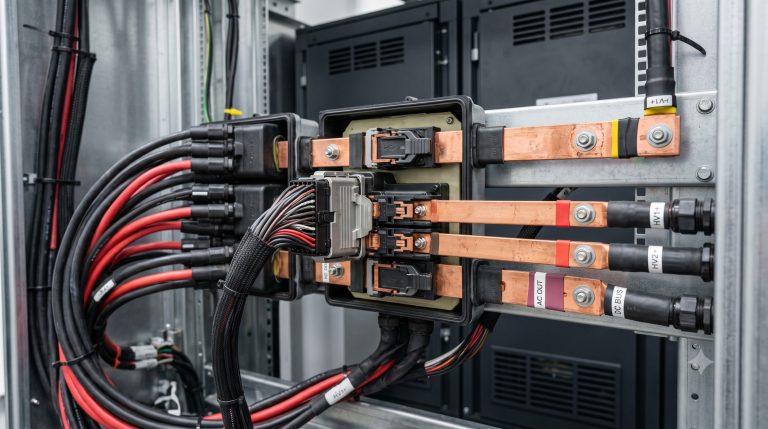
A robust BESS relies on a hierarchical communication topology to ensure safety and operational precision. At the foundational level, the BMS utilizes internal protocols like CAN bus (Controller Area Network) or RS-485 to monitor individual cell voltages, temperatures, and State of Charge (SoC). This data is aggregated at the String level before being transmitted to the PCS and EMS. The critical metric here is latency; a delay exceeding 100ms in transmitting a thermal runaway warning can circumvent even the most advanced fire suppression systems. Tier-1 systems now employ Ethernet-based backbones (IEC 61850) to reduce jitter and ensure deterministic control.
Protocol Interoperability: Modbus vs. IEC 61850
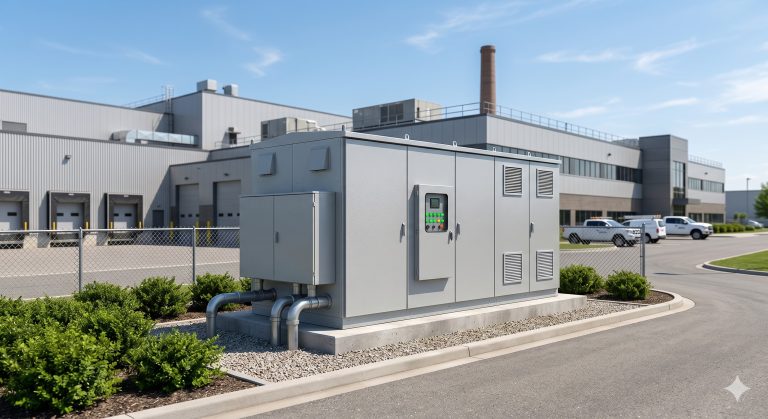
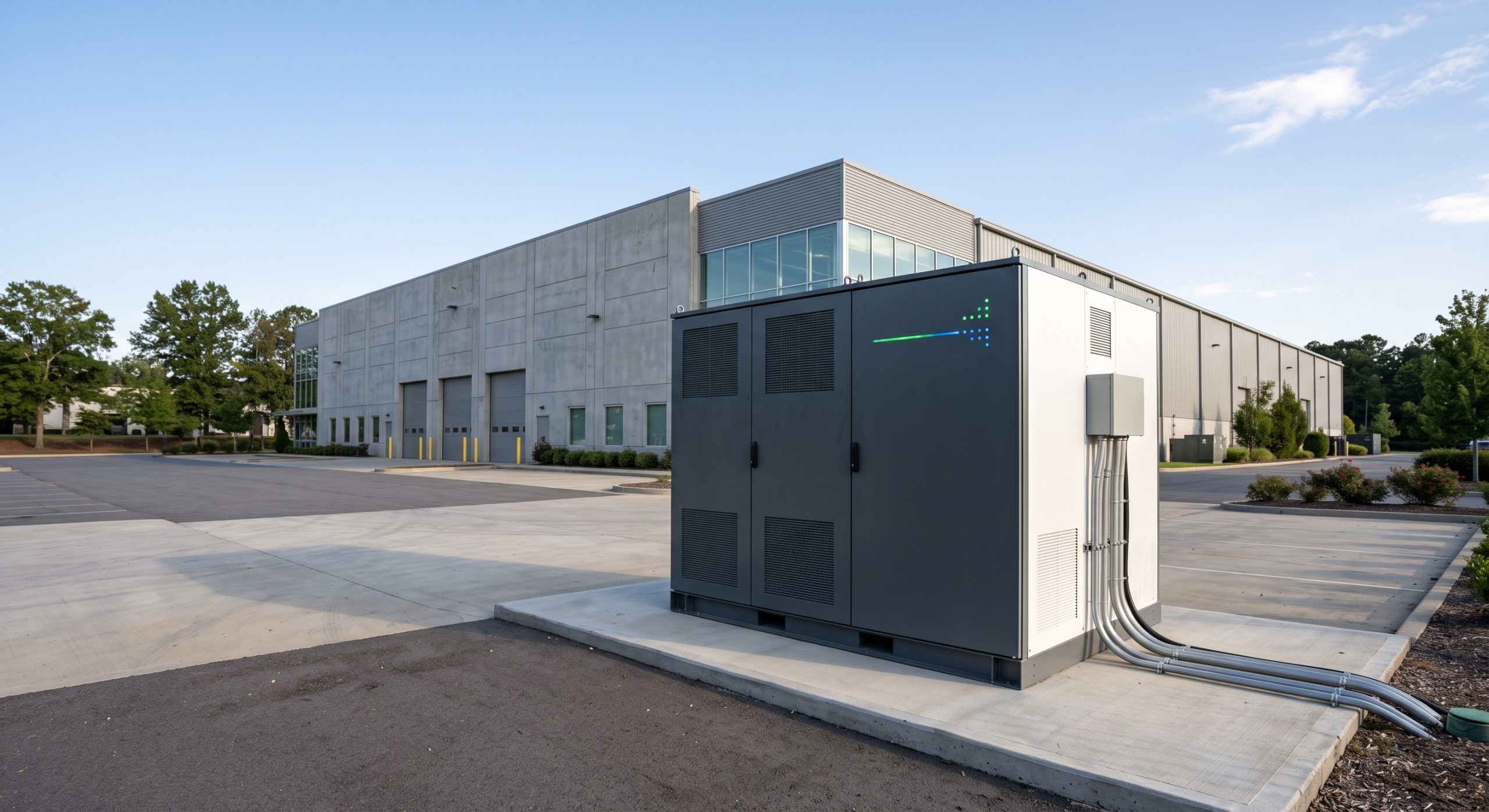
For B2B integrators, the choice between Modbus TCP/IP and IEC 61850 is pivotal. While Modbus remains the industry standard for its simplicity and low overhead, IEC 61850 offers advanced self-description and peer-to-peer communication essential for Virtual Power Plant (VPP) integration. Systems lacking multi-protocol gateways risk ‘protocol islands,’ preventing the EMS from executing complex demand response commands. Modern liquid-cooled commercial energy storage cabinets are increasingly shipping with dual-stack communication modules to bridge legacy SCADA systems with modern cloud-based EMS platforms.
Technical Specifications & Protocol Standards
When sourcing BESS hardware, the communication protocol specifications are as critical as the battery chemistry. The following table outlines the key parameters that govern system responsiveness and grid compliance. Note the emphasis on round-trip efficiency (RTE) and Depth of Discharge (DoD) relative to the communication refresh rate; slower refresh rates often force conservative DoD limits, thereby reducing usable capacity and inflating LCOE.
| Key Parameter | Technical Specification |
|---|---|
| Battery Chemistry | Tier-1 LFP (Lithium Iron Phosphate) |
| Cycle Life | >8000 cycles @ 90% DoD |
| Round-Trip Efficiency | >95% (AC-AC) |
| Communication Protocols | Modbus TCP/IP, IEC 61850, DNP3, CAN 2.0B |
| Thermal Management | Liquid Cooling (Active Thermal Control) |
| Safety Standards | IEC 62619, UL 9540, UN38.3, CE |
| Grid Support Functions | Frequency Regulation, Peak Shaving, Demand Response |
Commercial ROI & Grid Support
Peak Shaving and Demand Response Revenue
The financial viability of a C&I BESS is directly linked to the speed at which it can respond to utility signals. With frequency regulation markets requiring sub-second response times, the communication protocol stack must support unsolicited reporting (e.g., DNP3 unsolicited responses) rather than traditional polling. A system capable of >95% round-trip efficiency and >8000 cycles @ 90% DoD is rendered ineffective if the EMS cannot dispatch the PCS within the required timeframe due to protocol bottlenecks. By optimizing the communication loop, facilities can maximize peak-shaving ROI, often reducing demand charges by 30-50% in high-tariff industrial parks.
Cybersecurity and Grid Compliance
As BESS assets become grid-critical infrastructure, adherence to IEC 62443 cybersecurity standards for industrial control systems is non-negotiable. Sourcing managers must verify that communication gateways support TLS 1.2+ encryption and role-based access control (RBAC). Furthermore, compliance with UL 9540 and UN38.3 for transport safety is intrinsically linked to the BMS’s ability to log and transmit fault codes reliably over the communication bus.
Deployment Scenarios
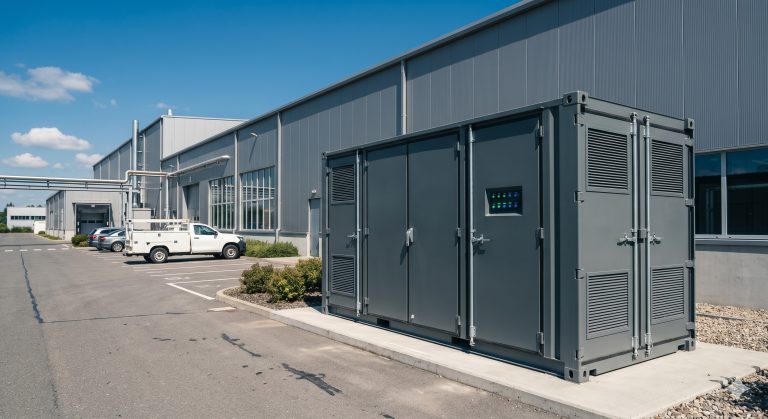
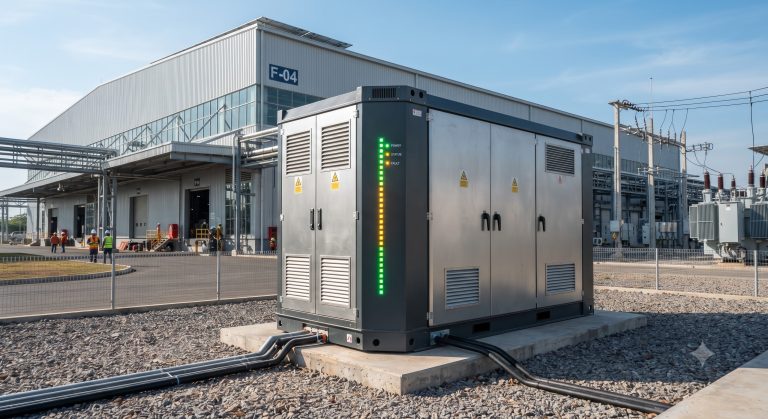
In real-world deployments—ranging from EV supercharging stations to remote micro-grids—the adaptability of the communication protocol determines the system’s resilience. For a PV-Storage-Charging (PSC) integration, the protocol must seamlessly balance solar generation, battery charging, and EV dispatching. This requires a high-speed CAN bus between the PCS and the DC-DC converters. In industrial park settings, modular BESS cabinets rely on inter-cabinet busbar linkage and parallel communication topologies to scale from 500kWh to 10MWh without degrading system latency or control accuracy.

Conclusion
Selecting a BESS for commercial and industrial applications is no longer just about battery capacity or liquid cooling thermal control. It is an architectural decision centered on BESS communication protocols. A system with open, robust, and secure protocols ensures seamless grid support, maximizes round-trip efficiency, and future-proofs the investment against evolving VPP and demand response markets. As the industry migrates toward zero-carbon facilities, the interoperability of the BMS, PCS, and EMS will be the definitive factor separating high-performing assets from stranded investments.