EXECUTIVE SUMMARY
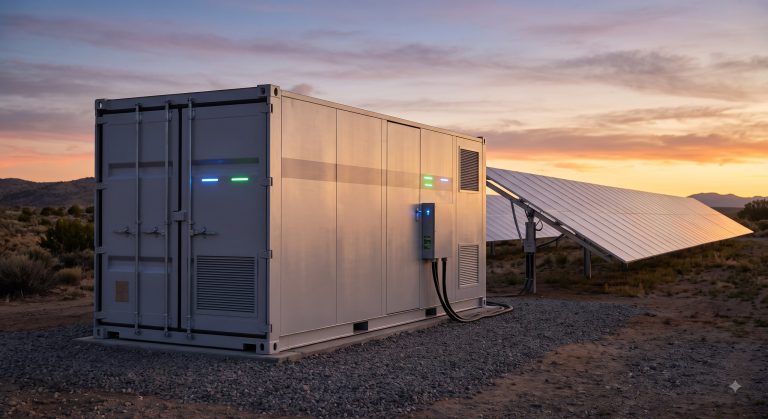
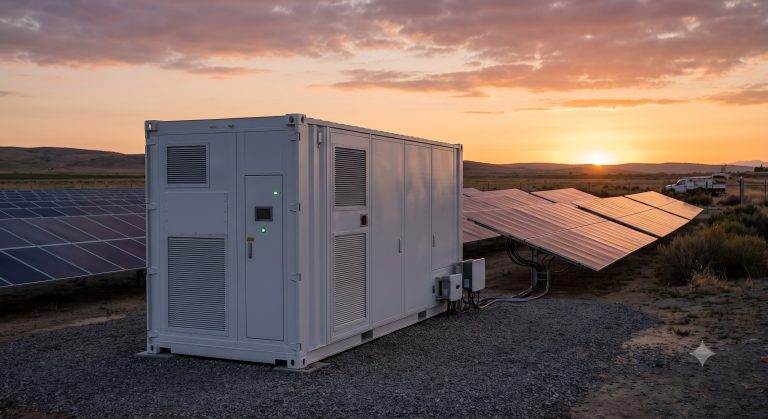
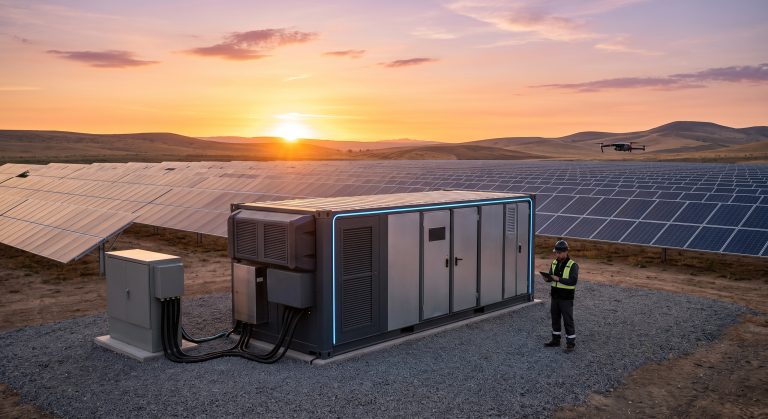
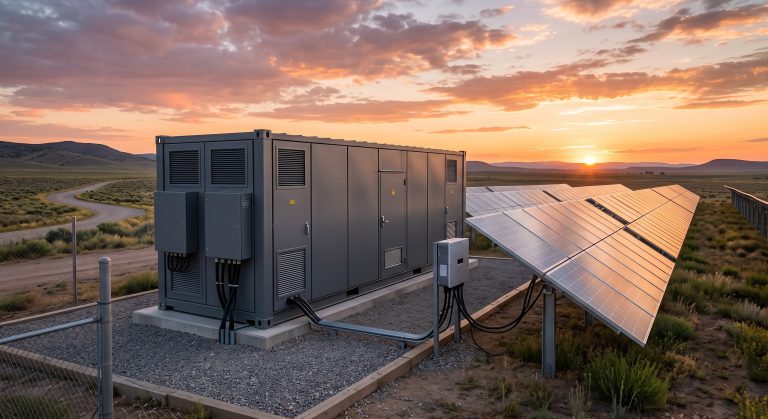
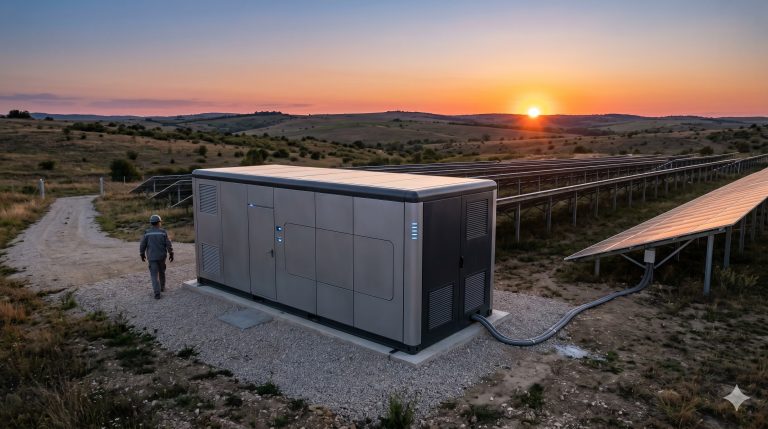
As the global energy landscape pivots toward intelligent electrification, the demand for EV charging infrastructure that does not destabilize the grid is paramount. Our Smart EV Charger is a next-generation, bi-directional energy asset designed for commercial & industrial (C&I) facilities, high-throughput EV supercharging stations, and islanded micro-grids. Unlike conventional unidirectional chargers, this system functions as an active grid node, enabling zero-carbon charging through native photovoltaic (PV) integration, peak shaving via dynamic load management, and vehicle-to-grid (V2G) readiness to monetize parked EV batteries.
Positioned at the intersection of e-mobility and energy storage, the Smart EV Charger eliminates the need for costly grid upgrades by embedding a high-power battery buffer (from 50kWh to 200kWh) and AI-driven energy dispatch. It reduces a facility’s peak demand charges by up to 35% while ensuring 100% renewable charging during daylight hours. The unit is engineered for extreme environments, delivering stable operation from -30°C to 55°C, making it the ideal choice for fleet depots, highway rest stops, and industrial parks seeking both operational resilience and ESG compliance.
SYSTEM ARCHITECTURE & SAFETY
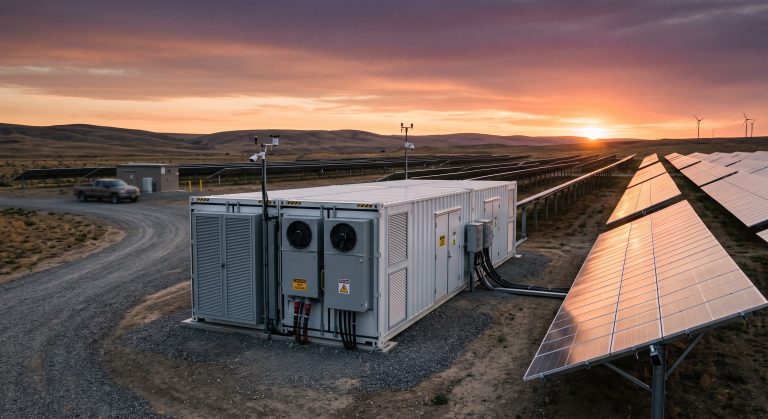
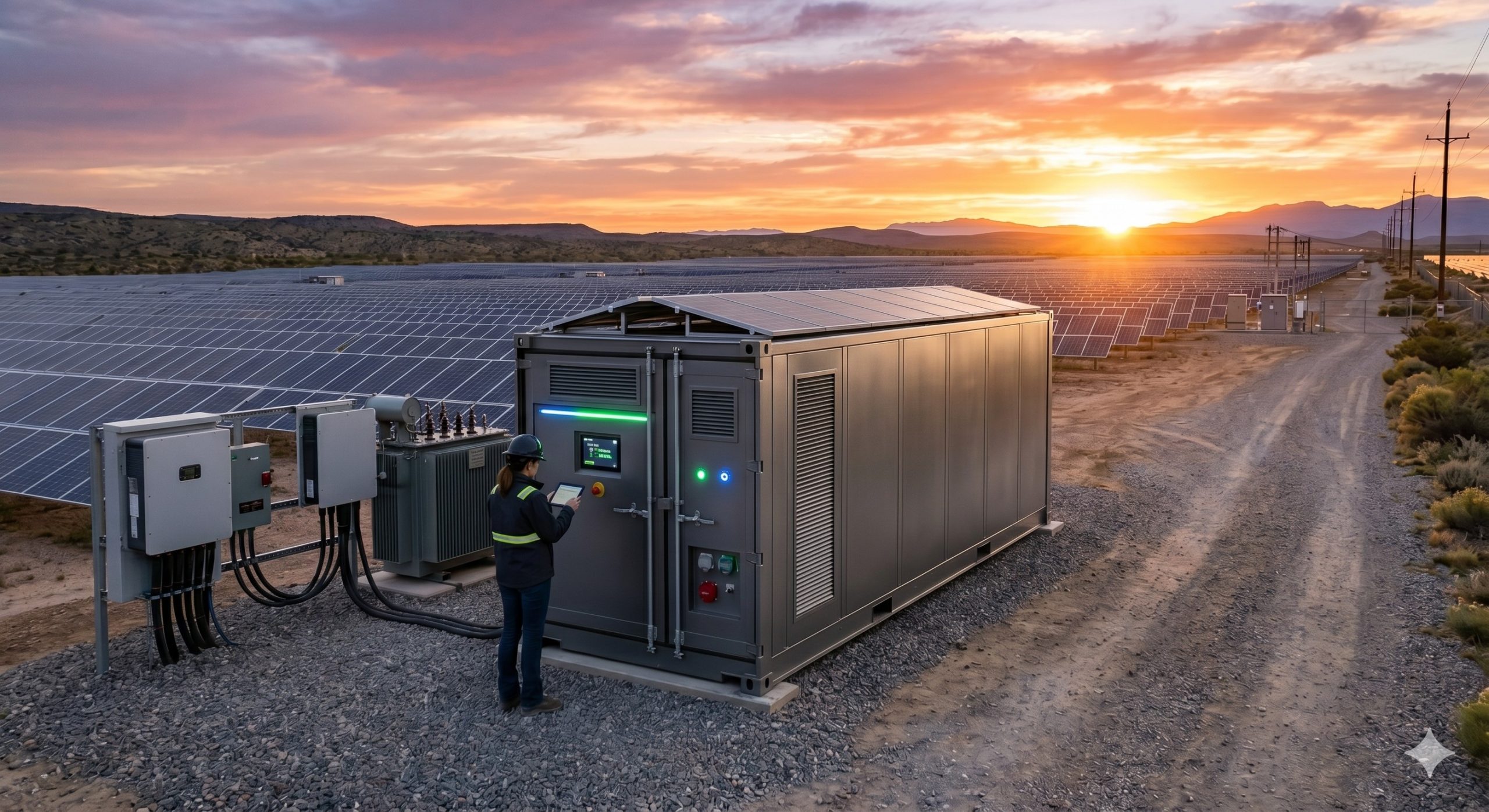
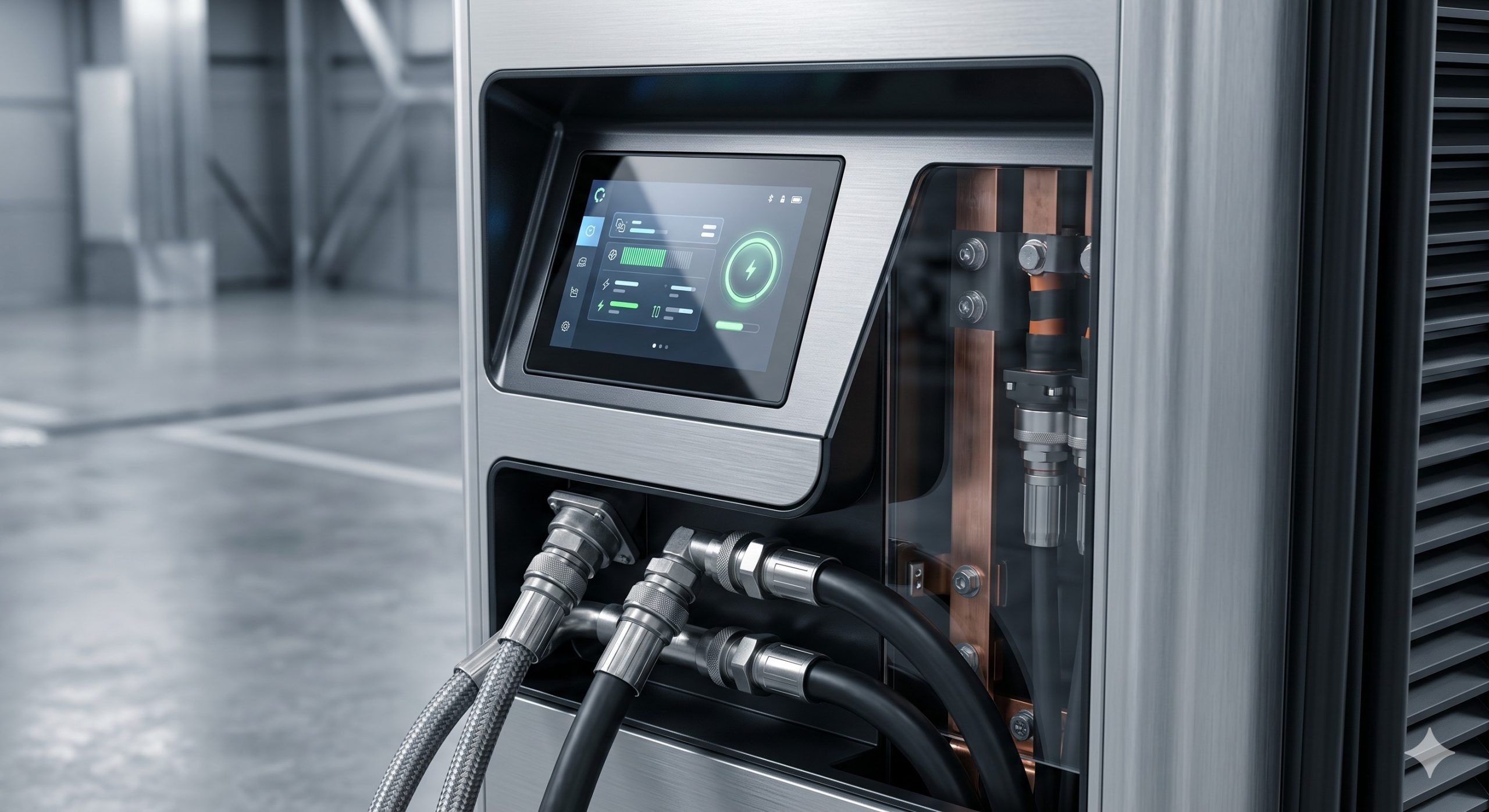
The hardware architecture is built on a modular, non-proprietary design centered around Tier-1 Lithium Iron Phosphate (LFP) prismatic cells, offering over 8,000 cycles at 80% depth of discharge (DoD). The chassis is an IP65-rated outdoor enclosure, segregating the power electronics (SiC MOSFETs, 97.5% peak efficiency) from the battery section via a thermal break. To ensure optimal cell uniformity, the system employs an active liquid cooling and heating loop (1.5kW cooling capacity ±0.5°C cell variance), which maintains 25°C-35°C even under 250kW rapid charging bursts.
Safety is enforced through five layers of protection: 1) Cell-level fusing, 2) Module-level passive propagation resistance (no thermal runaway spread), 3) Pack-level dual contactors (positive and negative rail), 4) Dedicated aerosol-based fire suppression unit with UL 2775 compliant detection tubes, and 5) An external emergency stop (ESS) and automatic grid disconnect on arc fault or insulation deterioration. The battery enclosure is rated UL 94 V-0 and includes a venting pathway for any off-gassing, effectively isolating hazards from personnel and adjacent equipment.
KEY FEATURES
– Seamless Grid Transition (<10ms): The onboard static transfer switch (STS) enables seamless islanding from the utility during blackouts or frequency excursions, converting the charger into a backup power source for critical C&I loads (e.g., security, cold storage) without interrupting active EV sessions.
- EMS Smart Dispatch with V2G: Integrated energy management system (EMS) utilizes real-time pricing (TOU) and local load forecasting. Supports ISO 15118-20 for plug-and-charge, automatic billing, and bi-directional power flow, allowing fleet operators to sell stored EV energy back to the grid during peak hours.
- Full PV-Storage-Charging Convergence: Native DC-coupling port for direct solar input (450V-900V DC) and AC-coupling for wind/grid. The charger can operate in 7 distinct modes: Self-consumption, Peak Shaving, Island Backup, Export Limitation, Demand Response, Scheduled V2G, and Frequency Regulation.
- Modular & Hot-Swappable Power Cabinets: Each charger supports 2 to 6 parallel power modules (30kW per module), offering output from 60kW to 180kW continuous. Modules are hot-swappable (tool-less replacement <5 minutes) and automatically recognized by the central controller, reducing mean time to repair (MTTR) to near zero.
- Extreme Climate Active Equalization: Proprietary balancing algorithm actively redistributes cell charge during idle periods, extending pack lifecycle. In cold climates, the liquid heater pre-conditions the battery using AC power or surplus PV, enabling fast-charge readiness from -30°C ambient within 45 minutes.
COMPLIANCE & STANDARDS
The Smart EV Charger is fully certified for global deployment, meeting the most stringent safety and grid codes. All electrical components are CE-marked and cUL/us listed. The battery system complies with UL 1973 (Energy Storage) and UL 9540 (System Level), including the mandatory UL 9540A fire test for thermal runaway propagation. For transport, the LFP cells are certified to UN38.3 and IEC 62619 (Industrial battery safety). The charger interface meets IEC 61851-1 and IEC 61851-23 for DC fast charging, and ISO 15118-2 for digital communication. Grid interconnection follows IEEE 1547 and UL 1741 SA (including California Rule 21 smart inverter functions). An optional NRTL certification is available for hazardous environments (Class I, Div 2).
TECHNICAL SPECIFICATIONS
Below are the verified electrical, mechanical, and environmental parameters for the standard chassis configuration (Model: SEV-150C). All values refer to nominal operation at 25°C with a new battery, unless noted otherwise.
| Parameter | Specification |
|---|---|
| AC Input / Output (Grid) | 480V AC, 3-phase, 60Hz (380-415V option) |
| DC Output (EV Charging) | 150kW continuous, 200kW peak (10 sec), 150A – 500A adjustable |
| Battery Chemistry | Tier 1 LFP (LiFePO4), prismatic cells |
| Usable Capacity (Buffer) | 100 kWh (standard); expandable to 200 kWh |
| Round-trip Efficiency | 91.5% (DC-DC, battery to EV), 88% (AC-grid to EV) |
| Cooling Method | Active liquid cooling + liquid heating (integrated) |
| Operating Temperature | -30°C to 55°C (derated above 50°C) |
| Fire Suppression | Aerosol-based, UL2775 compliant, dual heat/ion sensors |
| Communication | 4G, Ethernet, Wi-Fi, Modbus TCP/IP, OCPP 1.6J/2.0.1 |
| Dimensions (W x D x H) | 1200 x 800 x 2100 mm (2 cabinets, shared base) |
| Weight (with battery) | 1850 kg (approx.) |
| IP Rating | IP65 (enclosure), IP54 (connector interface) |
📥 Download Technical Specification
Click the button below to view or download the full official PDF datasheet.