Introduction: The Commercial Energy Cost Crisis
For today’s commercial and industrial (C&I) facility managers, the electricity bill is no longer a simple operational line item—it is a volatile, multi-variable threat to profitability. With industrial electricity prices surging across North America, Europe, and Asia-Pacific, and demand charges often accounting for 30–50% of total utility costs, the traditional model of passive energy consumption is financially unsustainable. Commercial energy self-consumption—the practice of generating, storing, and consuming your own power on-site—has emerged as the definitive strategic response. Unlike simple backup power, self-consumption directly attacks the two largest cost drivers: peak demand charges and time-of-use (TOU) energy pricing. This analysis provides a rigorous, data-driven Total Cost of Ownership (TCO) framework for deploying behind-the-meter Commercial & Industrial Battery Energy Storage Systems (C&I BESS), moving beyond marketing claims to quantify real ROI, lifecycle degradation, and grid-interactive value streams.
Core Architecture & Battery Management: The Foundation of Self-Consumption
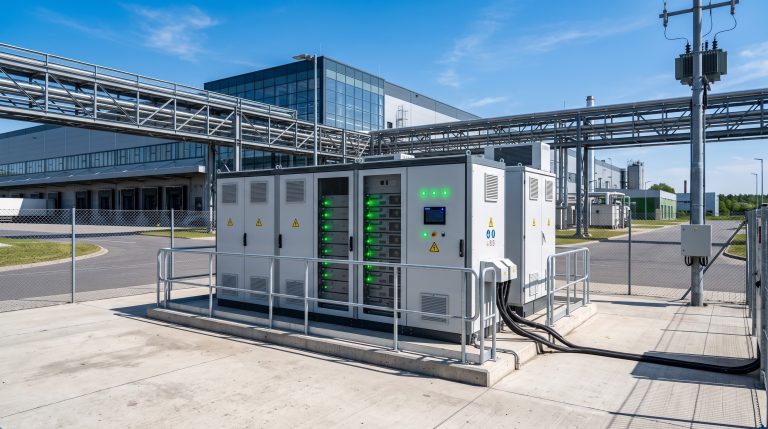
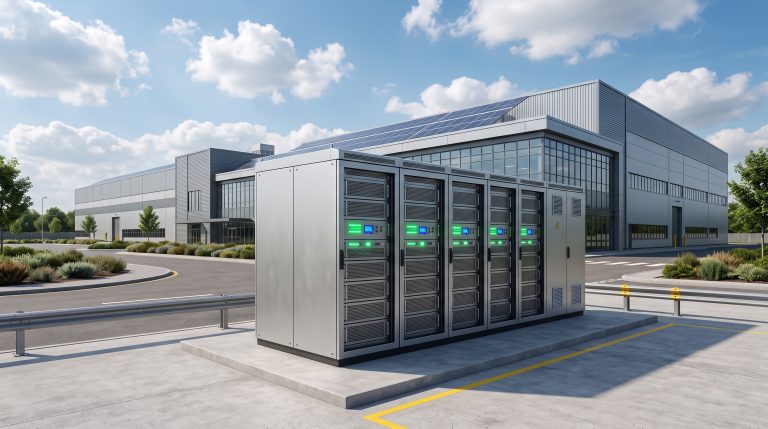
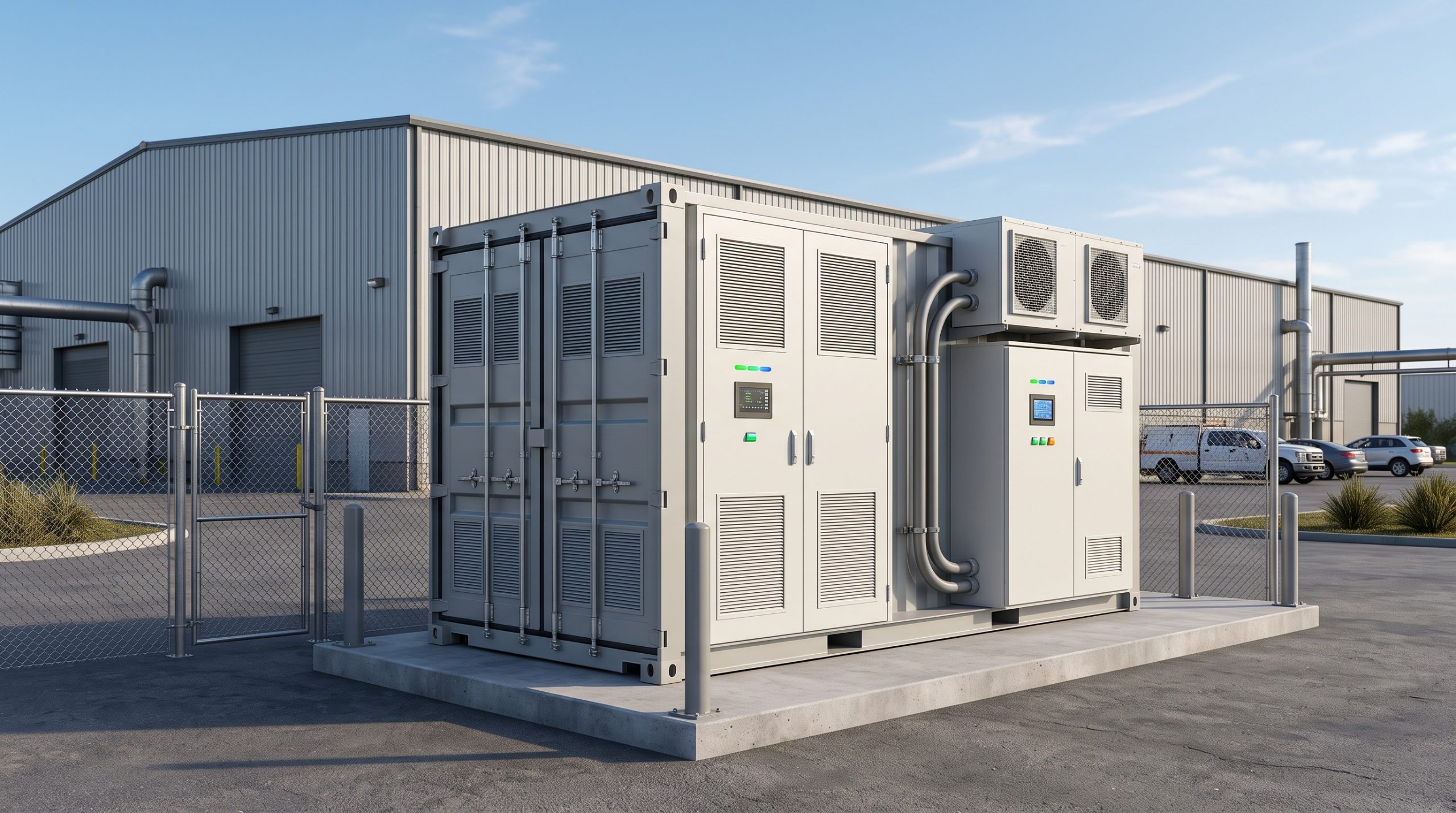
A commercial self-consumption system is not merely a battery bank; it is an integrated, intelligent energy asset. The architecture hinges on three interdependent pillars: the battery pack, the Power Conversion System (PCS), and the Battery Management System (BMS).
Tier-1 LFP Chemistry and Cycle Life Economics
While lithium nickel manganese cobalt oxide (NMC) offers higher energy density, Tier-1 Lithium Iron Phosphate (LFP) cells have become the dominant chemistry for C&I BESS due to their superior thermal stability, cost per kWh, and cycle life. A typical Tier-1 LFP cell delivers >8,000 cycles at 80% Depth of Discharge (DoD) under standard test conditions. For a daily cycling regime (one full cycle per day), this translates to a 20+ year operational lifespan before the battery degrades to 70% of its original capacity. This cycle life is the single most important variable in LCOE calculations; a system costing 20% more upfront but delivering 2,000 additional cycles can reduce the levelized cost of storage by over 30%.
BMS Precision: Active Balancing and State Estimation
The BMS is the brain of the battery pack. In a commercial system, a high-precision BMS must perform active cell balancing—not just passive dissipation—to ensure that weak cells do not prematurely limit the entire pack’s usable capacity. Advanced BMS units now employ state-of-charge (SOC) estimation accuracy of ±2% and state-of-health (SOH) tracking via electrochemical impedance spectroscopy (EIS). This data is critical for accurate peak-shaving dispatch; a 5% SOC estimation error can lead to either missed peak reduction or unnecessary grid import, eroding ROI.
PCS Integration: Bi-Directional Efficiency and Grid Support
The PCS converts DC battery power to AC grid power and vice versa. Modern bi-directional PCS units for C&I applications achieve round-trip efficiency (RTE) of 92–96%. The PCS must also provide four-quadrant operation to enable reactive power compensation and voltage support. For self-consumption, the critical metric is the peak efficiency window—typically between 30% and 80% load. A PCS with a narrow high-efficiency band will perform poorly if the facility’s load profile requires frequent low-power cycling.
Thermal Control: Liquid Cooling vs. Air Cooling in C&I Environments
Thermal management is the silent killer of BESS ROI. Heat accelerates calendar and cycle aging exponentially; a 10°C increase in average cell temperature can halve cycle life. Two dominant cooling architectures exist:
- Air Cooling: Uses fans and HVAC to circulate air across modules. Lower CapEx and simpler maintenance, but cell temperature delta can exceed 5–8°C within a cabinet, leading to uneven degradation. Suitable for low-power, moderate-duty cycles in temperate climates.
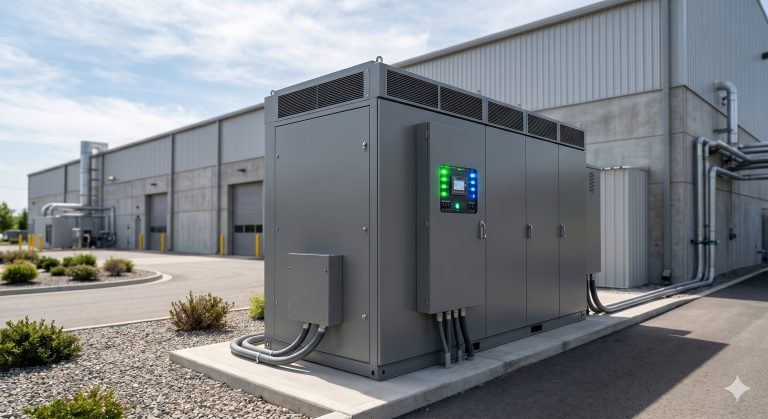
- Liquid Cooling: Uses a glycol-water coolant circulated through cold plates integrated into the module structure. Achieves cell temperature delta of <3°C and maintains operating temperatures at 25–30°C even under 1C continuous discharge. Higher CapEx, but extends cycle life by 15–25% and enables higher power density. For high-revenue peak-shaving applications in hot or humid industrial environments, liquid cooling is the TCO-optimal choice.
Technical Specifications: A Commercial BESS Reference Ledger
The following table represents a typical 500 kW / 1 MWh commercial self-consumption BESS designed for peak shaving and demand response. These parameters are illustrative of a Tier-1 system compliant with IEC 62619, UL 9540, CE, and UN38.3 standards.
| Key Parameter | Technical Specification |
|---|---|
| Battery Chemistry | Tier-1 LFP (Lithium Iron Phosphate) |
| System Capacity | 500 kW / 1,000 kWh (1 MWh) |
| Cycle Life | >8,000 cycles @ 80% DoD, 25°C |
| Depth of Discharge (DoD) | 90% maximum (configurable) |
| Round-Trip Efficiency | ≥ 94% (DC-DC), ≥ 90% (AC-AC) |
| Cooling Method | Liquid Cooling (Glycol-Water) |
| Cell Temperature Delta | < 3°C across module |
| Operating Temperature | -20°C to +55°C (derated above 45°C) |
| BMS Communication | CAN 2.0B / Modbus TCP / IEC 61850 |
| PCS Topology | Bi-directional, 4-quadrant, 3-level NPC |
| Grid Compliance | IEC 62619, UL 9540, CE, UN38.3, IEEE 1547 |
| Fire Suppression | Aerosol + Perfluorohexanone (Novec 1230) dual-stage |
| Enclosure Rating | IP54 (outdoor), IP20 (indoor cabinet) |
| Warranty | 10 years / 25,000 MWh throughput |
Commercial ROI & Grid Support: The TCO Model
Calculating the TCO of commercial energy self-consumption requires modeling four distinct value streams:
- Peak Demand Charge Reduction: The BESS discharges during the facility’s highest 15-minute demand interval, shaving the monthly kW billing peak. A 500 kW system can reduce a 2,500 kW peak by 20%, saving $3,000–$8,000 per month depending on utility rates.
- Time-of-Use Energy Arbitrage: Charging during off-peak windows (e.g., $0.08/kWh) and discharging during on-peak windows (e.g., $0.22/kWh) generates a gross margin of $0.14/kWh. With 300 cycles per year and 90% DoD, a 1 MWh system yields $37,800 in annual energy arbitrage.
- Demand Response (DR) Payments: Grid operators pay for curtailable load. A BESS with sub-100 ms response time can participate in frequency regulation markets, earning $50–$150 per kW-year.
- Solar Self-Consumption Optimization: When paired with PV, the BESS stores excess generation that would otherwise be exported at low net-metering rates, increasing the effective value of solar kWh by 40–60%.
The CapEx for a turnkey 1 MWh liquid-cooled system ranges from $250,000 to $400,000 depending on PCS rating, enclosure type, and fire suppression. With stacked value streams, payback periods of 4–6 years are achievable in high-cost utility territories, with IRR exceeding 15% over a 15-year horizon.
Deployment Scenarios: From Industrial Parks to EV Supercharging
Commercial self-consumption BESS deployments are highly site-specific. Three dominant archetypes emerge:
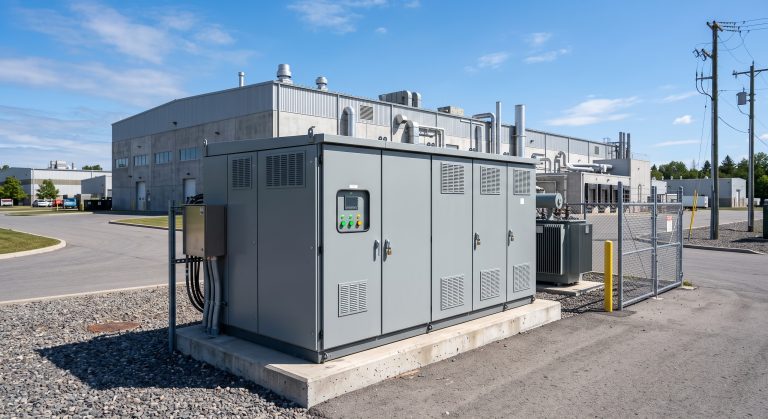
- Industrial Manufacturing Parks: Facilities with heavy inductive loads (motors, welders, compressors) benefit from BESS for power factor correction and voltage sag mitigation, in addition to peak shaving. The BESS acts as a shock absorber, reducing equipment wear and improving product quality.
- Commercial Real Estate & Data Centers: High-rent facilities with strict uptime requirements use BESS for demand charge management and as a bridge to generator start. Liquid cooling is essential in dense urban environments where noise and waste heat are constrained.
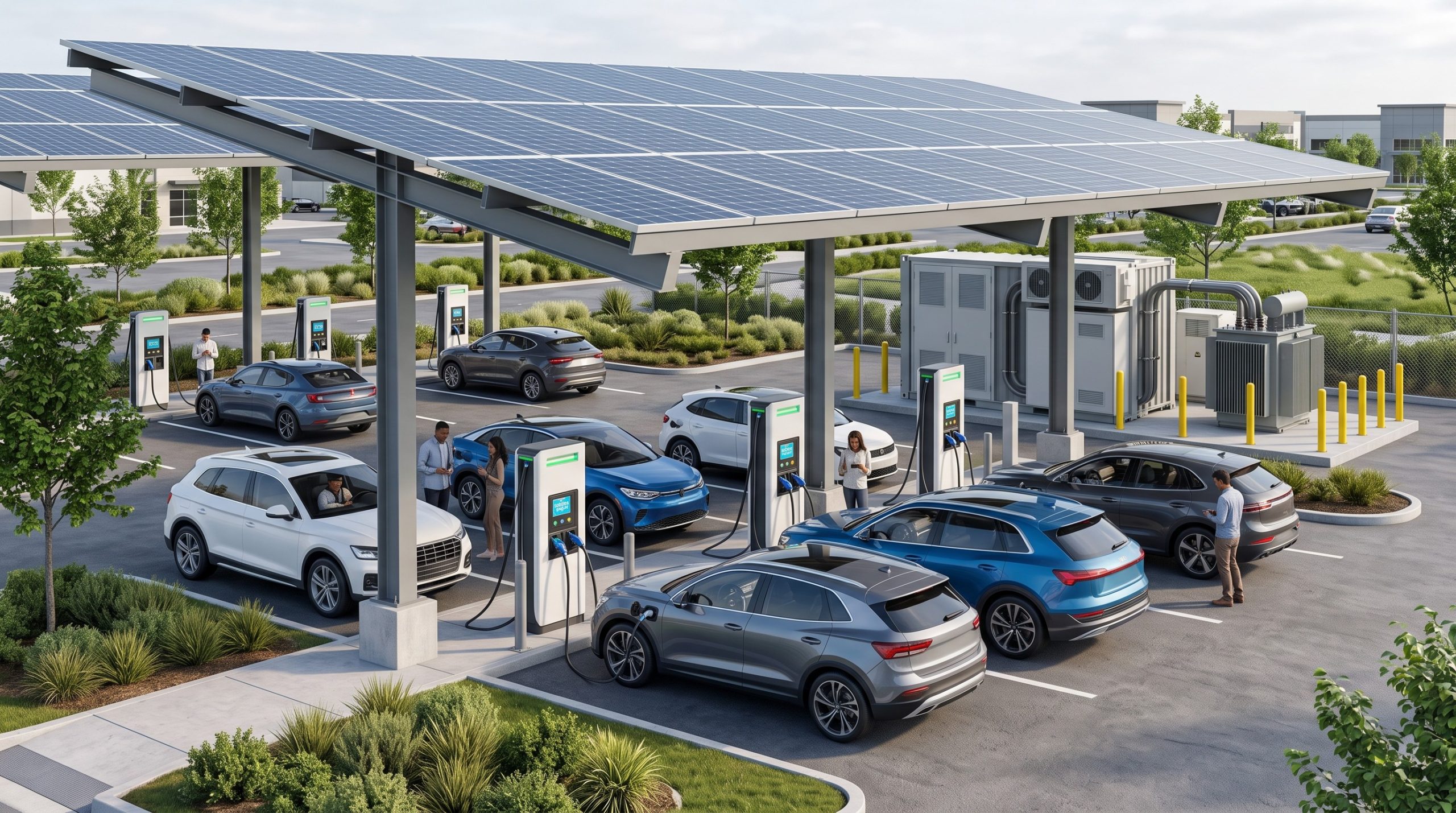
- EV Supercharging Hubs: The integration of PV, BESS, and DC fast chargers (PV-Storage-Charging) is the fastest-growing C&I segment. The BESS buffers the high-power pulses of 350 kW chargers, preventing demand spikes and enabling charging during grid outages. This architecture also reduces the required grid interconnection capacity by 50–70%.
Conclusion: The Strategic Imperative
Commercial energy self-consumption is no longer a niche sustainability gesture—it is a financial hedge, a resilience asset, and a grid-interactive revenue generator. The TCO analysis is clear: Tier-1 LFP cells, liquid-cooled architecture, and intelligent BMS/EMS integration deliver the lowest levelized cost of storage and the highest risk-adjusted return. Facility managers who delay adoption will face escalating demand charges, volatile TOU rates, and stranded asset risk. Those who act now will lock in energy independence, reduce operational risk, and position their facilities as critical nodes in the decarbonized grid of the future.