Introduction
For commercial and industrial (C&I) enterprises, the escalating volatility of grid electricity prices and the pressing need for decarbonization have transformed energy storage from a peripheral technology into a core strategic asset. As global renewable penetration surges, the requirement for reliable, high-performance energy storage OEM manufacturing partnerships has never been more critical. This guide serves as a comprehensive blueprint for procurement managers, system integrators, and facility directors navigating the complex landscape of battery energy storage systems (BESS). We dissect the technical architectures, economic models, and safety standards that define a Tier-1 supplier, providing the essential data to optimize your total cost of ownership (TCO) and ensure grid resilience.
Core Architecture & Battery Management
System Topology and Component Integration
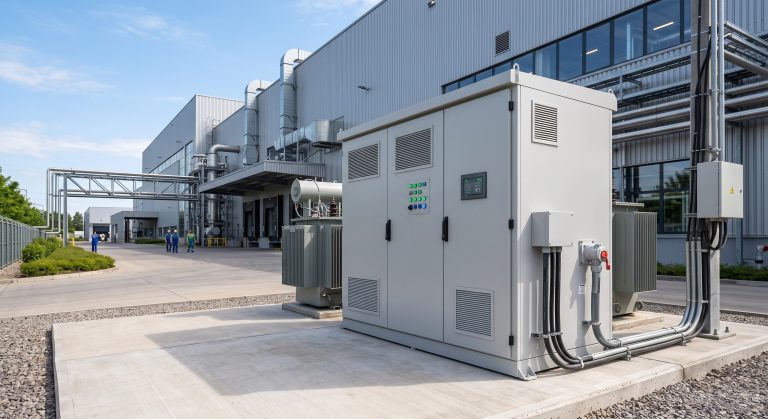
The foundation of any robust C&I BESS is a harmonious integration of power electronics, energy storage mediums, and intelligent controls. Professional energy storage OEM manufacturing relies on a three-tier architecture: the DC-side battery rack, the power conversion system (PCS), and the energy management system (EMS). In modern commercial energy storage solutions, the PCS serves as the bidirectional bridge, converting AC grid power to DC for storage and reconverting it during discharge. High-voltage DC bus configurations (typically 800-1500V) are increasingly standard to maximize efficiency and minimize cable losses.
Battery Chemistry: The Tier-1 LFP Imperative
While various chemistries exist, the industry has firmly consolidated around LFP (Lithium Iron Phosphate) for C&I applications. This dominance is driven by LFP’s intrinsic thermal stability, extended cycle life, and absence of cobalt, which mitigates supply chain risks. A key metric in energy storage OEM manufacturing is the guaranteed cycle life. Top-tier OEMs certify their systems for >8000 cycles at 90% Depth of Discharge (DoD). This translates to an operational lifespan exceeding 15 years under typical daily cycling regimes, dramatically reducing the annualized cost of storage.
Intelligent Battery Management (BMS)
The BMS is the central nervous system of the battery rack. Its primary role is cell balancing to prevent voltage drift and capacity fade, a critical factor in maintaining the health of the battery pack. Advanced BMS architectures provide real-time monitoring of current, voltage, and temperature at the cell and module level. This granular data is essential for prognostic health management and ensures that the entire pack operates within the safe operating area (SOA). In high-capacity systems procured through BESS wholesale channels, the BMS also integrates directly with the EMS to execute automated charge/discharge strategies that prolong asset life.
Technical Specifications & Thermal Control
Liquid Cooling vs. Air Cooling Optimization
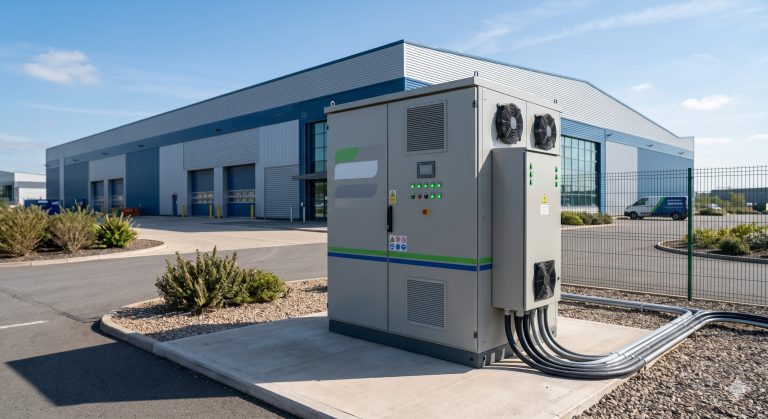
Thermal management is arguably the most critical differentiator in modern energy storage OEM manufacturing. Air cooling remains a cost-effective solution for lower power density applications; however, for utility-scale and high-throughput C&I systems, liquid cooling is rapidly becoming the industry benchmark. A liquid cooling system can maintain cell temperature differentials within ±2°C, compared to ±5°C for air cooling. This precise thermal control directly impacts round-trip efficiency and cycle life. For instance, advanced liquid-cooled BESS can achieve a round-trip efficiency of up to 95%, meaning 95% of the energy stored is retrievable, compared to 92% for standard air-cooled systems. Over a 10-year period, this 3% efficiency delta represents a substantial revenue or savings differential for peak-shaving applications.
Technical Specifications
| Key Parameter | Technical Specification |
|---|---|
| Battery Chemistry | Tier-1 LFP (Lithium Iron Phosphate) |
| System Capacity | 100kWh – 5MWh scalable |
| Rated Voltage | 800V – 1500V DC |
| Round-Trip Efficiency | Up to 95% (with liquid cooling) |
| Cycle Life | >8000 cycles @ 90% DoD |
| Thermal Management | Liquid Cooling (ΔT < ±2°C) |
| Safety Standards | IEC 62619, UL 9540, CE, UN38.3 |
| Fire Suppression | Multi-level (Aerosol, Gas, Water Mist) |
| PCS Topology | Bi-directional, 3-Level NPC |
Commercial ROI & Grid Support
Unlocking Revenue Streams: Peak Shaving and Arbitrage
The financial case for BESS is underpinned by energy arbitrage and peak demand shaving. By storing energy during low-cost off-peak hours and discharging during high-cost peak periods, C&I facilities can significantly reduce their electricity bills. Furthermore, in deregulated markets, battery systems offer a rapid response capability for frequency regulation and demand response programs. A well-architected system with a high round-trip efficiency maximizes the profitability of these use cases. When evaluating energy storage OEM manufacturing partners, it is essential to review their EMS dispatch algorithms, which dictate how effectively the asset captures these value streams.
Total Cost of Ownership (TCO) and LCOE Analysis
Beyond the upfront CapEx, the true economic indicator is the Levelized Cost of Storage (LCOS). This metric incorporates the system price, operational expenses (O&M), replacement costs, and financing. BESS wholesale purchasing can reduce initial capital outlay, but the quality of manufacturing dictates long-term performance. A system with guaranteed low degradation rates (e.g., 1.5% first-year degradation, followed by 0.5% per year) will have a significantly lower LCOS over its lifespan compared to a cheaper system with higher degradation. This underscores the importance of choosing an OEM that provides extended performance warranties backed by rigorous factory testing.
Deployment Scenarios
Micro-Grids and Grid Support
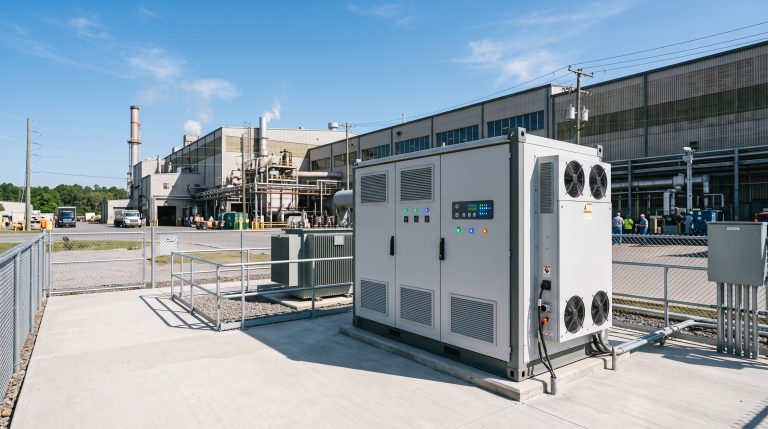
Integrating commercial energy storage with PV arrays to form a PV-Storage-Charging (光储充) ecosystem is the gold standard for modern industrial parks and EV supercharging hubs. This synergy enables ‘islanding’ or grid-disconnected operation during outages, ensuring business continuity. For high-power applications such as EV rapid chargers, the BESS acts as a buffer, absorbing grid capacity constraints and allowing for faster charging rates without costly infrastructure upgrades. The deployment of modular, containerized systems simplifies installation and local O&M support.

Compliance and Safety Standards
Navigating global compliance is non-negotiable. Professional energy storage OEM manufacturing must adhere to rigorous safety and performance standards. Our systems are engineered to meet IEC 62619 for industrial battery safety, UL 9540 for energy storage systems and equipment, CE marking for European markets, and UN38.3 for transportation. The integration of multi-level fire suppression systems—including aerosol, gas, and water mist—is essential for mitigating thermal runaway risks, protecting both asset and personnel.
Conclusion
Selecting the right energy storage OEM manufacturing partner is a strategic decision that impacts energy costs, operational resilience, and sustainability targets for decades. The ideal partner must demonstrate excellence in LFP chemistry management, advanced thermal control, and system integration expertise. By prioritizing high round-trip efficiency, robust cycle life, and comprehensive safety certifications, your organization can effectively turn energy volatility into a competitive advantage. This sourcing guide provides the technical foundation to make informed decisions in the rapidly evolving C&I landscape.