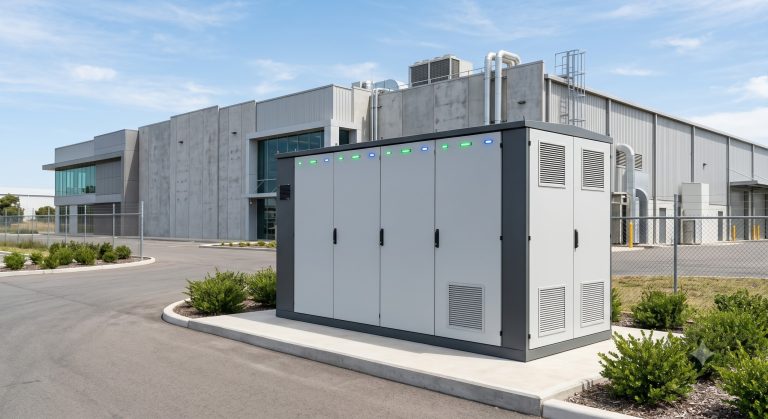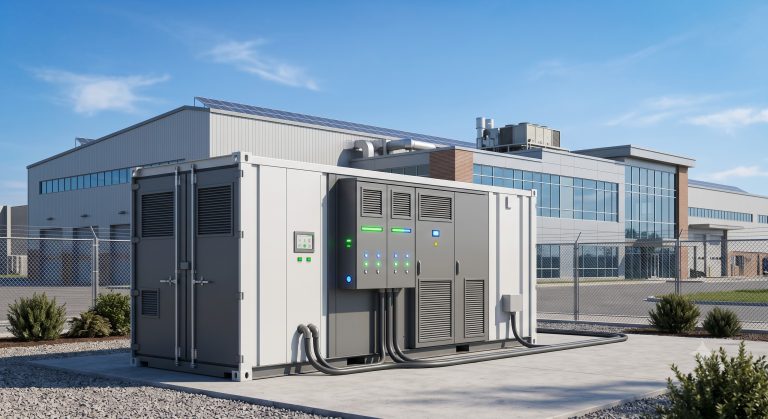
Introduction: The Paradigm Shift to Factory-Integrated Energy Storage
The global energy storage market is on a trajectory to reach $76.8 billion by 2032, growing at a CAGR of 19.5% . Central to this expansion is the pre-assembled container ESS, a solution that has rapidly become the industry standard for commercial and industrial (C&I) applications. Unlike traditional site-assembled systems, these containerized units offer a turnkey approach that significantly reduces project risks and deployment times. For B2B decision-makers—from EPC contractors to facility owners—understanding the technical architecture and economic benefits of these systems is paramount. This deep dive will explore the engineering superiority of modern containerized battery energy storage systems (BESS), focusing on liquid cooling integration, tier-1 LFP cell metrics, and the tangible ROI they deliver.
Core Architecture & Battery Management: The Shift to Smart, Integrated Systems
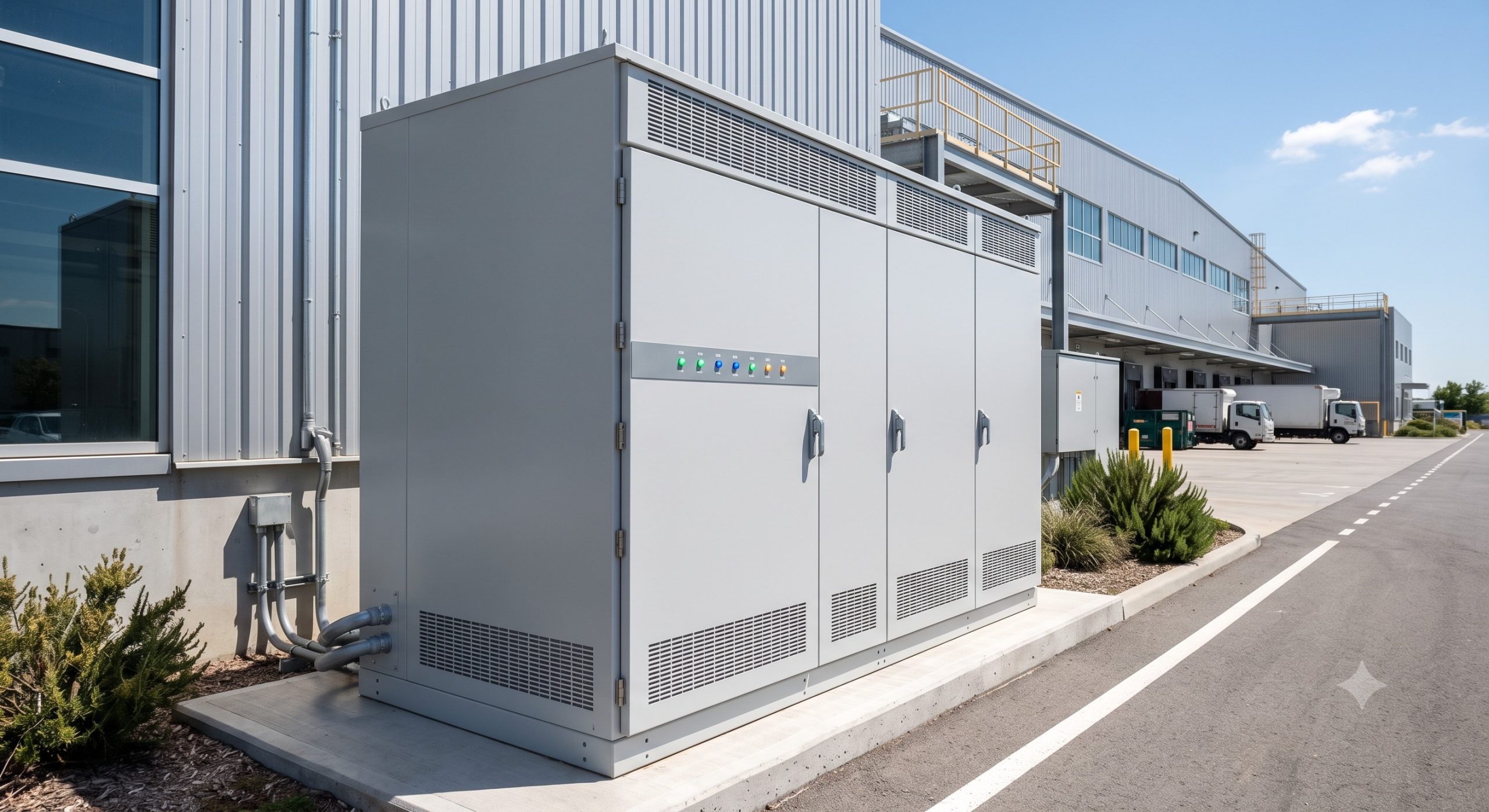
The modern pre-assembled container ESS is far more than a shipping container filled with batteries; it is a fully engineered ecosystem. At its heart is the integration of the Battery Management System (BMS), Power Conversion System (PCS), and thermal management into a single, factory-tested platform. This shift from component-level integration to system-level engineering is a game-changer.
PCS Integration: Bi-Directional Intelligence
The Power Conversion System (PCS) is the brain of the operation, managing the AC/DC conversion that charges and discharges the battery. Advanced systems now feature grid-forming capabilities, with dynamic response times of less than 20 milliseconds for seamless grid synchronization . Modern PCS units, such as those in the 1250 kW range, achieve conversion efficiency exceeding 99%, effectively minimizing energy losses during round-trip cycles . This level of performance is critical for applications requiring frequency regulation and fast-response grid services.
BMS Precision and LFP Cell Chemistry
Safety and longevity are dictated by the Battery Management System (BMS) and the cell chemistry. The industry standard has firmly settled on Tier-1 Lithium Iron Phosphate (LFP) cells. LFP’s inherent stability reduces the risk of thermal runaway compared to other chemistries, offering a cycle life of over 8,000 cycles at optimal Depth of Discharge (DoD) . Advanced BMS, utilizing Modbus TCP/IP communication protocols, provide real-time active balancing and state-of-health monitoring, ensuring cell-level precision to prolong pack life .
Technical Specifications: Decoding Performance Metrics
For procurement and engineering teams, the technical specification sheet is the bible of system evaluation. The data below represents the benchmark for a high-performance pre-assembled container ESS using modern LFP chemistry.
| Key Parameter | Technical Specification |
|---|---|
| Battery Chemistry | Tier-1 LFP (Lithium Iron Phosphate) |
| System Capacity | 1.0 MWh – 6.6 MWh+ (Scalable) |
| Cycle Life | >8,000 cycles @ 90% DoD |
| Round-trip Efficiency | Up to 96% (DC to AC) |
| Thermal Management | Advanced Active Liquid Cooling (Glycol-based) |
| Operating Temperature | -25°C to +50°C |
| Communication Protocol | Modbus TCP/IP, IEC 61850 |
| Safety Compliance | UL 9540A, IEC 62619, UN38.3, CE |
Liquid Cooling: The Thermal Efficiency Advantage
Thermal management is a critical differentiator. While air cooling is common, liquid cooling is rapidly becoming the preferred choice for high-density systems. Glycol-based liquid cooling ensures consistent temperature distribution across battery packs, mitigating hotspots that lead to accelerated degradation . Systems operating in ambient temperatures as high as 50°C can maintain peak performance with minimal derating, a significant advantage over air-cooled alternatives .
Commercial ROI & Grid Support: Turning Energy into Profit
For commercial and industrial enterprises, the value proposition of a pre-assembled container ESS is anchored in a robust Total Cost of Ownership (TCO) model. By shifting energy consumption from peak to off-peak periods, the system unlocks peak-shaving revenue. In fact, for a 5 MWh-class system, payback periods can shorten to 3–4 years, compared to 5–6 years for site-built solutions .
Furthermore, these systems serve as a Virtual Power Plant (VPP) asset. By participating in frequency regulation and demand response programs, businesses can create a new revenue stream. The integrated EMS enables smart dispatch, optimizing battery usage based on dynamic utility pricing and grid signals.
Deployment Scenarios: Real-World Applications
The versatility of the pre-assembled container ESS is evident in its wide range of deployment scenarios. The modular design allows for simple parallel expansion to meet growing energy needs .
PV-Storage-Charging Synergy
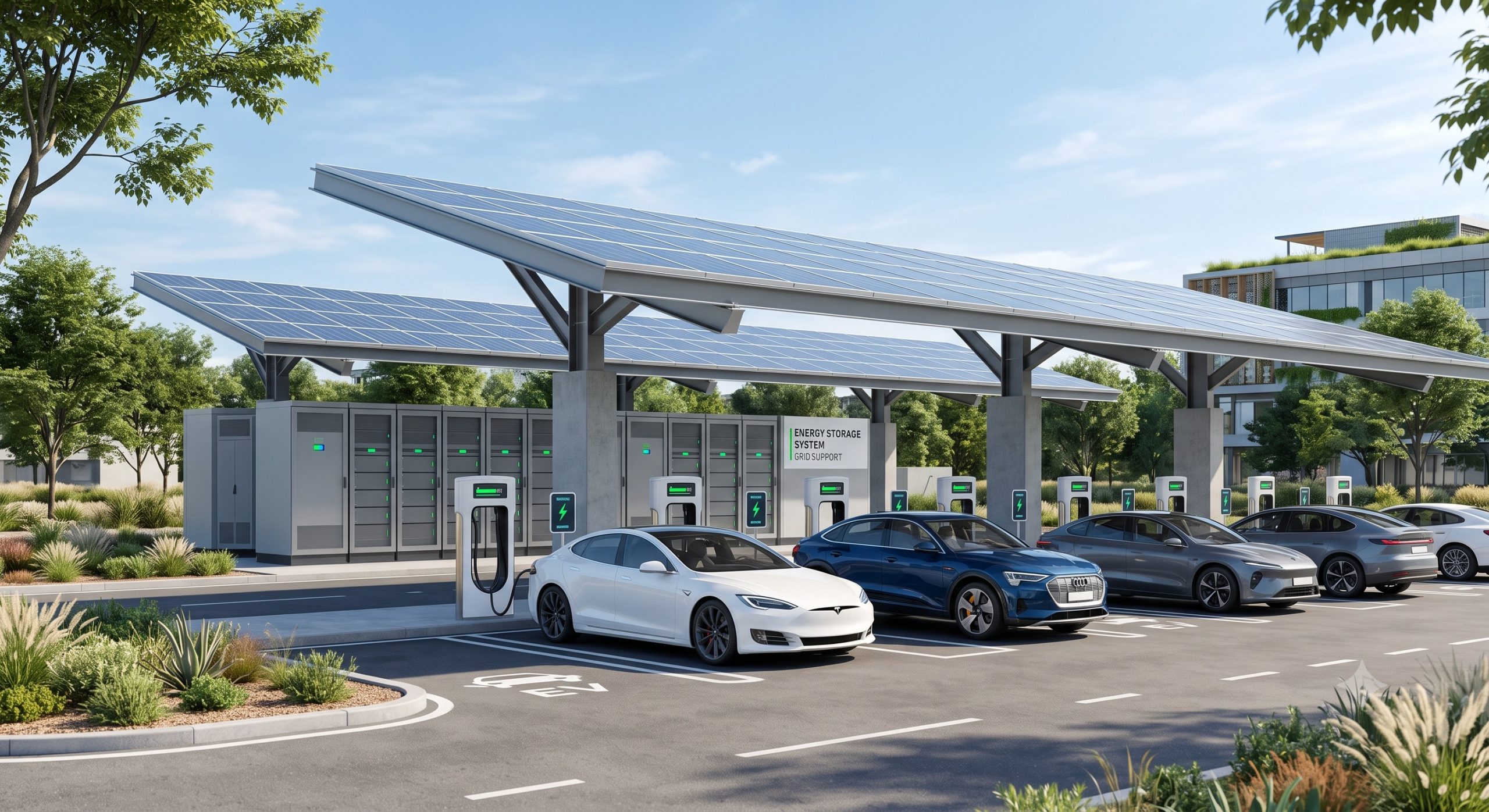
One of the most compelling use cases is integrating containerized ESS with solar PV and EV supercharging stations. By storing excess solar energy, facilities can power EV fleets with green energy while simultaneously reducing demand charges, creating a self-sustaining microgrid.
Industrial Parks and Data Centers
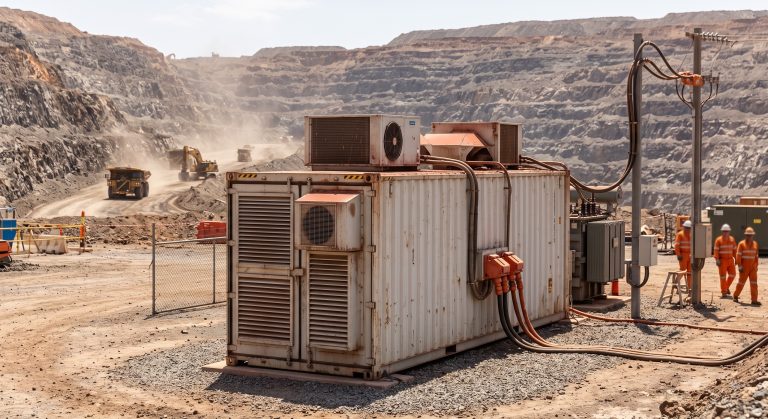
For high-demand facilities, the system provides critical backup power and grid stabilization. The IP54/IP55-rated enclosures are designed for outdoor installation in harsh conditions, ensuring reliable operation from -30°C to +50°C, making them ideal for varied global climates . The ability to seamlessly transition off-grid in under 20 milliseconds makes them indispensable for mission-critical infrastructure .
Conclusion: Engineering Certainty for the Energy Transition
The pre-assembled container ESS represents the gold standard for commercial and industrial energy storage. By combining Tier-1 LFP cells, intelligent liquid cooling, and certified safety systems (IEC 62619, UL 9540) in a factory-integrated package, these systems de-risk projects, accelerate timelines, and deliver unrivalled ROI. As the transition toward renewable energy accelerates, the pre-assembled container ESS will remain an indispensable asset for achieving energy independence and grid resilience.