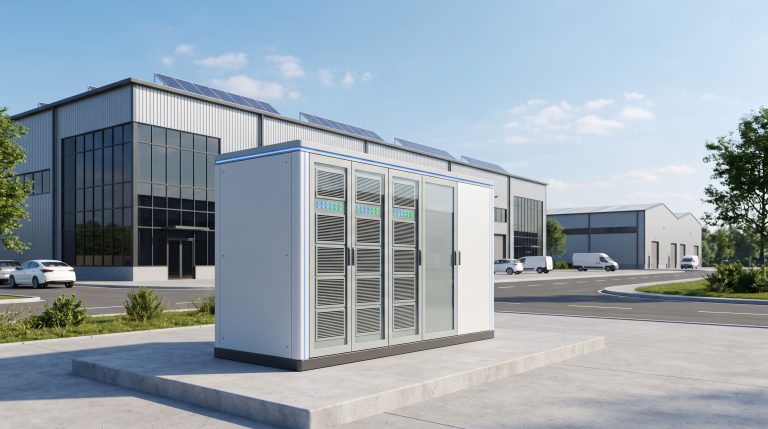
Introduction: The Escalating Cost of Commercial Demand Charges
For commercial and industrial (C&I) facility managers, the single most punitive line item on a utility bill is rarely the volumetric energy consumption (kWh). It is the demand charge (kW). In deregulated markets and regions with high industrial tariffs, demand charges can account for 30% to 70% of a monthly electricity bill. As grid instability increases and utilities impose stricter peak demand penalties, the traditional approach of simply ‘efficiency upgrades’ is no longer sufficient. This is where Commercial Peak Load Shifting becomes a mission-critical financial strategy.
By deploying a Battery Energy Storage System (BESS), facility owners can decouple their load profile from the grid’s peak pricing windows. This article serves as an elite system architect’s guide to sourcing, specifying, and deploying commercial peak load shifting assets. We will dissect the engineering required to achieve >8,000 cycles, examine the thermal dynamics of liquid cooling versus air cooling, and quantify the Total Cost of Ownership (TCO) for a MWh-scale deployment.
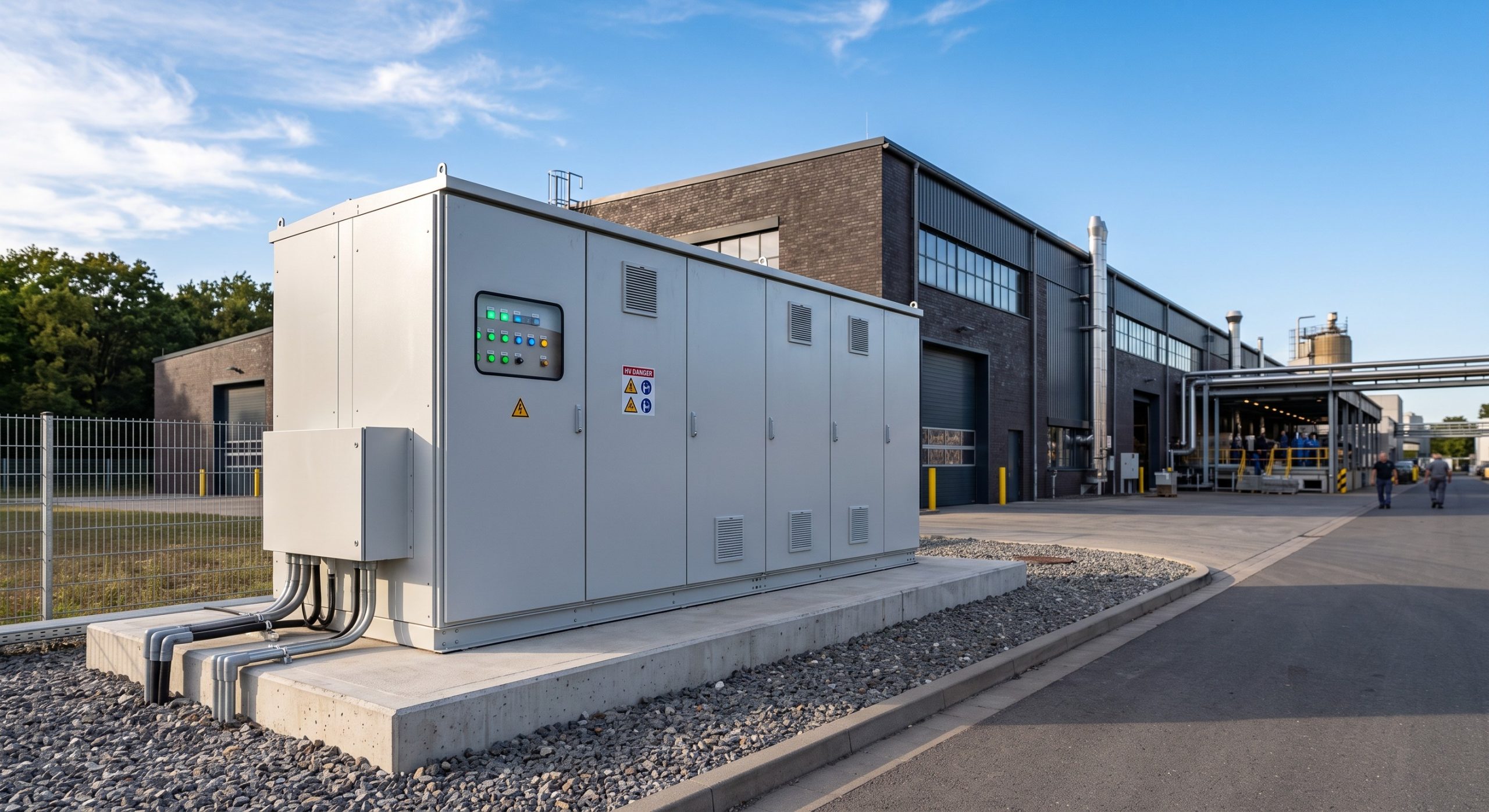
Core Architecture & Battery Management: The PCS and BMS Nexus
Bi-Directional PCS and High-Efficiency Conversion
At the heart of any peak shaving system lies the Power Conversion System (PCS). Unlike a standard solar inverter, a PCS must manage bi-directional energy flow with >98.5% efficiency. When the facility load exceeds a pre-set demand threshold, the EMS instructs the PCS to discharge the battery. Conversely, during low-load or negative-pricing windows, the PCS rectifies AC to DC to recharge the cells. Modern PCS units integrate active front-end (AFE) topology to mitigate harmonic distortion (THD < 3%) and provide reactive power compensation, ensuring the facility maintains a power factor near unity.
Battery Management System (BMS) and Cell Balancing
The BMS is the brain of the battery cabinet. For commercial peak load shifting, precise State of Charge (SoC) estimation is critical to avoid over-discharge and premature aging. An advanced BMS utilizes active balancing technology, which transfers energy between high-voltage and low-voltage cells rather than dissipating it as heat (passive balancing). This ensures that the weakest cell does not dictate the string’s capacity, maximizing the usable Depth of Discharge (DoD).
Thermal Control: Liquid Cooling vs. Air Cooling
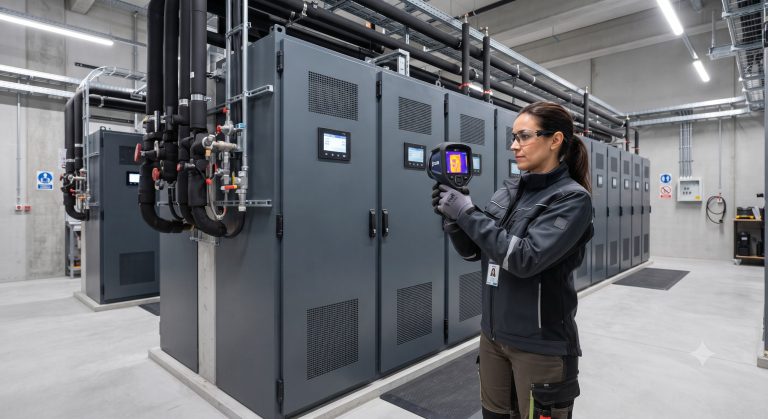
Thermal management is the single biggest determinant of system longevity. While traditional air-cooled systems rely on HVAC units, they often struggle with temperature stratification across the rack. Liquid Cooling has emerged as the gold standard for high-cycle commercial applications. By circulating a glycol-water mixture through cold plates directly attached to the battery modules, liquid cooling maintains a temperature delta of <3°C across the entire rack. This prevents hotspots that accelerate Solid Electrolyte Interphase (SEI) layer growth, thereby extending the asset’s calendar life by 20-30% compared to air-cooled equivalents.
Technical Specifications: Engineering the Tier-1 Standard
When sourcing Commercial Peak Load Shifting systems, the specification sheet must be scrutinized for safety and cycle life. The following table represents the baseline metrics expected from a Tier-1 LFP (Lithium Iron Phosphate) system designed for daily cycling. Note the critical importance of Round-Trip Efficiency (RTE) and UL 9540 certification.
| Key Parameter | Technical Specification |
|---|---|
| Battery Chemistry | Tier-1 LFP (Lithium Iron Phosphate) |
| Cycle Life | >8000 cycles @ 90% DoD, 25°C |
| Round-Trip Efficiency | ≥ 95% (DC-DC), ≥ 88% (AC-AC) |
| Usable Capacity | 215 kWh per Cabinet (Liquid Cooled) |
| Thermal Management | Liquid Cooling (Glycol-Water Loop) |
| Certifications | IEC 62619, UL 9540, CE, UN38.3 |
| Fire Suppression | Aerosol + Perfluorohexanone (Novec 1230) |
| Communication Protocol | Modbus TCP/IP, CAN 2.0B, IEC 61850 |
Procurement officers must demand UN38.3 transport certification and IEC 62619 compliance for safe stationary operation. The inclusion of aerosol-based fire suppression systems, compliant with NFPA 855, is non-negotiable for indoor or containerized installations.
Commercial ROI & Grid Support: LCOE and Demand Response
Maximizing Peak-Shaving ROI through LCOE Analysis
The financial viability of peak load shifting hinges on the Levelized Cost of Storage (LCOS). With LFP cell prices stabilizing, a well-designed 1 MWh system can achieve an LCOS of $0.05 – $0.08 per kWh cycled. In regions where the peak-to-off-peak tariff delta exceeds $0.20/kWh, the arbitrage opportunity is substantial. Furthermore, the system must be designed to capture demand response (DR) incentives. By enrolling in utility DR programs, the BESS can curtail facility load during grid emergencies, generating additional revenue streams that accelerate the payback period to under 4 years in high-value markets.
Virtual Power Plant (VPP) Readiness
Modern EMS platforms enable VPP aggregation. This allows the facility’s battery to participate in frequency regulation markets. The PCS must be capable of sub-second response times to grid frequency deviations (e.g., 50.0 Hz ± 0.1 Hz). This capability transforms the BESS from a cost-center into a profit-center, leveraging grid stability payments to offset the initial CapEx.
Deployment Scenarios: Industrial Parks and EV Supercharging
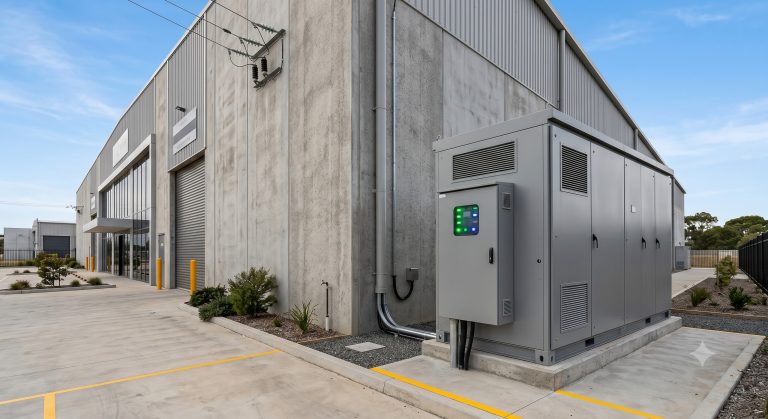
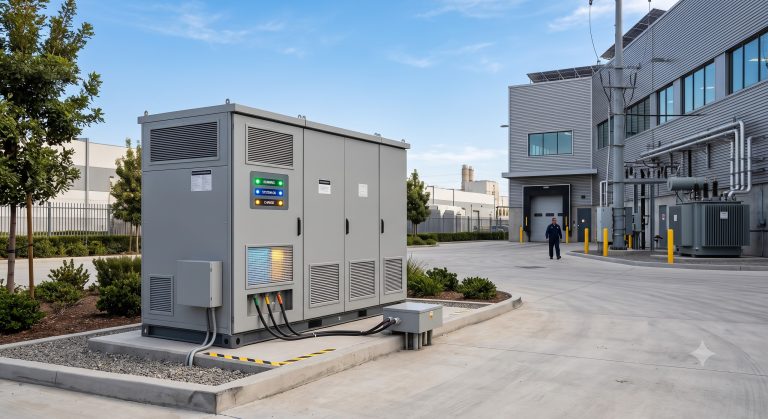
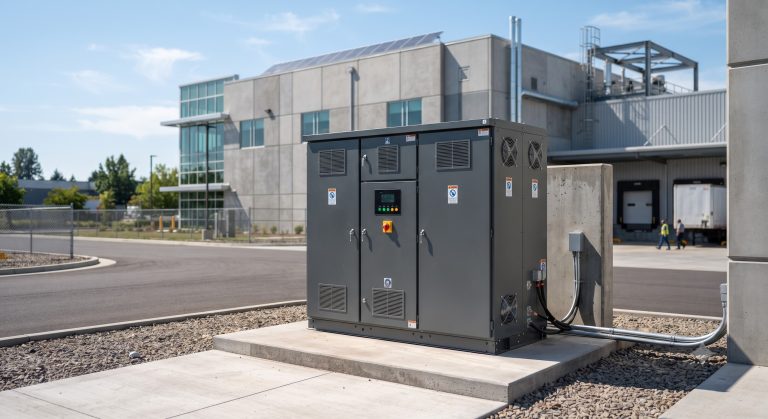
The versatility of modular BESS cabinets allows for diverse deployment topologies. In industrial parks, multiple 500 kWh cabinets can be paralleled to form a multi-megawatt micro-grid, providing seamless backup power and peak shaving for manufacturing lines. The integration of PV-Storage-Charging synergy is particularly transformative for fleet operators. By coupling a solar canopy with a BESS and EV superchargers, site hosts can mitigate the massive demand spikes caused by high-power DC fast charging (e.g., 350 kW chargers). The BESS buffers the grid, ensuring that the facility’s demand charge remains flat even when multiple EVs are charging simultaneously.

Conclusion: Strategic Energy Independence
Commercial Peak Load Shifting is no longer a niche technology; it is a fundamental requirement for competitive industrial operations. As grid volatility increases and carbon regulations tighten, the BESS serves as the critical infrastructure bridging the gap between renewable intermittency and industrial reliability. By prioritizing liquid cooling, Tier-1 LFP chemistry, and intelligent EMS dispatch, system architects can deliver a turnkey solution that guarantees energy independence, reduces operational expenditure, and future-proofs the facility against evolving utility rate structures. The transition to a zero-carbon micro-grid begins with a single, well-specified storage cabinet.