Introduction
In a climate of volatile industrial electricity pricing and increasing pressure to meet stringent carbon reduction targets, commercial and industrial (C&I) enterprises are aggressively seeking alternatives to traditional grid dependency. Battery Energy Storage Systems (BESS) have emerged as the definitive solution, but navigating the complex landscape of commercial BESS cost analysis requires more than just a surface-level review of initial hardware prices. For procurement managers, system architects, and energy directors, the true cost evaluation hinges on a Total Cost of Ownership (TCO) model that encompasses system architecture, battery chemistry degradation, liquid cooling efficiency, and sophisticated Energy Management System (EMS) integration. This guide provides an authoritative B2B deep dive into the engineering and economic metrics that define a cost-effective industrial BESS deployment, ensuring that your investment is optimized for maximum Return on Investment (ROI), peak-shaving performance, and grid support agility.
Core Architecture & Battery Management
Power Conversion System (PCS) and Bi-Directional Integration
The backbone of any commercially viable system is the bi-directional PCS, which facilitates the seamless conversion between AC and DC power. Modern commercial BESS cost analysis must account for the PCS efficiency, typically exceeding 98% under full load conditions. This efficiency directly impacts the system’s round-trip efficiency, a metric that defines the financial viability of energy arbitrage. High-performance PCS units feature advanced grid synchronization algorithms, enabling smooth transitions between on-grid and off-grid modes, which is critical for facilities requiring uninterrupted power supply (UPS) capabilities. It is essential to evaluate the PCS’s ability to handle overload conditions and reactive power compensation, as these capabilities influence the overall cost of grid integration and compliance with local utility standards.
Battery Chemistry and Tier-1 LFP Cell Performance
The selection of battery chemistry is the most significant factor in determining long-term operational costs. Tier-1 Lithium Iron Phosphate (LFP) cells dominate the C&I sector due to their superior thermal stability, extended cycle life, and cost-effectiveness. A comprehensive commercial BESS cost analysis evaluates the Depth of Discharge (DoD) capabilities, with systems often designed to operate at 90% DoD to maximize usable energy while ensuring a cycle life exceeding 8,000 cycles. This longevity translates to a lower Levelized Cost of Storage (LCOE) over the asset’s lifespan, typically amortized over 15 to 20 years. Industry standards such as IEC 62619 and UL 9540 mandate rigorous safety and performance testing for these cells, including mandatory factory and site acceptance tests (FAT and SAT) to verify internal resistance, capacity retention, and voltage consistency.
BMS and Thermal Management
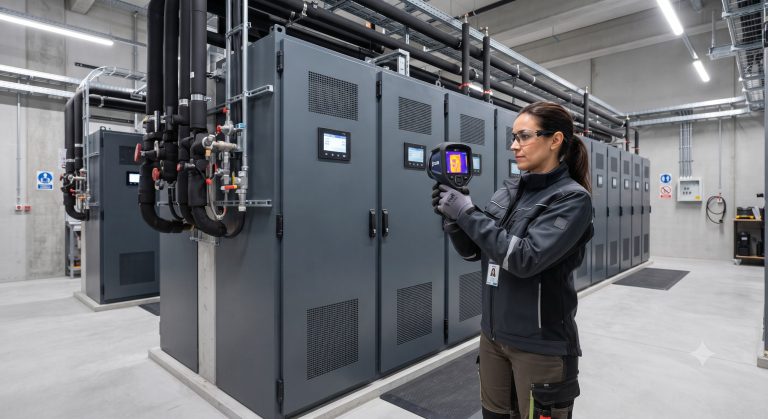
The Battery Management System (BMS) is the critical intelligence unit responsible for cell balancing, state of charge (SoC) estimation, and state of health (SoH) monitoring. Effective BMS algorithms prevent overcharging and deep discharging, which are primary causes of capacity fade. To further enhance safety and efficiency, most modern industrial cabinets employ liquid cooling thermal control. Compared to air cooling, liquid cooling offers a significantly higher heat transfer coefficient, maintaining optimal operating temperatures between 25°C and 35°C. This precise temperature control mitigates thermal runaway risks and reduces the degradation rate of LFP cells, ensuring that the system maintains its specified performance for the duration of its warranty period. The integration of fire suppression systems, including aerosol and gas-based extinguishing agents, is a non-negotiable aspect of the safety architecture, designed to comply with stringent NFPA 855 guidelines.
Technical Specifications
When conducting a commercial BESS cost analysis, engineers require a granular understanding of the technical parameters governing system performance. The following table outlines the essential specifications that define a modern, high-capacity C&I BESS, typically ranging from 500kWh to several MWh per containerized unit. These metrics are directly tied to operational expenditure, influencing battery replacement intervals, maintenance schedules, and overall grid-support capabilities.
| Key Parameter | Technical Specification |
|---|---|
| Battery Chemistry | Tier-1 LFP (Lithium Iron Phosphate) |
| System Capacity | 500kWh to 5MWh per Container |
| Cycle Life (90% DoD) | >8000 Cycles (0.5C Charge/Discharge) |
| Round-Trip Efficiency | ≥ 92% (AC-to-AC) |
| Cooling Method | Liquid Cooling (Glycol/Water Mixture) |
| Thermal Control Range | 25°C – 35°C |
| Max. Depth of Discharge (DoD) | 90% |
| Safety Certifications | IEC 62619, UL 9540, CE, UN38.3 |
| BMS Communication | CAN/RS485/Ethernet (Modbus TCP/IP) |
| Fire Suppression | Aerosol + Gas (NFPA 855 Compliant) |
Commercial ROI & Grid Support
Peak-Shaving and Demand Charge Reduction
The primary economic driver for C&I energy storage is peak-shaving. By discharging stored energy during periods of high demand, commercial facilities can significantly reduce their peak demand charges, which often account for 30-50% of an electricity bill. An effective commercial BESS cost analysis quantifies potential savings by modeling load profiles against utility rate structures. For instance, a facility with a peak demand of 2 MW could deploy a BESS to cap demand at 1.5 MW, effectively eliminating charges for the 500 kW threshold. Over a 10-year period, these savings can offset the initial CapEx, yielding a payback period of 3 to 5 years, depending on regional utility rates. The integration of an intelligent EMS is essential for automating dispatch strategies to maximize these savings without human intervention.
Demand Response and Virtual Power Plants (VPP)
Beyond internal load management, commercial BESS systems are increasingly monetized through demand response (DR) programs and Virtual Power Plant (VPP) aggregation. In regions with deregulated energy markets, BESS assets can provide ancillary services such as frequency regulation and voltage support. A thorough commercial BESS cost analysis must include revenue streams generated from these grid services. The fast-ramping capabilities of LFP batteries, combined with advanced grid-tie inverters, allow systems to respond to Automatic Generation Control (AGC) signals in milliseconds, capturing premium rates for frequency containment reserve (FCR) and automatic frequency restoration reserve (aFRR). This dual-use strategy enhances the overall economic case, transforming the BESS from a cost center into a revenue-generating asset.
Deployment Scenarios
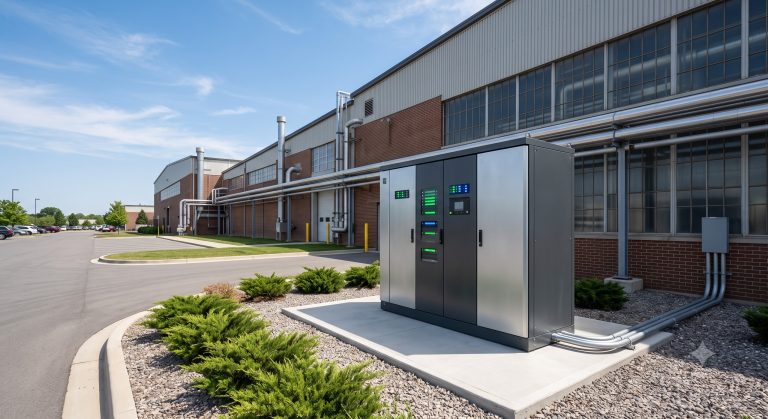
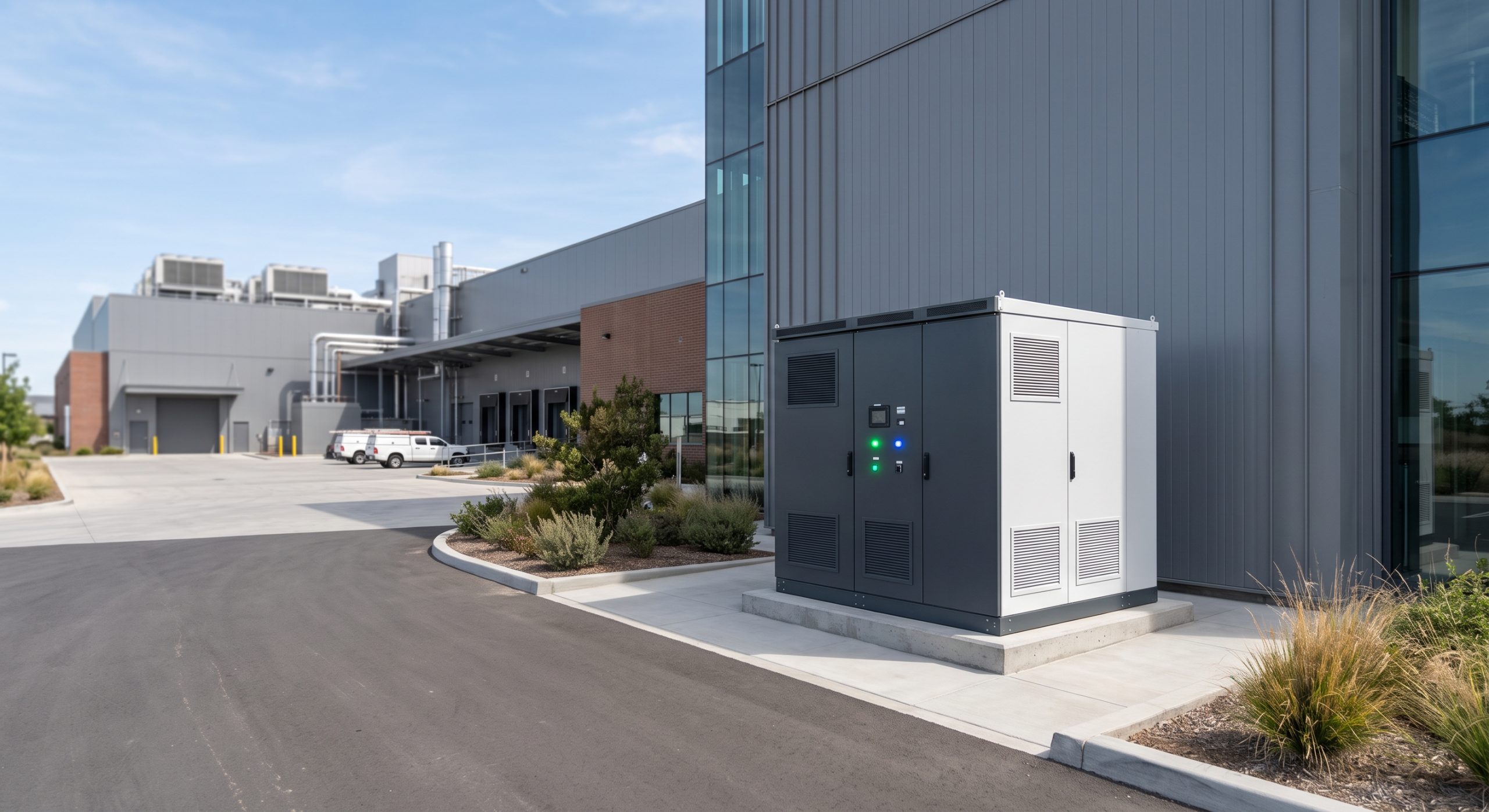
Understanding the physical and logistical requirements for deployment is critical for accurately estimating installation and civil works costs, which can constitute up to 15% of the total project budget. The following scenarios illustrate typical deployment environments where commercial BESS cost analysis plays a pivotal role in system sizing and site preparation.
Industrial Parks and Micro-Grids
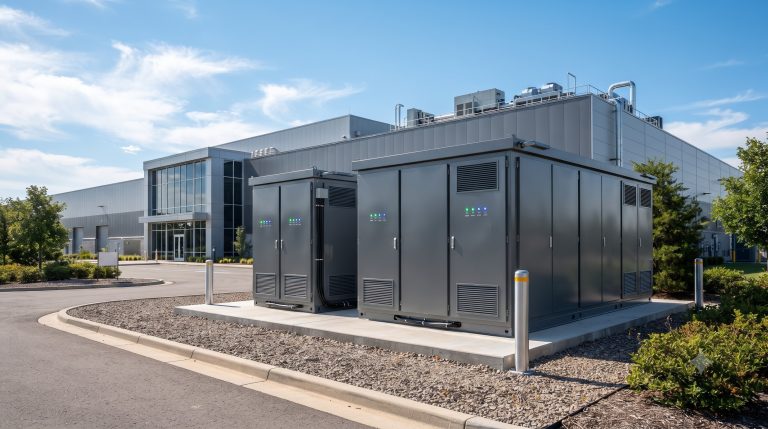
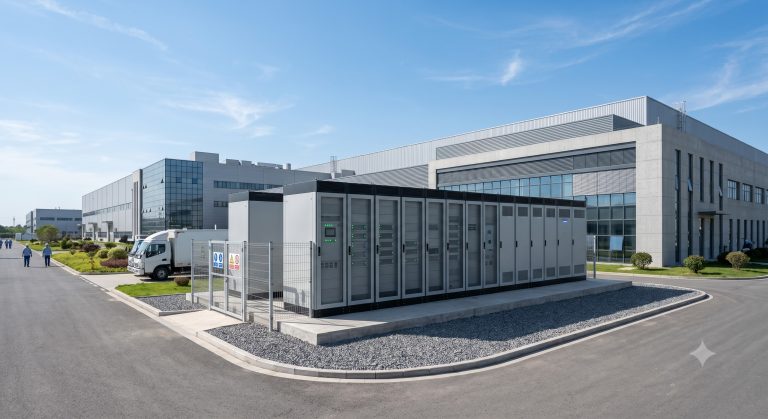
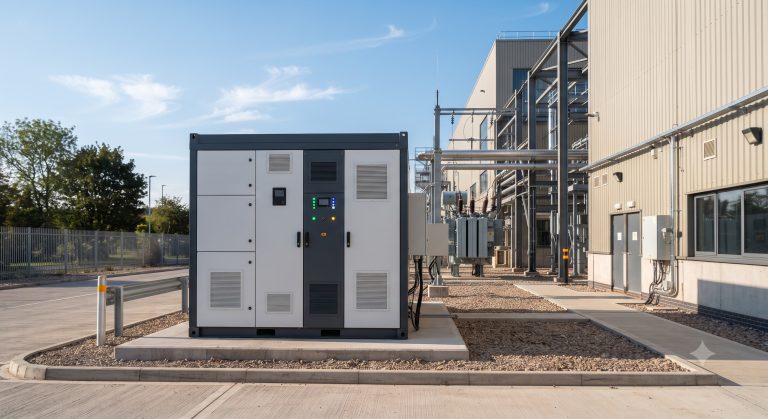
In industrial manufacturing parks, BESS units are often deployed in modular, containerized formats to facilitate seamless expansion as energy demands grow. These systems require reinforced foundations, adequate ventilation, and compliance with local zoning and fire codes. Integrating the BESS with existing on-site renewable generation, such as solar PV, creates a resilient micro-grid capable of islanding operations during grid outages. The commercial BESS cost analysis in this scenario accounts for the cost of switchgear upgrades and advanced relay protection systems.
EV Supercharging Hubs
The proliferation of electric vehicles has created a high-power demand challenge for supercharging stations. Deploying a BESS allows these hubs to buffer against grid connection constraints, enabling the installation of high-speed chargers without the expense of costly transformer upgrades. The dynamic integration of solar canopies with BESS in a PV-Storage-Charging (光储充) setup exemplifies a forward-thinking approach to energy management. In this configuration, the BESS ensures that the chargers can deliver peak power of up to 350kW without stressing the grid, reducing demand charges and qualifying for green energy incentives.

Conclusion
Conducting a rigorous commercial BESS cost analysis is an indispensable prerequisite for any successful C&I energy storage project. The analysis must extend beyond upfront equipment pricing to encompass long-term considerations such as LCOE, cycle-life degradation under varied DoD parameters, and the financial impact of safety compliance (UL 9540, IEC 62619) and thermal management strategies. By optimizing the balance between technical specifications and operational revenue streams—via peak-shaving, demand response, and VPP participation—facilities can achieve a substantial return on their investment while advancing their zero-carbon migration goals. As the energy landscape evolves toward higher renewable penetration, the strategic deployment of BESS will remain a cornerstone of industrial resilience and economic competitiveness.