Overview
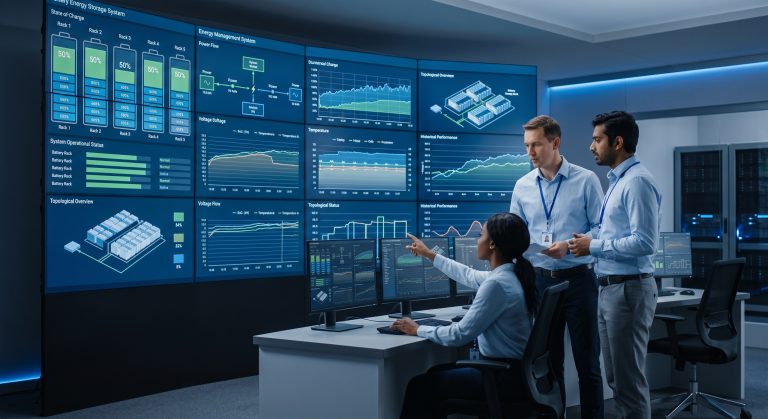
In commercial and industrial Battery Energy Storage System (BESS) deployments, the reliability of the system hinges on the seamless interaction between the Battery Management System (BMS) and the Energy Management System (EMS). A common and critical technical query among plant engineers and procurement specialists is whether the BMS can continue to function safely and autonomously if the EMS communication link is severed. This FAQ addresses that core question while covering essential pre-sales specifications and post-sales operational support for BESS projects.
Frequently Asked Questions
- Q1: Can the BMS operate independently if EMS communication is lost?
- Yes, the BMS is designed to operate independently and safely when EMS communication is lost. The BMS acts as the primary safety and protection layer, and upon detecting a communication timeout, it automatically transitions to a local autonomous mode. In this mode, the BMS continues to monitor cell voltage, temperature, and state of charge (SOC), and it will execute protective actions such as limiting charge/discharge current or triggering a shutdown if any parameters exceed safe thresholds. However, without the EMS, advanced grid-tie functions, peak shaving arbitrage, and remote monitoring capabilities are suspended until communication is restored.
- Q2: What are the key battery chemistry and cycle life specifications for a Tier-1 BESS?
- The standard chemistry for high-performance BESS is Lithium Iron Phosphate (LFP), offering a cycle life of 6,000 to 8,000 cycles at 80% Depth of Discharge (DoD). LFP is preferred for stationary storage due to its superior thermal stability and long lifespan compared to NMC. When paired with an advanced active BMS and liquid cooling, these cells can maintain over 80% of their original capacity after 10 years of daily cycling, ensuring a low Levelized Cost of Energy (LCOE).
- Q3: How does the liquid cooling system prevent thermal runaway in BESS?
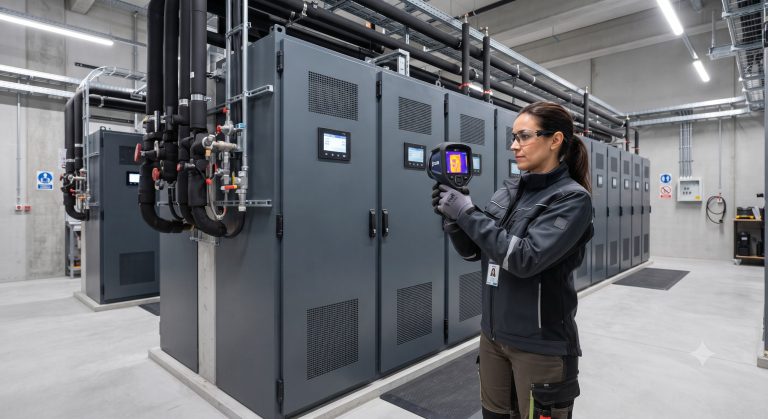
- A liquid cooling system prevents thermal runaway by maintaining precise temperature uniformity across all battery modules. Unlike air cooling, liquid cooling plates directly contact the cells, dissipating heat up to 3,000 times more efficiently. This keeps the temperature delta between cells below 3°C, preventing localized hotspots that can lead to cell degradation or thermal runaway. The system is integrated with multi-tier fire safety mechanisms, including early gas and smoke detection, which automatically trigger aerosol or Novec 1230 suppression systems if a fault is detected.
- Q4: What is the scalability of a modular BESS for industrial facilities?
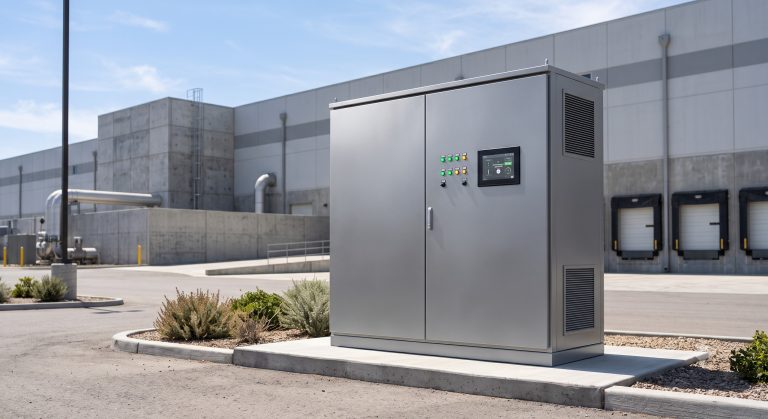
- A modular BESS is highly scalable, typically ranging from 100 kWh to 10 MWh and beyond through parallel cabinet connectivity. You can start with a single 215 kWh cabinet and expand by adding identical units in parallel using custom DC busbar linkages. The system’s EMS automatically detects new cabinets and balances the load, allowing for seamless capacity upgrades without replacing existing infrastructure. This modular approach ensures that ROI is optimized as energy demands grow.
- Q5: How is ROI calculated for a commercial BESS, and what is the typical payback period?
- ROI for a commercial BESS is calculated by dividing the annual savings from peak shaving, demand response, and arbitrage by the total installed cost. A typical payback period is 4 to 6 years, depending on local utility rates and incentive programs. For example, a 500 kW / 1 MWh system can save over $100,000 annually by reducing demand charges and participating in grid frequency regulation. The LCOE over a 10-year guarantee is often 30-50% lower than diesel generator alternatives.
- Q6: What are the grid-tie and off-grid configuration options for BESS?
- The BESS supports both grid-tie and off-grid configurations through a bi-directional Power Conversion System (PCS). In grid-tie mode, the PCS synchronizes with the utility grid for peak shaving and demand response. In off-grid mode, the PCS forms a stable voltage and frequency reference, allowing the BESS to act as the primary power source for islanded micro-grids. The switch between modes is seamless, with a transition time of less than 20 milliseconds, ensuring no interruption to critical loads.
- Q7: How does the BMS handle cell balancing and monitoring during normal operation?
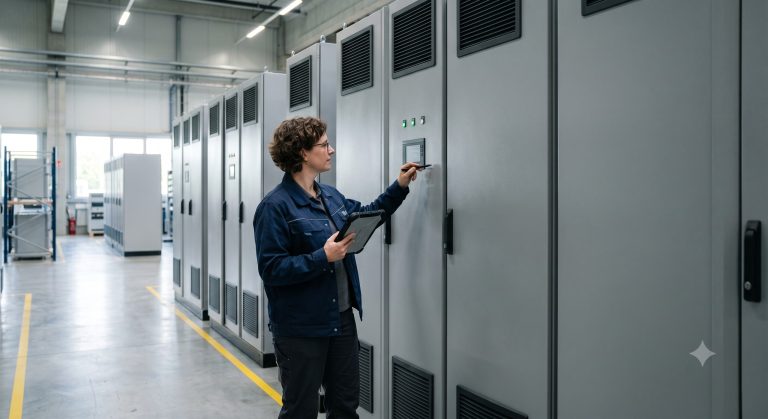
- The BMS handles cell balancing through an active balancing protocol that continuously monitors individual cell voltages. When a voltage deviation exceeds 30 mV, the BMS redistributes energy from higher-voltage cells to lower-voltage cells, maximizing usable capacity and extending pack life. All data is logged and can be accessed via the EMS or a local HMI, providing plant engineers with real-time visibility into State of Health (SOH) and any fault codes for proactive maintenance.
- Q8: What international safety and interconnection standards does the BESS comply with?
- The BESS complies with strict international standards including UL 9540, IEC 62619, and CE. UL 9540 certifies the entire system for safety and performance, while IEC 62619 ensures the safety of industrial lithium batteries. CE marking confirms conformity with European health, safety, and environmental protection legislation. These certifications are essential for securing permits, insurance, and grid interconnection approvals in global markets.