Introduction: The Synchronization Imperative in Modern C&I Energy Storage
As commercial and industrial (C&I) facilities face escalating demand charges, dynamic tariff structures, and increasing grid instability, the role of Energy Storage Grid Synchronization has evolved from a niche technical requirement to a cornerstone of resilient, profitable energy infrastructure. For B2B buyers, EPCs, and system architects, the ability to seamlessly synchronize a Battery Energy Storage System (BESS) with the local utility grid—or transition to islanded mode within milliseconds—determines whether a project delivers ROI or becomes a liability.
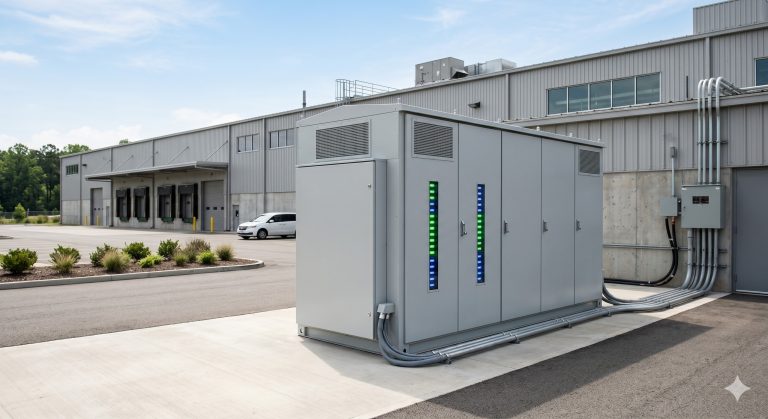
This comprehensive guide dissects the engineering, commercial, and regulatory dimensions of grid synchronization for C&I energy storage. We will examine the critical role of bi-directional PCS, smart EMS dispatch, and Tier-1 LFP cell integration, while providing a data-driven framework for evaluating LCOE and grid support capabilities. Whether you are deploying a 500 kWh cabinet or a multi-MWh microgrid, the synchronization layer is where your asset value is either realized or lost.
Core Architecture: PCS, BMS, and the Synchronization Layer
The Bi-Directional PCS as the Synchronization Gateway
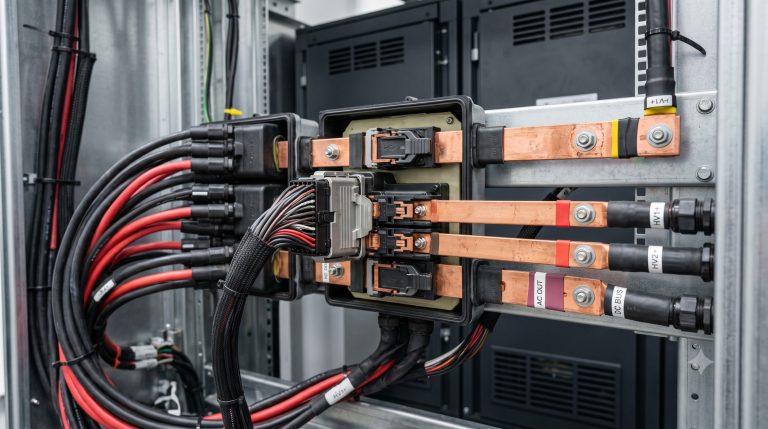
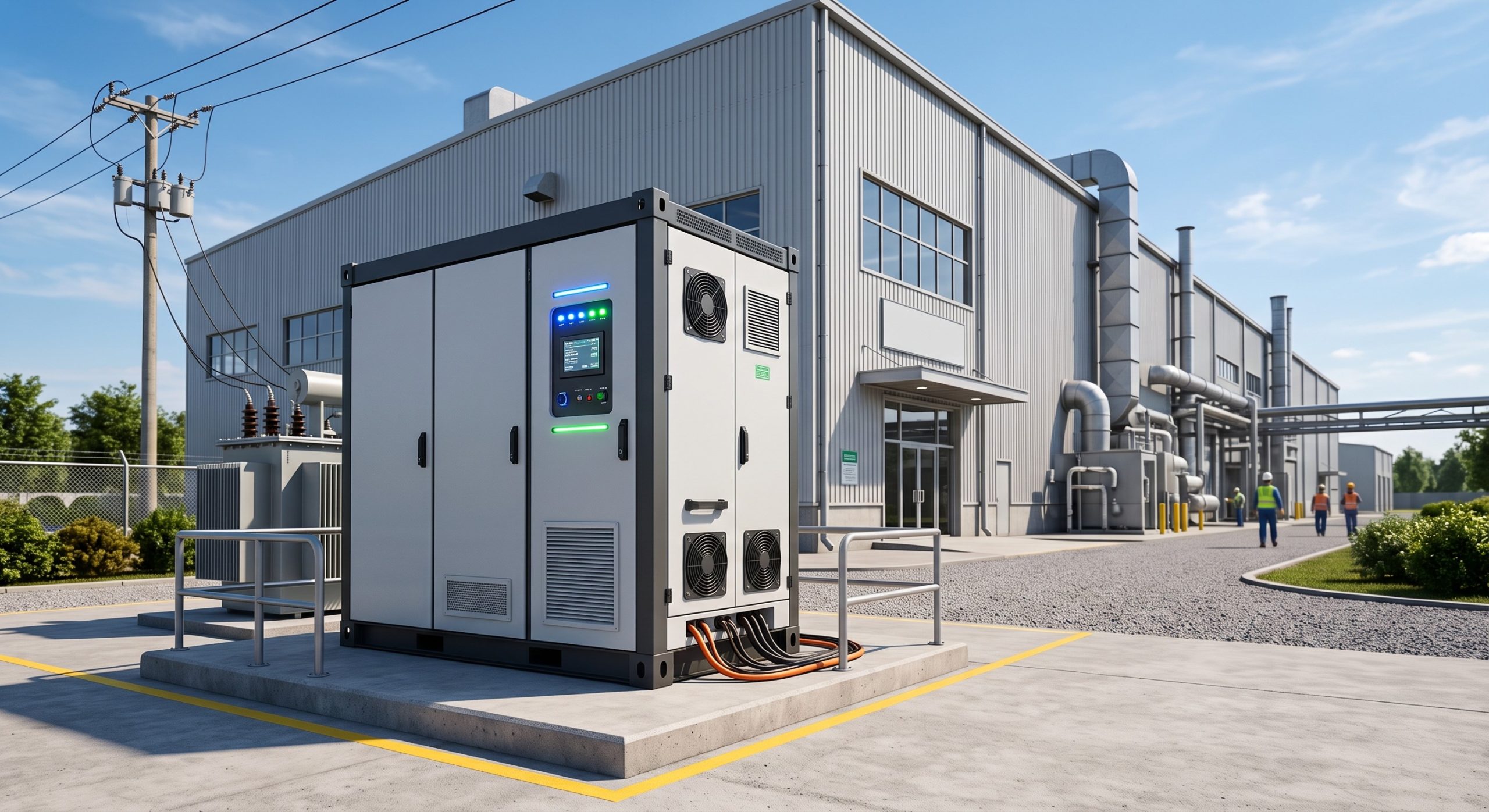
At the heart of Energy Storage Grid Synchronization lies the Power Conversion System (PCS). Unlike a simple inverter, a grid-tied PCS must perform active synchronization—matching voltage, frequency, and phase angle with the grid before closing the point of common coupling (PCC) contactor. Modern liquid-cooled PCS units achieve synchronization times of < 20 ms, enabling seamless grid support functions such as frequency regulation and voltage ride-through.
Key synchronization metrics include:
- Phase Lock Loop (PLL) Accuracy: < 0.5° phase error for minimal inrush current.
- Frequency Response Time: < 100 ms for primary frequency response.
- Voltage Ride-Through: Compliance with IEEE 1547 and IEC 62933 for grid disturbances.
BMS and Cell Balancing for Synchronized Operation
The Battery Management System (BMS) ensures that individual cell voltages and temperatures remain within safe limits during high-rate charge/discharge cycles inherent in grid synchronization events. Automated cell balancing is critical for maintaining round-trip efficiency above 90% and preventing premature degradation. Tier-1 LFP cells, with cycle life exceeding 8,000 cycles at 90% DoD, provide the durability required for daily synchronization cycles.
Thermal Control: Liquid Cooling vs. Air Cooling
Grid synchronization events generate significant thermal loads due to rapid power fluctuations. Liquid cooling thermal control maintains cell temperature uniformity within ±2°C, compared to ±5°C for air cooling. This directly impacts cycle life and round-trip efficiency, making liquid cooling the preferred choice for high-utilization C&I assets.
Technical Specifications: Engineering the Synchronized BESS
The following table outlines the core parameters that define a grid-synchronized C&I energy storage system. These specifications are critical for procurement teams evaluating BESS wholesale options and ensuring compliance with IEC 62619, UL 9540, and UN38.3.
| Key Parameter | Technical Specification |
|---|---|
| Battery Chemistry | Tier-1 LFP (Lithium Iron Phosphate) |
| System Capacity | 500 kWh / 1 MWh / 2 MWh modular cabinets |
| Cycle Life | >8,000 cycles @ 90% DoD, 25°C |
| Round-Trip Efficiency | ≥ 92% (DC-DC), ≥ 88% (AC-AC) |
| Depth of Discharge (DoD) | 90% usable capacity |
| Cooling Method | Liquid Cooling (±2°C uniformity) |
| PCS Synchronization Time | < 20 ms |
| Grid Compliance | IEEE 1547, IEC 62933, UL 9540 |
| Battery Safety | IEC 62619, UN38.3, CE |
| Fire Suppression | Multi-level aerosol + water mist |
| Communication Protocol | Modbus TCP, IEC 61850, CAN 2.0 |
| Operating Temperature | -20°C to +55°C (derated above 45°C) |
| Warranty | 10 years / 8,000 cycles |
Compliance and Safety Standards
Grid synchronization introduces additional safety considerations, particularly regarding anti-islanding protection and fault ride-through. Systems must comply with:
- UL 9540: Standard for Energy Storage Systems and Equipment.
- IEC 62619: Safety requirements for industrial lithium batteries.
- CE: European conformity for grid-tied power converters.
- UN38.3: Transport safety for lithium cells.
These certifications ensure that the BESS can safely synchronize with the grid without risking backfeed, islanding, or thermal runaway.
Commercial ROI and Grid Support: The Financial Case for Synchronization
Peak Shaving and Demand Charge Reduction
The primary ROI driver for C&I energy storage remains peak shaving. By synchronizing discharge events with facility load peaks, a 1 MWh system can reduce demand charges by 30-50% depending on the utility tariff. With round-trip efficiency of 92% and DoD of 90%, the system can perform two full cycles daily, accelerating payback to 4-6 years.
Demand Response and Frequency Regulation
Grid-synchronized BESS assets can participate in demand response programs, generating additional revenue through frequency regulation and ancillary services. Fast synchronization (< 20 ms) enables the system to respond to utility dispatch signals, capturing incentives that can offset 15-25% of annual operating costs.
LCOE Analysis
When evaluating Energy Storage Grid Synchronization, LCOE must account for synchronization losses, PCS efficiency, and cycle life degradation. A well-designed system with liquid cooling and Tier-1 LFP cells can achieve LCOE of $0.05-0.08/kWh over a 10-year horizon, making it competitive with diesel generators and grid-supplied power in high-tariff regions.
Deployment Scenarios: From Industrial Parks to EV Supercharging
Industrial Park Microgrids
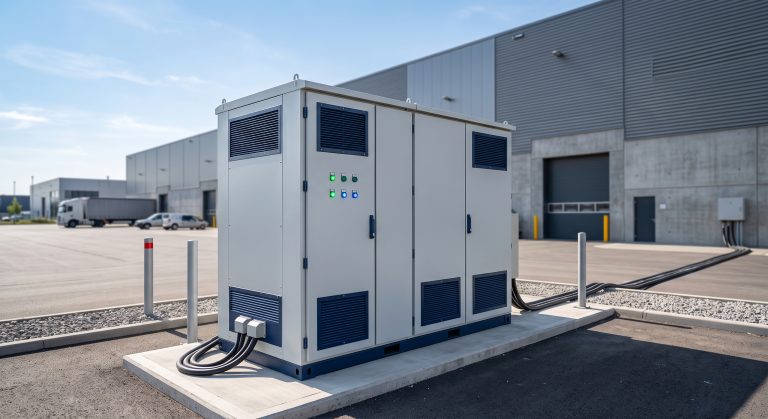
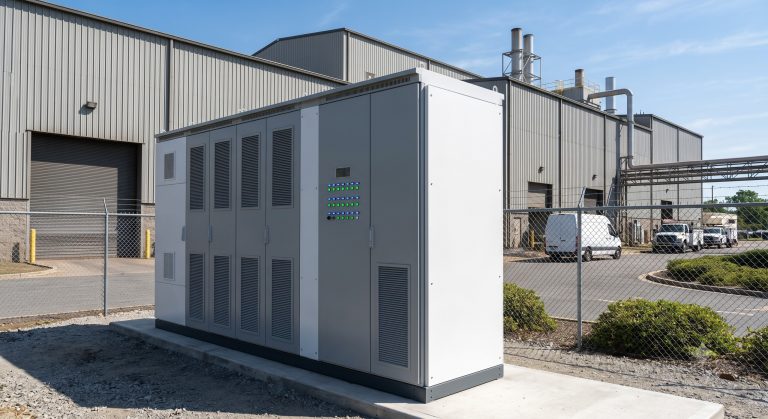
Industrial parks with multiple facilities can deploy modular BESS cabinets synchronized to a common PCC, creating a microgrid that provides energy independence and resilience against grid outages. Parallel cabinet expansion topology allows capacity to scale from 500 kWh to 10 MWh without replacing existing PCS units.
PV-Storage-Charging Integration
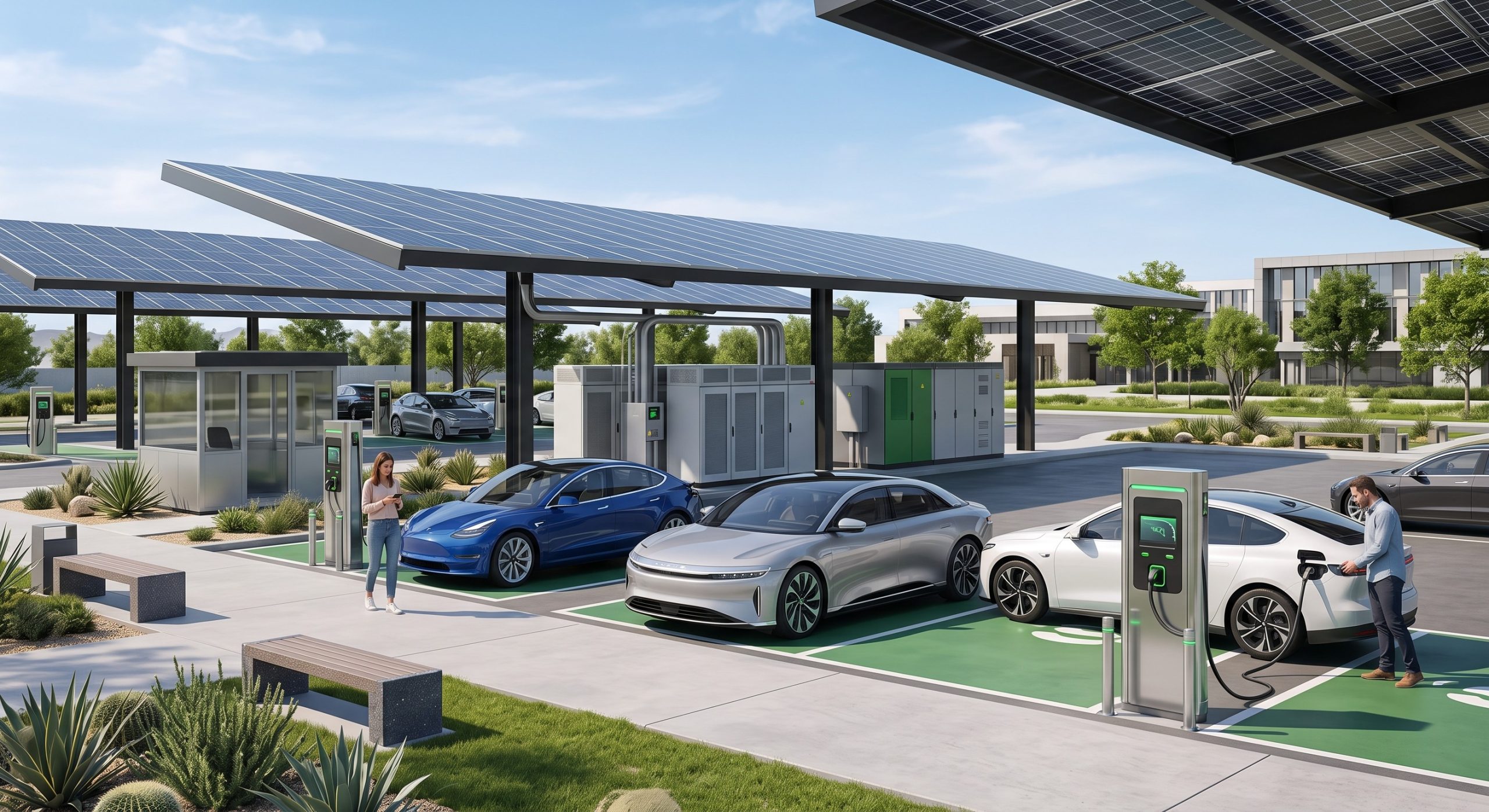
The integration of solar PV, energy storage, and EV supercharging creates a PV-Storage-Charging ecosystem where grid synchronization enables seamless transitions between solar, battery, and grid power. This is particularly valuable for highway rest stops and urban charging hubs, where demand charges can be prohibitive without storage buffering.
Data Centers and Critical Infrastructure
Data centers require grid synchronization with < 10 ms transfer times to prevent IT equipment downtime. Liquid-cooled BESS with advanced BMS and fire suppression systems provide the reliability and safety required for Tier IV data center certifications.
Conclusion: Strategic Procurement for Synchronized Energy Storage
Energy Storage Grid Synchronization is not merely a technical feature—it is the foundation of a profitable, resilient, and compliant C&I energy asset. For B2B buyers, the key takeaways are:
- Prioritize liquid-cooled PCS and Tier-1 LFP cells for durability and efficiency.
- Ensure compliance with UL 9540, IEC 62619, and UN38.3 for safety and market access.
- Evaluate LCOE holistically, accounting for synchronization losses and cycle life.
- Leverage demand response and frequency regulation to maximize ROI.
- Design for modular scalability to accommodate future capacity expansion.
As grid instability and energy costs continue to rise, the ability to synchronize storage assets with the grid—and with each other—will define the winners in the C&I energy transition. Partner with suppliers who provide transparent technical specifications, certified compliance, and turnkey delivery capabilities.