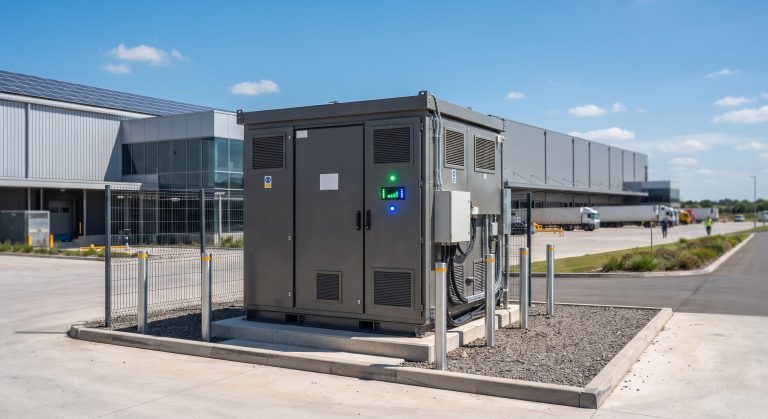
Overview
As a B2B Energy Storage System (BESS) Technical Support Engineer and Senior SEO copywriter, I address the most critical question for plant engineers, procurement teams, and EPC contractors: Are there redundant safety circuits built into the advanced BMS? This FAQ provides definitive, expert-level answers on the redundant safety architectures, thermal runaway prevention, and multi-tier protection mechanisms integrated into modern commercial and industrial BESS. Whether you are evaluating LFP chemistry, liquid cooling systems, or grid-tie configurations, understanding these safety layers is essential for risk mitigation and long-term operational reliability.

Frequently Asked Questions
- Q1: Are there redundant safety circuits built into the advanced BMS?
- Yes, advanced BESS platforms employ at least three independent, redundant safety circuits within the Battery Management System (BMS) architecture. The primary layer is the cell-level monitoring circuit, which continuously tracks voltage, temperature, and state-of-charge (SOC) for each individual cell. The secondary layer is a hardware-based protection circuit that operates independently of the main BMS software, triggering immediate disconnection via contactors if any parameter exceeds safe thresholds. The tertiary layer is a system-level emergency stop (E-stop) loop that physically isolates the battery racks from the power conversion system (PCS) and grid. This redundancy ensures that even if one circuit fails, backup protection remains active, directly addressing thermal runaway prevention and fire safety requirements.
- Q2: What specific fire safety and thermal runaway prevention mechanisms are integrated into the BESS?
- The BESS integrates a multi-tier fire safety strategy: early gas/smoke detection, active liquid cooling, and suppression systems. First, each cabinet contains gas and smoke sensors that detect off-gassing from cell degradation up to 15 minutes before visible smoke or fire, triggering an alarm and automatic shutdown. Second, the liquid cooling system maintains cell temperature within a narrow band (e.g., 20–35°C) to prevent thermal runaway initiation. Third, if detection occurs, a clean-agent fire suppression system (e.g., Novec 1230 or aerosol) is released into the cabinet, followed by emergency ventilation and isolation. This layered approach meets UL 9540A and NFPA 855 standards for commercial energy storage.
- Q3: How does the BMS monitor and balance individual cells in a redundant safety architecture?
- The advanced BMS uses active cell balancing with redundant monitoring channels. Each battery module contains a slave BMS board that measures cell voltage and temperature. These boards communicate via a dual CAN bus or daisy-chain topology to the master BMS. If one communication path fails, the redundant path maintains data flow. The master BMS then performs active balancing by shuttling energy between cells, ensuring no cell exceeds voltage limits. This real-time monitoring and balancing is critical for maximizing cycle life and preventing localized overheating, which is a primary cause of thermal runaway.
- Q4: What is the standard cycle life and depth of discharge (DoD) for LFP chemistry in this BESS?
- The standard cycle life for Tier-1 LFP cells in this BESS is 6,000–8,000 cycles at 80% DoD, with a capacity retention of 70–80% at end-of-life. This is achieved through advanced liquid cooling and precise BMS cell balancing, which minimize degradation. For a typical commercial application with one cycle per day, this translates to over 15 years of operational life. The BMS also enforces a maximum DoD limit (e.g., 90%) to protect cells from deep discharge stress, further extending lifespan.
- Q5: Can the BESS be scaled in parallel for larger capacity, and how does the BMS manage redundant safety across multiple cabinets?
- Yes, the BESS supports modular parallel expansion, scaling from 100 kWh to multiple MWh. Each cabinet has its own BMS, and a central Energy Management System (EMS) coordinates the cluster. For redundancy, the DC busbar linkage includes per-cabinet disconnect switches and fuses. If one cabinet’s BMS detects a fault, it isolates that cabinet while the rest continue operating. The EMS also monitors inter-cabinet current sharing to prevent overload. This design ensures scalability without compromising safety, making it suitable for micro-grids and industrial facilities.
- Q6: How does the liquid cooling system work with the BMS to prevent thermal runaway?
- The liquid cooling system is controlled by the BMS, which adjusts coolant flow and temperature based on real-time cell temperatures. Each battery module has cooling plates with embedded temperature sensors. If the BMS detects a cell temperature rising above a threshold (e.g., 45°C), it increases coolant flow and may reduce charge/discharge power. If temperatures continue to rise, the BMS triggers a controlled shutdown. This proactive thermal management is far more effective than passive air cooling and is a key reason why liquid-cooled BESS can maintain cell temperature uniformity within ±2°C, drastically reducing thermal runaway risk.
- Q7: What grid-tie and off-grid configurations are supported, and how does the BMS handle seamless switching?
- The BESS supports both grid-tie and off-grid configurations via a bi-directional Power Conversion System (PCS). In grid-tie mode, the BMS communicates with the PCS to perform peak shaving, demand response, and frequency regulation. In off-grid mode, the BMS manages the islanded micro-grid, balancing load and generation. For seamless switching during grid outages, the BMS initiates a transfer to off-grid mode within 20 milliseconds, ensuring uninterrupted power for critical loads. Redundant safety circuits ensure that the transition does not cause voltage spikes or equipment damage.
- Q8: What post-sales O&M and BMS monitoring support is available for safety and performance?
- Post-sales support includes 24/7 remote BMS monitoring via a cloud-based EMS platform, which provides real-time alerts on cell imbalance, temperature anomalies, and fault codes. The system logs all safety events for audit and predictive maintenance. Local service teams are available for on-site calibration, firmware updates, and emergency response. Additionally, the BESS comes with a 10-year performance warranty, and the BMS data is used to validate warranty claims. This comprehensive O&M framework ensures that redundant safety circuits remain functional throughout the system’s lifecycle.