Overview
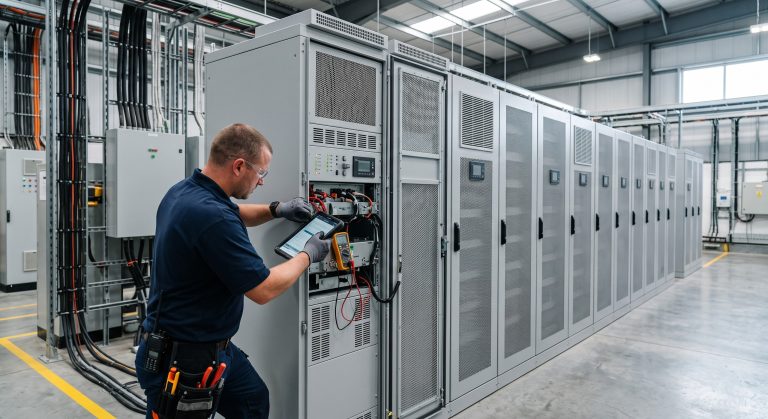
Welcome to our comprehensive technical FAQ for the M6 Battery Terminal, a state-of-the-art energy storage system designed for commercial and industrial applications. This guide provides definitive answers to the most critical pre-sales and post-sales questions from plant engineers and procurement specialists. We cover everything from core battery chemistry and scalable architecture to advanced safety protocols and financial modeling, ensuring you have the technical confidence to deploy this robust energy asset.
Frequently Asked Questions
- Q1: What is the standard cycle life and recommended depth of discharge (DoD) for the M6 Battery Terminal?
- The standard cycle life of the M6 Battery Terminal is 8,000 cycles at 80% Depth of Discharge (DoD) under standard operating conditions. This exceptional longevity is achieved using Tier-1 Lithium Iron Phosphate (LFP) prismatic cells and an advanced liquid cooling system that maintains optimal cell temperature, significantly reducing degradation. For maximum asset lifespan, we recommend operating within a 10% to 90% state of charge window, which can extend cycle life beyond 10,000 cycles.
- Q2: How does the M6 Battery Terminal manage thermal runaway and ensure fire safety?
- The M6 Battery Terminal employs a multi-tiered safety strategy to prevent and contain thermal runaway, incorporating cell-to-pack and pack-to-system isolation. This includes early gas and smoke detection sensors at the module level, which trigger an automatic shutdown and release of a clean agent fire suppressant before any event escalates. Additionally, the system features passive thermal propagation barriers between each cell and is certified to stringent international safety standards, including UL 9540 and NFPA 855.
- Q3: Can the M6 Battery Terminal be scaled for future energy needs, and how does the expansion process work?
- Yes, the M6 Battery Terminal is designed with a highly scalable, modular architecture that allows for parallel cabinet connectivity and custom DC busbar linkage. Expansion is achieved by simply adding identical power cabinets to the existing system, which are then integrated via a common AC bus. The system’s energy management system (EMS) automatically recognizes and incorporates the new capacity, ensuring seamless operation and load sharing without requiring a complete system overhaul.
- Q4: What is the typical ROI and how does peak shaving arbitrage calculate with the M6 Battery Terminal?
- The typical ROI for an M6 Battery Terminal deployment ranges from 15% to 25% annually, primarily driven by peak shaving and energy arbitrage. The financial model relies on the system’s ability to charge during low-cost off-peak hours and discharge during high-cost peak demand periods, reducing demand charges and capturing price spreads. With a round-trip efficiency exceeding 92%, the M6 Battery Terminal maximizes the captured spread, and our proprietary EMS platform provides real-time ROI dashboards to track performance against projected savings.
- Q5: How does the Battery Management System (BMS) monitor cell health and balance the pack?
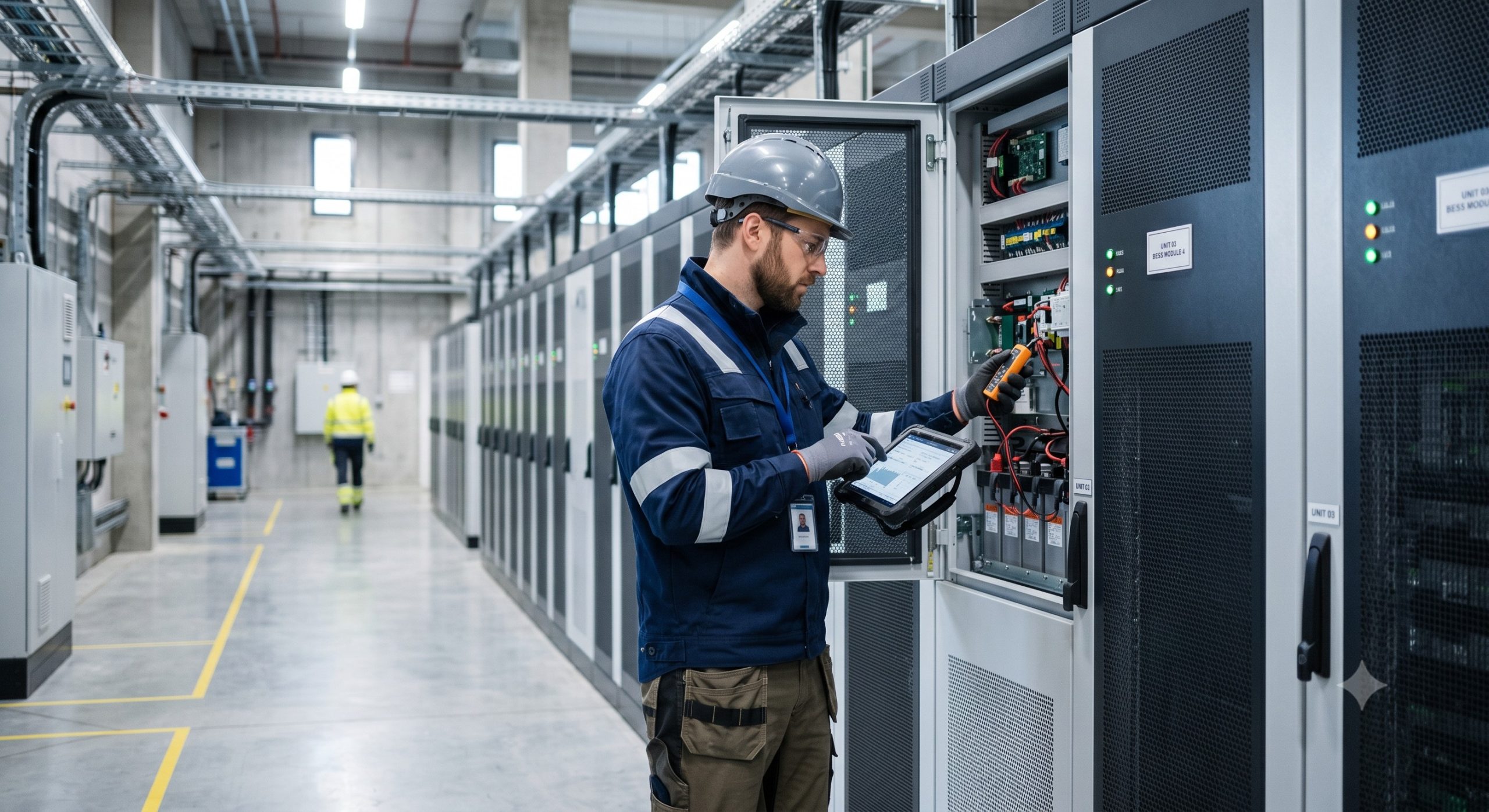
- The active Battery Management System (BMS) in the M6 Battery Terminal monitors each individual cell’s voltage, temperature, and internal resistance in real-time, using sophisticated inter-cell balancing protocols. This active balancing ensures that all cells within the pack maintain a uniform state of charge, preventing any single cell from becoming over-charged or deeply discharged. The BMS continuously recalibrates its algorithms and provides alerts for preventative maintenance, ensuring maximum performance and safety throughout the system’s life.
- Q6: Is the M6 Battery Terminal suitable for both grid-tie and off-grid configurations?
- Absolutely, the M6 Battery Terminal features a versatile bi-directional Power Conversion System (PCS) that supports both grid-tie and off-grid (islanding) modes. In grid-tie mode, it enables peak shaving, demand response, and frequency regulation. In off-grid mode, it provides a seamless transition to power critical loads during grid outages, with a transfer time of less than 4 milliseconds. This dual functionality makes it an ideal solution for enhancing energy resilience and optimizing energy costs in industrial facilities.
- Q7: What are the installation requirements and environmental enclosure ratings for the M6 Battery Terminal?
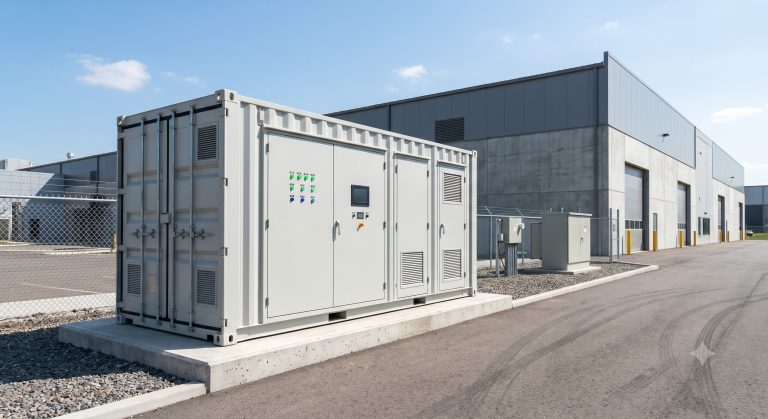
- The M6 Battery Terminal is engineered for robust outdoor and indoor use, featuring an IP65 enclosure rating for superior dust and water ingress protection, along with anti-corrosion coatings. For installation, a flat, level concrete pad is recommended, with minimum clearance for ventilation and service access. The system operates efficiently in a wide ambient temperature range (-20°C to +50°C) thanks to its integrated liquid cooling, making it suitable for diverse and harsh environmental conditions.
- Q8: What is the lead time for wholesale orders and what warranty coverage is provided?
- For wholesale orders, the standard lead time for the M6 Battery Terminal is 12-16 weeks, depending on order size and configuration, with expedited options available for urgent projects. The system comes with a comprehensive 10-year performance warranty that guarantees 80% of the initial nameplate capacity, inclusive of full parts and labor for the battery and BMS. Our O&M support package also includes remote monitoring and proactive maintenance alerts to ensure long-term, trouble-free operation.