Overview
For commercial complexes, managing energy costs is a critical operational challenge. Load shifting with a Battery Energy Storage System (BESS) offers a strategic solution, allowing facilities to purchase and store electricity during low-cost, off-peak hours for use during expensive peak periods. This process, often called tariff arbitrage, can significantly reduce utility bills and even generate revenue through demand response programs. This FAQ addresses the most common technical and financial questions from facility managers and engineers considering BESS deployment for load shifting in commercial properties.
Frequently Asked Questions
- Q1: What is load shifting in commercial complexes, and how does it differ from peak shaving?
- Load shifting is the strategic practice of moving a commercial complex’s electricity consumption from periods of high utility rates (peak hours) to periods of low rates (off-peak hours) to reduce energy costs . It does not significantly change total energy use but optimizes when that energy is drawn. Peak shaving, in contrast, focuses specifically on reducing a facility’s highest single point of power demand to lower demand charges, often using BESS to flatten these spikes during a billing cycle . While related, load shifting is about time-based cost arbitrage, whereas peak shaving targets maximum power draw.
- Q2: What is the typical ROI and payback period for a BESS used for load shifting in a commercial building?
- The return on investment (ROI) for a commercial BESS is heavily dependent on the spread between peak and off-peak electricity tariffs, system capacity, and usage patterns. For a medium-sized facility shifting 500 kWh daily with a $0.17/kWh arbitrage spread, annual savings can exceed $22,000 . Studies show that with demand tariffs around $15/kW, a typical large commercial building can achieve an annual ROI of approximately 5%, with this figure improving as battery costs decline . A well-optimized system can reduce total electricity bills by up to 24.1%, with energy storage contributing over 70% of the arbitrage income . Payback periods typically range from 3 to 7 years.
- Q3: What battery chemistry and cycle life should I consider for a commercial load-shifting BESS?
- Lithium Iron Phosphate (LFP) is the leading battery chemistry for commercial and industrial (C&I) energy storage due to its superior thermal stability, long cycle life, and inherent safety . The maximum cycle life for high-quality LFP cells is typically 6,000 to 8,000 cycles at an 80% Depth of Discharge (DoD). This extended cycle life, supported by advanced liquid cooling and precise Battery Management Systems (BMS) for cell balancing, ensures the system’s performance and financial viability over its 10-15 year lifespan .
- Q4: How does a BMS ensure the safety and longevity of the battery system in a commercial complex?
- The Battery Management System (BMS) is the critical safety and performance brain of a BESS. It continuously monitors individual cell voltage, temperature, and state of charge to prevent overcharging, deep discharging, and overheating . The BMS also executes sophisticated inter-cell balancing protocols, which equalize the charge across all cells in the battery pack, maximizing the overall capacity, extending the system’s cycle life, and preventing premature degradation . This active monitoring is essential for thermal runaway prevention and ensures safe, reliable operation.
- Q5: Can a BESS for load shifting operate in both grid-tied and off-grid configurations for a commercial complex?
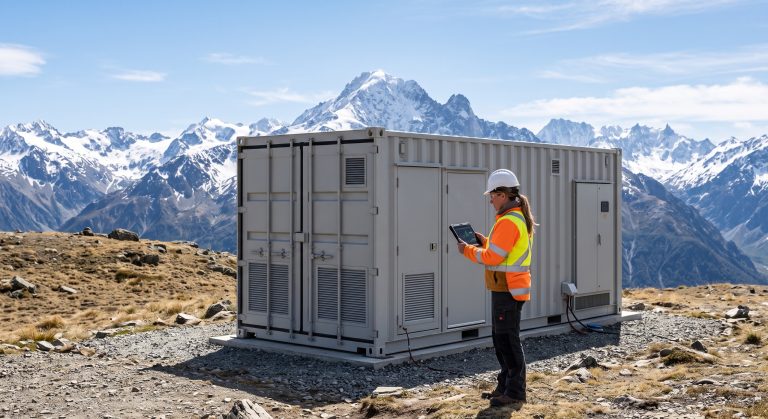
- Commercial BESS for load shifting is primarily designed for grid-tied operation, executing its ‘charge low, discharge high’ strategy based on utility time-of-use rates . However, many modern bi-directional Power Conversion Systems (PCS) provide islanding capability, allowing the system to disconnect from the grid and operate as a standalone power source during an outage . This hybrid capability is crucial for commercial complexes like hospitals, data centers, and retail centers that require both cost savings and energy resilience for critical loads.
- Q6: What are the key fire safety and thermal runaway prevention features of a commercial BESS?
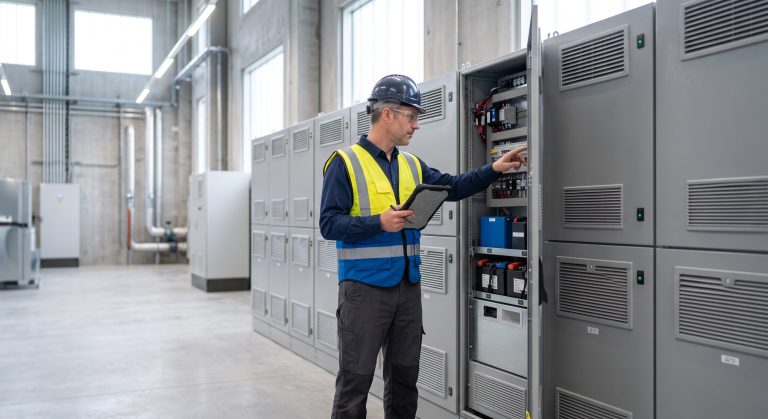
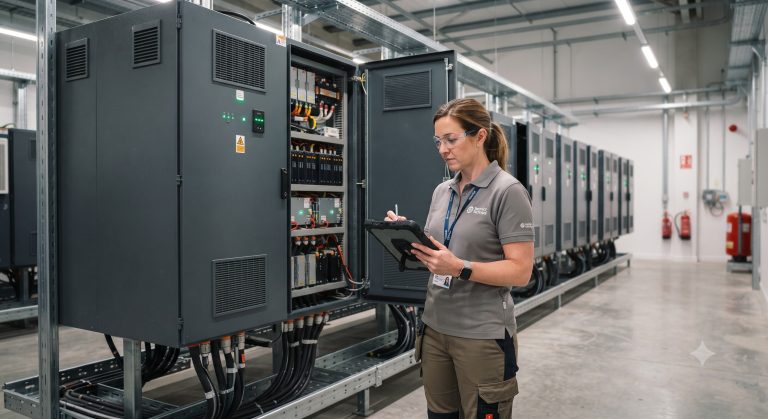
- Modern commercial BESS cabinets feature multi-tiered safety systems to prevent and mitigate thermal runaway. The first line of defense is advanced liquid cooling, which maintains optimal cell temperatures and prevents overheating . This is coupled with early gas and smoke detection sensors within the cabinet. If a cell enters thermal runaway, the system can isolate the affected battery module and deploy integrated fire suppression agents, such as aerosol or gas-based systems, to contain the event and prevent propagation to adjacent cabinets . These systems are designed to meet strict international safety standards like UL 9540A.
- Q7: How scalable is a BESS solution for a growing commercial complex with expanding energy needs?
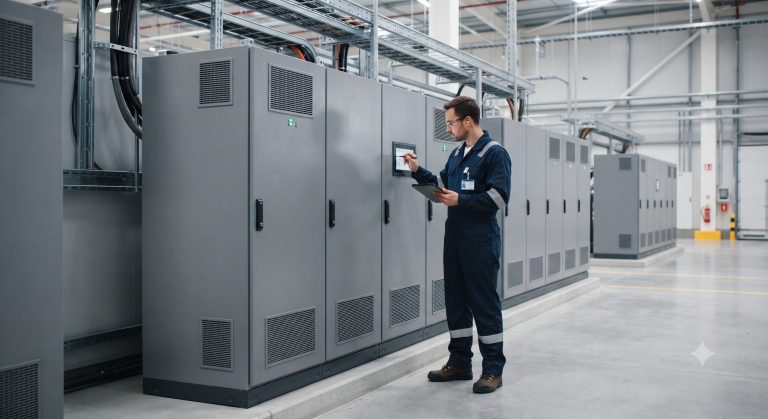
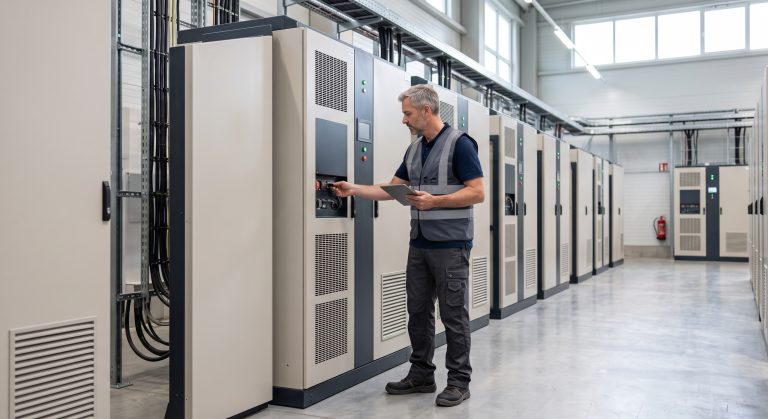
- Commercial BESS solutions are highly modular and scalable. They are designed as parallel cabinet systems, allowing for incremental capacity additions as a complex’s energy needs or financial savings goals grow . This parallel scalability enables the total storage capacity to be expanded from a few hundred kWh to multiple MWh by simply linking additional cabinets via a common DC busbar . This ‘pay-as-you-grow’ approach protects initial capital investment and allows the system to evolve with the facility’s requirements.
- Q8: Is it necessary to change employee shifts or interrupt operations to implement load shifting?
- No, implementing load shifting with a BESS does not require changing employee shifts or interrupting operations. The battery system decouples the moment of grid consumption from the moment of actual use . The BESS charges silently overnight and automatically discharges during peak afternoon hours, seamlessly powering the facility’s HVAC, lighting, and other systems . Critical production or revenue-generating equipment should not be shifted; the BESS provides the shifted power, allowing the building to run as usual while the utility meter registers minimal peak draw .