Overview
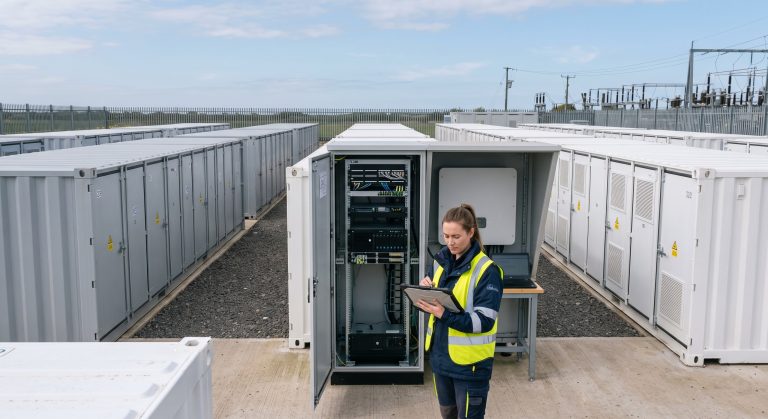
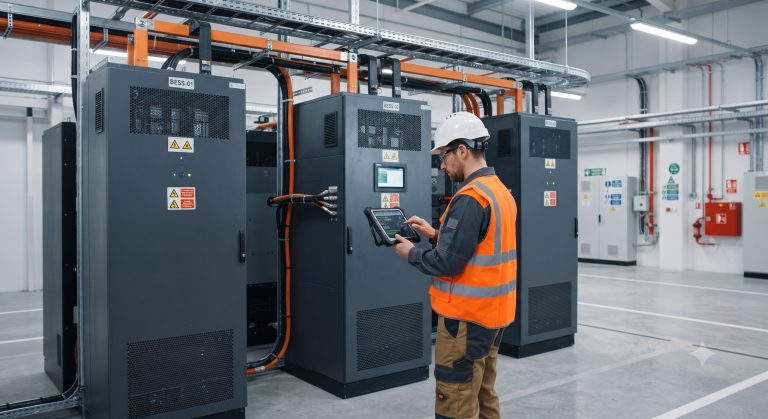
Emergency shutdown procedures for containerized Battery Energy Storage Systems (BESS) are mission-critical for plant engineers, safety officers, and O&M teams. Understanding the exact sequence of isolation, from the Battery Management System (BMS) to the grid-tie inverter, can mean the difference between a controlled stop and a catastrophic failure. This FAQ addresses the most common high-stakes questions surrounding BESS safety protocols, thermal runaway prevention, and system resets, ensuring your team can act decisively in a crisis.
Frequently Asked Questions
- Q1: What is the correct sequence for an emergency shutdown on a containerized BESS?
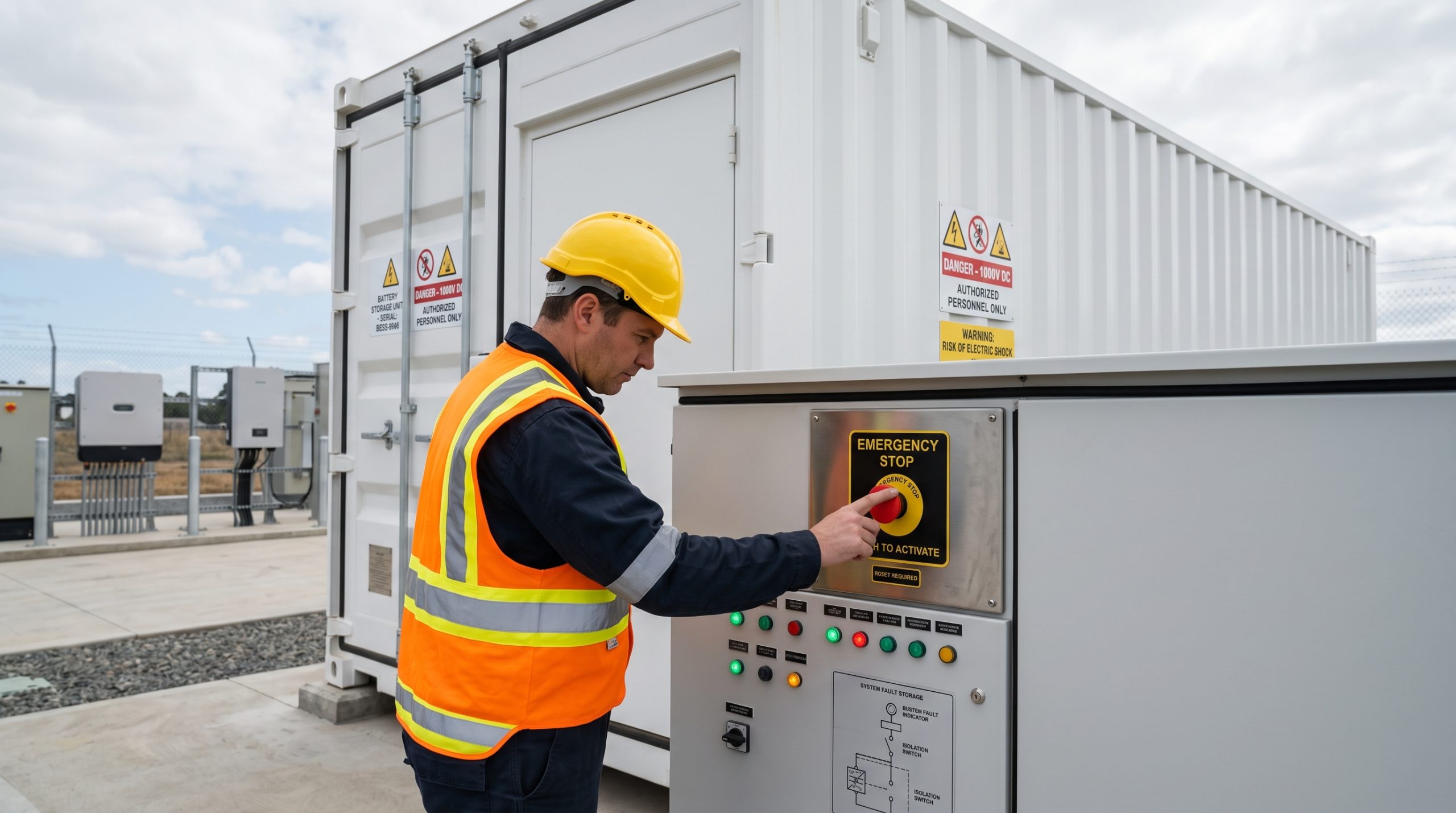
- The correct sequence is: 1) Press the physical E-Stop button on the exterior of the container to isolate the AC/DC power, 2) Manually open the DC circuit breaker to disconnect the battery racks from the bi-directional inverter (PCS), and 3) Close the manual gas isolation valve on the fire suppression system (e.g., Novec 1230 or FM-200) to prevent agent discharge during the fault. Always verify zero voltage at the PCS terminals before performing any physical inspection.
- Q2: How does the Battery Management System (BMS) facilitate emergency stops?
- The BMS initiates a software-based emergency stop via the Energy Management System (EMS) communication link, sending a ‘SYS_FAULT’ command to all Battery Control Units (BCUs). This immediately suspends charge/discharge operations and opens the internal DC contactors within 50ms, isolating the cells. The BMS data logs all pre-shutdown parameters, such as voltage and temperature gradient, which are critical for forensic analysis when diagnosing the root cause.
- Q3: What fire safety mechanisms are activated to prevent thermal runaway?
- Multi-tier fire safety mechanisms include: 1) Early gas detection sensors (H2, CO, VOCs) that trigger audible alarms before thermal runaway; 2) Aerosol-based or water-mist fire suppression localized to the rack level; and 3) A locked, nitrogen-purged inerting system that floods the container after confirmation of an internal arc. These systems are designed to maintain the module temperature below the critical 150°C threshold for LFP chemistry.
- Q4: How do you perform a post-emergency reset to bring the BESS back online?
- Post-emergency reset requires a four-step authorization process: 1) Physically reset the E-Stop button, 2) Clear the fault queue using the local HMI (Human-Machine Interface), 3) Conduct a ‘Insulation Resistance Test’ via the BMS to check for ground faults, and 4) Re-close the DC disconnect and perform a soft pre-charge sequence to prevent inrush current. The system will not reconnect to the grid until EMS confirms voltage synchronization (within ±5%).
- Q5: What are the key indicators in the BMS that suggest a shutdown is imminent?
- Critical pre-alarm indicators include: 1) Cell voltage deviation exceeding 50mV, 2) Temperature delta between high and low cells surpassing 5°C, and 3) A rapid increase in internal resistance (IR) of more than 20% over baseline. When these metrics trigger a ‘Level-1 Alarm’, the BMS automatically limits current to 10% of rated capacity and issues a visual warning, giving operators a 60-second window to initiate a manual controlled shutdown.
- Q6: Are there specific shutdown protocols for grid-tie vs. off-grid configurations?
- Yes. For grid-tie configurations, the anti-islanding protection must be verified to trigger the AC breaker open before the E-Stop is pressed to prevent backfeeding. For off-grid islanding, the PCS must be switched to ‘Load Disconnect’ mode first to shed the load; otherwise, the sudden dump of active power can cause voltage spikes that damage the inverter’s IGBTs. Most modern containerized systems feature automatic detection and handle this transition seamlessly, provided the emergency stop is initiated through the EMS.
- Q7: How does the liquid cooling system behave during an emergency stop?
- During an emergency stop, the liquid cooling pump controller receives a ‘Emergency Shutdown Signal’ and transitions to ‘Standby Mode’. The chiller unit stops active cooling, but the circulation pump continues to run for an additional 120 seconds to absorb residual heat from the battery packs (thermal inertia). This prevents localized hot spots that could lead to delayed thermal propagation. The system must be manually re-primed before restarting to ensure there are no air locks in the coolant loop.
- Q8: How should teams handle a container with visible gas/smoke prior to E-Stop?
- If visible gas or smoke is present, DO NOT approach the container for a manual E-Stop. Initiate the ‘Remote Emergency Shutdown’ via the SCADA (Supervisory Control and Data Acquisition) system. Engage the fixed fire suppression system (CO2 or aerosol) and evacuate the area to a minimum distance of 300 meters. The on-site fire brigade should utilize thermal imaging drones to monitor skin temperature of the container to determine if a full breach is likely, rather than human entry.