Overview
Ensuring robust network cybersecurity for utility-scale Battery Energy Storage Systems (BESS) is paramount as these assets become critical to grid stability. This FAQ addresses the most pressing technical and pre-sales questions that plant engineers, procurement managers, and system operators face when implementing and securing BESS monitoring infrastructure. From advanced encryption protocols to compliance with NERC CIP standards, we provide expert answers to safeguard your energy assets.
Frequently Asked Questions
- Q1: What are the primary cybersecurity threats to a utility-scale BESS monitoring network?
- The primary threats include ransomware attacks targeting operational technology (OT), man-in-the-middle (MITM) attacks on communication links, and unauthorized access through vulnerable remote access points. These threats can lead to loss of control over the BESS, data manipulation, or complete system shutdown.
- Q2: Which specific network security protocols are essential for BESS monitoring?
- Essential protocols include IEC 61850 for secure substation automation, DNP3 Secure Authentication (SA) for robust SCADA communication, and TLS 1.3 for encrypting all data streams. Additionally, implementing a strict firewall policy with deep packet inspection (DPI) is critical to filter malicious traffic.
- Q3: How does a BESS monitoring system achieve NERC CIP compliance?
- Compliance is achieved by implementing a comprehensive Cybersecurity Framework that includes asset identification, electronic security perimeters, incident response planning, and continuous security monitoring. Regular audits and patch management are also mandatory to maintain CIP compliance.
- Q4: What role does encryption play in securing BESS data and control commands?
- Encryption renders data unreadable to unauthorized parties, ensuring the confidentiality and integrity of sensitive operational data. For control commands, encrypted channels prevent attackers from injecting false commands that could cause physical damage or grid instability.
- Q5: Can the BMS and EMS be securely accessed remotely?
- Yes, but only through a secure, multi-factor authenticated VPN. This access should be further protected by role-based access control (RBAC) and session timeouts. All remote sessions must be logged and monitored for anomalous behavior.
- Q6: What is the best approach to secure legacy SCADA systems integrated with a new BESS?
- The best approach is to use a secure gateway that acts as a proxy or a data diode. This gateway translates protocols from the legacy SCADA to modern secure ones, preventing direct network access to the older, less secure system from the internet-facing BESS network.
- Q7: How often should a BESS cybersecurity assessment be conducted?
- A comprehensive assessment, including penetration testing and vulnerability scanning, should be conducted at least annually. However, continuous monitoring and threat hunting are recommended as a standard operational practice to detect and respond to threats in real-time.
- Q8: What are the physical layer considerations for network security in BESS?
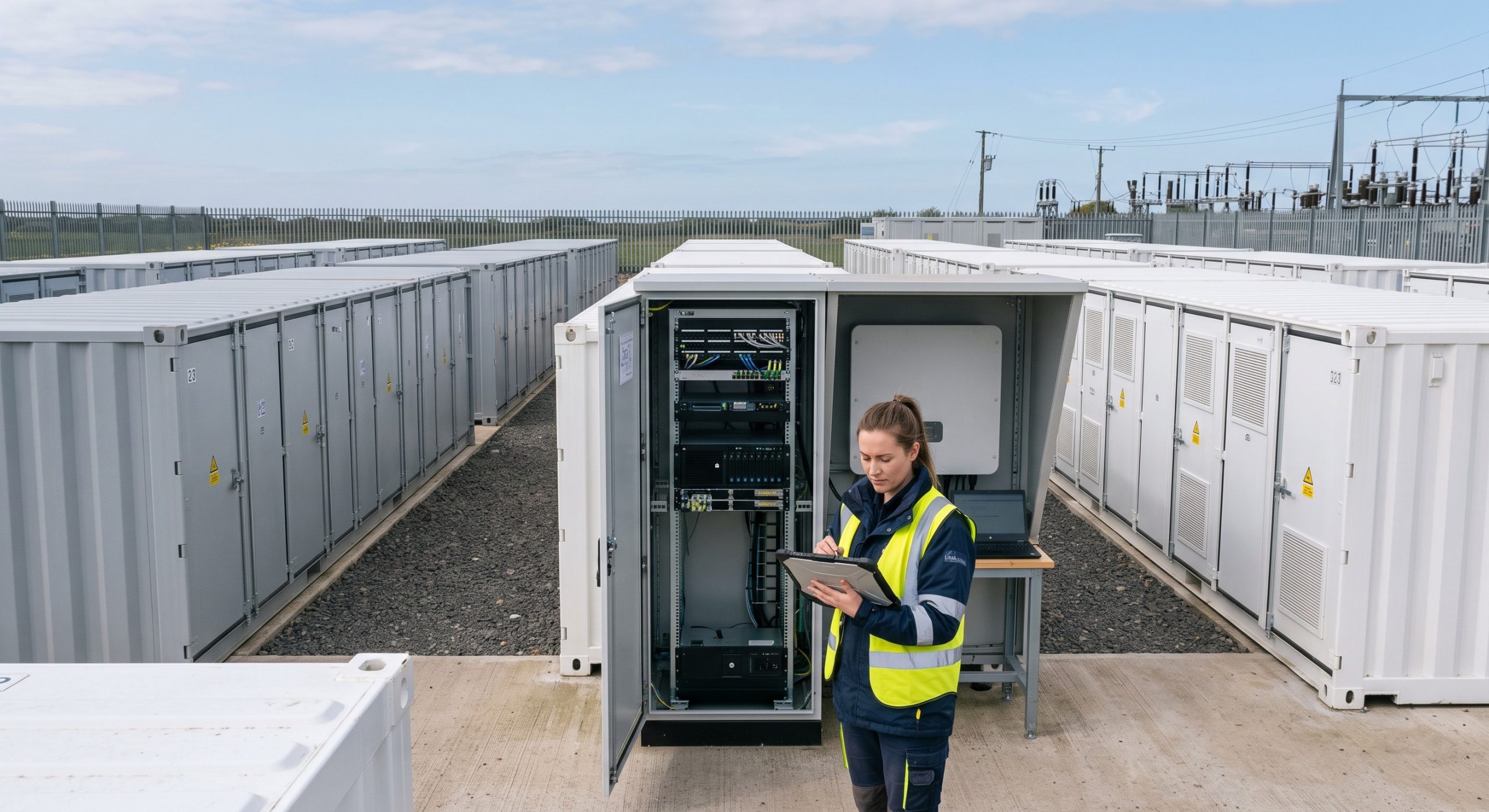
- Physical security measures include securing network cabinets in locked, access-controlled rooms, disabling unused physical ports on switches and routers, and using fiber-optic cables where possible to prevent electromagnetic eavesdropping on copper connections.