Overview
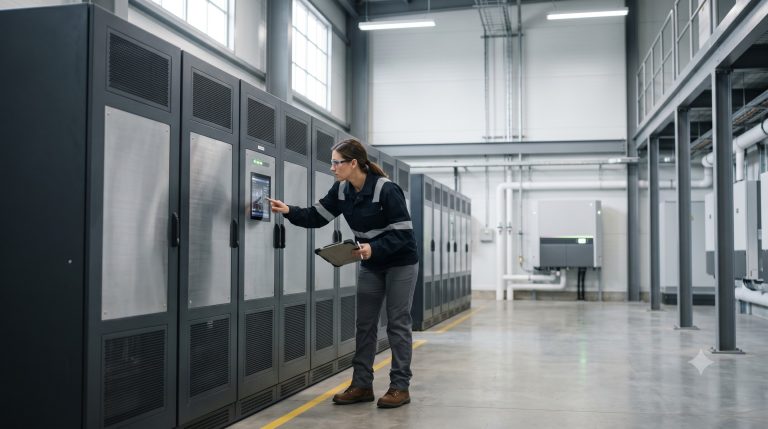
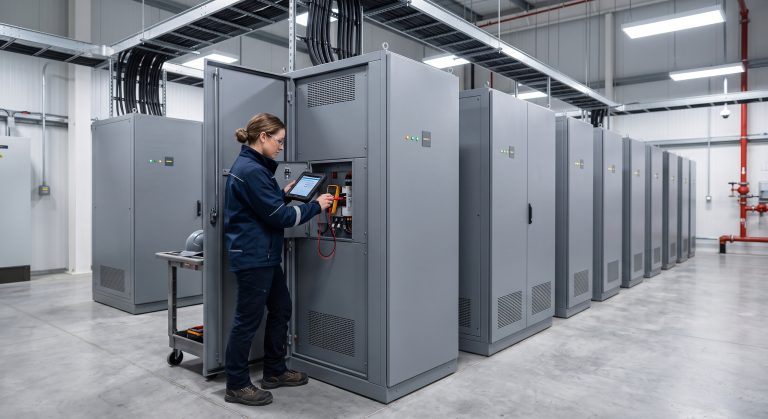
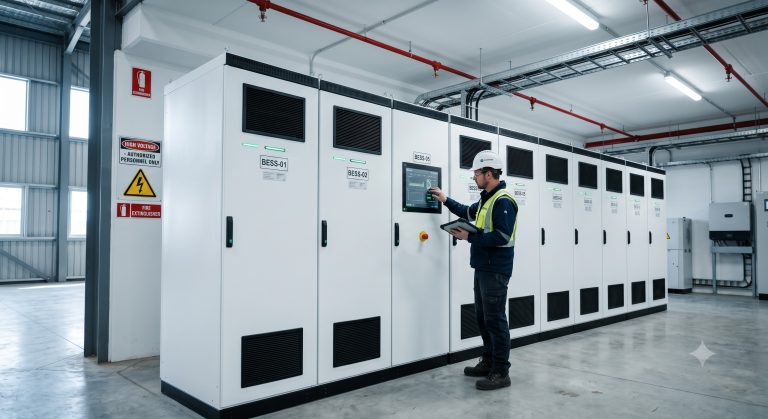
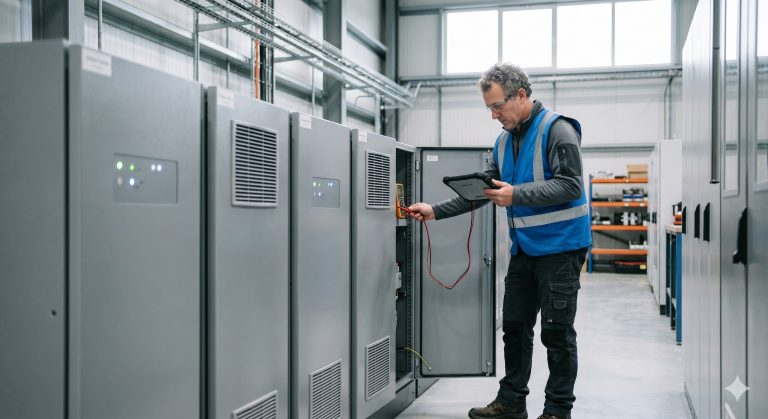
As a high-power DC fast charging solution integrated with Battery Energy Storage Systems (BESS), the cdc160 DC Charging Station is engineered for commercial, industrial, and EV fleet applications. This FAQ addresses pre-sales specifications, safety protocols, post-sales BMS integration, and total cost of ownership optimization for plant engineers, procurement managers, and system integrators.
Frequently Asked Questions
- Q1: What is the standard cycle life and recommended depth of discharge (DoD) for the cdc160 DC Charging Station’s integrated BESS?
- The standard cycle life of the cdc160 DC Charging Station’s LFP battery cells is ≥6,000 cycles at 90% depth of discharge (DoD), extending to 8,000+ cycles at 80% DoD. This performance is achieved through Tier-1 prismatic LFP cells, active liquid cooling, and real-time BMS cell balancing. Operating within 20-90% DoD daily maximizes calendar life beyond 12 years under typical C&I usage patterns.
- Q2: How does the liquid cooling system prevent thermal runaway in the cdc160 during ultra-fast 160kW DC charging?
- The cdc160 DC Charging Station employs a multi-layer active liquid cooling circuit that maintains cell temperature differentials below 3°C across all modules. For thermal runaway prevention, the system integrates early gas detection sensors, per-module fire suppression with aerosol-based agents, and automatic electrical disconnection within 200ms if internal temperatures exceed 55°C. This design complies with UL 9540A thermal runaway propagation testing.
- Q3: Can the cdc160 DC Charging Station operate in both grid-tied and off-grid island modes? How is the transition managed?
- Yes, the cdc160 DC Charging Station supports seamless grid-tie and off-grid (island) operation via its bi-directional PCS and EMS. Transition is managed by the internal Energy Management System (EMS), which detects grid loss within 40ms and switches to island mode using the BESS as a voltage source. For off-grid configurations, you must pre-configure the EMS with load prioritization rules and ensure battery SOC stays above 30% to support black-start capability.
- Q4: How do I calculate ROI and payback period for a cdc160 deployed with peak shaving and EV fleet charging?
- To calculate ROI for the cdc160, use this formula: Annual Savings = (Peak demand reduction in kW × local demand charge rate × 12 months) + (Energy arbitrage: Discharged kWh × (peak tariff – off-peak tariff)) – (O&M costs). Typical payback period for C&I facilities with demand charges >$15/kW is 3-5 years. For example, shaving 200kW of peak demand at $20/kW saves $48,000/year. Include federal ITC (30% under 2026 rules) and avoided EV charger grid upgrade costs.
- Q5: What BMS monitoring and remote API access does the cdc160 provide for fleet operators?
- The cdc160’s BMS provides real-time monitoring of cell voltage (accuracy ±5mV), temperature (per module), SOC, SOH, and contactor status via Modbus TCP/IP and RESTful API. You can access historical cycle data, alarm logs, and inter-cell balancing statistics through the local EMS dashboard or integrate with third-party platforms. For remote fleet management, the API supports commands for scheduled charging, power capping, and emergency stop — all with role-based access control.
- Q6: Is the cdc160 scalable? How many units can be paralleled for MWh-scale DC fast charging hubs?
- Yes, the cdc160 is designed for modular scalability. Up to 16 units can be paralleled on a common DC busbar using the built-in CAN-based sync protocol, delivering a total of 2.56MW DC charging power (16 × 160kW) with a shared BESS capacity of up to 10MWh. For larger deployments, a master-slave EMS coordinates load distribution, grid import limits, and battery balancing across cabinets without requiring external PLCs.
- Q7: What certifications and grid interconnection standards does the cdc160 comply with for global deployment?
- The cdc160 DC Charging Station holds UL 9540 (energy storage systems), UL 1741 SA (grid support), IEC 62619 (battery safety), and CE (EMC and LVD). For grid interconnection, it complies with IEEE 1547-2018, VDE-AR-N 4105, and G99. Fire safety includes NFPA 855 compliance and EN 50604-1 for lithium battery protection. Always verify local utility requirements for anti-islanding and power factor settings before installation.
- Q8: What maintenance and O&M support are included after purchasing the cdc160?
- Standard O&M includes remote BMS diagnostics, firmware updates via secure OTA, and an annual on-site inspection of liquid cooling levels, contactor wear, and terminal torque (first year included). Extended warranties cover 80% capacity retention at year 10 or 6,000 cycles. Global response times: critical alarms within 4 hours (remote), on-site within 48 hours through certified local partners. Sea freight packaging is ISO 668 container-certified with shock logging.