Overview
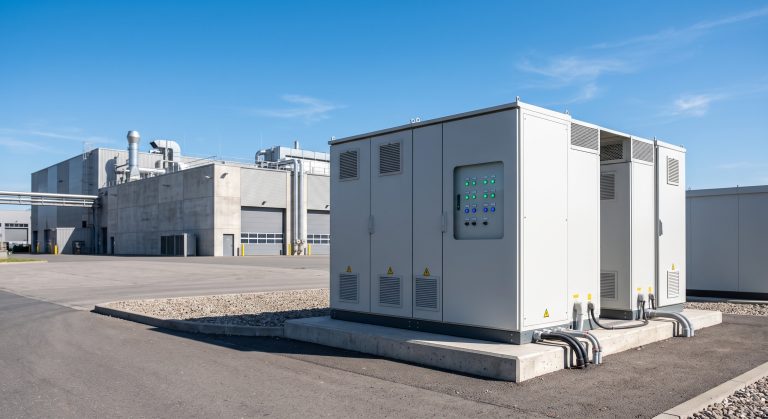
As a B2B Energy Storage System (BESS) technical support engineer, I field daily questions about the thermal operating range of battery cell chemistry. The answer directly impacts system sizing, cooling design, warranty coverage, and site safety. This FAQ addresses the most common pre-sales and post-sales thermal questions for commercial and industrial BESS deployments, with a focus on LFP chemistry, liquid cooling, and thermal runaway prevention.
Frequently Asked Questions
- Q1: What is the thermal operating range of the battery cell chemistry used in commercial BESS?
- The standard thermal operating range for LFP battery cells in commercial BESS is -20°C to 60°C for discharge and 0°C to 55°C for charge, with optimal performance between 15°C and 35°C. Operating outside this window accelerates degradation, reduces round-trip efficiency, and may void performance warranties. Most tier-1 systems use liquid cooling to maintain cell temperatures within ±3°C of the setpoint.
- Q2: How does temperature affect LFP cycle life and depth of discharge (DoD) in BESS?
- LFP cycle life drops by roughly 30-50% when average cell temperature exceeds 40°C, even at the same DoD. A system rated for 6,000 cycles at 80% DoD and 25°C may deliver only 3,500-4,000 cycles at 45°C. For every 10°C rise above 25°C, calendar aging roughly doubles. BESS designers should specify liquid cooling and thermal setpoints that keep cells below 35°C for maximum warranty compliance.
- Q3: What cooling systems are used to maintain BESS thermal operating range?
- Liquid cooling is the dominant solution for high-utilization commercial BESS, maintaining cell temperature within ±2-3°C and enabling higher continuous C-rates. Air cooling remains viable for low-power, low-cycle applications in mild climates. Liquid-cooled systems typically consume 2-4% of stored energy for thermal management, while air-cooled systems can consume 5-8% in hot ambient conditions. The choice directly impacts round-trip efficiency and LCOE.
- Q4: How does the BMS monitor and control cell temperature in a BESS?
- The BMS continuously monitors cell-level temperature via NTC thermistors and triggers derating or shutdown if temperatures exceed safe thresholds. Typical BMS thermal thresholds are: warning at 45°C, charge derating at 50°C, discharge derating at 55°C, and emergency shutdown at 60°C. Advanced BMS platforms also log thermal data for predictive maintenance and warranty validation.
- Q5: What is the risk of thermal runaway in LFP BESS, and how is it prevented?
- LFP chemistry has a higher thermal runaway onset temperature (around 200-270°C) than NMC, making it inherently safer for stationary storage. Prevention relies on multi-tier protection: liquid cooling to prevent hot spots, cell-level fusing, gas and smoke detection, and NFPA 69/UL 9540A-compliant fire suppression. Early gas detection can identify off-gassing 5-10 minutes before visible smoke, enabling preemptive isolation.
- Q6: Can BESS operate in extreme cold or hot climates, and what configuration changes are needed?
- Yes, but with configuration changes. For cold climates (-20°C to 0°C), BESS requires integrated heaters and charge blocking below 0°C to prevent lithium plating. For hot climates (above 40°C ambient), systems need oversized liquid cooling, solar shade structures, and reduced continuous C-rates. IP65+ enclosures with anti-corrosion coatings are recommended for coastal or humid environments.
- Q7: How does thermal operating range affect grid-tie and off-grid BESS sizing?
- Thermal range affects usable capacity and PCS derating. In off-grid applications, the BESS must be sized with a 15-25% thermal derating factor for high-ambient sites. For grid-tie peak shaving, thermal management ensures the system can deliver full power during demand response events without tripping. Undersizing cooling is a leading cause of premature capacity fade in C&I BESS.
- Q8: What thermal data should be included in a BESS ROI and LCOE calculation?
- Your LCOE model should include ambient temperature profile, cooling energy consumption (2-8% of throughput), expected cycle life at site temperature, and warranty terms tied to thermal conditions. A BESS operating at 35°C average cell temperature may have a 10-year LCOE 15-20% higher than the same system at 25°C. Always request a thermal simulation from the supplier before finalizing ROI.