Overview
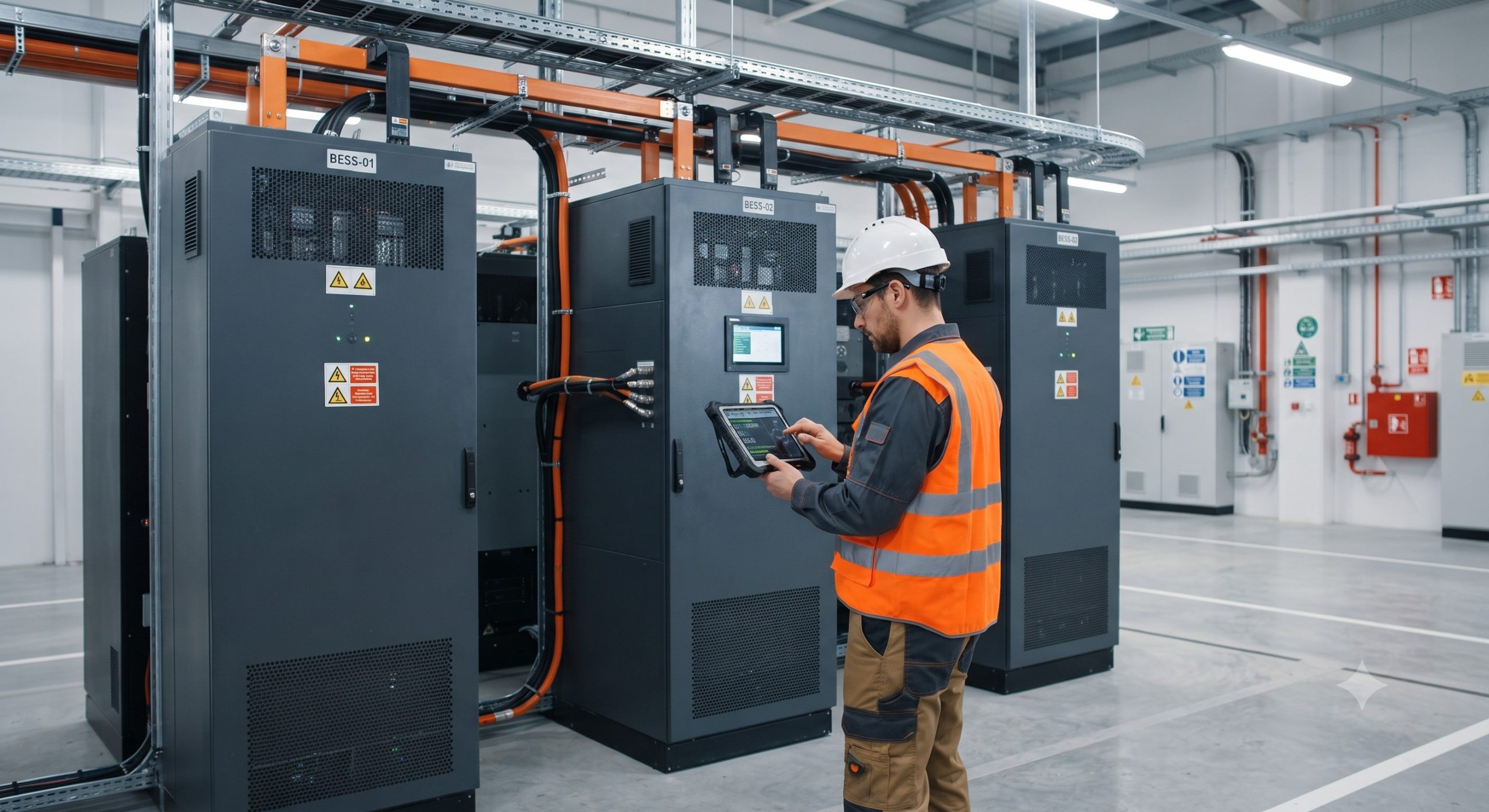
As commercial and industrial (C&I) energy demands grow, scalability becomes a critical factor in battery energy storage system (BESS) design. One of the most common engineering queries we receive concerns the physical and electrical integration of multiple cabinet units. This FAQ addresses the technical, safety, and financial considerations of deploying a modular parallel cabinet architecture, providing definitive answers for plant engineers, project developers, and procurement specialists.
Frequently Asked Questions
- Q1: Can multiple commercial battery cabinets be connected in parallel to increase total system capacity?
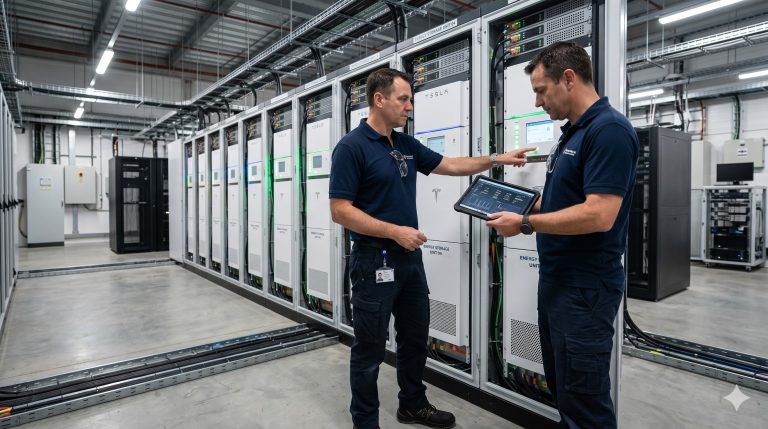
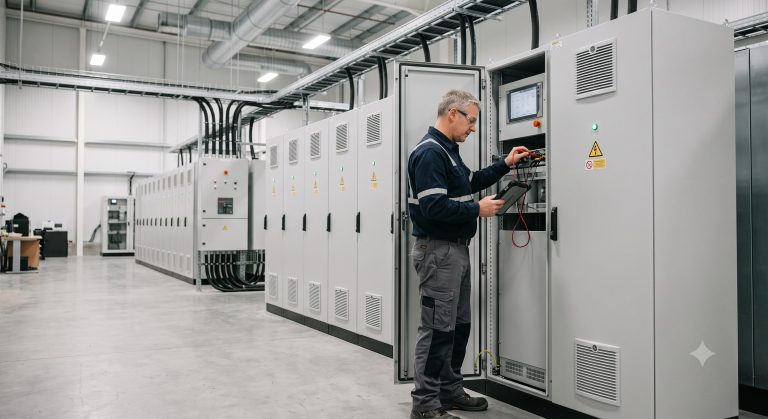
- Yes, commercial battery cabinets are specifically engineered for parallel connectivity to scale system capacity from kilowatt-hours (kWh) to multiple megawatt-hours (MWh). This is achieved by synchronizing the AC output through a common busbar or by linking DC side connections, depending on the PCS topology. The system’s Energy Management System (EMS) and Battery Management System (BMS) must be configured for master-slave communication to ensure balanced charge/discharge cycles.
- Q2: What is the maximum number of cabinets that can be paralleled, and what are the limitations?
- The maximum number of paralleled cabinets is typically dictated by the inverter’s rated capacity, generally ranging from 4 to 20 units per cluster, before requiring an additional Power Conversion System (PCS) skid. The primary limiting factors are the AC combiner panel rating, the communication bandwidth of the BMS daisy-chain, and the total fault current capacity. For large-scale projects exceeding 5MWh, it is standard practice to deploy multiple PCS units rather than linking an excessive number of cabinets to a single inverter.
- Q3: How does the BMS manage battery balancing when running cabinets in parallel?
- When cabinets are paralleled, the centralized or distributed BMS ensures State of Charge (SoC) and State of Health (SoH) synchronization across all racks. This is managed through active cell balancing protocols and CAN/Modbus communication. If SoC differences exceed 5%, the system prevents full discharge until balancing occurs, utilizing a master BMS that polls each slave unit to calculate average current and adjust output. This prevents ‘circulating currents’ where one battery charges another due to voltage mismatch.
- Q4: Do I need a specialized grid-tie agreement to operate paralleled cabinets?
- Yes, paralleling cabinets increases the total export capacity, which frequently necessitates a revised grid interconnection agreement or a new permit. This is because grid operators require accurate fault current contribution data for protection relay coordination. However, the cabinets themselves maintain a safe ‘islanding’ capability for peak shaving and can be configured with a high-speed transfer switch (HSTS) to ensure a seamless transition from grid-tie to off-grid backup without re-engineering the main switchboard.
- Q5: How does the fire suppression system scale when adding additional cabinets?
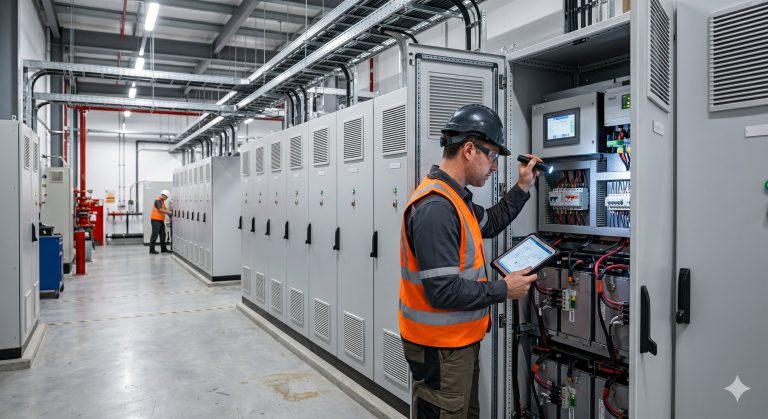
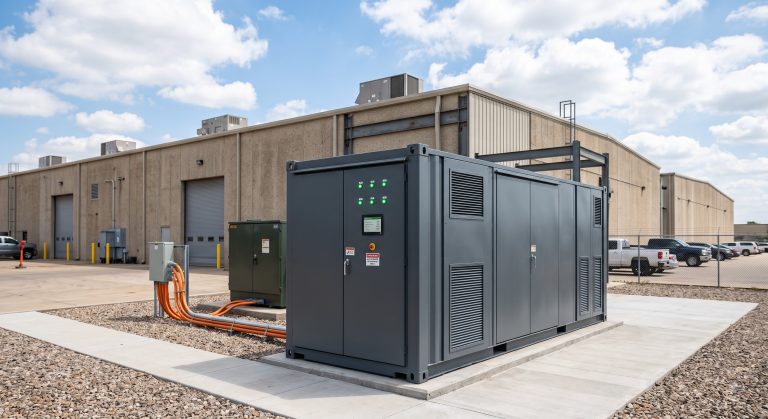
- Fire safety scales proportionally with cabinet addition. Each 20-foot or 40-foot cabinet is equipped with an independent Aerosol or Novec 1230 fire suppression system and an early gas detection sensor (CO/H2). When paralleled, these systems are networked to trigger a common zone alarm. In the event of thermal runaway in one unit, the system isolates that specific DC busbar and vents the gas, preventing propagation to adjacent cabinets, thereby maintaining UL 9540A compliance for the entire cluster.
- Q6: What are the ROI implications of starting with a small system and scaling up later?
- Implementing a modular parallel strategy significantly optimizes capital expenditure (CAPEX). By deploying a ‘pay-as-you-grow’ model, you can avoid oversized inverters and grid transformer upgrades on day one. While the initial cost per kWh is slightly higher for a smaller unit, the ability to expand capacity over 3-5 years reduces the Levelized Cost of Storage (LCOE) by up to 15% due to delayed battery degradation and precise load matching. This also allows you to take advantage of future improvements in cell density.
- Q7: Are there specific Tier-1 cell requirements for paralleled systems?
- Absolutely. For paralleled cabinets, we strictly recommend LFP (Lithium Iron Phosphate) prismatic cells from Tier-1 manufacturers, characterized by minimal voltage variation over 80% Depth of Discharge (DoD). This chemistry is critical for parallel operation because its flat voltage curve naturally reduces the risk of overcurrent during busbar coupling. You must also ensure that all cabinets share the same nominal voltage (e.g., 768V or 1500V) and utilize identical cell batches to maintain impedance matching.