EXECUTIVE SUMMARY
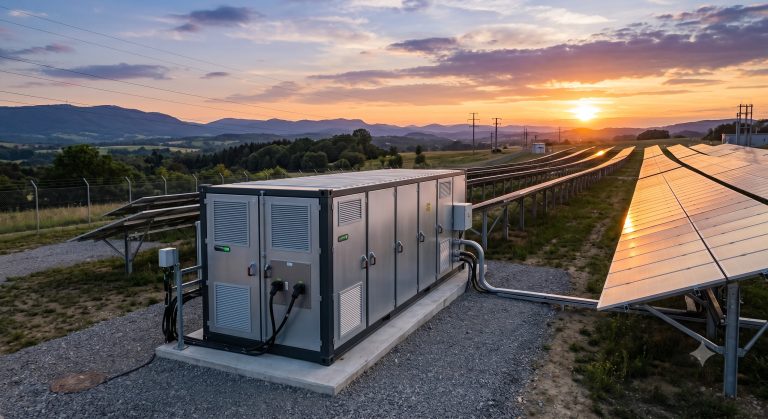
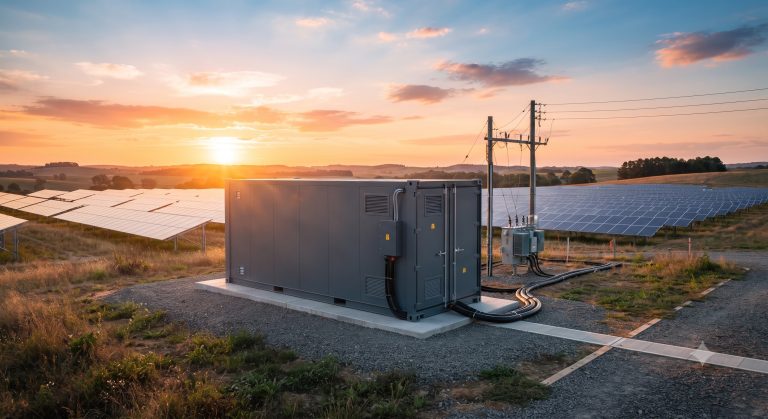
The 360kW-2.88MWh Split-type DC Charging Station represents a paradigm shift in distributed energy infrastructure, purpose-built for high-utilization EV supercharging hubs, C&I facilities seeking demand charge mitigation, and islanded micro-grids requiring grid independence. This second-generation system integrates a 360kW dual-gun DC fast charger with a 2.88MWh liquid-cooled battery energy storage system (BESS), enabling ultra-fast charging without grid upgrades while delivering peak shaving, backup power, and renewable time-shifting in a single UL-certified enclosure.
By decoupling charging power from grid capacity, the system slashes demand charges by up to 70% and supports 100% renewable penetration when paired with on-site solar PV. Operators benefit from revenue stacking via energy arbitrage, frequency regulation, and EV fleet prioritization—all orchestrated by an AI-driven EMS. For micro-grids and behind-the-meter applications, the split-type architecture offers scalable deployment of up to 8 units in parallel (total 2.88MW / 23.04MWh), ensuring turnkey compliance with NFPA 855 and IFC 2024 fire codes.
SYSTEM ARCHITECTURE & SAFETY
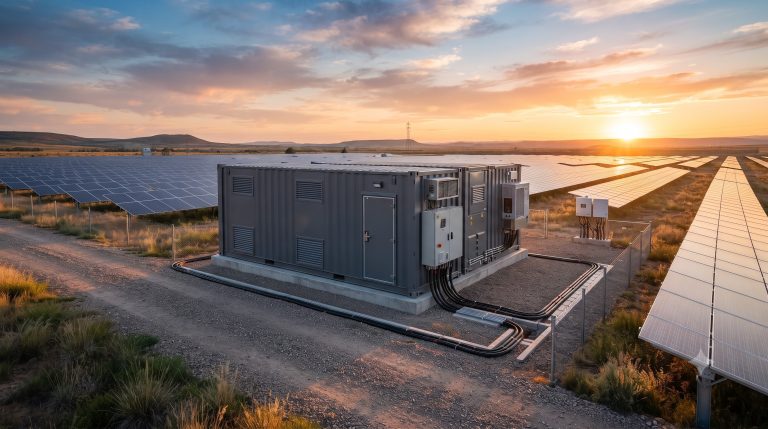
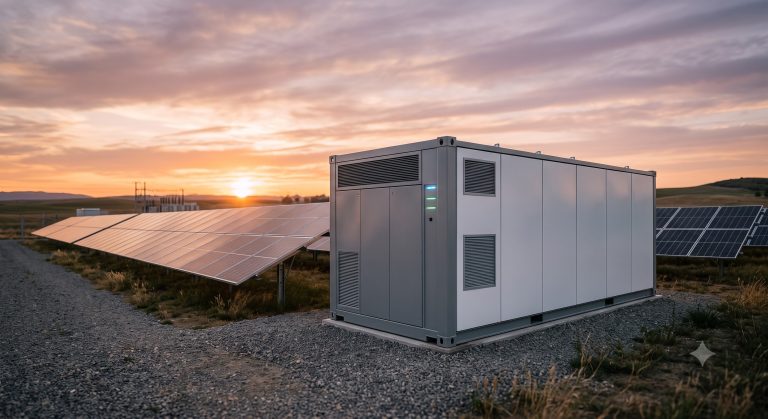
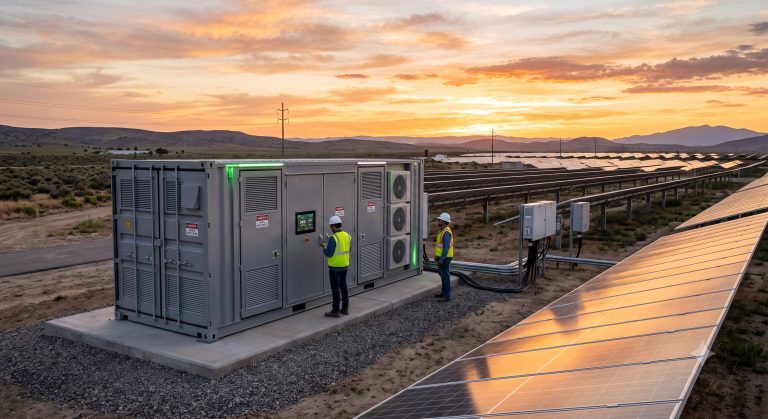
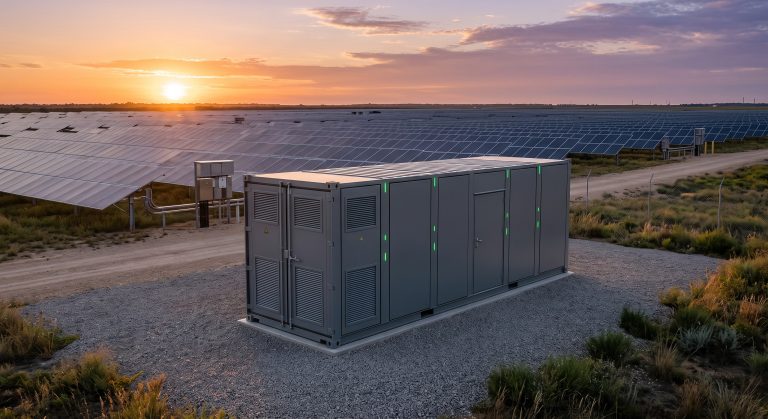
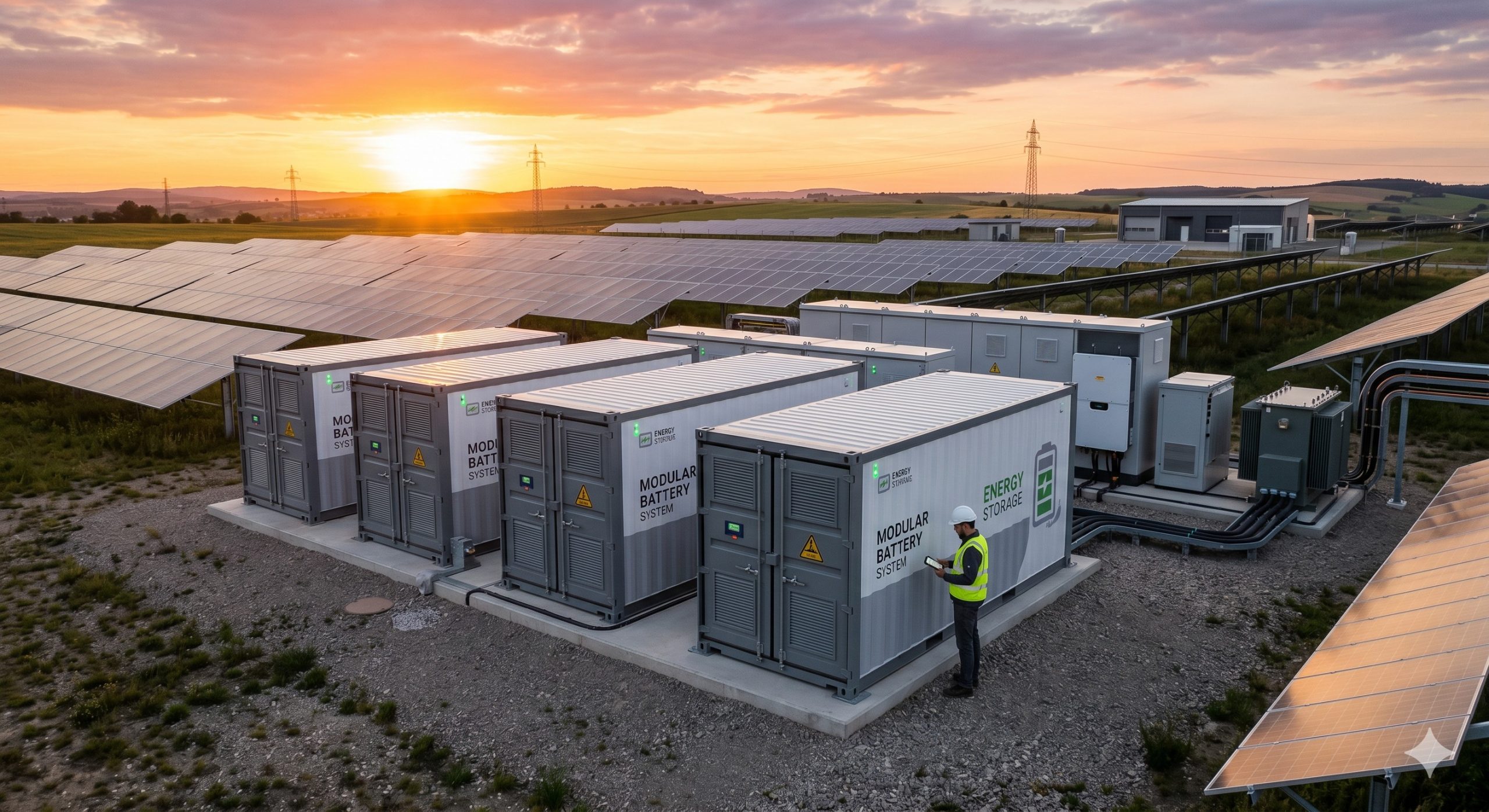
The system employs a split-type physical separation: a compact 360kW power cabinet (charging electronics) located adjacent to parking stalls, plus a 2.88MWh battery enclosure rated for outdoor IP55 deployment. Battery chemistry is automotive-grade LFP (Lithium Iron Phosphate) from Tier-1 suppliers (CATL/EVE), delivering >8,000 cycles at 90% DoD and inherent thermal runaway resistance. A dual-loop liquid cooling system maintains battery cell temperature differential <3°C across all 2,304 prismatic cells, enabling full-power operation from -30°C to 55°C ambient. Passive safety includes three-tier fire suppression: (1) cell-level fuse and vent, (2) module-level aerosol fire extinguisher, and (3) rack-level Novec 1230 total-flooding with remote alarm. Interiors feature flame-retardant cables (VW-1 rating) and arc-fault detection with 2ms mechanical disconnect. KEY FEATURES - Seamless Grid-to-Island Transition: Sub-20ms UPS-class switchover from grid-connected to island mode, supporting continuous EV charging during blackouts. SiC-based bi-directional PCS enables V2G-ready architecture for future fleet back-feeding. - AI-EMS Smart Dispatch: Real-time predictive algorithm learns load patterns and solar irradiance forecasts to minimize energy costs. Priority modes include peak shaving (sheds 90% of demand spikes), PV self-consumption (98% utilization), and emergency backup (24-hour island runtime at 100kW load). - Modular Scalability & Redundancy: Each 360kW power module operates independently (N+1 redundant). Battery racks are swappable (hot-swappable within 30 minutes) with automatic SOC balancing across up to 8 parallel units. Communication via dual CAN/Modbus TCP for seamless SCADA integration. - Native PV-Storage-Charging Integration: Integrated DC bus coupler allows direct PV input (up to 200kWp) without additional inverters, boosting round-trip efficiency to 94.5%. Smart scheduling prioritizes solar-to-vehicle conversion, reducing grid draw to <10% during daylight. - Cyber-Resilient Architecture: Isolated security gateway with hardware encryption (AES-256) and role-based access control. Compliant with IEC 62443-3-3, offering per-port VLAN segmentation, intrusion detection, and OCPP 2.0.1 remote management. COMPLIANCE & STANDARDS The 360kW-2.88MWh Split-type DC Charging Station is fully certified for global deployment. All components carry UL 1973 (energy storage), UL 9540 (complete system), and UL 9540A (thermal runaway propagation tested at cell, module, and rack levels). Electrical safety complies with IEC 62619 (secondary cells), IEC 62477 (PCS), and UL 2202 (DC fast charger). Transport certification includes UN38.3. EMC meets FCC Part 15 Class A and EN 55011. Grid interconnection follows IEEE 1547, UL 1741 SA, and VDE-AR-N 4105. Fire and building codes satisfy NFPA 855 (2023), IFC 2024 Chapter 12, and Shanghai DB31/T 1383-2023. Additional environmental compliance includes RoHS, REACH, and CE marking for low voltage and electromagnetic compatibility directives. TECHNICAL SPECIFICATIONS All electrical, mechanical, and environmental parameters are validated at nominal operating conditions (25°C ambient, 90% DoD, 0.5C charge/discharge). Values represent worst-case tolerances unless stated otherwise.
| Parameter | Specification |
|---|---|
| Nominal Energy Capacity | 2.88 MWh (2.62 MWh usable, 90% DoD) |
| Battery Chemistry | LFP (LiFePO4), Tier-1 prismatic cells |
| Cycle Life | 8,000 cycles @ 25°C, 90% DoD, EOL 70% SOH |
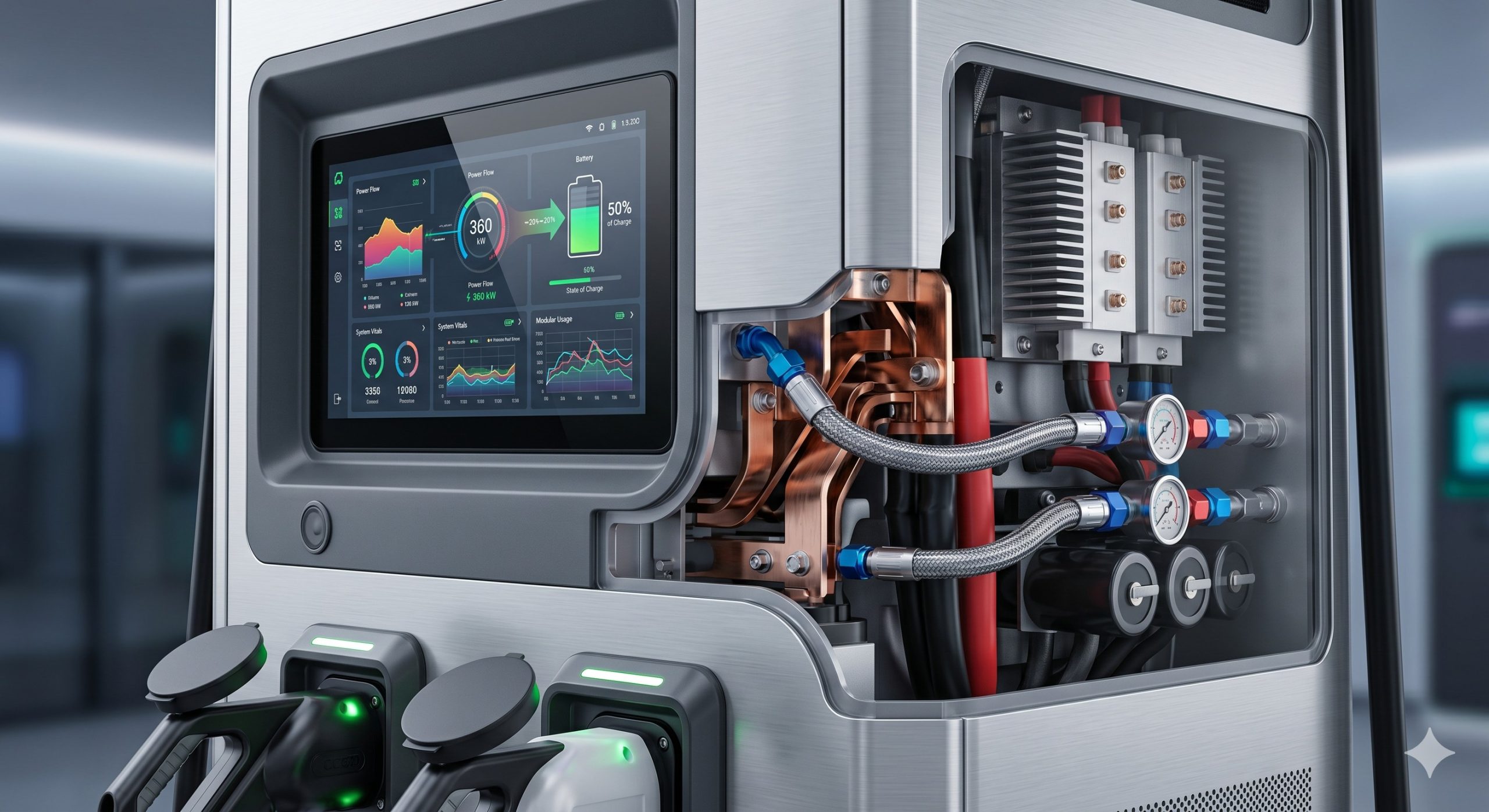
| DC Charging Power (Dual Gun) | 360 kW total (180 kW per gun, simultaneous) |
| Charging Voltage Range | 150 V – 1000 V DC |
| Max. Output Current (per gun) | 400 A continuous, 600 A boost (10 min) |
| PCS Rated Power (Bi-directional) | 360 kW / 360 kVA |
| Grid Connection | 480 V AC, 3-phase, 60 Hz (380-415V for 50 Hz markets) |
| Cooling Method | Liquid cooling (battery + PCS), IP55 outdoor-rated chillers |
| Operating Temperature | -30°C to +55°C (derated >50°C) |
| Protection Ratings | Battery enclosure: IP55 / NEMA 3R, Charger: IP54 |
| Fire Suppression | Aerosol (module) + Novec 1230 (rack), NFPA 855 compliant |
| Communication Protocols | OCPP 2.0.1, Modbus TCP, CAN 2.0, IEC 61850 |
| Dimensions (Battery Enclosure) | 6,058 mm (L) x 2,438 mm (W) x 2,896 mm (H) |
| Dimensions (Charger Cabinet) | 1,800 mm (L) x 1,000 mm (W) x 2,000 mm (H) |
| Total Weight | ~28,000 kg (battery unit) + 1,200 kg (charger cabinet) |
📥 Download Technical Specification
Click the button below to view or download the full official PDF datasheet.