Overview
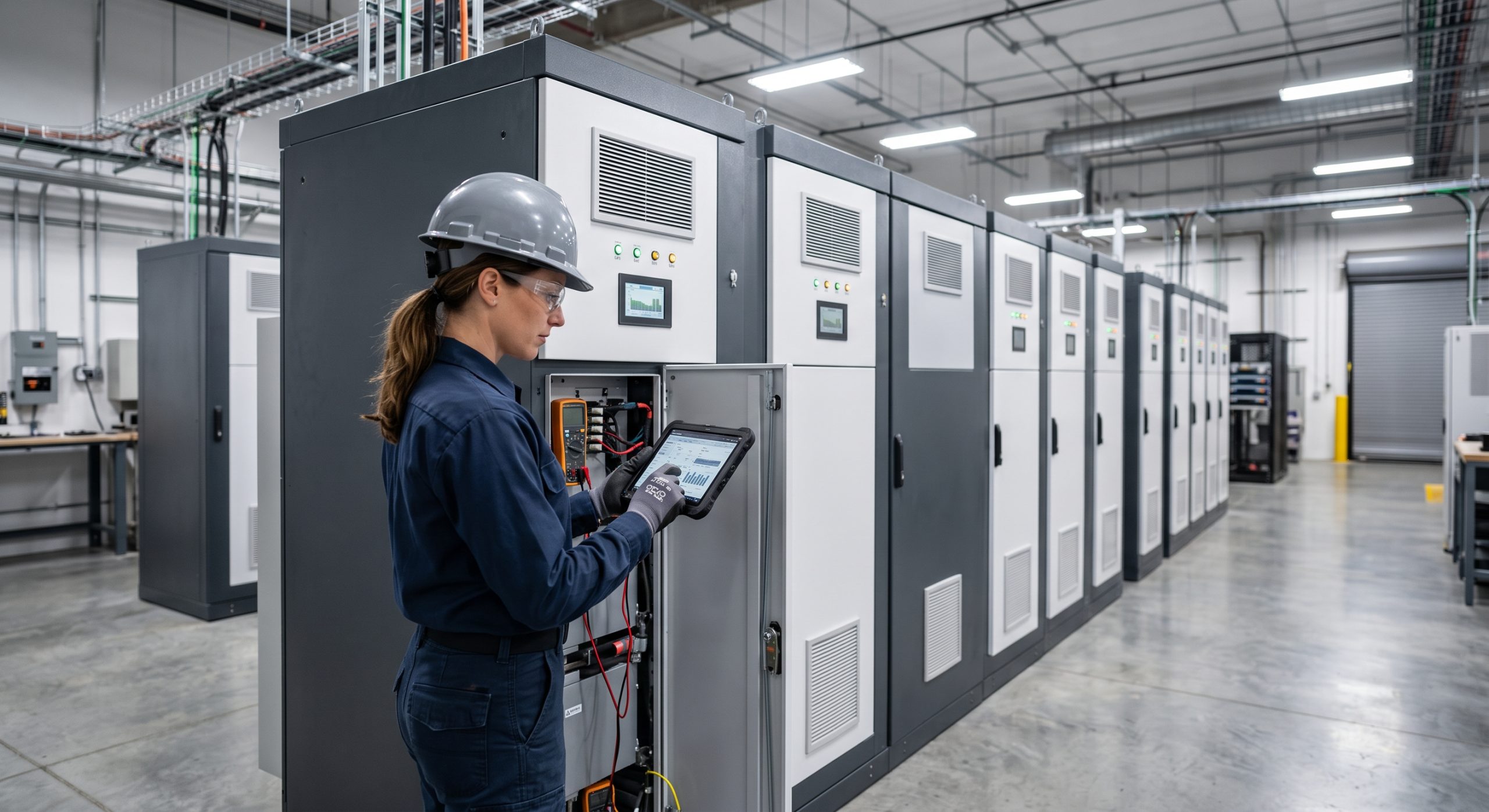
Gas detection is a critical component of any modern Battery Energy Storage System (BESS) fire protection plan. Early identification of off-gassing from lithium-ion cells can prevent catastrophic thermal runaway events, protecting both capital assets and personnel. This FAQ addresses the most pressing pre-sales and post-sales engineering questions regarding gas sensing, suppression triggers, and overall safety integration in industrial BESS cabinets.
Frequently Asked Questions
- Q1: How is gas detection handled within the ESS fire protection system?
- Gas detection is handled through a multi-tiered sensor suite that continuously monitors for hydrogen (H₂), carbon monoxide (CO), and volatile organic compounds (VOCs). These sensors are strategically placed within each battery module and the cabinet plenum, feeding real-time data to the central Battery Management System (BMS), which initiates a pre-alarm at 25% LEL and triggers full system shutdown and suppression at 50% LEL.
- Q2: What battery chemistry is used and how does it affect thermal runaway risk?
- Our BESS utilizes Tier-1 Lithium Iron Phosphate (LFP) chemistry, which offers superior thermal stability compared to NMC, with a decomposition onset temperature above 270°C. This inherently reduces the risk of thermal runaway, but our system still incorporates early gas detection as a failsafe, ensuring that any off-gassing from overcharging or internal shorts is identified within milliseconds before cell temperatures escalate.
- Q3: What is the standard cycle life and depth of discharge (DoD) for these LFP cells?
- The standard cycle life is 6,000 cycles at 80% DoD and 8,000 cycles at 70% DoD under controlled ambient temperatures. This longevity is maintained through our active liquid cooling system, which keeps cell temperature variance within ±2°C, minimizing degradation and ensuring consistent performance over a 15-year design life.
- Q4: How does the liquid cooling system integrate with gas detection and fire suppression?
- The liquid cooling system is directly integrated with the fire protection logic; upon gas detection triggering a Level 2 alarm, the cooling system immediately reduces flow temperature to aid in thermal absorption. Simultaneously, the system activates the dual-agent fire suppression (aerosol and inert gas), which is designed to extinguish incipient fires without damaging adjacent cells or requiring electrical power to operate.
- Q5: How is scalability handled for parallel cabinet connectivity?
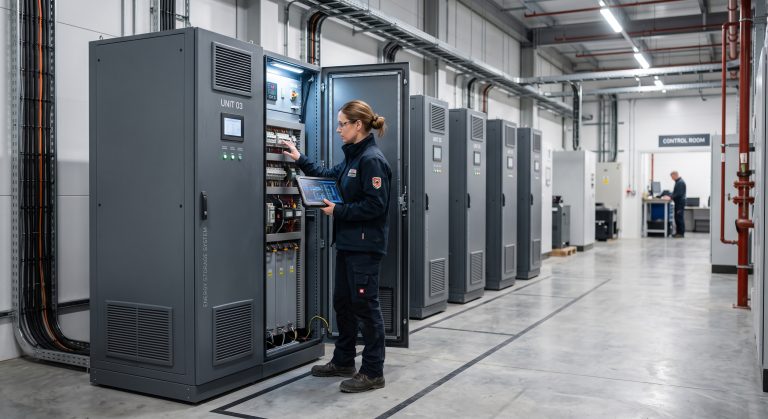
- Scalability is handled through a modular DC busbar linkage architecture that allows up to 20 cabinets to be paralleled without complex re-engineering. Each cabinet contains independent gas detection and suppression, ensuring that isolation protocols remain effective even as the total MWh capacity scales from 2 MWh to over 100 MWh on a single site.
- Q6: What BMS monitoring protocols are in place for post-sales maintenance?
- Post-sales monitoring includes a cloud-based EMS platform that provides 24/7 visibility into cell voltage, temperature, and gas sensor trends. Our service team performs remote diagnostic checks quarterly and on-site calibration of gas sensors annually, ensuring the detection system remains accurate and compliant with UL 9540 and NFPA 855 standards for the system’s entire lifecycle.
- Q7: How do you calculate ROI, and what are the peak shaving benefits?
- ROI is calculated using a localized energy arbitrage and peak demand reduction model, typically yielding a 3-5 year payback depending on utility tariffs. The BESS achieves this by automatically discharging during peak pricing periods while leveraging gas detection and thermal protection to safely participate in ancillary services, ensuring maximum revenue without compromising safety margins.
- Q8: What are the international interconnection standards for this system?
- Our system is fully certified to UL 9540A (thermal runaway propagation), IEC 62619 (industrial battery safety), and CE standards. This includes passing rigorous gas emission and smoke detection tests, ensuring that the system’s fire protection mechanisms are validated for grid-tie and islanding applications worldwide.