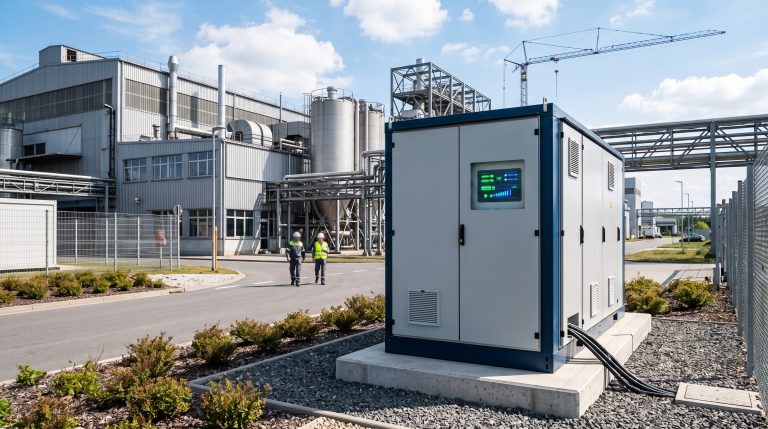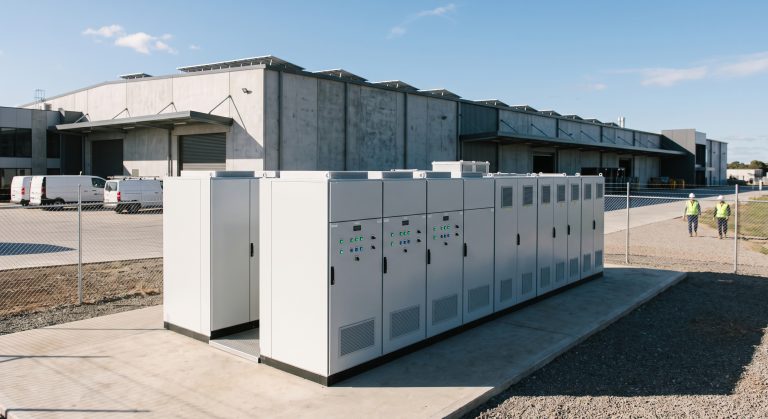
Introduction: The Industrial Imperative for Automated Battery Production
The global energy transition is placing unprecedented demand on battery supply chains, particularly for Commercial & Industrial (C&I) energy storage systems. As of 2026, the bottleneck is no longer raw material availability but the scalable, precision-driven manufacturing of safe and durable battery energy storage systems (BESS). To meet the rigorous requirements of grid stabilization, peak shaving, and renewable integration, the industry has pivoted to automated battery production lines. These lines are not merely assembly conveyors; they are highly integrated cyber-physical systems that ensure micron-level precision, zero-defect quality, and long-term lifecycle performance for assets that must operate reliably for over a decade.
For B2B procurers, system integrators, and engineering, procurement, and construction (EPC) firms, understanding the engineering specifications and automated processes behind a BESS is critical to asset valuation. This deep dive analyzes the architecture of a modern automated battery production line, focusing on Tier-1 LFP cell handling, liquid cooling integration, and the stringent safety protocols that underpin Tier-1 vendor status and compliance with standards like IEC 62619 and UL 9540.
Core Architecture of a High-Throughput Automated BESS Line
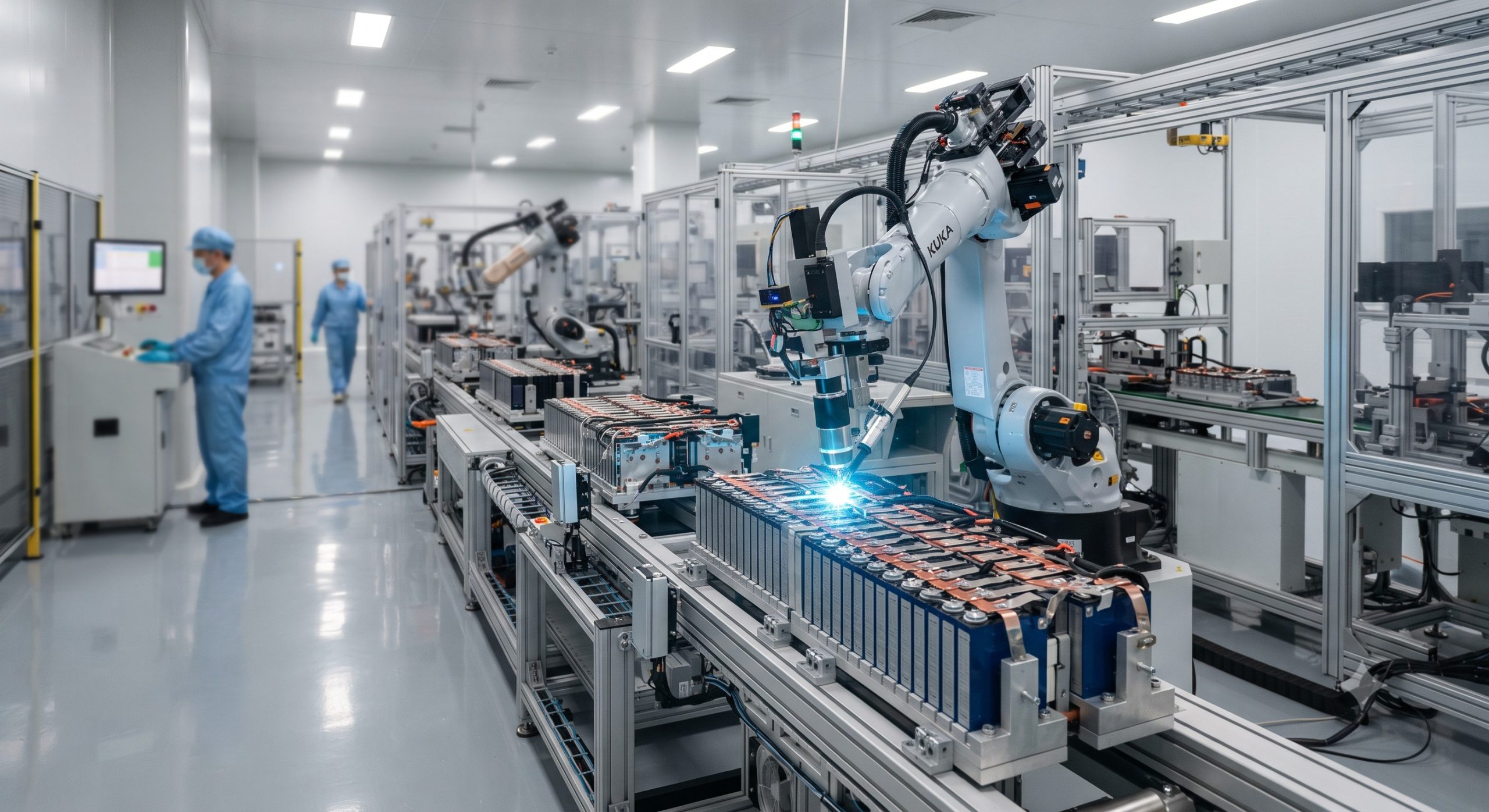
A state-of-the-art automated battery production line for C&I applications transcends traditional assembly. It is a modular ecosystem designed for giga-scale throughput, often exceeding 1,500 prismatic cells or 250+ battery packs per hour, depending on form factor . The architecture is typically segmented into distinct, robotically orchestrated zones:
1. Cell Sorting and Grading (The Foundation of Consistency)
Incoming Tier-1 LFP (Lithium Iron Phosphate) cells are immediately subjected to rigorous Open Circuit Voltage (OCV) and internal resistance (IR) testing. Automated sorting machines, guided by CCD vision systems, categorize cells with a tolerance of ±0.5% for voltage and ±0.1mΩ for resistance . This ensures that only cells with matched electrical characteristics proceed, preventing premature aging and capacity imbalance in the final battery pack. This process is vital for extending the cycle life of the ESS, often exceeding 8,000 cycles at 90% Depth of Discharge (DoD).
2. Precision Module Assembly and Laser Welding
The assembly phase is dominated by robotic articulation. Multi-axis robots perform the precise stacking and compression of cells into modules. The critical joining process—busbar welding—is executed by automated laser welding systems. This non-contact method ensures ultra-low resistance connections and minimal heat distortion, crucial for maintaining electrical efficiency. Advanced lines integrate in-line weld integrity verification, utilizing algorithms to detect microscopic cracks or misalignments in real-time, thus preventing thermal events caused by high-resistance joints .
3. Automated Thermal Management Integration
In line with the liquid cooling trend, automated production lines now feature integrated dispensing stations for Thermal Interface Materials (TIM). Robots apply TIM with exacting consistency across the module base to ensure optimal heat transfer to the cooling plates. This is critical because round-trip efficiency is inversely correlated to temperature variance; optimized thermal control can sustain efficiency rates above 95% and prevent thermal runaway .
Technical Specifications
The following table represents the key performance indicators (KPIs) demanded by Tier-1 integrators from an automated production line and the resultant BESS specifications.
| Key Parameter | Technical Specification / Standard |
|---|---|
| Battery Chemistry | Tier-1 LFP (Lithium Iron Phosphate) |
| Nominal System Capacity | Up to 5 MWh per 20-ft container |
| Round-Trip Efficiency | ≥ 95% (with Liquid Cooling Thermal Control) |
| Cycle Life | > 8,000 cycles @ 90% DoD (Depth of Discharge) |
| Safety Compliance | IEC 62619, UL 9540 (US), CE (EU), UN38.3 |
| Cell Sorting Accuracy | Voltage: ±0.5%, Internal Resistance: ±0.1mΩ |
The Critical Role of the Battery Management System (BMS) and Fire Suppression
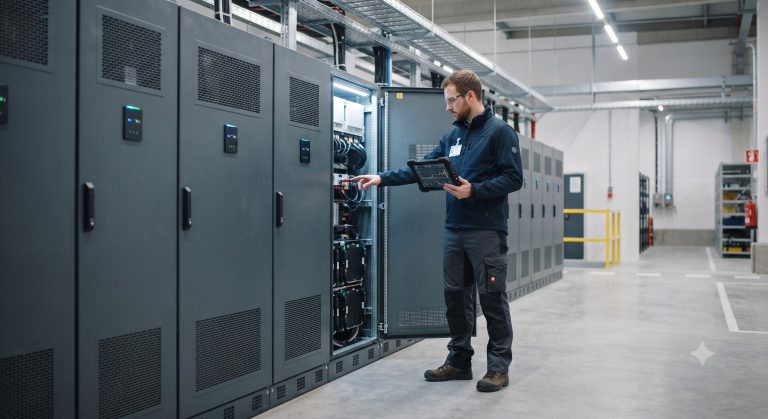
During automated production, the BMS (Battery Management System) harnesses are integrated with robotic precision. The system’s intelligence lies in its ability to perform cell balancing and communicate with the Power Conversion System (PCS). Automated production ensures that every sensor connection is torqued to specification, eliminating the human error that often leads to BMS communication failures.
Furthermore, compliance with safety standards like UL 9540 and UN38.3 necessitates the integration of multi-level fire suppression systems within the battery cabinet. The production line automates the installation of aerosol-based or gaseous fire extinguishing units, ensuring they are seamlessly integrated into the cabinet’s busbar and control systems without manual intervention, enhancing safety and speed.
Smart Manufacturing: The Digital Thread
Modern automated lines are built on the principle of smart manufacturing. By embedding sensors and utilizing the Industrial Internet of Things (IIoT), these lines create a ‘digital twin’ of every battery pack . This digital thread allows for complete traceability—from the specific electrode coating batch to the exact torque applied to a terminal.
Data generated during production is fed into the EMS (Energy Management System) software, allowing operators to predict degradation curves and optimize the system’s dispatch strategy from day one. This connectivity is non-negotiable for applications involving Virtual Power Plants (VPP) and demand response, where grid operators require high-fidelity asset data.
Deployment Scenarios and Target Applications
An ESS produced on a fully automated line offers demonstrable benefits in high-stakes environments:
Industrial Parks and Micro-Grids
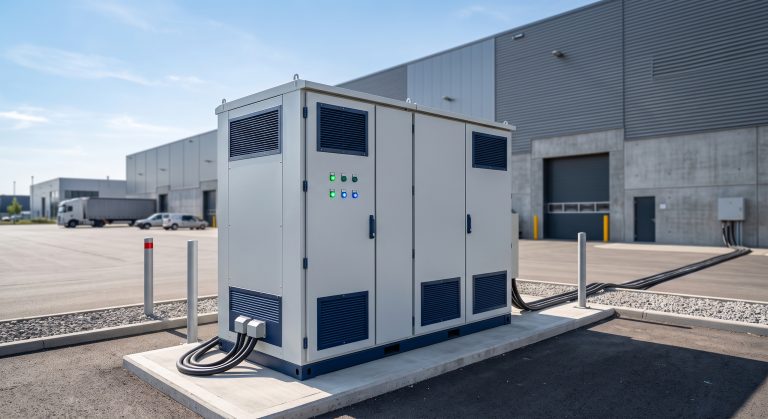
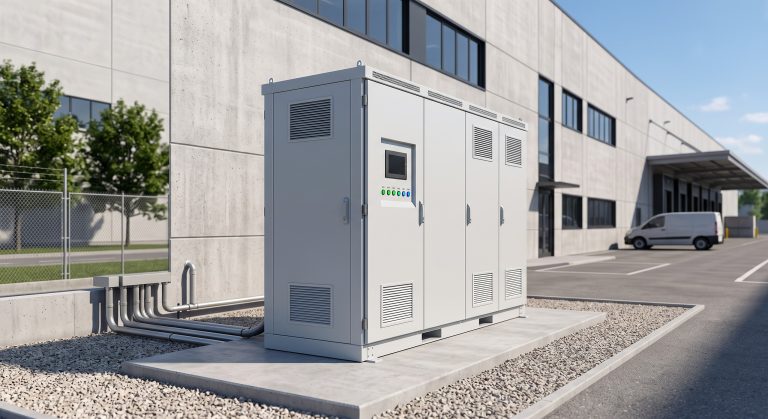
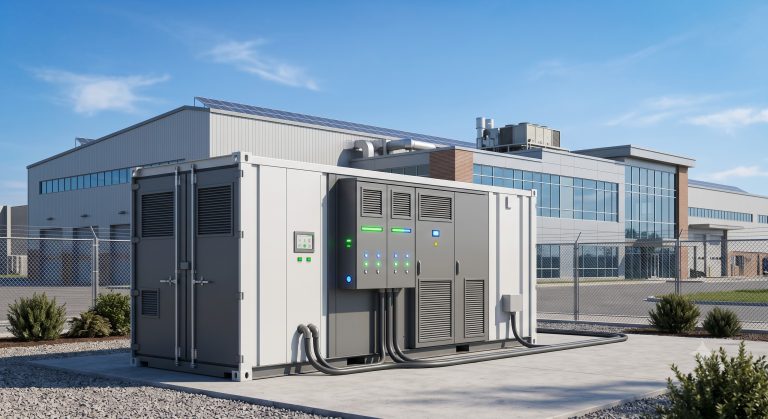
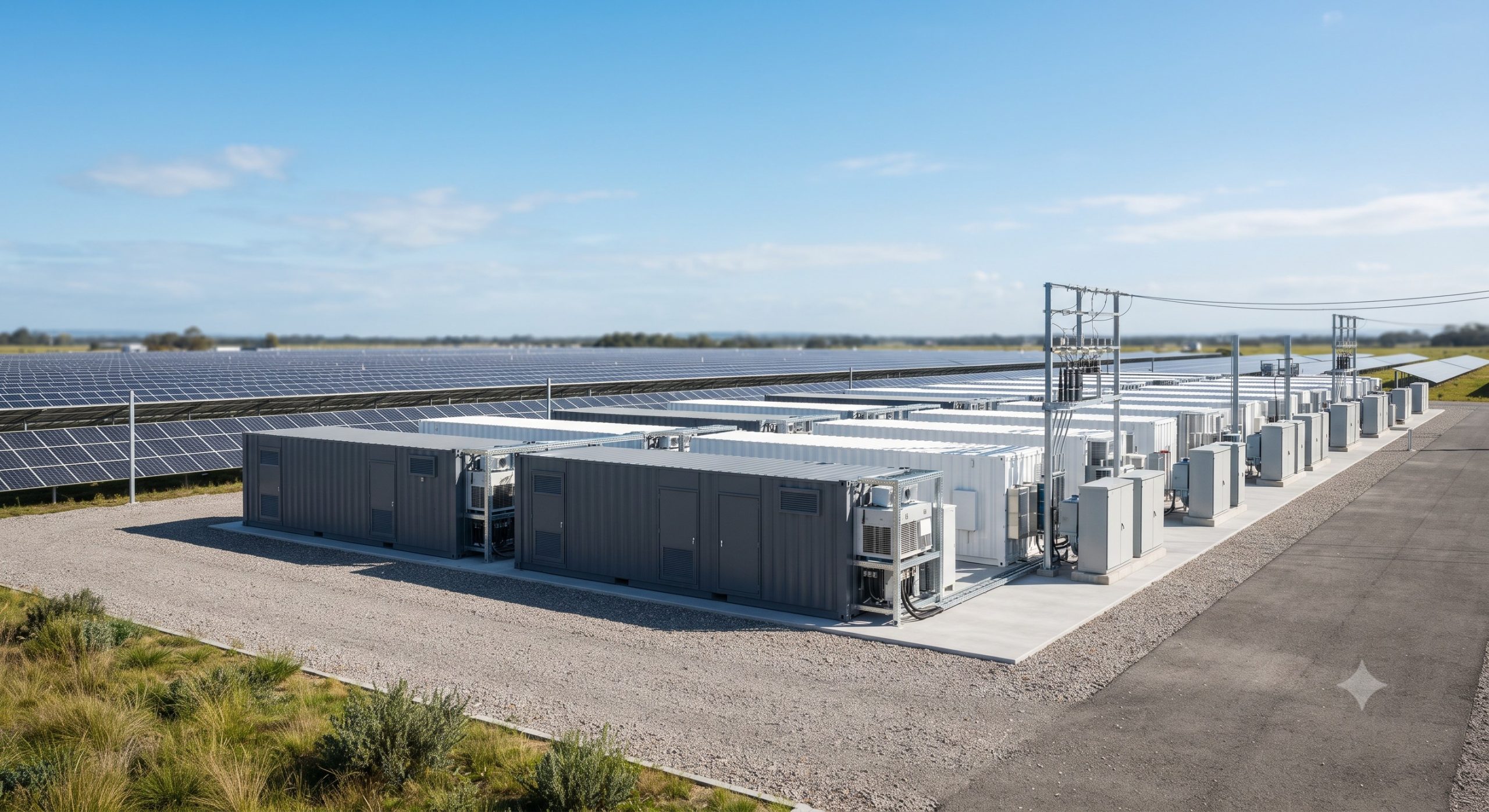
For industrial facilities facing high electricity tariffs and grid instability, automated lines ensure rapid deployment of containerized solutions. The consistency of production translates to predictable Total Cost of Ownership (TCO) and peak-shaving ROI. By integrating seamlessly with PV-storage-charging infrastructure, these systems facilitate zero-carbon migration.
EV Supercharging Stations
High-power EV chargers require burst power. Automated production ensures that the high-voltage busbars and liquid cooling systems are engineered to handle the strain, enabling a seamless transition between grid supply and battery discharge to avoid costly demand spikes.
Grid Support and Frequency Regulation
The fast response time (<30ms) of these systems, guaranteed by rigorous assembly standards, makes them ideal for primary frequency regulation. The high DoD capability ensures profitability even when cycling multiple times per day.
Conclusion: The Economic Rationale for Automation
The shift to fully automated battery production lines is an economic necessity, not just a manufacturing upgrade. By minimizing defect rates to <0.1%, ensuring stringent safety compliance (CE, UL 9540A, IEC 62619), and optimizing cell-to-pack energy density, automation directly improves the LCOS (Levelized Cost of Storage). For C&I buyers, sourcing from vendors with advanced automated lines is the only reliable path to achieving long-term asset durability, maximum operational safety, and the highest financial returns.