Introduction: The Industrial Energy Cost Crisis
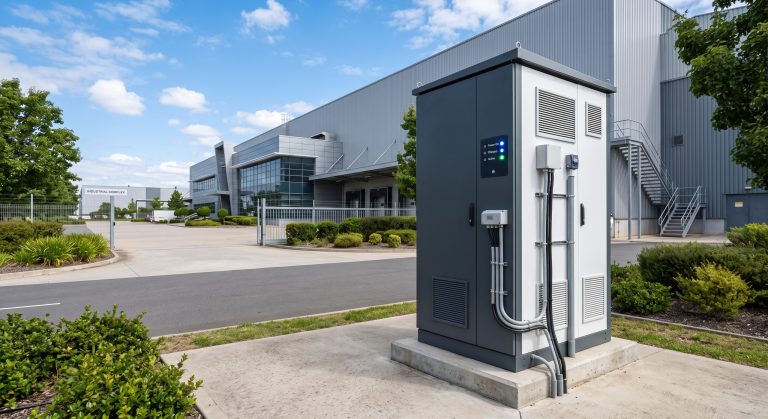
Industrial electricity tariffs have surged by 40-70% across major manufacturing hubs in the past 36 months, driven by volatile natural gas pricing, carbon taxation mechanisms, and grid infrastructure underinvestment. For energy-intensive facilities — automotive assembly, cold-chain logistics, semiconductor fabrication, and heavy machining — electricity now represents 18-32% of total operational expenditure. The strategic response from Tier-1 manufacturers is no longer negotiating tariffs; it is deploying behind-the-meter Factory Electricity Cost Reduction BESS (Battery Energy Storage Systems) to arbitrage time-of-use rates, shave peak demand charges, and participate in demand response markets.
This guide delivers a system-architect-level analysis of C&I energy storage: from LFP cell chemistry and liquid-cooling thermal management to LCOE modeling, UL 9540 compliance, and multi-megawatt micro-grid integration. Whether you are evaluating a 500 kWh cabinet or a 20 MWh containerized farm, the engineering and financial frameworks below will accelerate your procurement decision.
Core Architecture: PCS, BMS, and Battery Topology
Bi-Directional PCS Integration
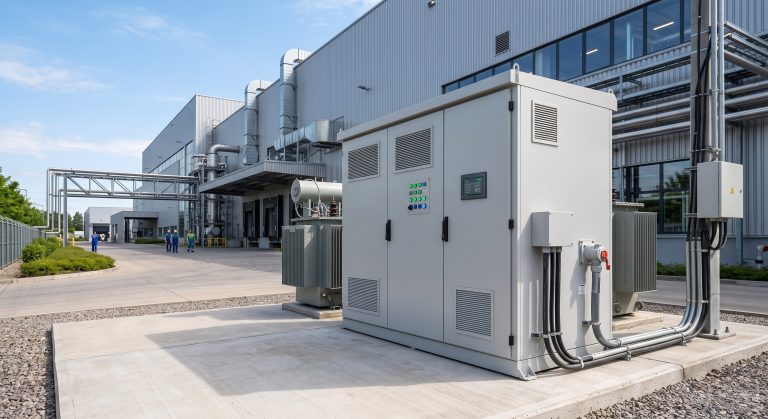
At the heart of any Factory Electricity Cost Reduction BESS is the Power Conversion System (PCS). Modern C&I systems employ bi-directional IGBT-based PCS units with 98.5% peak efficiency and <20 ms grid synchronization latency. The PCS manages four critical functions: AC/DC rectification during charging, DC/AC inversion during discharge, reactive power compensation (SVG mode), and seamless islanding transition. For factories with highly inductive loads (motors, welders, compressors), the PCS must deliver >0.99 power factor correction to avoid utility penalties.
Battery Management System (BMS) Hierarchy
A three-tier BMS architecture is mandatory for safety and longevity. The BMU (Battery Monitoring Unit) at cell level samples voltage every 100 ms with ±2 mV accuracy. The BCU (Battery Control Unit) aggregates module data and performs active balancing. The MBMS (Master BMS) communicates with the PCS and EMS via CAN 2.0B or Modbus TCP. Tier-1 systems now integrate AI-driven state-of-health (SOH) prediction, reducing capacity fade uncertainty to <3% over 8,000 cycles.
Thermal Control: Liquid Cooling vs. Air Cooling
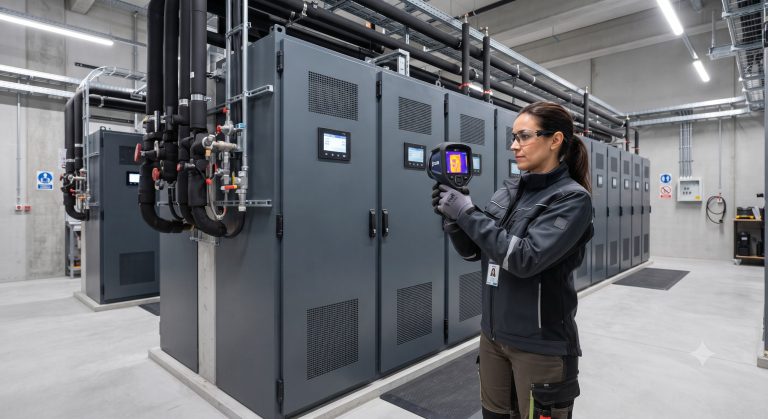
Liquid-cooling thermal management has become the default for high-cycle C&I applications. Compared to forced-air systems, liquid cooling reduces cell temperature differential from 8-12°C to 2-3°C, extending cycle life by 15-25%. The coolant loop typically uses 50% ethylene glycol with a flow rate of 15-25 L/min per cabinet, maintaining cells at a target 25±2°C. This precision thermal control is critical for UL 9540A thermal runaway propagation testing compliance.
Technical Specifications & Certification Matrix
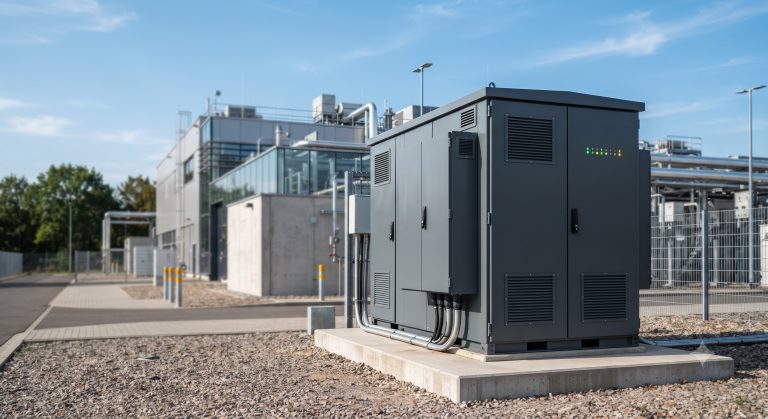
The table below summarizes the core engineering parameters for a typical 1 MWh C&I Factory Electricity Cost Reduction BESS cabinet. All values reflect Tier-1 supplier benchmarks and are validated against IEC 62619, UL 9540, CE, and UN38.3 test protocols.
| Key Parameter | Technical Specification |
|---|---|
| Battery Chemistry | Tier-1 LFP (Lithium Iron Phosphate) |
| Nominal System Capacity | 500 kWh / 1 MWh / 2 MWh (modular) |
| Cycle Life | >8,000 cycles @ 90% DoD, 25°C |
| Round-Trip Efficiency | ≥95% (DC-DC), ≥92% (AC-AC) |
| Depth of Discharge (DoD) | 90% (standard), 100% (emergency) |
| Cooling Method | Liquid Cooling (50% glycol, 25±2°C) |
| PCS Rated Power | 250 kW / 500 kW / 1 MW bi-directional |
| Grid Synchronization | <20 ms transfer, seamless islanding |
| Communication Protocol | CAN 2.0B, Modbus TCP, IEC 61850 |
| Certifications | IEC 62619, UL 9540, CE, UN38.3 |
| Operating Temperature | -20°C to +55°C (derated >45°C) |
| Enclosure Protection | IP54 (cabinet), IP67 (battery module) |
| Design Life | 10-15 years (capacity retention ≥80%) |
| Warranty | 10 years / 8,000 cycles (whichever first) |
Commercial ROI: Peak Shaving, Demand Response, and LCOE
Peak Shaving Economics
For a factory with a 2 MW peak demand and a demand charge of $18/kW-month, a 1 MWh BESS discharging 500 kW for 2 hours during peak windows can reduce demand charges by $9,000/month. Combined with time-of-use energy arbitrage (charging at $0.06/kWh off-peak, discharging at $0.18/kWh on-peak), total annual savings reach $180,000-$240,000 per MWh installed. Simple payback typically lands between 4.2 and 6.5 years depending on tariff structure and cycle frequency.
LCOE Modeling
Levelized Cost of Storage (LCOS) for a Tier-1 LFP system with >8,000 cycles @ 90% DoD and 95% round-trip efficiency ranges from $0.08-$0.12/kWh over a 10-year horizon. This assumes a CapEx of $280-$380/kWh (turnkey, including PCS, EMS, and installation) and O&M costs of $8-$12/kWh-year. When stacked with demand response revenues ($40-$80/kW-year in PJM, ERCOT, or National Grid territories), the effective LCOS drops below $0.06/kWh — making BESS cheaper than grid-supplied peak power in most industrial markets.
Demand Response & VPP Readiness
Modern EMS platforms enable VPP (Virtual Power Plant) aggregation. A 10 MWh factory BESS can provide ±5 MW of frequency regulation (RegD/RegA) with <500 ms response time, qualifying for capacity market payments. In markets like the UK (DFS), Australia (FCAS), and California (CAISO), these ancillary services add $15,000-$45,000/MW-year in incremental revenue.
Deployment Scenarios: Industrial Parks, EV Charging, and Micro-Grids
Industrial Park Modular Deployment
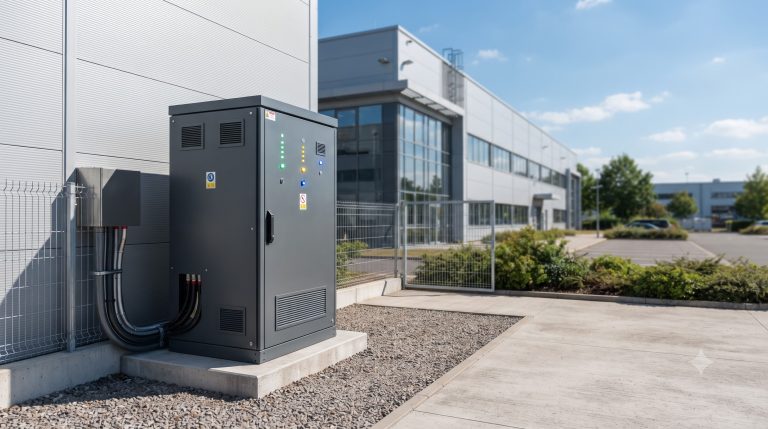
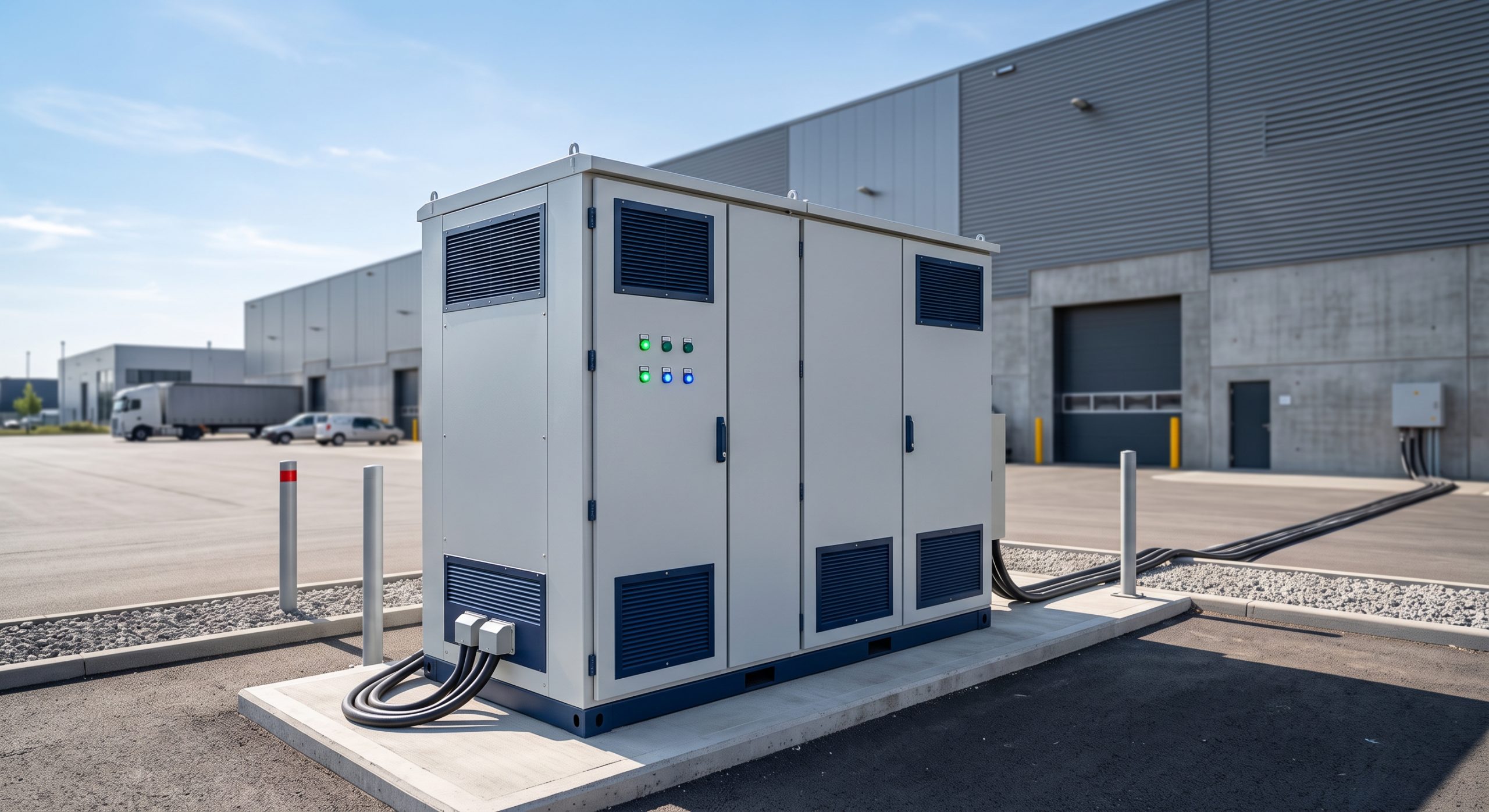
Containerized 20ft/40ft BESS units (2-5 MWh per container) allow phased capacity expansion. Parallel cabinet topology supports up to 20 units on a shared AC bus, scaling from 500 kWh to 100 MWh without PCS replacement. Inter-cabinet busbar linkage uses copper busbars rated 2000A with IP54 enclosure protection.
PV-Storage-Charging (光储充) Integration
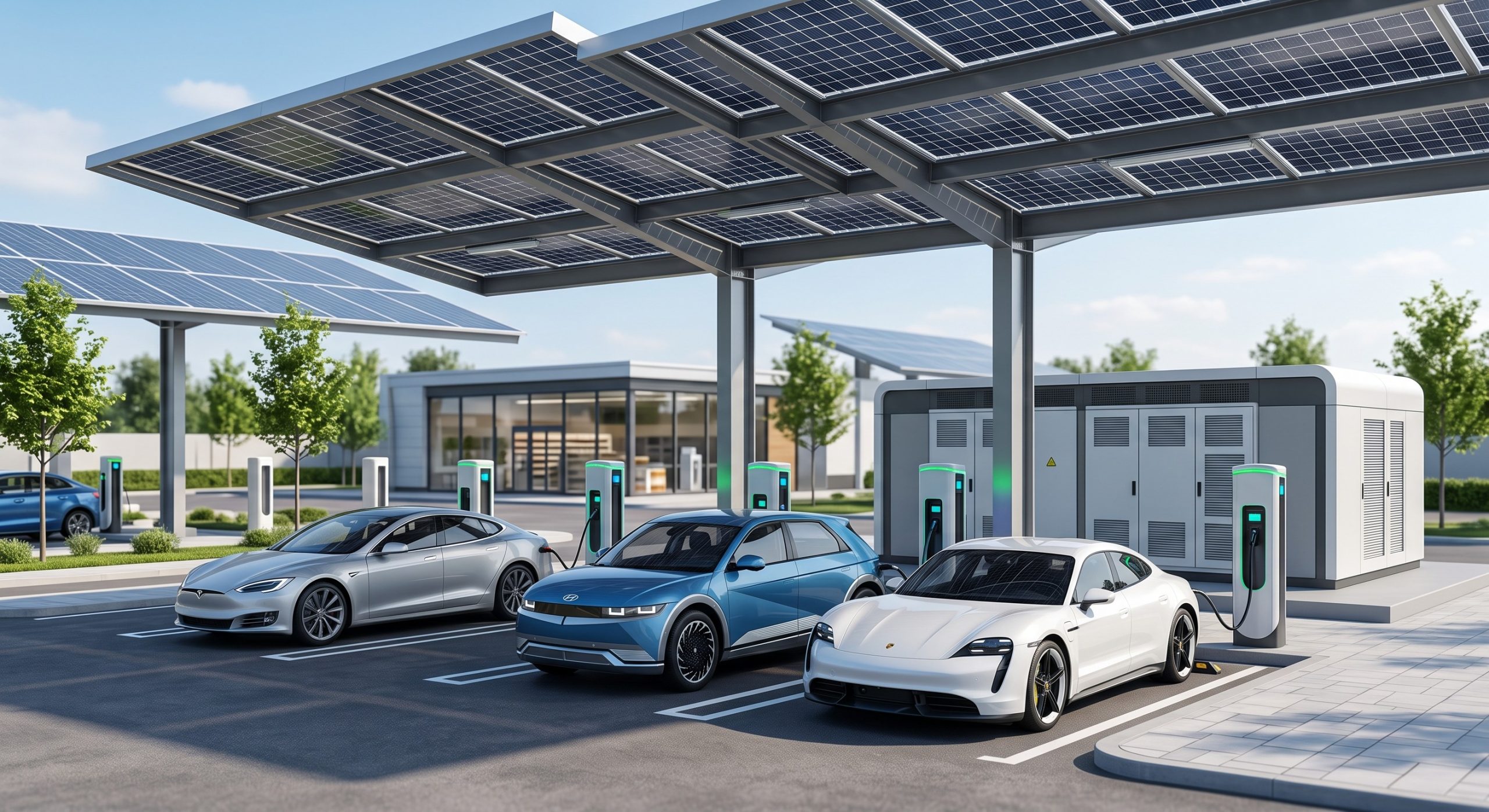
Factories adding EV supercharging for fleet vehicles can couple BESS with rooftop solar (500 kWp-5 MWp) and DC fast chargers (120-350 kW). The BESS buffers solar intermittency and prevents demand charge spikes during simultaneous charging events. This architecture is particularly compelling for logistics hubs and manufacturing campuses with electric forklift or truck fleets.
Seamless Off-Grid Transition
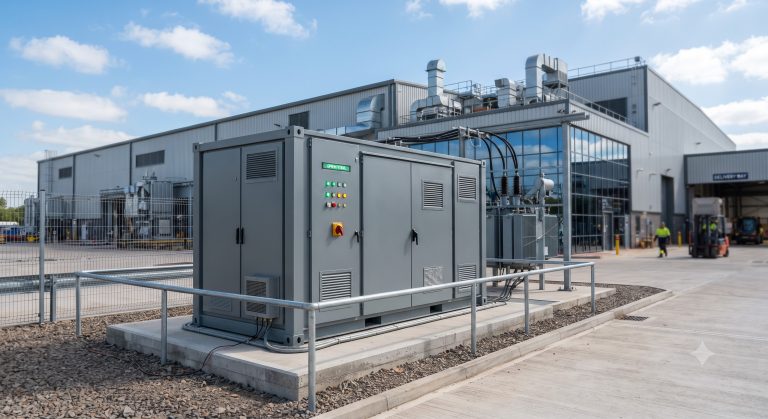
For facilities in regions with unreliable grid infrastructure, BESS can operate in island mode with <20 ms transfer time, replacing diesel generators for short-duration outages. Unlike diesel, BESS delivers zero emissions, requires no fuel logistics, and provides silent operation — critical for urban industrial zones with noise ordinances.
Conclusion: Strategic Procurement for Zero-Carbon Industrial Operations
Deploying a Factory Electricity Cost Reduction BESS is no longer a sustainability gesture — it is a board-level financial strategy. With LCOE below $0.10/kWh, 4-6 year paybacks, and UL 9540/IEC 62619 certified safety, C&I energy storage has crossed the inflection point from early-adopter pilot to mainstream industrial infrastructure. Procurement teams should prioritize Tier-1 LFP suppliers with >8,000 cycle warranties, liquid-cooling thermal systems, and open-protocol EMS platforms that support future VPP and demand response monetization. The factories that move first will lock in lower energy costs, higher resilience, and a measurable carbon advantage for the next decade.