Overview
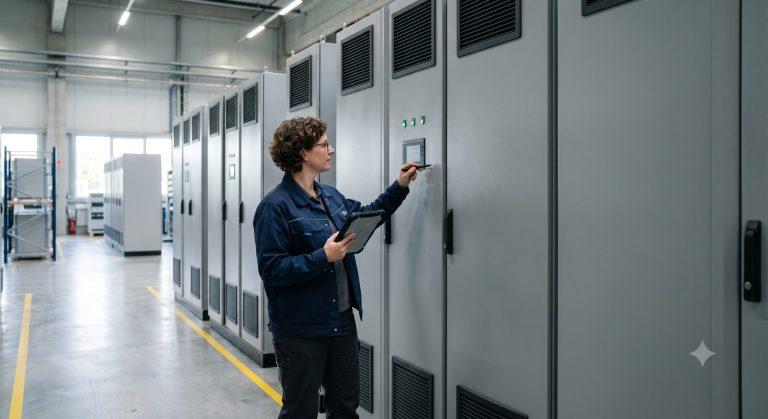
In the rapidly evolving B2B energy storage landscape, the promise of a ‘plug-and-play’ solution is highly appealing. However, for commercial and industrial (C&I) applications, the reality involves nuanced engineering, stringent safety protocols, and sophisticated software integration. This FAQ addresses the core technical and commercial queries from plant engineers, procurement officers, and project developers, clarifying what true turnkey deployment entails.
Frequently Asked Questions
- Q1: Are commercial BESS units truly plug-and-play for industrial sites?
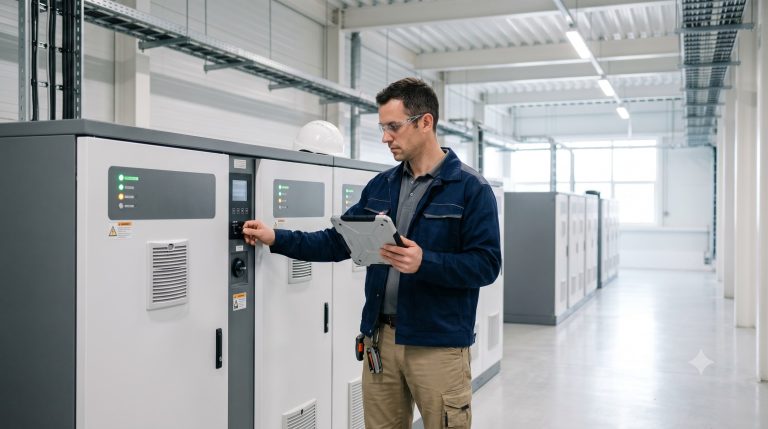
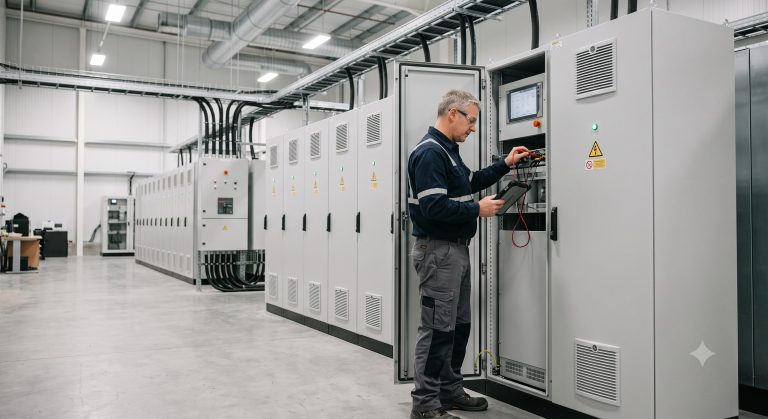
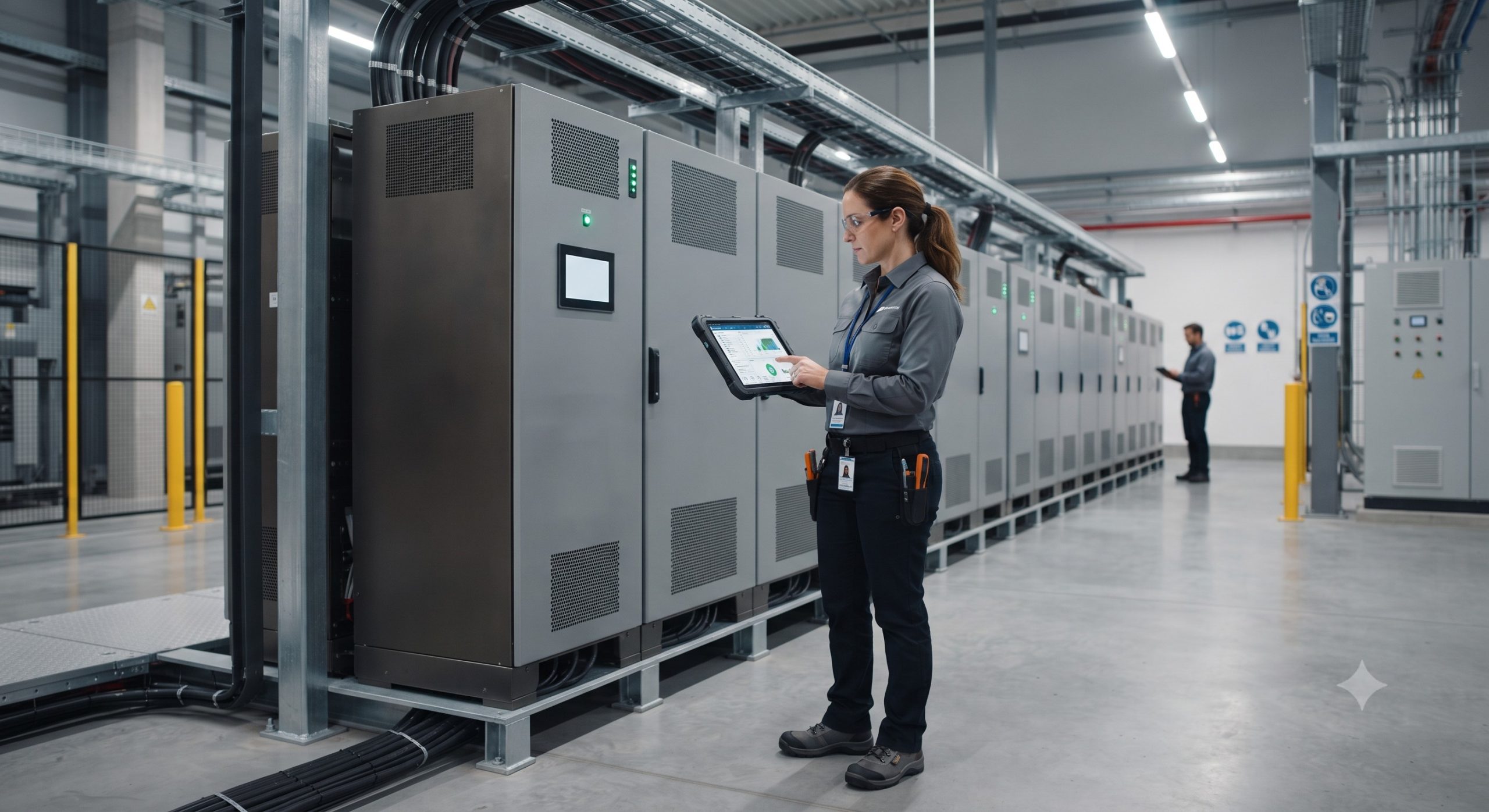
- No, industrial BESS are not consumer-grade plug-and-play; they require professional engineering for grid interconnection and site-specific configuration. While they arrive as pre-assembled, factory-tested cabinets with standardized AC/DC terminals, proper deployment necessitates a licensed electrician for main service panel integration, CT installation, and communication network setup to comply with local utility regulations.
- Q2: What is the cycle life and depth of discharge (DoD) of your LFP battery systems?
- Our Tier-1 LFP cells deliver a standard cycle life of 6,000 cycles at 90% DoD, achieving 80% end-of-life capacity retention. This performance is guaranteed through advanced liquid cooling that maintains optimal cell temperature differentials (within ±2°C), significantly reducing degradation rates compared to air-cooled alternatives.
- Q3: How does the Battery Management System (BMS) monitor and protect the system?
- The multi-layer BMS provides real-time active monitoring and inter-cell balancing at the module, rack, and system levels. It continuously tracks voltage, current, and temperature, executing autonomous protective actions such as current limiting or contactor disconnection within milliseconds to prevent overcharge, deep discharge, or thermal runaway, while communicating all data to the local EMS.
- Q4: Can the system be configured for both grid-tied and off-grid operations?
- Yes, our bi-directional PCS supports seamless grid-tied and off-grid (islanding) functionality. In grid-tied mode, it enables peak shaving and demand response; during a grid outage, it automatically isolates and transitions to off-grid mode within 20ms to provide backup power, ensuring an uninterrupted power supply for critical industrial loads.
- Q5: What safety mechanisms prevent thermal runaway and fire risks?
- Our safety architecture includes multi-tier fire suppression with aerosol generators, integrated gas and smoke detection sensors, and a three-level protection system (cell, module, and cabinet). In the event of cell abnormality, the system triggers pre-alarm, ventilation, and isolation stages, with a dedicated fire suppression unit capable of rapid suppression before escalation.
- Q6: How scalable is the system for future capacity expansion?
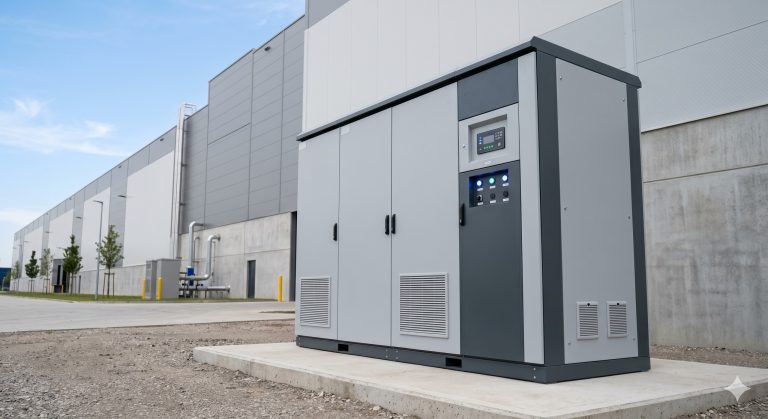
- The modular cabinet design supports parallel connectivity up to 10 MW via custom DC busbar linkage. You can start with a 100kWh base unit and incrementally add cabinets to increase capacity, all controlled by a unified EMS platform, without a costly central inverter overhaul.
- Q7: What is the typical ROI timeline through peak shaving arbitrage?
- ROI depends on local utility rate structures, but typical payback periods range from 3 to 5 years. The system’s intelligent EMS optimizes energy dispatch for peak shaving and arbitrage, reducing demand charges by 20-30% annually. We provide a comprehensive LCOE analysis and 10-year performance warranty tailored to your specific load profile.
- Q8: What international certifications and post-sales O&M support do you offer?
- Our systems are fully certified to UL 9540, UL 1973, IEC 62619, and CE standards. Post-sales, we offer a 10-year product warranty, comprehensive O&M service contracts with remote diagnostics, and global spare parts logistics via sea freight, ensuring minimal downtime and maximum asset availability.