Overview
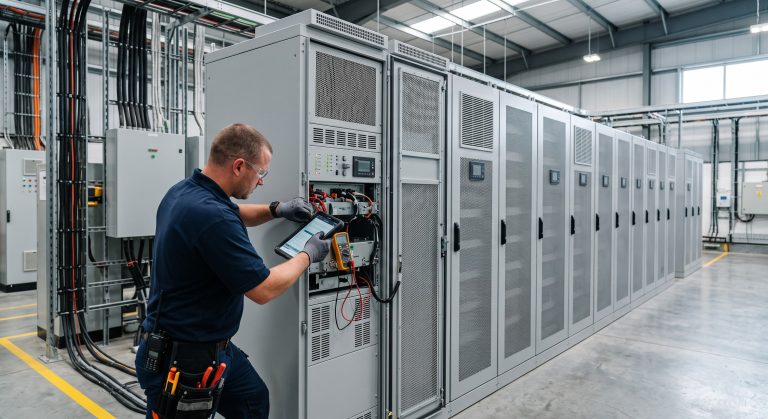
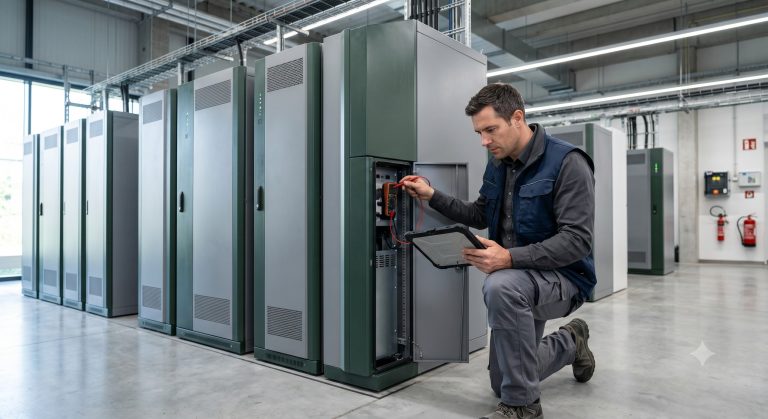
Becoming a strategic supply chain partner with Wantage means aligning your procurement, engineering, and service teams with a Tier-1 BESS platform built on LFP chemistry, liquid-cooled thermal management, and utility-grade safety architecture. This FAQ answers the highest-intent pre-sales and post-sales questions that EPCs, plant engineers, and energy managers ask before, during, and after deployment.
Frequently Asked Questions
- Q1: What is the maximum cycle life and depth of discharge (DoD) of Wantage LFP battery systems?
- Wantage LFP battery systems deliver up to 8,000 cycles at 80% DoD under standard 25°C operating conditions, with a 10-year performance warranty. This is achieved through Tier-1 prismatic LFP cells, precision active BMS cell balancing, and liquid-cooled thermal management that keeps cell temperature differentials below 3°C. For partners, this translates into predictable degradation curves and bankable LCOE models for C&I and utility-scale projects.
- Q2: How does Wantage liquid cooling prevent thermal runaway and extend system lifespan?
- Wantage liquid cooling maintains cell temperatures within a narrow band, typically 20–30°C, which reduces degradation rates and prevents thermal runaway propagation. The system combines multi-tier protection: cell-level voltage and temperature sensing, pack-level gas and smoke detection, module-level isolation, and cabinet-level fire suppression. This architecture supports compliance with UL 9540, IEC 62619, and CE interconnection standards.
- Q3: What BMS monitoring and remote diagnostics does Wantage provide for post-sales support?
- Wantage provides a cloud-connected active BMS with cell-level monitoring, state-of-charge (SOC) and state-of-health (SOH) reporting, and automated fault alarms. Partners gain API access to the EMS platform for real-time dispatch, demand response, and predictive maintenance. Local lifecycle service includes remote firmware updates, periodic calibration, and on-site O&M support through regional service hubs.
- Q4: Can Wantage BESS be configured for grid-tie, off-grid, and micro-grid applications?
- Yes. Wantage BESS supports bi-directional PCS configurations for grid-tie, seamless off-grid switch, and hybrid micro-grid operation. The EMS enables peak shaving, demand response, and islanding mode with automatic transfer. For industrial facilities, this means one platform can handle grid support, backup power, and renewable integration without separate inverter stacks.
- Q5: How do I calculate ROI and LCOE for a Wantage BESS project?
- ROI and LCOE are calculated using cycle life, round-trip efficiency, peak shaving arbitrage, demand charge reduction, and local incentives. Wantage provides a partner ROI calculator that models 10-year cash flows based on your load profile and tariff structure. Typical C&I projects achieve payback in 4–6 years with peak shaving and demand response, while LCOE improves with higher cycle utilization and lower degradation.
- Q6: What is the scalability and lead time for Wantage BESS cabinets and containers?
- Wantage BESS scales from 100 kWh cabinets to multi-MWh containerized systems using parallel cabinet connectivity and custom DC busbar linkage. Standard lead times for turnkey orders are 8–12 weeks depending on configuration and destination. Strategic supply chain partners receive priority allocation, dedicated account management, and global sea freight security with real-time shipment tracking.
- Q7: What safety certifications and fire suppression standards does Wantage meet?
- Wantage BESS meets UL 9540, UL 9540A, IEC 62619, and CE standards, with integrated fire suppression, gas detection, and emergency ventilation. The enclosure is rated IP65+ for harsh outdoor environments with anti-corrosion protection. These certifications support permitting and insurance approval for commercial and industrial installations.
- Q8: How does Wantage support corporate decarbonization and zero-carbon factory integration?
- Wantage BESS integrates with solar arrays, EV supercharging, and factory EMS to maximize renewable self-consumption and reduce Scope 2 emissions. The platform supports zero-carbon factory goals through peak shaving, load shifting, and demand response. Partners receive technical training, co-branded proposals, and lifecycle service to help end customers achieve decarbonization targets.