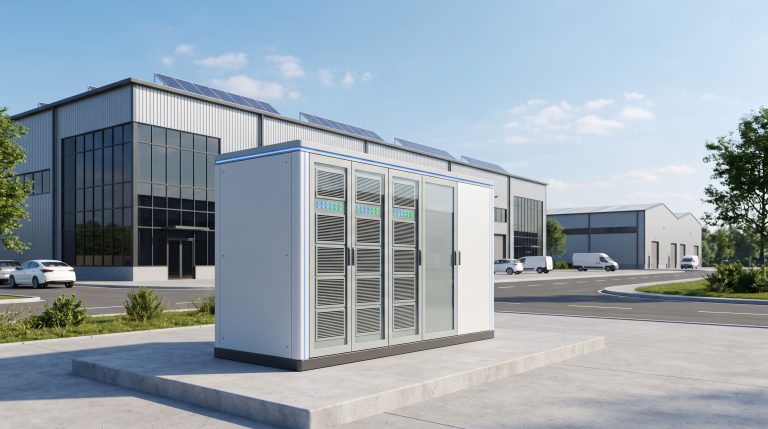
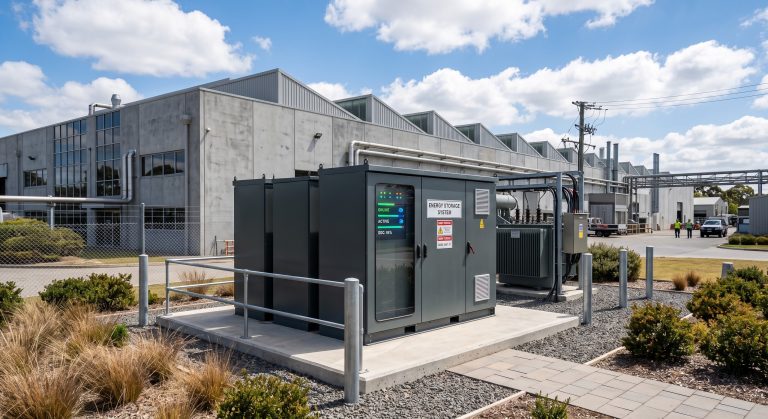
Introduction: The MWh-Scale Imperative in Commercial & Industrial Energy Storage
The commercial and industrial (C&I) sector is undergoing a profound transformation, driven by volatile electricity tariffs, decarbonization mandates, and the urgent need for grid resilience. At the heart of this transition lies the high-capacity industrial battery — a modular, scalable energy storage system (ESS) engineered to deliver megawatt-hour (MWh) scale capacity with unprecedented safety, longevity, and round-trip efficiency. Unlike legacy lead-acid or early-generation lithium-ion systems, today’s Tier-1 high-capacity industrial battery platforms leverage advanced Lithium Iron Phosphate (LFP) chemistry, liquid cooling thermal management, and intelligent Energy Management Systems (EMS) to optimize peak shaving, demand response, and renewable integration.
This comprehensive technical blueprint provides system architects, EPC contractors, and facility managers with a data-driven framework for sizing, specifying, and deploying high-capacity industrial battery systems at the MWh scale. We will dissect core architecture, thermal control strategies, compliance requirements (IEC 62619, UL 9540, UN38.3), and the commercial ROI levers that justify capital allocation. Whether you are evaluating a 500 kWh cabinet or a 10 MWh containerized micro-grid, the principles of capacity sizing, turnkey delivery, and lifecycle cost optimization remain paramount.
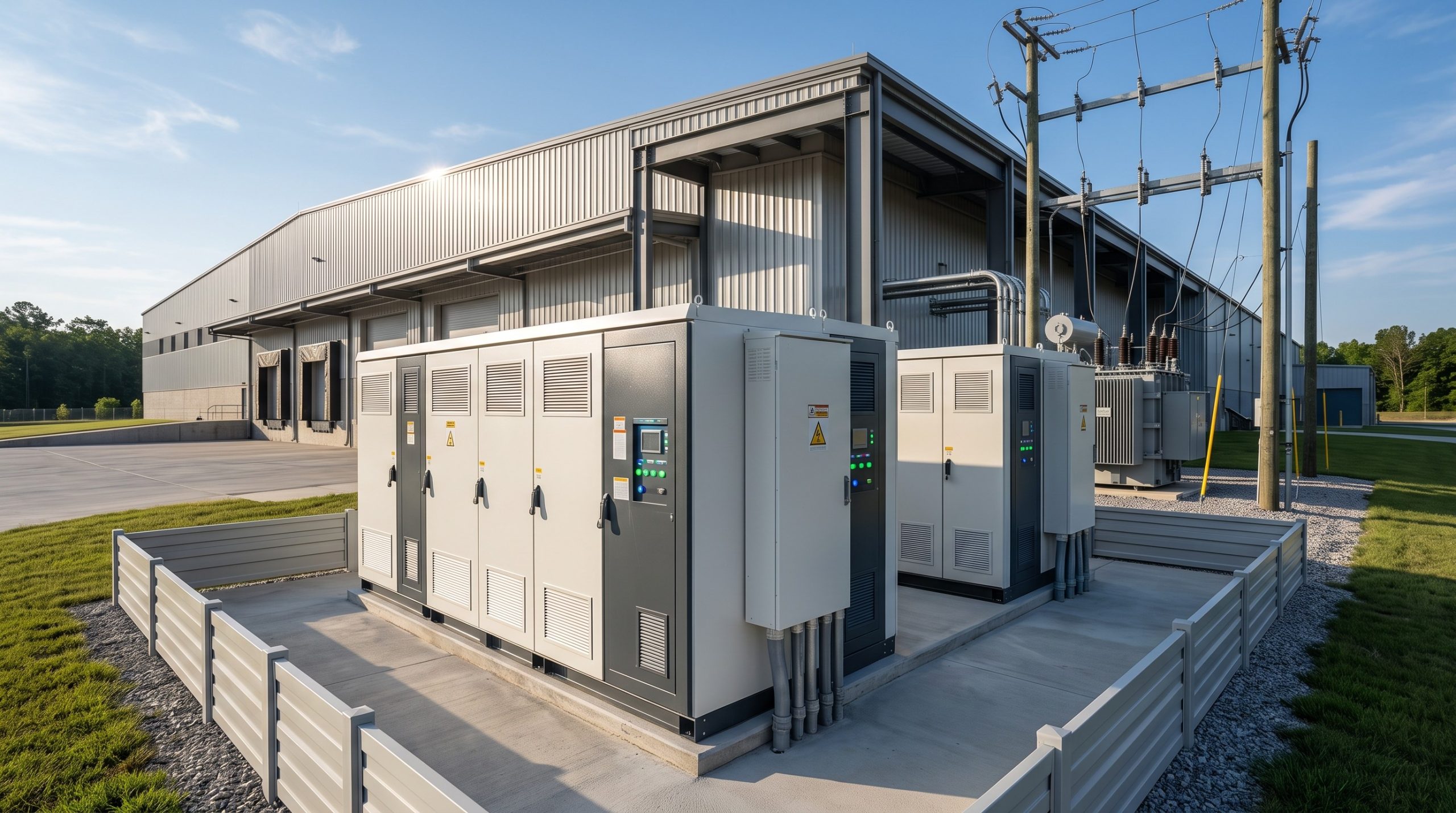
Core Architecture: PCS, BMS, and the High-Capacity Industrial Battery Platform
Power Conversion System (PCS) Integration
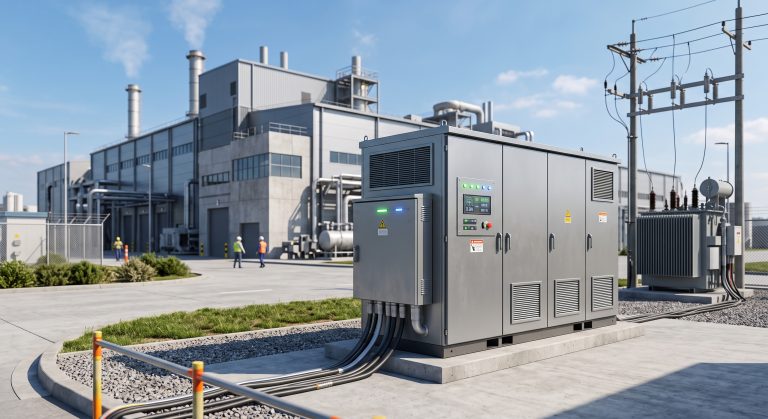
The high-capacity industrial battery is not a standalone asset; it is the electrochemical heart of a tightly integrated system. The Power Conversion System (PCS) serves as the bi-directional gateway between the DC battery bus and the AC grid or facility load. Modern PCS units for MWh-scale deployments typically operate at 98.5% peak efficiency and support four-quadrant operation, enabling seamless transitions between grid charging, discharging, and reactive power support. For high-capacity industrial battery systems, PCS sizing must account for continuous power rating (kW), overload capability (e.g., 110% for 10 seconds), and grid-forming vs. grid-following modes. Advanced PCS platforms now integrate virtual synchronous machine (VSM) algorithms to provide synthetic inertia, a critical feature for weak-grid industrial parks.
Battery Management System (BMS) Precision
The BMS is the brain of the high-capacity industrial battery, responsible for cell-level monitoring, state-of-charge (SoC) estimation, state-of-health (SoH) tracking, and active balancing. In a 1 MWh cabinet containing 280 Ah LFP cells in a 1P16S configuration, the BMS must manage voltage deviations of less than 10 mV across thousands of cells. Tier-1 BMS architectures employ distributed topology with slave modules per module and a master controller for string-level aggregation. Key metrics include:
- SoC estimation accuracy: ±3% (advanced coulomb counting + open-circuit voltage correction)
- Cell balancing current: 2A passive or 5A active balancing
- Communication protocols: CAN 2.0B, Modbus TCP/IP, IEC 61850 for grid integration
- Protection thresholds: Over-voltage (3.65V/cell), under-voltage (2.5V/cell), over-temperature (55°C), over-current (1.5C rate)
The BMS also executes demand response commands from the EMS, dynamically adjusting charge/discharge rates to capture utility incentives or avoid peak demand charges.
Liquid Cooling Thermal Control: The MWh-Scale Enabler
Thermal management is the single most critical factor differentiating a robust high-capacity industrial battery from a compromised one. At MWh scale, air cooling becomes thermodynamically inefficient due to uneven cell temperatures and hot spots. Liquid cooling — typically a 50/50 water-glycol mixture circulated through cold plates — maintains cell-to-cell temperature delta within ±2°C and pack-level delta within ±3°C. This precision directly extends cycle life: every 10°C reduction in operating temperature can double LFP cell lifespan. A typical liquid cooling loop for a 1 MWh high-capacity industrial battery includes:
- Cold plates: Aluminum micro-channel design with 0.5 L/min per module flow rate
- Coolant pump: Variable frequency drive, 4-6 kW rated power
- Heat exchanger: Plate-and-frame or shell-and-tube, 20-30 kW thermal rejection
- Chiller: Integrated or remote, maintaining 25°C supply temperature
- Redundancy: N+1 pump and chiller configuration for 99.9% availability
Liquid cooling also enables higher C-rates (0.5C continuous, 1C peak) without derating, a prerequisite for frequency regulation and EV supercharging buffering applications.
Technical Specifications: High-Capacity Industrial Battery Parameter Ledger
The following specification table represents a typical Tier-1 high-capacity industrial battery cabinet (1 MWh class) suitable for commercial and industrial deployments. These parameters are validated through factory acceptance testing (FAT) and site acceptance testing (SAT) per IEC 62619 and UL 9540 standards.
| Key Parameter | Technical Specification |
|---|---|
| Battery Chemistry | Tier-1 LFP (Lithium Iron Phosphate) |
| Nominal System Capacity | 1,000 kWh (1 MWh) per cabinet |
| Usable Capacity | 900 kWh @ 90% DoD |
| Nominal DC Voltage | 1,331 V (1P416S configuration) |
| Cycle Life | >8,000 cycles @ 90% DoD, 25°C, 0.5C |
| Round-Trip Efficiency | ≥92% (DC-DC), ≥88% (AC-AC) |
| Depth of Discharge (DoD) | 90% maximum continuous |
| Continuous Power Rating | 500 kW (0.5C) |
| Peak Power Rating | 1,000 kW (1C) for 10 seconds |
| Thermal Management | Liquid cooling (50% water-glycol), ±2°C cell delta |
| Operating Temperature | -20°C to +55°C (derated above 45°C) |
| BMS Communication | CAN 2.0B, Modbus TCP/IP, IEC 61850 |
| Protection Rating | IP54 (cabinet), IP67 (modules) |
| Safety Compliance | IEC 62619, UL 9540, UL 9540A, CE, UN38.3 |
| Fire Suppression | Aerosol + perfluorohexanone (Novec 1230) hybrid |
| Dimensions (WxDxH) | 1,200 x 1,100 x 2,200 mm |
| Weight | ~2,500 kg (cabinet) |
| Design Life | 15 years (25°C, 0.5C, 90% DoD) |
Note: All specifications are subject to cell supplier tolerances and system configuration. Round-trip efficiency (RTE) is measured at 0.5C charge/discharge, 25°C ambient, and includes PCS, transformer, and auxiliary loads. Cycle life is warranted at 90% DoD, 25°C, and 0.5C rate.
Commercial ROI & Grid Support: Quantifying the High-Capacity Industrial Battery Value Proposition
Peak Shaving and Demand Charge Reduction
The most immediate ROI lever for high-capacity industrial battery deployment is peak shaving. Industrial facilities with demand charges exceeding $15/kW-month can achieve payback periods of 4-6 years by discharging the battery during peak windows (e.g., 4 PM – 9 PM). A 1 MWh / 500 kW system can shave 500 kW of peak demand, translating to $7,500 monthly savings at $15/kW. Over a 10-year lifecycle, this accumulates to $900,000 in avoided demand charges, assuming 2% annual utility rate escalation.
Demand Response and Ancillary Services
Beyond peak shaving, high-capacity industrial battery systems can participate in utility demand response programs, capacity markets, and frequency regulation (e.g., PJM RegD, ERCOT RRS). A 1 MWh system with 500 kW power rating can earn $50,000–$120,000 annually in ancillary service revenues, depending on market pricing. The BMS and EMS must support sub-second response times (< 100 ms) for frequency regulation, achievable with liquid-cooled LFP systems.
Round-Trip Efficiency and LCOE Optimization
Round-trip efficiency (RTE) directly impacts the levelized cost of storage (LCOS). A high-capacity industrial battery with 92% RTE loses only 8% of energy per cycle, compared to 15-20% for legacy systems. At 8,000 cycles, this efficiency delta translates to significant OPEX savings. Coupled with declining LFP cell costs ($80–$100/kWh at cell level), the LCOS for MWh-scale systems now ranges from $0.08–$0.12/kWh, making high-capacity industrial battery economically superior to diesel generators for backup and cycling applications.
Grid Support and Micro-Grid Capabilities
Modern high-capacity industrial battery systems are grid-forming capable, providing voltage and frequency support during grid disturbances. This is critical for industrial parks with sensitive manufacturing processes (e.g., semiconductor fabrication, data centers). The PCS can seamlessly transition between grid-tied and islanded modes within 10 ms, ensuring uninterrupted power quality. For PV-storage-charging synergy, the battery buffers solar intermittency and dispatches stored energy to EV superchargers during peak demand, avoiding costly demand charges.
Deployment Scenarios: Turnkey Delivery and Capacity Sizing
Modular Cabinet Scaling for MWh-Scale Deployments
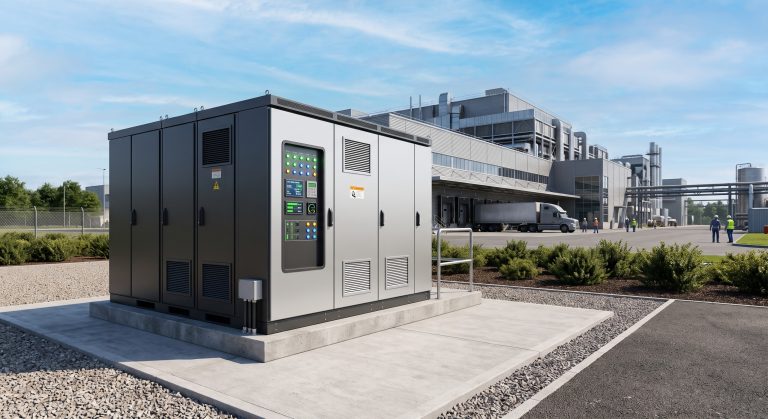
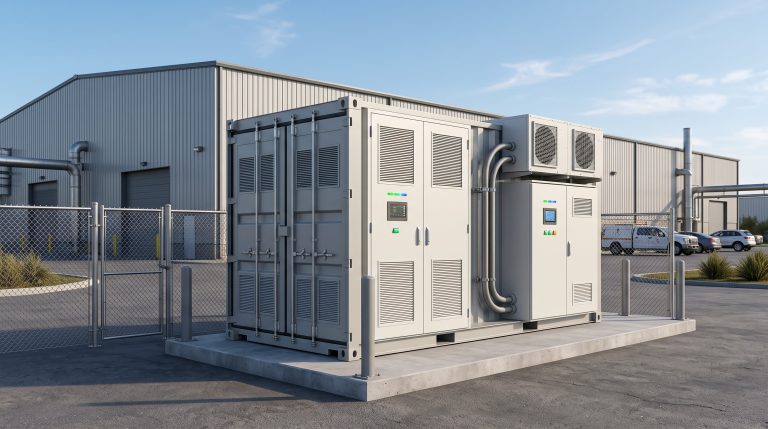
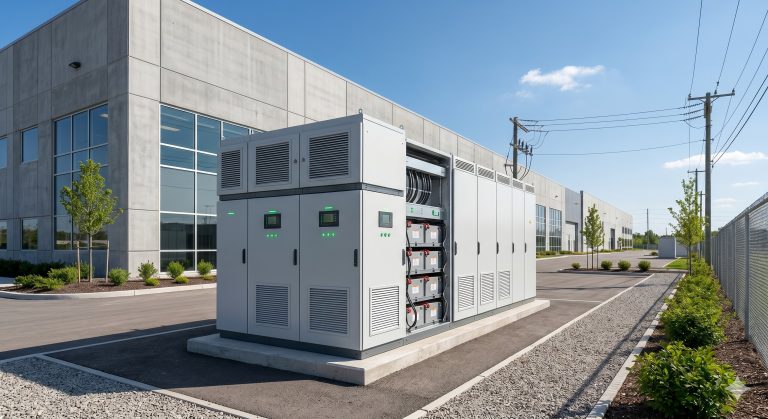
The high-capacity industrial battery is typically deployed in modular cabinets (100 kWh to 1 MWh per cabinet) that can be paralleled to achieve multi-MWh capacity. A 5 MWh system might comprise five 1 MWh cabinets, each with independent BMS and liquid cooling, connected via a shared DC bus and central EMS. This modularity simplifies transportation, installation, and maintenance. Turnkey delivery includes:
- Site assessment: Load profiling, utility interconnection studies, structural and thermal audits
- Engineering design: Single-line diagrams, protection coordination, grounding, and fire suppression layout
- Equipment procurement: Tier-1 LFP cells, PCS, BMS, EMS, HVAC, and fire suppression
- Installation and commissioning: Containerized or cabinet-based deployment, FAT/SAT, grid synchronization
- O&M and monitoring: 24/7 remote monitoring, predictive maintenance, and performance guarantees
Industrial Park and Data Center Deployments
Industrial parks with high simultaneous demand (e.g., 10 MW peak) can deploy high-capacity industrial battery systems to achieve energy independence and hedge against tariff volatility. A 10 MWh / 5 MW system can shave 50% of peak demand, integrate 5 MW of rooftop solar, and provide 2 hours of backup power for critical loads. Data centers, with their 99.999% uptime requirements, increasingly favor high-capacity industrial battery over diesel generators due to zero emissions, faster response, and lower maintenance costs.
EV Supercharging and PV-Storage-Charging Integration
The convergence of high-capacity industrial battery with EV supercharging is a game-changer for commercial fleets and highway rest stops. A 2 MWh battery can buffer a 1 MW EV charger, avoiding demand charges and enabling off-grid charging during grid outages. Coupled with solar canopies, the PV-storage-charging architecture reduces carbon footprint and energy costs by 40-60% compared to grid-only charging.

Conclusion: Strategic Procurement of High-Capacity Industrial Battery Systems
The high-capacity industrial battery is no longer a niche technology; it is a strategic asset for C&I facilities seeking energy resilience, cost reduction, and decarbonization. By prioritizing Tier-1 LFP cells, liquid cooling thermal management, UL 9540/IEC 62619 compliance, and modular MWh-scale architecture, procurement teams can ensure a 15-20 year asset life with minimal degradation. The commercial case is compelling: peak shaving, demand response, and ancillary services can deliver IRR of 15-25% depending on utility tariffs and market incentives. As grid instability and electricity price volatility persist, the high-capacity industrial battery will become as ubiquitous as the diesel generator once was — but cleaner, quieter, and far more intelligent. Engage with Tier-1 suppliers, demand FAT/SAT documentation, and model your LCOS rigorously. The MWh-scale future is here.